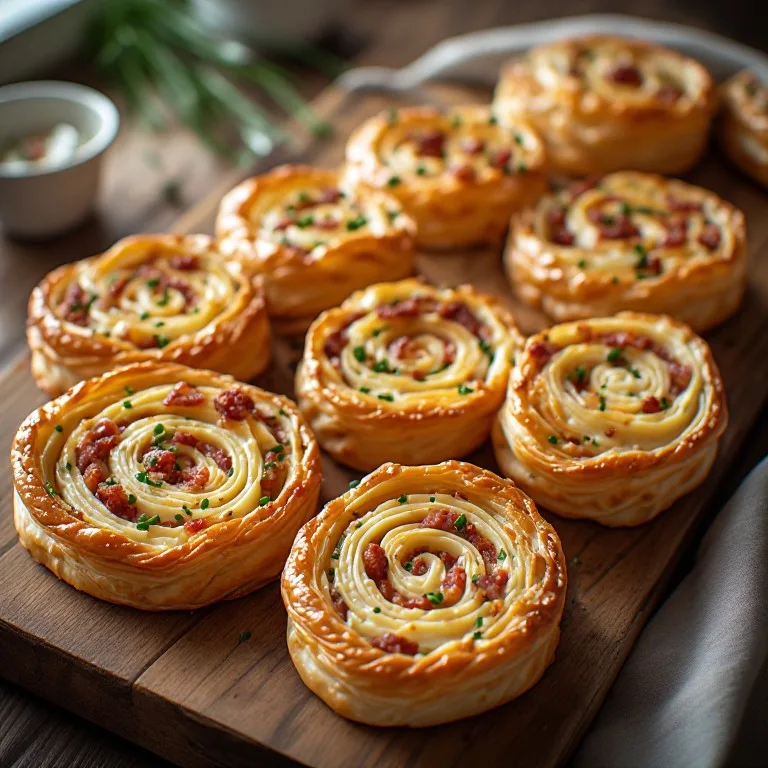

Every few years, one passed appetizer breaks through from the catering circuit into home kitchens — not because it’s new, but because a video makes the technique click for people who assumed they couldn’t make it. Boursin puff pastry pinwheels became that recipe in 2025 and 2026: a TikTok spiral that looks like it came from a bakery, made with five ingredients and about 15 minutes of actual work.
The Boursin does most of it. Garlic & Fine Herbs is already seasoned with garlic, parsley, chives, and white pepper — there is nothing to season, nothing to taste and adjust, no risk of over-salting. The only technique it requires is caramelizing the onions properly and chilling the log before slicing. Both are simple. Neither can be skipped.
The Two Things That Actually Matter
1. The Onions Take 25–30 Minutes — Not 5
Every shortcut version of this recipe calls for sautéed onions. Every good version uses caramelized ones. The difference is not cosmetic.
Sautéed onions cooked over medium-high heat for 5–8 minutes turn soft and translucent, but they still carry raw allicin — the sulfur compound that makes onions sharp and pungent. Inside a rolled and sealed pastry, that raw bite is trapped. It dominates every bite of the pinwheel instead of fading.
Caramelized onions cooked over medium-low heat for 25–30 minutes are a different ingredient. The sharp sulfur compounds mellow, the natural sugars brown, and the onions reduce to a sweet, almost jammy mass with meaty depth and no raw edge. In the enclosed heat of the oven, they become richer, not sharper.
The technique is not complicated: butter and olive oil, medium-low heat, patience, a stir every 5 minutes. If you need to speed things up, add a pinch of baking soda at minute 5 — it raises the pH and accelerates the Maillard reaction, getting you to fully caramelized in about 15 minutes instead of 30. The result is slightly softer but still fully transformed.
One non-negotiable: the onions must be fully cooled before they go on the pastry. Hot or even warm onions melt the Boursin layer before the log is rolled, and a melted filling layer slides during rolling rather than holding its position in the spiral.
2. Chill the Log — Then Slice
The Boursin is soft at room temperature. The pastry is soft at room temperature. If you roll the log and slice it immediately, the knife compresses the layers before it cuts through them: the rounds flatten, the spirals blur, and the filling pushes out the sides.
Cold changes everything. After 20 minutes in the refrigerator, the Boursin firms back up, the butter in the pastry solidifies, and the whole log cuts cleanly with a serrated knife. Each slice holds its spiral all the way to the center. What looks like a presentation detail is actually a structural one.
Roll the log, wrap it tightly in plastic, refrigerate it — and use the 20-minute wait to preheat the oven, line a baking sheet, and beat the egg wash. Nothing is wasted. If you’ve rolled the log the day before, it comes out of the refrigerator and goes directly to slicing and baking without any thaw time.
The Full Walkthrough
Start the caramelized onions first — they take the longest and must cool before use.
Heat 1 tablespoon butter and 1 tablespoon olive oil in a wide skillet over medium-low. Add the thinly sliced onion with a pinch of salt. Cook for 25 to 30 minutes, stirring every 5 minutes, until deeply golden and soft. In the final minute, add 1 tablespoon of dry white wine and stir until it evaporates. Spread on a plate and cool to room temperature.
Thaw 1 sheet of puff pastry until pliable but still cool — firm to the touch, not sticky. Unfold it on a lightly floured surface.
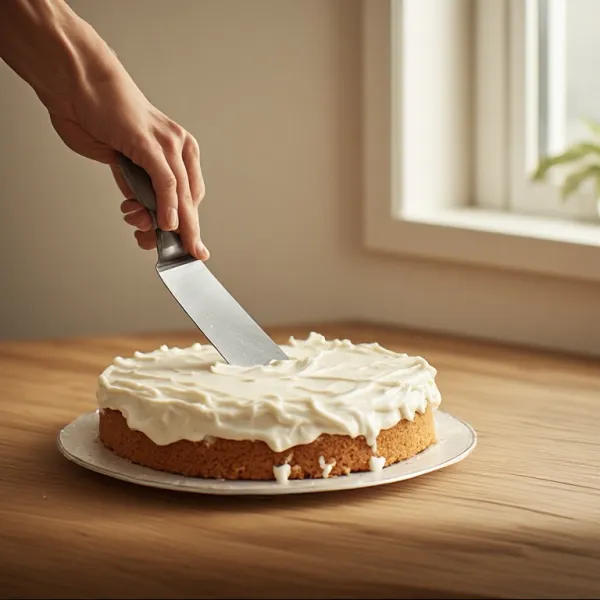
Using an offset spatula, spread the full package of room-temperature Boursin Garlic & Fine Herbs evenly over the pastry, leaving a ½-inch bare border along the far long edge. Scatter the cooled onions evenly over the Boursin, then scatter the crumbled bacon.
Starting at the near long edge, roll the pastry toward the far edge in a tight, even cylinder. Apply light, steady tension as you roll — you’re compressing the layers, not stretching them. When you reach the bare border, press it firmly against the log to seal. Wrap tightly in plastic wrap and refrigerate for at least 20 minutes.
Preheat the oven to 375°F. Line a rimmed baking sheet with parchment.
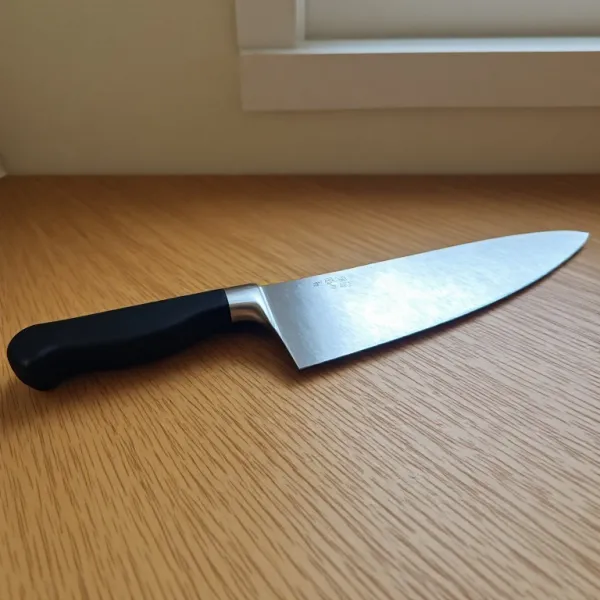
Unwrap the chilled log and cut it into ½-inch rounds using a sharp serrated knife with a gentle sawing motion — no pressing. Place on the prepared sheet about 1 inch apart. Brush each one with beaten egg wash and scatter a few flakes of sea salt on top.
Bake 18 to 22 minutes until puffed, deeply golden, and bubbling at the edges. Cool on the pan for 5 minutes before serving — the filling is extremely hot.
The Vegetarian Version
Omit the bacon entirely and either double the caramelized onions, or replace the bacon with sautéed cremini mushrooms cooked down until dry and concentrated (add a teaspoon of balsamic vinegar at the end for depth). The mushroom version works particularly well with Boursin Shallot & Chive instead of Garlic & Fine Herbs.
The rule for any substitution: the filling must be dry. Wet fillings create steam inside the log during baking, which separates the pastry layers and produces soggy bottoms.
Make-Ahead Options
Up to 24 hours ahead: Roll the log, wrap in plastic, refrigerate. Slice and bake day-of.
Up to 3 months ahead: Slice the cold log into rounds, freeze on a parchment-lined tray until solid, transfer to a zip-lock bag. Bake directly from frozen at 375°F for 22–26 minutes — no thaw needed and the results are identical to fresh.
The freezer method is the one that makes these a genuinely useful thing to have on hand. A dinner party with 25 minutes’ notice, a holiday gathering where the first course needs work — a cold tray of frozen pinwheels in the oven solves it.