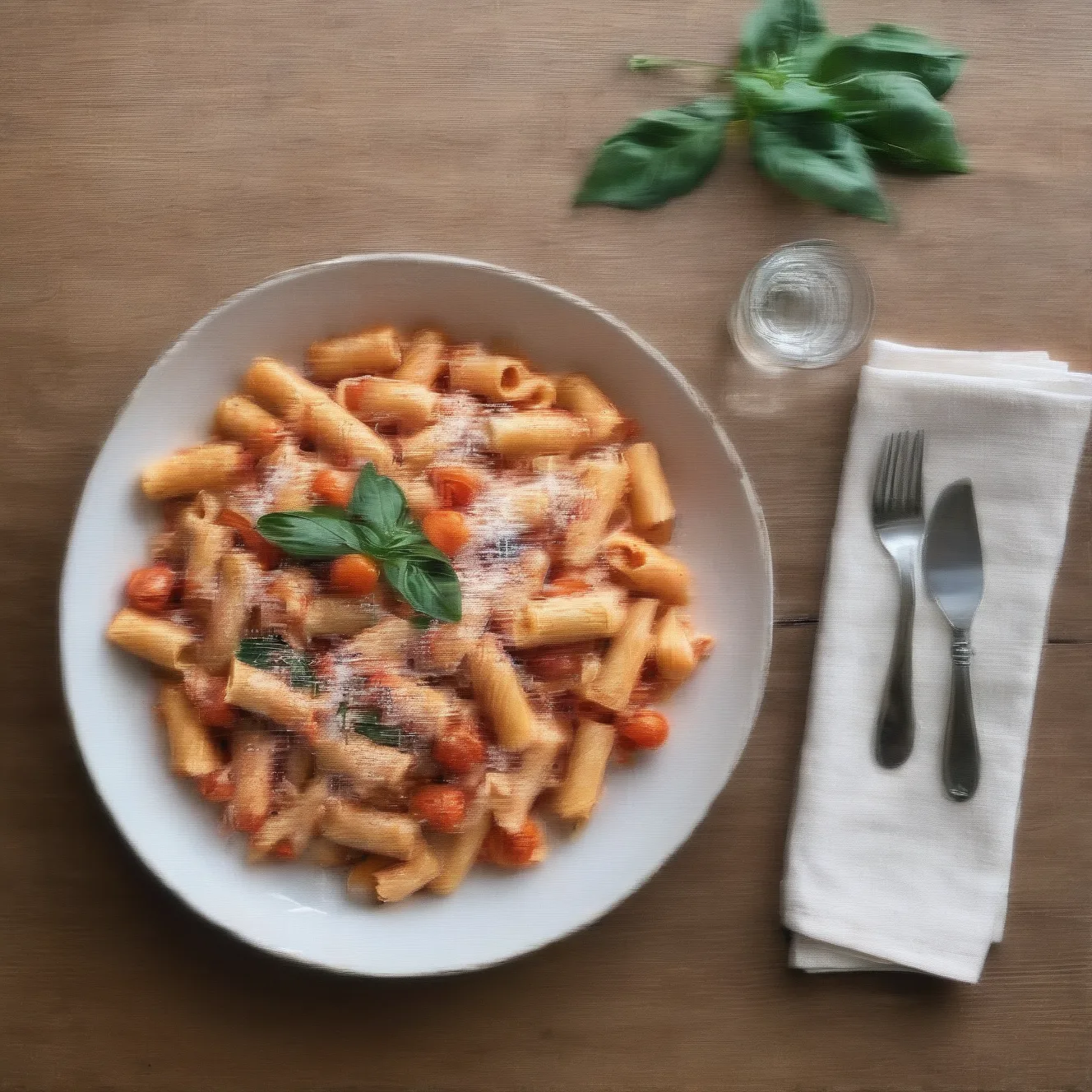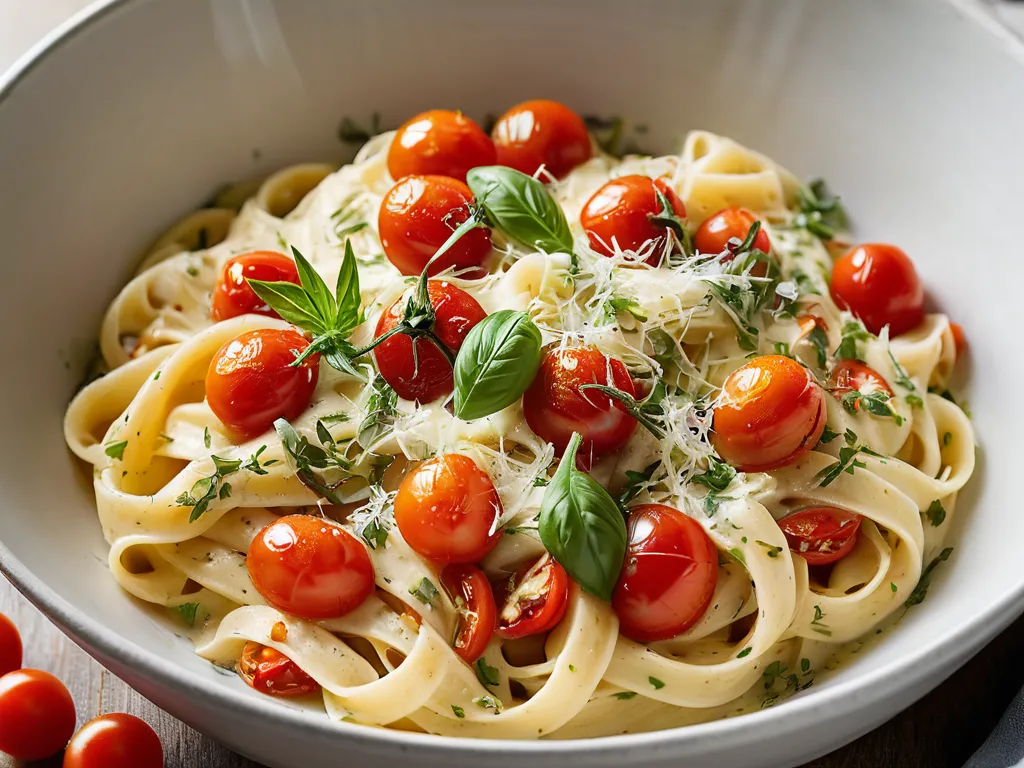
Baked feta pasta went viral on TikTok in early 2021 — popular enough to clear feta off grocery shelves and trigger reported shortages. Then food creators started asking: what else works with this technique? A block of cheese, cherry tomatoes, olive oil, a 400°F oven, done.
Boursin turned out to be the best answer. Food creator MacKenzie Smith (@grilledcheesesocial) is the name most tied to the original craze — her January 2021 baked feta pasta video drew nearly 3 million views and helped make baked feta the single most-Googled recipe of that year. As the technique spread, creators began swapping the feta for other cheeses, and Boursin emerged as the standout (Smith herself later published a baked Boursin version). When you roast the Garlic & Fine Herbs wheel alongside burst cherry tomatoes, it doesn’t just melt — it dissolves into a sauce that already tastes finished, because the parsley, chives, and garlic are built into the cheese. The result is smoother and more elegant than baked feta pasta, and considerably less hands-on: no mashing required, just a stir.
TL;DR:
- Place a 5.2 oz Boursin wheel (Garlic & Fine Herbs) in a baking dish surrounded by 2 pints cherry tomatoes and 4 whole unpeeled garlic cloves; drizzle with olive oil
- Roast at 400°F for 30–35 minutes until tomatoes burst and Boursin is fully melted
- Before draining your pasta, reserve ½ cup pasta water — this step is non-negotiable for a silky sauce
- Smash everything into a sauce, toss with 12 oz of cooked pasta, loosen with pasta water to coat
- 40 minutes total, 4 servings, ~$3–4 per serving at home vs. $18–26 at an Italian bistro
- The key difference from baked feta: Boursin’s 39g-per-100g fat content means it melts into sauce without mashing — just stir
What Is Boursin Cheese?
Boursin is a soft, triple-cream cheese from Normandy, France. François Boursin, a cheesemaker in the Normandy town of Croisy-sur-Eure, founded his creamery there in 1957 and spent years perfecting a fresh Gournay-style cheese; he launched the now-iconic Garlic & Fine Herbs flavor in 1963 — the story goes that a newspaper mistakenly reported a garlic Boursin already existed, and public demand pushed him to actually create it. “Triple-cream” (triple-crème) is a designation in French cheesemaking for a cheese enriched with extra cream to a butterfat content of at least 75% of its dry matter — which works out to roughly 39 grams of fat per 100 grams of cheese as sold. That high fat content is exactly why Boursin melts so well: it has the richness of cream cheese but with more fat and less protein structure holding it firm, so it becomes a flowing, glossy sauce in the oven rather than the gummy, seized texture you’d get from lower-fat cheeses.
The seasoning in Garlic & Fine Herbs is short and specific: dried garlic, parsley, dried chives, white pepper, and salt — that’s the entire flavoring beyond the cultured milk and cream. The cheese is mild, herby, and rich, closer to a heavily seasoned cream cheese than to anything sharp or funky.
Boursin is sold in 5.2 oz wheels in the specialty cheese section of most US grocery stores, typically priced at $5–8 depending on retailer.
Boursin Pasta vs. Baked Feta Pasta: The Key Differences
Both recipes share the same structure — cheese in the center, cherry tomatoes around it, olive oil, hot oven — but the cheese changes everything.
| Boursin Pasta | Baked Feta Pasta | |
|---|---|---|
| Cheese type | Triple-cream soft cheese | Firm brined sheep’s/goat’s milk cheese |
| Fat content | ~39g fat per 100g (triple-cream, ~75% butterfat in dry matter) | ~21g fat per 100g (~45% in dry matter) |
| In-oven behavior | Melts by itself into a flowing sauce | Holds shape; must be actively mashed |
| Flavor | Mild, herby, garlicky, rich | Sharp, salty, tangy, bright |
| Built-in seasoning | Yes — garlic and herbs already in cheese | No — needs garlic, fresh herbs added separately |
| Sauce texture | Silky, creamy, coating | Slightly chunkier, more rustic |
| Price per oz | Higher (~$1.00–1.50/oz) | Lower (~$0.40–0.70/oz) |
| Best for | Weeknight dinner, elegant presentation | Weeknight dinner, brighter/bolder flavor |
Neither version is better — they’re different dishes. Feta pasta is sharper and more intensely savory; Boursin pasta is richer and more aromatic. The Boursin version has a slight edge in convenience because you don’t need to provide any garlic or herbs separately.
Which Boursin Variety to Use
The standard choice is Garlic & Fine Herbs — the original flavor, written for this recipe, and the most widely stocked. The garlic and herb profile works naturally with roasted cherry tomatoes.
Shallot & Chive is an excellent alternative. It’s milder and more delicately oniony, which lets the sweetness of the roasted tomatoes come forward more than the garlic variety does.
Pepper (coated in cracked black pepper) adds heat throughout the sauce. Use it if you want to skip the red pepper flakes — the pepper flavor distributes more evenly from inside the cheese than from flakes added on top.
Caramelized Onion & Herbs is worth trying with mushrooms added to the baking dish — the sweet onion depth and the earthy mushroom are natural partners.
Lemon & Dill produces a brighter, more Scandinavian-leaning sauce that pairs particularly well with shrimp or salmon stirred in at the toss stage.
Basil & Chive produces a more summery, herb-forward sauce. Good in August when tomatoes are at their peak.
Rosemary & Black Garlic is a stronger, more savory option — the black garlic is fermented and deeply umami rather than sharp, which works well if you want the garlic presence to be the dominant note.
Avoid Fig & Balsamic for pasta — the sweetness clashes with the savory direction of roasted tomatoes and cooked pasta. The Hot Honey & Roasted Garlic variety has a similar issue: its sweetness is built for a cheese board, not a tomato pasta sauce.
One 5.2 oz wheel is the right amount for 12 oz of pasta regardless of which variety you use.
Four Mistakes That Ruin the Sauce
1. Crowding the tomatoes. Cherry tomatoes need a single layer spread around the Boursin wheel, not a pile. When tomatoes are stacked or crammed together, they steam from each other’s moisture instead of roasting in dry heat. The result is diluted, watery tomatoes that produce a thin sauce. Give them room — a 9×13 or similar large dish is the right size for 2 pints.
2. Cold Boursin straight from the fridge. Boursin taken directly from refrigerator temperature takes significantly longer to melt and can develop slightly seized edges before the center flows. Set the wheel on the counter for 15 minutes before roasting — room-temperature fat melts more evenly and the sauce comes together cleaner.
3. Forgetting to reserve pasta water. You must scoop out ½ cup of pasta water before draining. It is not a nice-to-have — it is what makes the Boursin sauce silky rather than gluey. The starch that leaches off the pasta during cooking acts as an emulsifier, binding the fat (Boursin) and liquid (tomato juice) into a cohesive sauce. Without it, the sauce either clumps or separates. Set a measuring cup next to the stove before you start the pasta so you don’t forget at the critical moment.
4. Minced garlic in the dish. Raw minced garlic burns at 400°F — it will taste bitter and acrid by the time the tomatoes are done at minute 30. Whole, unpeeled cloves steam-roast in their skins, turning sweet and jammy. Squeezing the golden paste directly into the sauce at the end adds roasted garlic depth that no amount of raw garlic replicates.
The Roasting Science at 400°F
What’s happening in the oven is why this dish works the way it does.
Cherry tomatoes at 400°F: The high heat drives off surface moisture quickly, concentrating the tomatoes’ natural sugars and acids rather than diluting them the way a lower temperature would. By 25–30 minutes, the skins are splitting and the flesh is collapsing, releasing the thickened, intensely flavored juice. This is Maillard reaction territory at the contact points with the hot dish — the slight brown at the bottom of each tomato is caramelized sugar and concentrated flavor.
Boursin at 400°F: Boursin contains approximately 39 grams of fat per 100 grams — nearly twice the fat of feta — which is why it behaves so differently in the oven. There’s minimal protein structure fighting the heat; the cheese begins flowing smoothly well below the temperature where lower-fat cheeses would seize or separate. By 20 minutes, the Boursin is starting to melt; by 35 minutes, it’s fully collapsed and pooling, its fat emulsified with the tomato juice and olive oil into a cohesive sauce. The dried herbs soften and bloom, deepening their flavor into the surrounding sauce.
The whole garlic cloves: The unpeeled cloves are doing something different — steam-roasting in their skins. Raw garlic is sharp and pungent; roasted garlic at 400°F for 30+ minutes transforms into something sweet, mellow, and jammy. Squeezing the softened golden paste from the papery skin directly into the sauce adds a garlic depth that no amount of raw minced garlic replicates.
Which Pasta Shape to Use
Not all pasta shapes work equally well with a creamy, relatively light sauce. The goal is maximum contact between sauce and pasta.
| Shape | How it holds sauce | Best for |
|---|---|---|
| Rigatoni | Wide ridged tube — large interior traps sauce; ridged exterior grips it | Best overall for this chunky, creamy sauce |
| Penne rigate | Ridged exterior + hollow tube — the most widely available choice | Reliable; use ridged penne (rigate), not smooth |
| Fusilli | Tight spiral coils catch and grip creamy sauces well | Great if you want maximum sauce contact on every bite |
| Gemelli | Two twists — similar surface area to fusilli, great cling | Excellent but less common in stores |
| Spaghetti / linguine | Long strands coat but don’t trap sauce | Works, but loses sauce faster; better with thinner sauces |
The Boursin sauce is creamy but not thick — it needs a pasta with some surface area or geometry to cling to. Smooth long pasta like spaghetti will drop most of the sauce to the bottom of the bowl by the second bite. Any short ridged pasta is the safer choice.
Variations Worth Making
The base recipe is five ingredients. These additions turn it into something different without complicating the technique.
Protein additions: Stir in sliced grilled chicken, Italian sausage coins cooked before the bake, or large peeled shrimp added directly to the baking dish for the last 8–10 minutes of roasting. The shrimp version is particularly good — shrimp cook through in the oven at 400°F in about 8 minutes and absorb the Boursin-tomato sauce.
Vegetable additions: Halved zucchini, baby bell peppers, or handfuls of baby spinach (added when tossing with pasta — the heat wilts them instantly) all work. Avoid watery vegetables that would dilute the sauce — fresh corn kernels added at the toss stage add sweetness without adding moisture.
Lemon finish: A squeeze of lemon juice over the finished pasta brightens the richness immediately. The Boursin’s herby character reads as more vivid with acid. Don’t add it to the baking dish — add it after tossing, just before serving.
Caramelized onion layer: Spread 1 cup of thin-sliced onions in the bottom of the baking dish before adding the tomatoes. They’ll caramelize slowly over 30+ minutes, adding a sweet depth to the sauce. This adds 5 minutes of prep (slicing the onions) and no extra cook time.
Storage and Reheating
Boursin pasta is best eaten immediately — the sauce is most silky and flowing right out of the baking dish. The high fat content of Boursin means the sauce firms up significantly in the fridge, and even after reheating it tends to be slightly thicker and denser than when freshly made.
Leftovers keep for up to 4 days in an airtight container in the fridge. Reheat in the microwave at 70% power in 60-second intervals with a splash of water (2–3 tablespoons per serving) stirred in before heating, or on the stovetop over medium-low with a splash of water in a covered pan. The flavor stays excellent; it’s primarily the original flowing texture that changes.
The dish does not freeze well — the sauce breaks on thawing.
Cost at Home vs. Restaurant
| Home (batch for 4) | Per serving | |
|---|---|---|
| Boursin wheel (5.2 oz) | $5–8 | — |
| Cherry tomatoes (2 pints) | $4–6 | — |
| Pasta (12 oz) | $2 | — |
| Olive oil, garlic, herbs | ~$1 | — |
| Total | ~$12–17 | ~$3–4 |
| Italian bistro equivalent | — | $18–26 |
A restaurant serving a baked Boursin pasta or comparable creamy-cheese pasta typically prices it between $18 and $26. At home, the only specialty cost is the Boursin wheel ($5–8 depending on retailer and region). Everything else is pantry staples and produce. For a dish that looks and tastes restaurant-quality, the cost-to-impression ratio is hard to beat.
Other Baked Cheese Pasta Recipes
If you like the Boursin technique, baked feta pasta is the original version that started the trend — worth making to understand the flavor difference firsthand. For pasta dishes with a different kind of creaminess, viral TikTok butter pasta is a five-ingredient dish with a completely different flavor register, and viral TikTok creamy lemon pasta adds brightness that balances richness the way lemon does here. For another baked pasta technique that transforms a key ingredient through long, patient heat, French onion soup pasta uses 40–50 minutes of caramelizing onions to build the same kind of deep, concentrated flavor the Boursin technique produces with tomatoes. For a stovetop version with the same one-pan minimalism but no oven at all, crispy pan-fried gnocchi uses the same burst-tomato technique in a single skillet and is done in 20 minutes.