
Why Ghost Meringues Go Viral Every Halloween
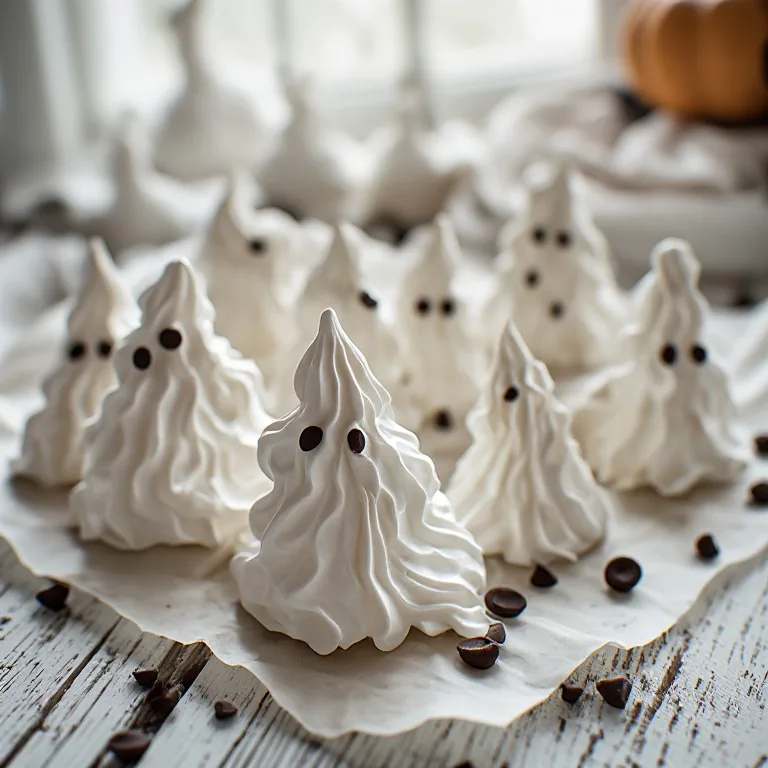
Ghost meringue cookies are a TikTok perennial — they come back every September and rack up millions of views because the concept hits the platform’s sweet spot perfectly: the gap between how hard they look and how easy they actually are. A pristine tray of white meringue ghosts with tiny eyes looks like it took hours. It didn’t. Egg whites, sugar, a piping bag, and a lot of oven time.
The recipe itself is older than TikTok — meringue ghosts have appeared in Halloween cookbooks since the 1990s — but the platform revived it because the reveal shot is irresistible. The technique of the long bake in a turned-off oven (the step that keeps them from cracking) is exactly the kind of counterintuitive tip that performs on food-focused accounts.
Understanding Meringue
Meringue is foam. You’re trapping air bubbles inside a network of unfolded egg proteins, then stabilizing that foam with sugar and gently evaporating the water so the proteins set. The rules follow from that:
Temperature matters. Room-temperature egg whites whip faster and to more volume than cold whites — cold protein strands are stiffer and less willing to unfold. Separate your eggs while they’re cold (yolk separates cleanly from cold eggs) but let the whites come to room temperature before beating.
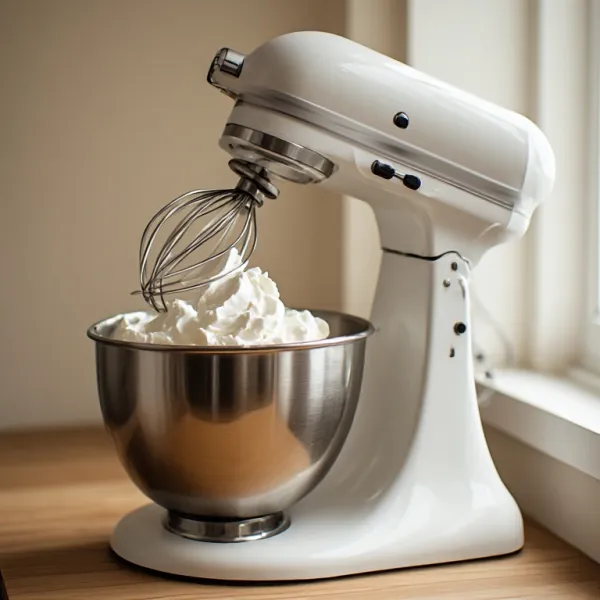
Fat is fatal. A single drop of egg yolk or any grease on your bowl or beaters will prevent the foam from forming. Fat molecules disrupt the protein network before it can stabilize. This is why you wipe the bowl with vinegar — acid removes fat residue completely.
Sugar dissolves gradually. Adding sugar all at once weighs down the unstabilized foam and can cause it to collapse. Added tablespoon by tablespoon after soft peaks form, the sugar integrates into the protein network and actually reinforces it, creating the thick, glossy meringue that holds its shape through piping and baking.
Cream of tartar is insurance. It’s a mild acid that slightly lowers the pH of the egg whites, making the protein network tighter and more stable. It’s the reason French and Italian meringues (which add hot syrup instead) don’t need it — the heat does the same job. For Swiss or plain French meringue (this recipe), cream of tartar is cheap insurance against collapse.
Piping Ghost Shapes
The key is continuity of pressure — you get one shot at each ghost.
Start the piping tip about 1/2 inch above the parchment, hold it still, and squeeze firmly to anchor the base. As the base spreads to about 2 inches, slowly lift the bag while maintaining steady pressure. The meringue naturally “stacks” — each new meringue sits on top of the last. When you’re about 3 inches up, you want a smooth taper to the wisp. Do this by gradually releasing pressure over about 1/2 inch while still moving the bag upward, ending in a smooth pull-away.
Variations in personality come from the eyes. Pressing two chips in at slightly different heights, or one pointing slightly up and one level, gives each ghost a different expression. A tray of 30 ghosts with slight personality variations looks more charming than 30 identical faces.
The Bake and the Critical Cooling
The 200°F bake is not decorative — it’s barely above the temperature needed to evaporate the water from the meringue without browning the surface. At 225°F, the surface firms too fast and cracks as steam tries to escape from inside. At 200°F, water evaporates slowly and evenly, leaving a papery shell over a dissolving interior.
The cooling in the oven works because you’re letting the meringues slowly equilibrate to room temperature rather than shocking them with a 70°F temperature drop. The shell is still slightly flexible when the oven is first turned off — it firms completely only as it cools. Pulling them early is the number-one cause of the cracks and sunken ghosts you see in failed attempts.
Serving and Storage
Ghost meringues last up to 2 weeks in an airtight container — making them the single best Halloween treat to bake in advance. A batch of 30 fits easily into a standard storage container or large zip-lock bag.
For a Halloween dessert table, stand the taller ghosts toward the back of the tray and shorter ones at the front (you’ll get size variation naturally from piping). A light scatter of black sprinkles around the base makes the tray look deliberately styled. They pair beautifully with hot chocolate or mulled cider, and children love them partly because each ghost looks slightly different from the next.
Troubleshooting at a Glance
| Problem | Cause | Fix |
|---|---|---|
| Won’t reach stiff peaks | Fat in bowl or yolk trace | Rewipe bowl with vinegar; re-separate eggs |
| Cracks during bake | Oven too hot or door opened | Use oven thermometer; don’t check until time is up |
| Deflates after baking | Pulled from warm oven | Leave in closed oven at least 60 min after turning off |
| Sticky surface after storage | Humidity | Store in airtight container with silica pack |
| Flat ghosts | Meringue overbeaten (dry) | Stop at thick, glossy stiff peaks; dry-looking = overbeaten |