


Viral TikTok Hasselback Chicken — The Stuffed Breast That Actually Stays Juicy
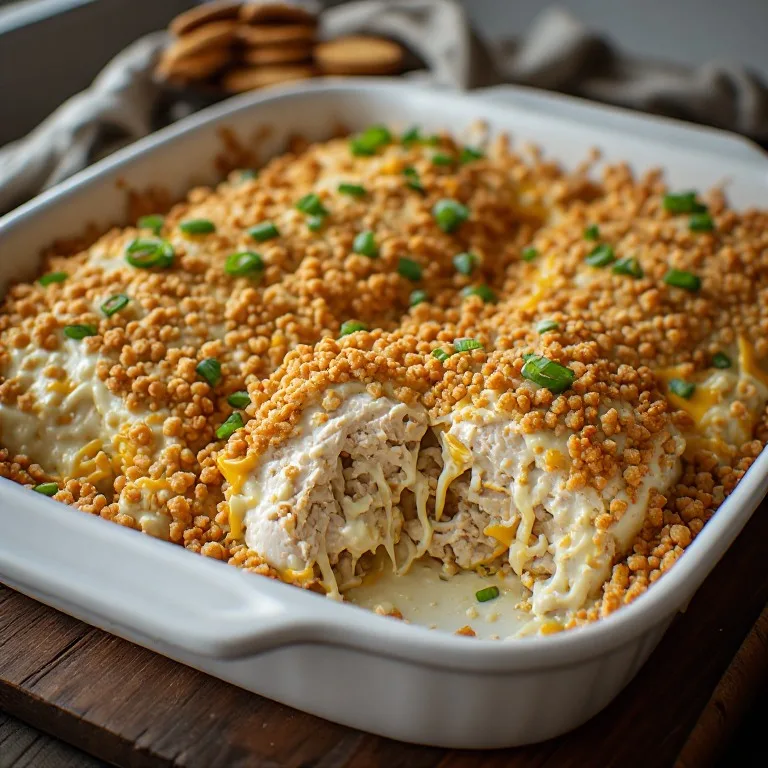
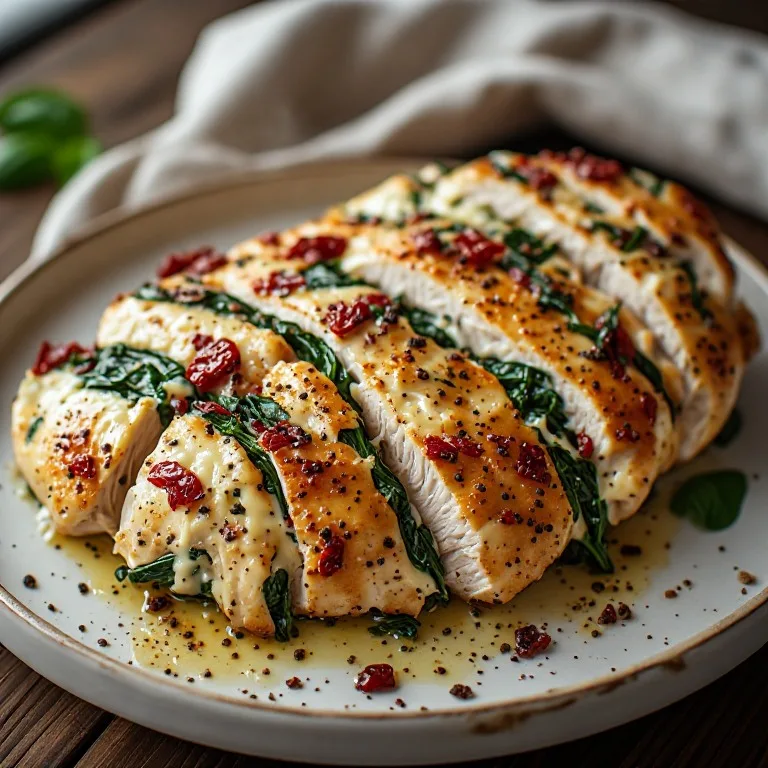
Hasselback chicken borrows a trick from the Swedish hasselback potato: you cut a row of deep, evenly spaced slits across the top of the meat without slicing all the way through, then pack every slit with filling. On chicken breast the effect is dramatic — a plain, flat cut of white meat turns into an accordion of golden, cheese-stuffed pockets, and the filling bastes the meat from the inside so it stays juicy where a bare breast would dry out. That visual payoff, the melting cheese pulling apart between each slit, is exactly why it took off on FoodTok.
Why This Version Stays Juicy
A boneless, skinless chicken breast has almost no fat and a narrow window between done and dry — the difference between 160°F and 175°F is only a few minutes in the oven. The filling is what buys you margin. Cream cheese and mozzarella melt into the slits and coat the interior surfaces of the meat, insulating them and adding moisture right where a breast normally overcooks first. The slits also shorten the distance heat has to travel to the center, so the breast cooks more evenly than a solid one. You still need a thermometer — the filling insulates the interior enough that the surface reads done before the center catches up — but the built-in basting is why this cut of meat, notorious for drying out, comes out tender here.
The Scoring Is the Whole Technique
Everything rides on the slits. Cut too shallow and the filling has nowhere to sit, so it slides off the top and burns on the pan instead of staying in the meat. Cut all the way through and the breast butterflies open and the pockets collapse. The target is two-thirds of the way down — deep enough to hold a real spoonful, shallow enough that the bottom third holds the breast together as one piece.
The chopstick trick makes this close to foolproof: lay a wooden chopstick (or the spine of a butter knife) flat along each long side of the breast, and your knife blade stops when it hits them, giving you a consistent depth on every slit. It’s the same guide method used for hasselback potatoes. Space the slits about ¾ inch apart — closer than that and the walls between them are too thin to hold up; wider and you get fewer, sloppier pockets.
Room-Temperature Cream Cheese, Not Cold
Cold cream cheese is the other silent killer. Straight from the fridge it’s stiff and breaks into clumps instead of blending into a smooth paste, so it tears out of the slits during baking rather than melting into them. Pull it out at least 30 minutes ahead. Softened, it mixes cleanly with the spinach and mozzarella into a spreadable filling you can press deep into each slit. Full-fat gives the richest result; Neufchâtel (⅓-less-fat) works with a barely noticeable texture change if you want to lighten it.
Make Ahead and Storage
You can score and stuff the breasts up to 24 hours ahead — wrap tightly and refrigerate, then add 5–7 minutes to the bake time since they go in cold, and hold the oil drizzle until just before baking. Leftovers keep 3–4 days in an airtight container. Reheat in a 325°F oven, covered loosely with foil, until warmed through; the microwave works in a pinch but toughens the meat and makes the filling weep. This is a strong meal-prep dish precisely because the filling keeps the reheated breast from drying out.
What to Serve With It
The filling is rich, so lean the sides bright or starchy. Roasted cherry tomatoes (olive oil, salt, 400°F, 15 minutes — they can share the oven) soak up the cheese that drips onto the plate. Garlic mashed potatoes or crusty bread give you something to catch the melted filling. An arugula salad with a sharp lemon vinaigrette cuts the richness. Skip heavy cream-based sides; the chicken already carries the meal.