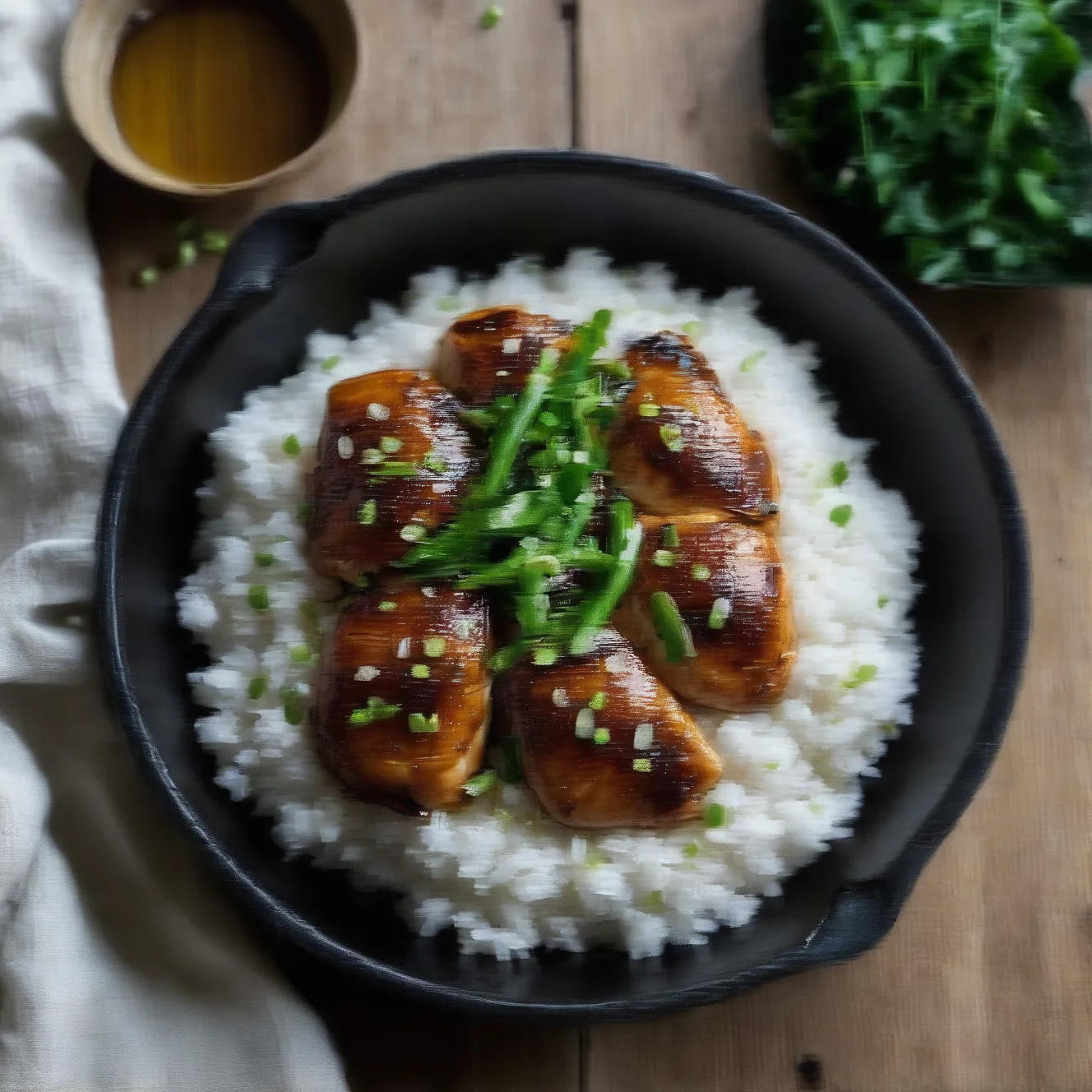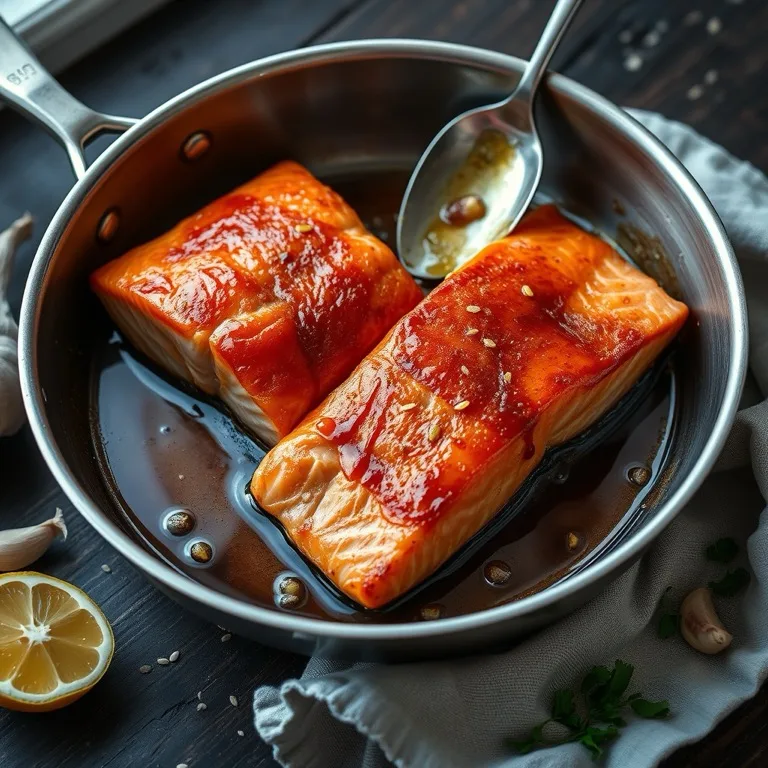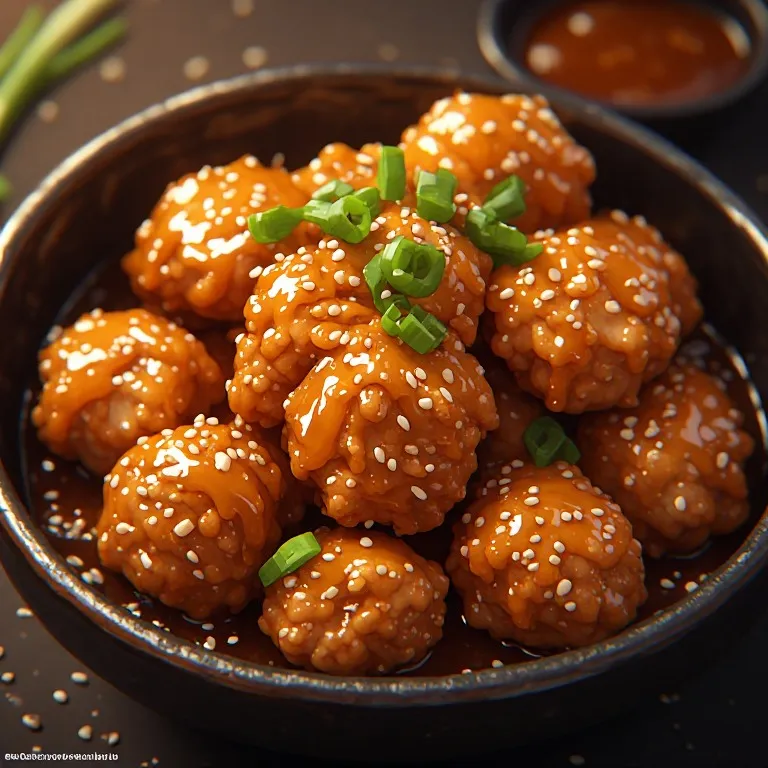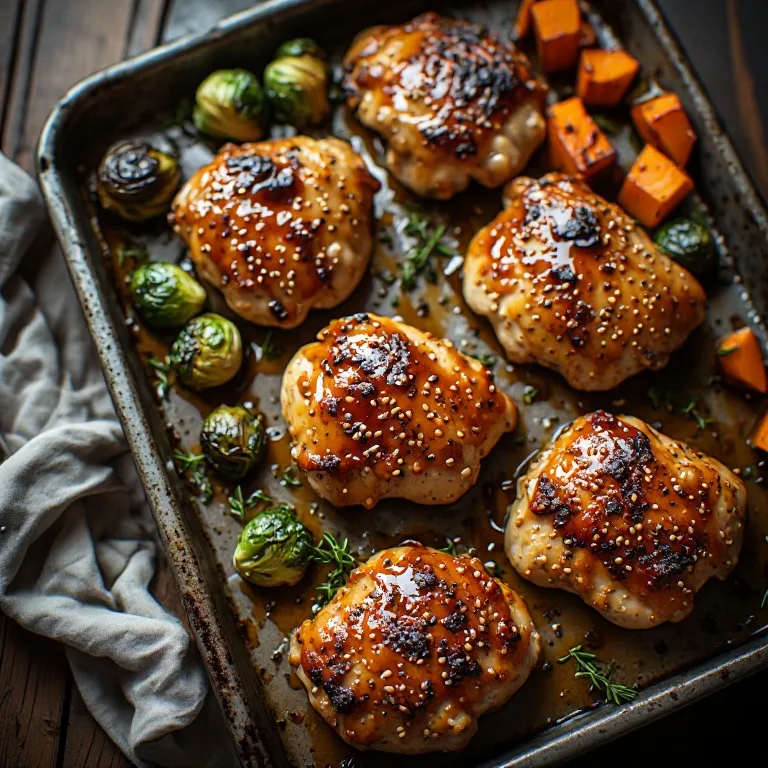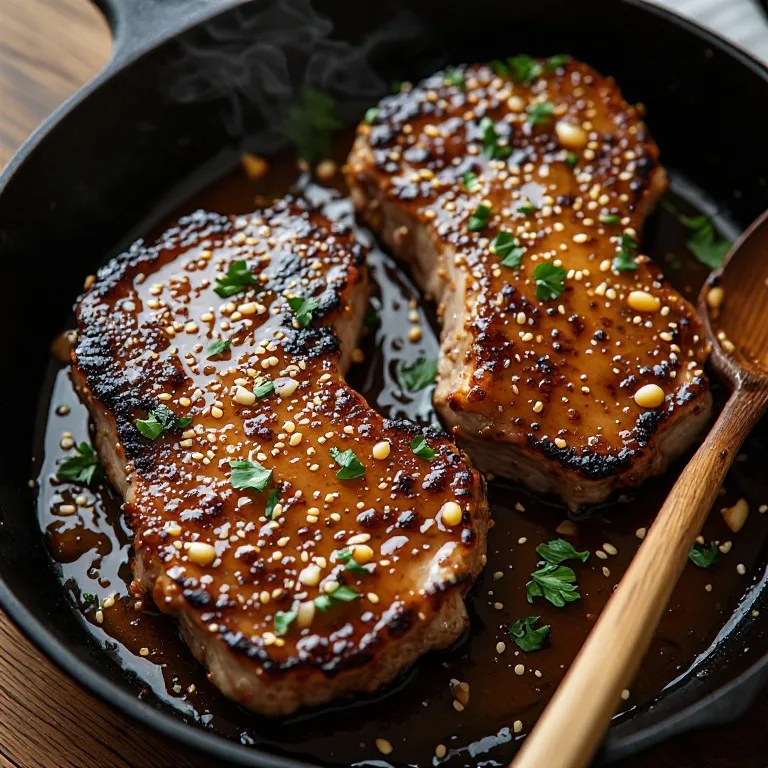



Bone-in pork chops seared until the crust is genuinely golden, then finished in a sticky honey garlic glaze that reduces into a dark, glossy lacquer. This is how the TikTok chop actually works.
What Makes This Different from Regular Pan-Fried Pork Chops
Most pan-fried pork chop recipes stop at the sear. This one uses the sear as stage one and builds an entirely separate sauce in the same pan — using the fond from the pork, butter, and fresh garlic — then returns the chops to finish in the sauce. The basting step is what creates the glaze: as you spoon the sauce repeatedly over the chops in the final few minutes, it cools slightly each time, thickens as it hits the warm surface, and builds up in layers that you can’t achieve by just pouring sauce on at the end.
The Dry Pork Chop Problem (and What Fixes It)
Pork chops have a reputation for being dry. The reason isn’t the meat — it’s how long most home cooks leave them on the heat. The USDA updated the safe internal temperature for pork from 160°F to 145°F in 2011, but many people still cook pork to the old (and overcooking) standard. At 145°F with a 3-minute rest, pork is pale pink at the center, fully safe, and noticeably juicier than pork cooked to 160°F.
The second dry-chop cause is skipping the pat dry before searing. Surface moisture on a pork chop creates steam in the pan, which lowers the pan temperature dramatically and delays browning. A chop that steams for 2 minutes before it can start browning has already been cooking its interior for those 2 minutes — by the time the exterior looks golden, the interior is overcooked. Pat the chops completely dry and the sear starts immediately.
Why the Sauce Turns Glossy
The sauce ingredients — honey, soy, vinegar, Dijon — are mixed at room temperature but change character entirely when they reduce in a hot pan. Honey caramelizes as it heats, creating bitter-sweet compounds that deepen the glaze’s color and flavor. Soy sauce concentrates and amplifies the savory base. The Dijon mustard acts as an emulsifier, keeping the butter and honey suspension stable instead of separating as it heats. The butter added in two stages — once with the garlic, once with the sauce — rounds out the sharpness of the soy and gives the glaze its shine.
The continuous basting in the final stage accelerates the reduction by exposing the sauce to air repeatedly. Each time you spoon sauce over the chops, a thin film reduces faster on the exposed meat surface than the sauce in the pan, building up the glaze coating.
Getting the Sear Right
Medium-high, not high. A properly hot pan over medium-high produces a deep golden crust in 3–4 minutes. High heat can burn the seasoning before the crust develops, especially with garlic powder in the rub, which browns faster than plain salt.
Don’t crowd. If you’re cooking 4 chops and they can’t fit in a single layer without touching, cook them in two batches. Crowding traps steam between the chops and prevents browning on the sides.
Press and leave it. For the first 15 seconds, press each chop gently against the pan surface to ensure full contact. Then don’t touch it. Moving the chop breaks the forming crust and the chop will tear. If it resists lifting at 3 minutes, it needs another 30–60 seconds.
Variations
Gochujang honey garlic pork chops: Add 1 tablespoon of gochujang paste to the sauce alongside the honey. It adds heat, depth, and a slight funk that makes the glaze more complex. The color shifts from amber to a deeper reddish-brown.
Herb-butter honey garlic chops: After the chops rest, top each one with a small piece of compound butter made from softened butter, fresh thyme, and a pinch of rosemary. The butter melts over the hot glaze and adds a fragrant, grassy richness.
Pineapple honey garlic chops: Replace the apple cider vinegar with 2 tablespoons of pineapple juice and add ½ cup of fresh pineapple chunks to the pan when you return the chops for basting. The pineapple caramelizes in the glaze and adds a tropical sweetness that balances the soy.