

Pin It

Viral TikTok Maple Dijon Chicken (Sheet Pan, 40 Minutes)

Viral TikTok Maple Dijon Chicken (Sheet Pan, 40 Minutes)
Jump to Recipe
Prep 10 min Cook 40 min Serves 4
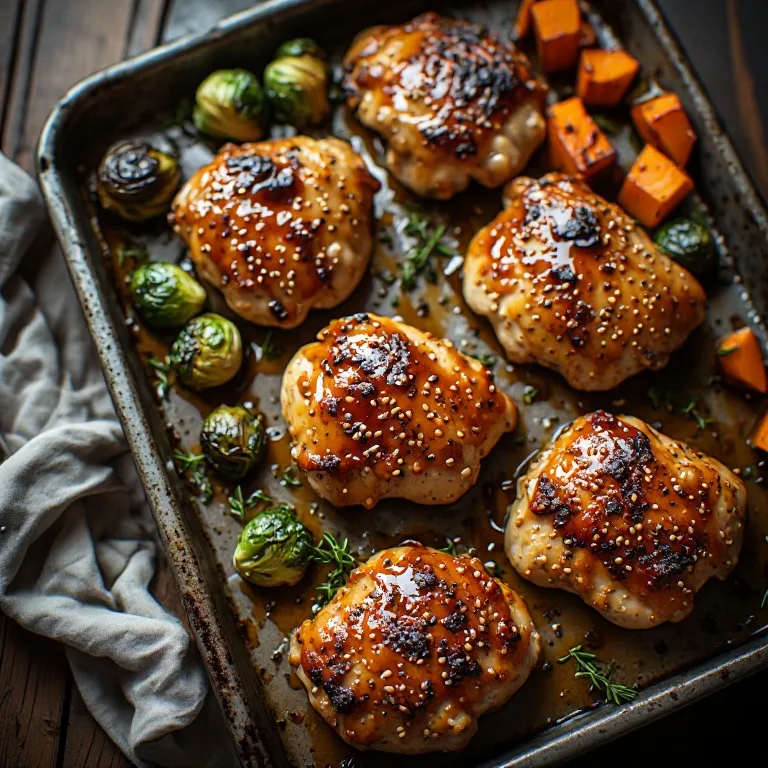
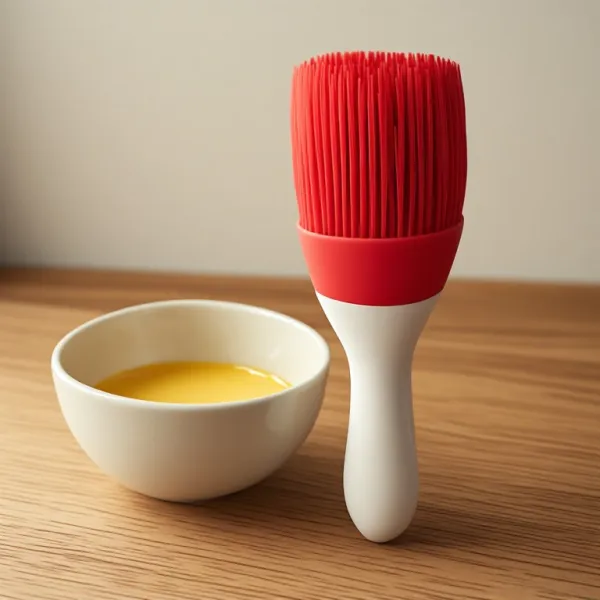
Quick answer: Pat 4 bone-in, skin-on chicken thighs dry and season generously with salt, pepper, and smoked paprika. Toss 1 pound of halved Brussels sprouts and 1 medium sweet potato cut into ¾-inch cubes with 2 tablespoons of olive oil, a pinch of salt, and a pinch of pepper, then spread them on a large rimmed baking sheet. Nestle the thighs skin-side UP among the vegetables. Roast at 400°F for 20 minutes — the chicken is not glazed yet. While it roasts, whisk together the glaze in a small bowl: ¼ cup pure maple syrup, 2 tablespoons Dijon mustard, 1 tablespoon whole-grain mustard, 1½ tablespoons soy sauce, 3 minced garlic cloves, 1 teaspoon fresh thyme leaves, ½ teaspoon smoked paprika, and a pinch of black pepper. After the 20 minutes, pull the pan and brush every thigh generously with the glaze — use it all. Return to the 400°F oven for 15 to 18 more minutes until the chicken reads 165°F internally and the glaze has darkened to amber and looks sticky. Switch the oven to broil on HIGH and cook 3 to 4 minutes, watching closely — the maple sugars are concentrated now and go from glossy-caramelized to burnt in about 60 seconds. Rest the chicken 5 minutes. Spoon any glaze that dripped onto the sweet potatoes and Brussels over everything when you serve.

Shop the tools

Gear matched to this recipe. These are Amazon affiliate links — we may earn a small commission if you buy, at no extra cost to you.

As an Amazon Associate, Copycat Spices earns from qualifying purchases. Product images are generic illustrations, not the exact item listed.

Viral TikTok Maple Dijon Chicken (Sheet Pan, 40 Minutes)

The fall TikTok maple dijon chicken everyone's making: bone-in thighs roasted on a sheet pan with Brussels sprouts and sweet potato, then glazed with pure maple syrup, two mustards, and soy sauce in the last 15 minutes. The broil finish is what makes it.

Easy Prep: 10 min Cook: 40 min Total: 50 min4 servings ~$4.50/serving
Prep10 min
Cook40 min
Total50 min
Servings
4
At home~$4.50/serving
vs
Restaurant~$20.25/serving
You save ~78%

The Story Behind the Recipe

The fall TikTok maple dijon chicken everyone's making: bone-in thighs roasted on a sheet pan with Brussels sprouts and sweet potato, then glazed with pure maple syrup, two mustards, and soy sauce in the last 15 minutes. The broil finish is what makes it.

Nutrition Facts

Per serving (4 servings)
Calories390
Total Fat18g
Total Carbs28g
Dietary Fiber5g
Sugars14g
Protein29g
Sodium610mg

* Estimated values based on standard recipe preparation. Actual values may vary.

Ingredients

  • Chicken and vegetables
  • Maple Dijon glaze

Instructions

💡
Pro tip: This recipe tastes even better the next day. The flavors need time to meld together in the fridge.
❄️
Storage: Keeps in an airtight container in the fridge for up to 2 weeks. Freezer-friendly for up to 3 months.
🎃 Free Halloween cookbook — download now The Copycat Halloween Cookbook A ready-made, photo-illustrated PDF of our best halloween copycat recipes — free to download, no building required. Pay what you want to support if you love it.

Free PDF — instant download. We'll also send new seasonal copycat recipes now and then; unsubscribe anytime. Or just download it →

There are dozens of fall chicken recipes. Most of them are either a marinade you plan ahead for, or a cream sauce that takes more than 40 minutes to pull off on a weeknight. This is neither. The whole thing — one pan, four ingredients in the glaze, no searing — is done in about 40 minutes, and the broil finish at the end gives it the lacquered, caramelized-amber look that makes it look like something from a restaurant.

The formula spread across TikTok because it’s genuinely easy and the payoff is disproportionately good for the effort.

The one rule: glaze goes on at 20 minutes, not minute zero

The most common version of this recipe that doesn’t work is the one where someone coats the chicken in maple dijon before it goes in the oven at a high temperature.

Maple syrup’s sugars — fructose and glucose — caramelize at relatively low temperatures (around 230°F to 250°F for fructose, slightly higher for glucose) and burn past that. At 400°F with no pre-cooking, the sugars on the skin surface will go from golden to dark to scorched well before the bone-in chicken thighs reach 165°F internally. You end up with bitter-black skin and a chemical-sweet burnt flavor that gets worse the longer you cook it.

The 20-minute pre-roast solves this in two ways. First, it dries the skin’s surface moisture so the glaze has something textured and sticky to adhere to rather than sliding off wet skin. Second, it starts cooking the chicken through — the final glazed period only needs 15 to 18 more minutes, which is just long enough for the sugars to caramelize to amber without running on into the burn zone.

The broil at the end concentrates the final reduction into that lacquered finish. Watch it the entire time; it goes fast.

The soy sauce is not optional

The glaze is maple syrup plus two mustards plus soy sauce. The soy sauce often gets dismissed as an odd addition to what looks like it should be a simple sweet-savory combination, but it’s doing the most important structural work in the recipe: depth.

Maple syrup, even Grade A Dark, is primarily sweet. Dijon adds sharpness and emulsification but not much savoriness. Soy sauce contributes glutamates — the same umami compounds in miso, Parmesan, and anchovies — that give the glaze a rounded, savory dimension that prevents it from tasting like chicken in a dessert sauce. One and a half tablespoons dissolved in ¼ cup of maple syrup doesn’t taste like soy sauce on the finished dish. It tastes like a glaze with unusual depth, and the people who leave it out typically notice that something is missing without being able to identify what.

Tamari works as a direct swap if you need it gluten-free.

Two mustards, not one

The recipe calls for both classic Dijon and whole-grain mustard. They serve different purposes.

Classic Dijon contains lecithin compounds that act as emulsifiers — they bind the maple syrup, olive oil, and soy sauce into a cohesive glaze rather than a separated liquid that runs off the chicken. It also provides a clean, sharp, creamy heat. Whole-grain mustard has seeds that survive the oven roast intact and caramelize slightly around the edges under the broiler, giving the finished surface a speckled, textured look and small bursts of mustardy sharpness against the sweet maple. The combination produces a glaze that looks interesting (the seeds are visible against the amber) and that has complexity beyond straight sweetness.

If you only have Dijon: use 3 tablespoons Dijon total. The texture will be smoother and the look less distinctive, but the flavor is there. Don’t substitute yellow mustard — it has a different flavor profile and won’t emulsify the same way.

Grade A Dark maple syrup specifically

Not all maple syrup performs the same in this recipe. The USDA grades for pure maple syrup are based on color and flavor intensity: Grade A Golden (Delicate Taste) is the lightest and mildest, Grade A Amber (Rich Taste) is the middle, and Grade A Dark (Robust Taste) is the most intensely flavored and produces the deepest color when it caramelizes.

For cooking — especially in a high-heat glaze — Grade A Dark is the right choice. Its flavor compounds are concentrated enough to survive reduction and stand up to the soy sauce and mustard. Grade A Golden tastes faint against the other ingredients and fades further under the broiler. Grade A Amber works but the result is slightly flat compared to Dark.

The one substitution that categorically doesn’t work: pancake syrup. Corn syrup with artificial maple flavoring has none of the organic acids, vanillin, or tannin complexity that makes pure maple syrup caramelize distinctively. It reduces to a sticky, sweet, one-dimensional film. Use pure maple syrup.

Brussels sprouts and sweet potato: why they work together

The pairing isn’t arbitrary. Sweet potato’s natural sugars caramelize at these temperatures but the flesh stays dense enough not to go mushy over the 35-minute cook. Brussels sprouts have enough moisture to stay bright at 400°F but their cut surface — the flat side of each halved sprout — chars beautifully when any glaze drips onto it from the chicken above.

Crucially, both vegetables absorb rendered chicken fat during the roast. A pound of bone-in thighs releases several tablespoons of fat as the subcutaneous fat under the skin renders out. On a sheet pan, that fat runs down onto the vegetables below, essentially basting them throughout the cook. The Brussels sprouts that cook directly beneath a thigh come out more flavorful than the ones at the edge of the pan, and the sweet potato cubes that catch the maple glaze drips are the best pieces on the entire pan.

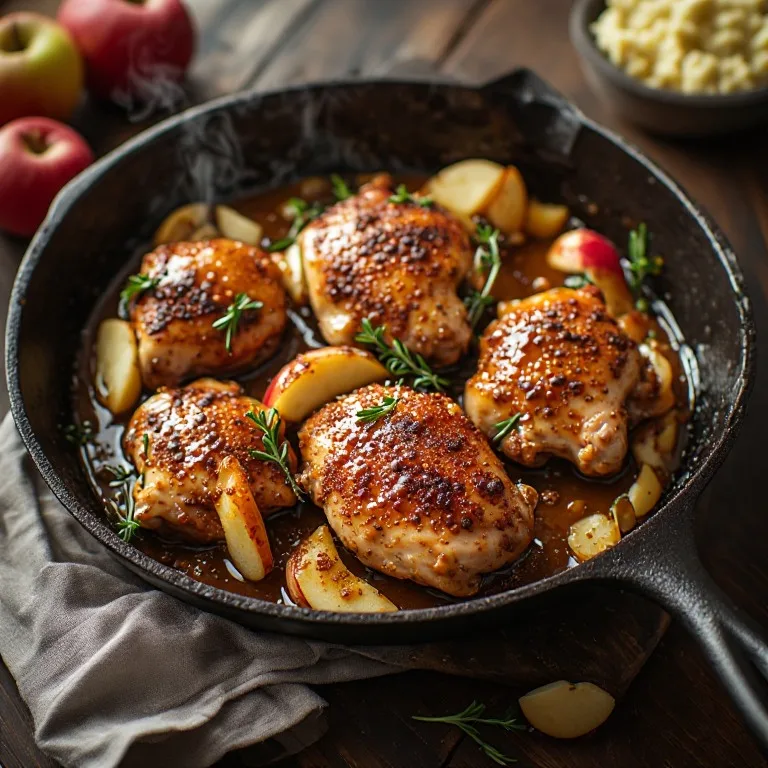
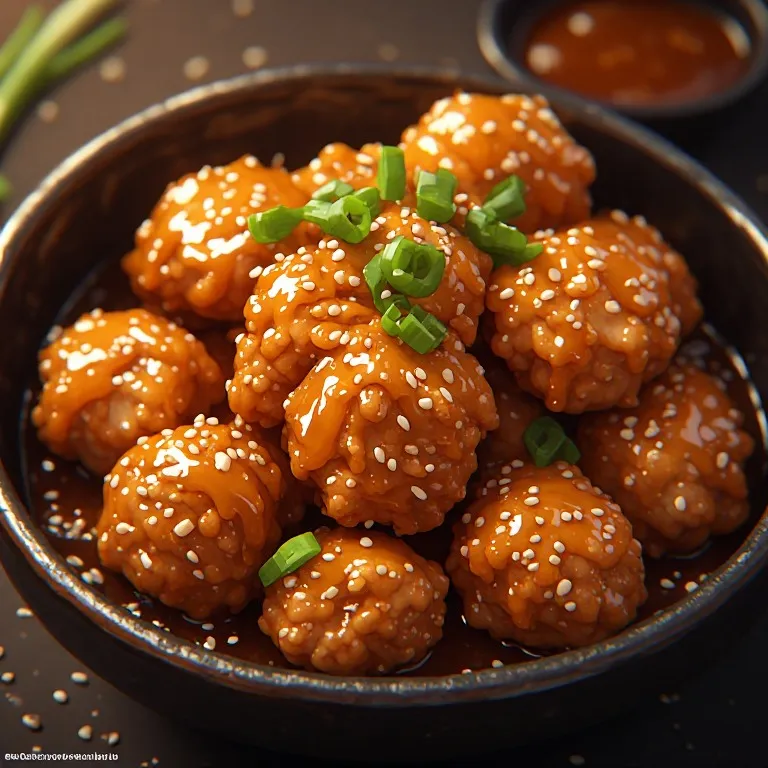
See also: Apple Cider Chicken — the autumn skillet version with fresh cider, apple wedges, and shallots that achieves a similar fall-dinner feel through a partial braise instead of a sheet-pan roast; Sticky Honey Garlic Chicken — the closest glaze sibling, sweet-savory and sticky but built on garlic and honey without the maple depth; Cowboy Butter Chicken — compound butter-basted thighs with garlic, lemon, and herbs rather than a sweet glaze, one of the most-viewed chicken formats on TikTok; French Onion Chicken — the skillet-to-oven format with slow-caramelized onions and Gruyère for a richer, savory direction; Boursin Chicken — the creamy herb cheese sauce that’s one of the most-saved fall dinner formats, for when you want cream sauce instead of a caramelized glaze.
🥗

Make It Healthier

Love Viral TikTok Maple Dijon Chicken (Sheet Pan, 40 Minutes) but want a lighter version? Try these simple swaps:

  • ✓Remove the skin before eating to cut fat from about 18g to under 9g per serving. The skin accounts for roughly half the fat content per thigh, and the glaze-caramelized skin is the most calorie-dense part of the dish — you'll lose some of the lacquered exterior, but the glaze soaks into the meat underneath, so the flavor mostly stays.
  • ✓Use chicken thighs without the sweet potato — serve over cauliflower rice or roasted broccoli instead. You'll drop carbs from 28g to under 10g per serving while keeping all the maple dijon flavor in the chicken.
  • ✓Reduce the maple syrup to 3 tablespoons (from ¼ cup) to cut the added sugar by about 25%. The glaze will be slightly less sweet and will caramelize a bit faster under the broil — watch it more closely in the final minutes.
  • ✓Use reduced-sodium soy sauce and skip the added salt on the vegetables to reduce sodium meaningfully. The soy sauce is the dominant sodium contributor in the glaze (about 280mg per tablespoon), and the chicken itself adds additional sodium from the smoked paprika rub.

Frequently Asked Questions

Why can't I just use pancake syrup instead of maple syrup?

Pancake syrup and pure maple syrup behave completely differently in this recipe. Pancake syrup (such as Log Cabin or Mrs. Butterworth's) is corn syrup with artificial maple flavoring — it has no depth beyond sweetness and its flavor compounds burn off quickly under oven heat, leaving a flat sugary crust with none of the caramel, vanilla, and tannin complexity of real maple. Pure maple syrup contains hundreds of flavor compounds including vanillin, furanones, and organic acids that develop into a rich, almost nutty caramelization at oven temperatures. It also thickens differently: the glucose and fructose in maple syrup create a glossy, viscous reduction that sticks to the skin in that lacquered amber layer you see in every viral version of this dish. Corn syrup reduces to a sticky-sweet film with no browning depth. Use real maple syrup; Grade A Dark (labeled 'Robust Taste') has the most pronounced maple flavor and works best here.

Why do I use two mustards — Dijon and whole-grain? Can I just use one?

Each type does something different. Classic Dijon is smooth, sharp, and creamy — it emulsifies the maple and soy sauce into a cohesive glaze instead of a layered, separated mess, and its sharper heat cuts through the sweetness without announcing itself. Whole-grain mustard has visible seeds that stay intact through the oven roast, giving the caramelized surface a textured, speckled look and small pops of mustardy sharpness rather than a flat uniformity. The combination gives you glaze that looks good (the seeds caramelize and become visible against the amber maple) and tastes balanced (sharp edge from Dijon, textural contrast from whole-grain). If you only have one: use 3 tablespoons of Dijon only for a smoother, sharper glaze. Whole-grain alone won't emulsify as cleanly and produces a grainier result.

Why did my glaze burn?

Three causes, in order of likelihood. First: the glaze went on too early. If you coat the chicken before or within the first few minutes of roasting, the concentrated sugars in the maple syrup caramelize to their peak and then continue cooking past that point to a bitter black char before the chicken is done. The 20-minute pre-roast before glazing exists to let the chicken and vegetables start cooking in dry heat, so the glazed phase only needs 15 to 18 more minutes. Second: the broil rack is too close. Under a full broiler, skin that's 3 to 4 inches from the element can go from golden to charred in under 60 seconds once the glaze is already reduced. Six to 8 inches is the correct distance. Third: you stepped away during the broil. The broil phase is not the step to use the bathroom or check your phone — stay at the oven and pull the moment the skin looks deeply amber with slightly charred edges.

Do I need to sear the chicken before roasting, like some sheet-pan recipes suggest?

No — and the sheet-pan format specifically avoids searing so you can use a single pan and skip the stovetop entirely. The 20-minute initial roast at 400°F dries and browns the skin surface enough for the glaze to adhere and caramelize. Searing first gives slightly crispier skin because the rendered fat creates a structural Maillard crust that the oven can maintain, but it adds a dirty pan and about 10 minutes. For most weeknight purposes, the sheet-pan method produces the same visual result after the broil step — the caramelized glaze covers the difference. If you want sear-first crispiness: use a cast-iron or stainless skillet, sear skin-side down over medium-high for 6 to 8 minutes until the skin is deep gold, flip for 2 minutes, then transfer to a sheet pan or keep in the oven-safe skillet and glaze as directed.

Can I use chicken breasts instead of thighs?

Yes, with adjustments. Boneless, skinless chicken breasts will dry out if you follow the same timeline — reduce the initial roast to 15 minutes (not 20) before glazing, then finish at 400°F for 10 to 12 more minutes until 165°F, and skip the broil or limit it to 2 minutes. Bone-in, split chicken breasts work better and tolerate roughly the same timing as bone-in thighs — the bone keeps them moist. Boneless thighs are the easiest swap: they take 15 minutes initial roast, 12 to 14 minutes glazed at 400°F, and 3 minutes broiled. In every case, the thermometer is your guide: 165°F is safe; 175°F is the target for thighs (dark meat is juiciest there, once the collagen renders), and exactly 165°F for breasts (they get dry above that).

What other vegetables work on the sheet pan instead of Brussels sprouts and sweet potato?

Any dense vegetable that roasts well at 400°F in 35 minutes without going to mush. Butternut squash cubes work exactly the same as sweet potato — same size, same timing. Broccoli florets are fine but they'll get quite charred under the broil step; add them at the 10-minute mark rather than the beginning if you want them to retain more green color. Red onion cut into 8 wedges caramelizes beautifully alongside the sweet potato and picks up the maple glaze on any cut surface. Carrots cut into coins need slightly longer — par-roast them for 10 minutes before adding the chicken to ensure they're tender by the time everything is done. Asparagus and green beans are too delicate for this timeline and will overcook before the chicken is done.

Can I make this ahead of time?

Partially. The glaze keeps for up to 5 days in the refrigerator in a sealed jar — make a double batch and use the second half on salmon, pork tenderloin, or roasted carrots during the week. The assembled, uncooked dish (chicken and veg on the pan, unglazed) can sit in the refrigerator for up to 24 hours before roasting — let it come to room temperature for 20 minutes before it goes in the oven so the cold chicken doesn't extend the cook time significantly. Fully cooked leftovers reheat well: 375°F for 10 to 12 minutes on a foil-lined pan re-crisps the skin better than a microwave.

Love this recipe? Share it!

Free PDF: our 12 most-wanted copycat recipes — instant download.

Made it? Buy us a coffee

Every recipe here is free, with no paywalls. If this one was a hit at your table, a small tip keeps new copycats coming.

$

Ratings & Reviews

—
No ratings yet

Rate this recipe

Click a star to rate

Leave a Review

0/500

CS

Copycat Spices Editorial

Researched + fact-checked. Every recipe on Copycat Spices is built from published sources — official ingredient lists, brand-published recipes, interviews and food-science references — and fact-checked before it goes live, then written as clear, step-by-step instructions for home cooks of all skill levels.

Learn more about our mission →