


Hugo Spritz — The TikTok Elderflower Cocktail
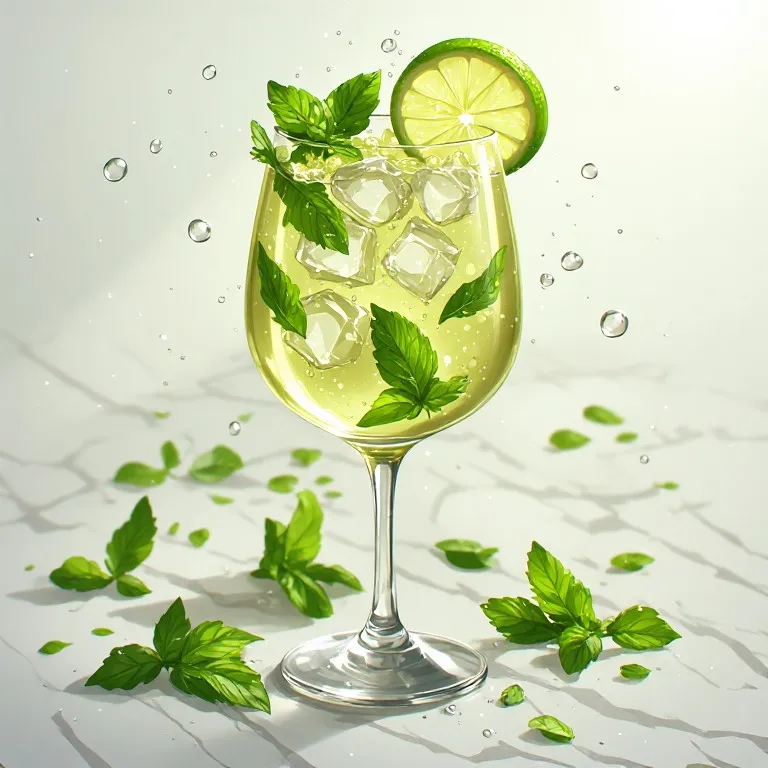
For several years, the Aperol Spritz owned summer TikTok. Then the Hugo Spritz arrived — and for people who find Aperol too bitter or too heavy, it’s become the preferred alternative. Where the Aperol Spritz is orange, bitter, and boldly Italian, the Hugo is pale gold, floral, and more delicate. It tastes like a warm afternoon in the South Tyrol Alps: fresh mint, elderflower perfume, sparkling wine, and lime.
The Hugo was invented around 2005 by bartender Roland Gruber in the village of Naturno in the Italian South Tyrol region — a German-speaking part of Italy where Alpine and Mediterranean cultures overlap. It spread gradually through northern Italy and Austria before appearing on TikTok’s radar around 2022–2023, where its aesthetic fit naturally: beautiful color, fresh green garnishes, wide wine glass, outdoor-dining visual.
Why Elderflower?
Elderflower is the flavor that makes the Hugo distinctive. St-Germain, the liqueur that defines the category, is made from fresh elderflower blossoms harvested by hand each spring in the French Alps. The flowers have a narrow harvest window — a few weeks in late May and early June — and must be used within a day or two of picking. The resulting liqueur is fragrant in a way that’s hard to place until you identify it: lychee, pear blossom, subtle grape, clean sweetness without the cloying quality of many fruit liqueurs.
Combined with prosecco and mint, it creates a drink that’s aromatic enough to notice before you taste it — a quality that photographs and videos well, which is part of its TikTok appeal.
The Three-Part Pour
The Hugo’s balance depends on respecting the three-part structure:
- Elderflower liqueur — sweet, aromatic, the flavor backbone
- Prosecco — dry, sparkling, cuts the sweetness and provides carbonation
- Sparkling water — lengthens the drink and reduces alcohol without sacrificing bubbles
Skipping the sparkling water makes the drink too rich and sweet. Adding too much makes it thin. The 3:2:2 ratio (prosecco:elderflower:sparkling water by volume) is the standard — though you can shade it to 4:2:2 if you prefer a drier result.
The Mint and Lime Technique
The mint and lime are not just garnish — they’re flavor ingredients. Gently pressing (not fully muddling) mint leaves bruises them enough to release their aromatic oils into the drink without creating bitter, shredded mint pieces that cloud the glass and taste harsh.
The lime is added in slices rather than just as juice so it continues to release flavor slowly as the ice melts. Fresh lime also provides an aromatic citrus note that preserved lime juice can’t replicate.
Don’t skip the fresh mint. Dried mint doesn’t work. Without fresh mint, you lose one of the three signature flavor pillars of the drink.
Three Variations
Cucumber Hugo Spritz
Add 3–4 thin slices of English cucumber to the glass along with the mint and lime. Gently press to release the cucumber’s clean, fresh notes. The cucumber amplifies the Hugo’s delicate quality and adds a garden-green visual element. A natural next step from the classic Hugo — popular at rooftop bars.
Peach Hugo Spritz
Replace 0.5 oz of elderflower liqueur with 0.5 oz of peach schnapps or peach nectar. The peach adds a warmer, more summer-stone-fruit quality that pairs beautifully with elderflower’s floral notes. Add a fresh peach slice as garnish. This variation is popular in August when peaches are at their peak.
Non-Alcoholic Hugo Spritz
Use elderflower cordial (Belvoir is the gold standard — it’s concentrated, so use 1 oz diluted with a splash of water) instead of St-Germain. Replace prosecco with sparkling grape juice or a non-alcoholic sparkling wine (Lyre’s, Thomson & Scott Noughty). Add mint, lime, sparkling water, and ice as normal. The result is slightly sweeter than the alcoholic version but genuinely excellent — one of the better NA cocktails you can make without specialized equipment.