


Pin It

Mulled Wine (German Glühwein Style)

Mulled Wine (German Glühwein Style)
Jump to Recipe
Prep 5 min Cook 25 min Serves 4
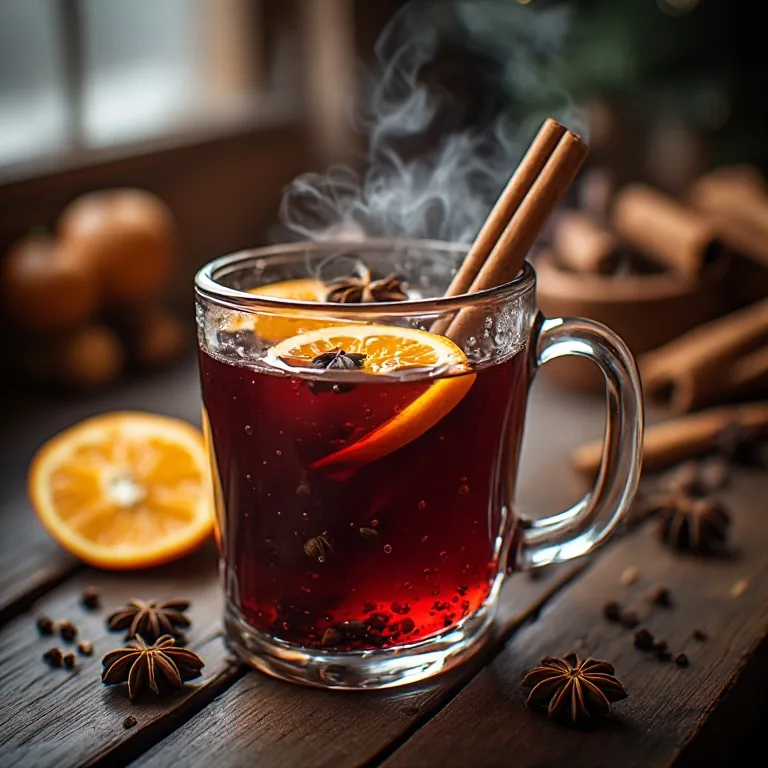
Quick answer: In a medium saucepan, combine 1 bottle (750ml) full-bodied red wine, 1 orange (sliced into rounds), 3 tablespoons honey, 3 cinnamon sticks, 8 whole cloves, 3 star anise, 4 lightly crushed cardamom pods, and ½ cup brandy or port (optional). Warm over medium-low heat, stirring occasionally, until it reaches 160°F — about 15 to 20 minutes. Never let it simmer or boil. Hold at 155–165°F for another 10 minutes so the spices bloom fully into the wine. Strain through a fine-mesh sieve, discard solids, and ladle into mugs. Garnish each with a fresh orange slice and a cinnamon stick.

Shop the tools

Gear matched to this recipe. These are Amazon affiliate links — we may earn a small commission if you buy, at no extra cost to you.

As an Amazon Associate, Copycat Spices earns from qualifying purchases. Product images are generic illustrations, not the exact item listed.

Mulled Wine (German Glühwein Style)

The viral TikTok mulled wine: one bottle of full-bodied red, fresh orange, cinnamon, cloves, star anise, and honey, warmed low and slow to 160°F — never boiled. The exact Glühwein method from German Christmas markets, ready in 30 minutes and better than anything from a packet.

Easy Prep: 5 min Cook: 25 min Total: 30 min4 servings ~$4.50/serving
Prep5 min
Cook25 min
Total30 min
Servings
4
At home~$4.50/serving
vs
Restaurant~$20.25/serving
You save ~78%

The Story Behind the Recipe

Glühwein — literally "glow wine" — has been sold at German and Alsatian Christmas markets for centuries; the earliest documented serving of spiced warm wine in a dedicated vessel dates to 1420. The Strasbourg Christmas market (running since 1570, one of Europe's oldest) still sells it from the same kind of wooden huts in the same kind of ceramic mugs. A cup at a Weihnachtsmarkt in Frankfurt or Cologne runs €4 to €6; a bottle's worth at home costs about $12 total in ingredients, serves four generously, and smells like the whole apartment is a Christmas market.

The TikTok wave — building every November under #MulledWine, #Glühwein, #CozyWinterDrinks — brought two things: the crockpot lazy version (pour everything in, set to low, walk away) and a renewed focus on the one rule every German grandmother already knew — do NOT boil it. Boiling drives off the alcohol, turns the tannins harsh, and flattens the spice aromatics that make mulled wine what it is. Target temperature: 155°F to 165°F. Hold it there for 20 minutes. That's the entire technique.

Nutrition Facts

Per serving (4 servings)
Calories185
Total Fat0g
Total Carbs18g
Dietary Fiber0g
Sugars14g
Protein0g
Sodium5mg

* Estimated values based on standard recipe preparation. Actual values may vary.

Ingredients

  • The wine base
  • Whole spices
  • Citrus
  • Optional additions (see headnotes)
  • To garnish

Instructions

💡
Pro tip: This recipe tastes even better the next day. The flavors need time to meld together in the fridge.
❄️
Storage: Keeps in an airtight container in the fridge for up to 2 weeks. Freezer-friendly for up to 3 months.
🎃 Free Halloween cookbook — download now The Copycat Halloween Cookbook A ready-made, photo-illustrated PDF of our best halloween copycat recipes — free to download, no building required. Pay what you want to support if you love it.

Free PDF — instant download. We'll also send new seasonal copycat recipes now and then; unsubscribe anytime. Or just download it →

Mulled wine is one recipe where every step has a clear reason, and knowing the reasons makes the difference between mediocre and genuinely great.

Temperature is the whole technique. Warm it to 160°F and hold it there. Don’t let it simmer. Don’t let it boil. A thermometer costs $10 and removes all the uncertainty.


Why You Don’t Boil Mulled Wine

Most recipes say “don’t boil it” without explaining why. Here’s why it matters enough to repeat:

Alcohol. Red wine is 12–15% alcohol. Ethanol boils at 173°F (78°C) — well below water’s boiling point. Ten minutes of aggressive simmering drives off roughly 10–15% of the alcohol content. Twenty minutes drives off up to 30%. This is why mulled wine that was over-heated tastes flabby and slightly medicinal — the alcohol that was carrying the spice aromatics has evaporated.

Tannins. Tannins (the compounds that make red wine dry and astringent) become harsher and more bitter when heated aggressively. At 160°F they mellow. At 210°F they turn sharp and leave a chalky bitterness in the finish that no amount of honey will fix.

Aromatics. Cinnamon, cloves, and star anise contain volatile aromatic compounds — the things that make them smell the way they smell. These compounds evaporate readily when heated. A mulled wine kept at 160°F for 20 minutes smells and tastes strongly of cinnamon and star anise. The same wine held at a hard simmer for 20 minutes smells like a shadow of that.

The fix is trivial: low heat, a thermometer, and attention for 20 minutes.


The Spice Balance

The four primary spices in this recipe do distinct things:

Cinnamon sticks: Warmth and sweetness. The dominant flavor most people associate with mulled wine. Three 3-inch sticks is the right amount for one bottle — more and it starts to taste like Red Hots candy.

Whole cloves: Depth and a slight floral sharpness. Eight cloves is on the higher end of the traditional range; go with 5 or 6 if you want a subtler result. Cloves extract fast — if you’re steeping longer than 30 minutes, fish the cloves out after 20 minutes to prevent the wine tasting medicinal.

Star anise: A faint anise / licorice note that ties the other spices together. Three pods is exactly right. You don’t taste star anise directly in a well-made mulled wine — it just makes the whole thing taste more coherent.

Cardamom: The surprise ingredient in traditional Glühwein. Lightly crush the pods before adding — this opens the husk and releases the seeds, which carry the actual flavor. Four pods adds a faintly perfumed, almost floral note that distinguishes homemade mulled wine from the packet versions that skip it.


Choosing Your Wine

Best options: Merlot, Côtes du Rhône, Garnacha (Spanish Grenache), or basic Bordeaux blend. Look for “medium-bodied” and “fruity” on the label. A $9 to $12 wine is exactly right — the spices take over, and paying $25 for a Napa Cabernet to mull is wasteful.

Works but not ideal: Basic Shiraz / Syrah (works, slightly peppery and tannic), Malbec (works, slightly plummy).

Avoid: Heavily oaked Chardonnay or Sauvignon Blanc (this is a red wine recipe; white mulled wine is a different recipe), overextracted Cabernet Sauvignon (turns harsh when heated), thin Pinot Noir (the body disappears in the spice mix).

German authenticity: Dornfelder or Spätburgunder (German Pinot Noir, more body than French versions) are the traditional choices if you can find them. Austrian Zweigelt also works extremely well.


Crockpot (Slow Cooker) Method

This is the most popular TikTok variation for a reason — it’s completely hands-off and keeps the wine at the right temperature for hours.

  1. Pour all ingredients into the slow cooker.
  2. Set to LOW for 2 hours with the lid slightly ajar (condensation can collect and dilute the wine if fully covered).
  3. Switch to WARM to serve. In WARM mode the wine will hold at the right temperature for up to 4 hours.
  4. Ladle through a fine-mesh sieve directly into mugs.

One caution: Test your slow cooker’s temperature. Some models run hot and push past 165°F on LOW — if yours does, start on WARM from the beginning and let it come up to temperature more slowly over 3 hours.


Variations

White mulled wine (Weißer Glühwein): Swap the red wine for a bottle of dry Riesling or Pinot Grigio. Use 2 tablespoons of honey instead of 3 (white wines are slightly sweeter base). Replace the cloves with 2 green cardamom pods (the flavor is too strong against white wine) and add a cinnamon stick. Garnish with lemon peel instead of orange. The result is lighter, more delicate, and genuinely good — popular in Bavaria where it’s called Weißer Glühwein.

Glögg (Scandinavian version): Add ¼ cup of raisins and ¼ cup of blanched almonds to the pot. Serve the raisins and a few almonds in each mug along with the wine. Add 2 tablespoons of aquavit or vodka instead of brandy. Traditional Swedish Glögg also uses a small amount of port mixed with the red wine.

Non-alcoholic: See FAQ. Concord grape juice + pomegranate juice + cranberry juice approximates the depth and color of red wine without the alcohol.


Make-Ahead and Serving a Crowd

Double or triple the recipe: Scale up proportionally. One bottle feeds 4 generously; two bottles feed 8 to 10. A Dutch oven or large stockpot handles large batches on the stovetop; a large slow cooker handles them hands-off.

Refrigerating: Strain the mulled wine, cool to room temperature, and refrigerate in a sealed jar for up to 3 days. Reheat gently on the stovetop. The flavor actually improves slightly at day 1 to 2 as the spice infusion continues to develop even cold.

For a party: Keep a pot warm on the lowest burner setting (ideally monitored with a thermometer to stay below 165°F) and let guests serve themselves with a ladle. Set out garnishes — orange rounds, cinnamon sticks, star anise — so guests can customize their mug.
🥗

Make It Healthier

Love Mulled Wine (German Glühwein Style) but want a lighter version? Try these simple swaps:

  • ✓Use 1 tablespoon of honey instead of 3 — the orange rounds and star anise add natural sweetness; the wine doesn't need as much as most recipes call for. Save 45 calories per serving.
  • ✓Skip the brandy or port to cut alcohol content and drop the calorie count by about 25 per serving. The spiced wine base is fully satisfying without a spirit boost.
  • ✓Add 1 cup of unsweetened cranberry juice and reduce the wine to ¾ bottle — you get 4 bigger servings and each has about 15% less alcohol per glass while keeping the color deep and the tartness bright.
  • ✓Use a dry, lower-alcohol red (12–13% ABV) like Côtes du Rhône rather than a 15% Cabernet — the lighter wine still holds the spices and the final mug has less alcohol for the same flavor.

Frequently Asked Questions

What is the best wine for mulled wine?

A fruity, full-bodied dry red with moderate tannins — Merlot, Côtes du Rhône, Garnacha (Grenache), Shiraz, or a basic Bordeaux blend. These wines have enough fruit and body to hold up to heating and spices without turning bitter. You do not need to spend more than $10 to $12 — the spices, orange, and honey dominate the flavor anyway, and premium tannins don't survive heating intact. Avoid heavily oaked Cabernet Sauvignon (harsh when hot) and thin Pinot Noir (disappears in the spice mix). German Dornfelder and Austrian Zweigelt are the traditional Glühwein wines if you want to go authentic.

Can I make mulled wine in a crockpot or slow cooker?

Yes — this is the most popular TikTok method. Combine all ingredients in the slow cooker. Set to LOW for 2 hours, then switch to WARM to serve. Keep the lid slightly ajar once it's hot so condensation doesn't collect and dilute the wine. The crockpot method produces a slightly less vivid spice aroma than stovetop (slower extraction), but it's genuinely hands-off and perfect for a party — guests can help themselves for hours and the wine stays at the right temperature automatically. Check it occasionally: some slow cookers run hot and can push past 165°F on LOW — if yours does, start on WARM from the beginning.

What temperature should mulled wine be? Can you boil it?

Target temperature: 155°F to 165°F (68°C to 74°C). This is hot enough to feel warming in the mug and to bloom the spice aromatics fully, but cool enough to preserve the wine's complexity and most of its alcohol. Do NOT let it boil (212°F/100°C) or even simmer aggressively. Boiling does three things, all bad: it drives off the ethanol (you lose 10–30% of the alcohol in 10 minutes of simmering), it cooks the tannins harshly, and it blows off the volatile aromatic compounds that make cinnamon and cloves smell the way they do. A gentle steam rising from the surface with no visible bubbles is the visual cue. An instant-read thermometer is the exact method.

How long does mulled wine keep?

Stored in a sealed jar or container in the refrigerator, strained mulled wine keeps for 3 days. The spice intensity actually peaks at day 1 or 2 (the aromatics continue to infuse even cold). Reheat gently on the stovetop or in a slow cooker — do not microwave a full mug, which heats unevenly and can scald the wine on the bottom while the top is lukewarm. Do not freeze mulled wine; the alcohol content and aromatics degrade significantly after a freeze-thaw cycle.

How do you make non-alcoholic mulled wine?

Replace the red wine with 2 cups of Concord grape juice plus 1 cup of pomegranate juice and 1 cup of cranberry juice. The blend gives you the deep color, tannic bite, and fruit depth of red wine without the alcohol. Reduce the honey to 1 tablespoon (the juices are sweeter than wine). Skip the brandy or port. All other spices and the orange remain exactly the same. This version is genuinely excellent and not a compromise — the pomegranate carries enough astringency to feel like the real thing. Serve in the same mugs with the same orange and cinnamon garnish.

What is Glühwein and is it different from mulled wine?

Glühwein is the German word for mulled wine, and it refers to the same basic drink — red wine warmed with spices, citrus, and a sweetener. 'Glühwein' literally means 'glow wine,' a reference to the iron vessels the wine was originally heated in, and the flushed cheeks that follow. The German version leans toward whole cloves and cinnamon as the primary spices, often with cardamom and star anise, and typically uses brandy rather than port as the spirit addition. The Scandinavian equivalent is Glögg, which often adds raisins and blanched almonds directly to the cup. British mulled wine frequently adds apple juice or cranberry for volume. All are valid; this recipe uses the German flavor profile.

Love this recipe? Share it!

Free PDF: our 12 most-wanted copycat recipes — instant download.

Made it? Buy us a coffee

Every recipe here is free, with no paywalls. If this one was a hit at your table, a small tip keeps new copycats coming.

$

Ratings & Reviews

—
No ratings yet

Rate this recipe

Click a star to rate

Leave a Review

0/500

CS

Copycat Spices Editorial

Researched + fact-checked. Every recipe on Copycat Spices is built from published sources — official ingredient lists, brand-published recipes, interviews and food-science references — and fact-checked before it goes live, then written as clear, step-by-step instructions for home cooks of all skill levels.

Learn more about our mission →