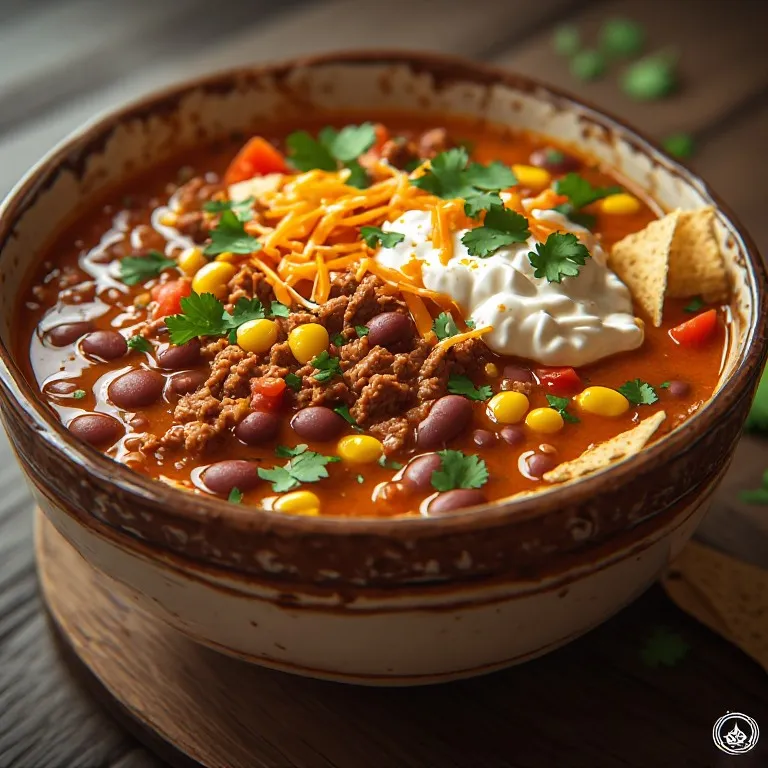



Taco Soup — The Dump-and-Simmer Dinner That Feeds a Crowd
There is a category of recipes that food people sometimes dismiss as too easy — recipes that require almost no technique and rely on pantry staples. Taco soup belongs to that category, and it has been quietly feeding American families for decades. TikTok’s viral recipe community rediscovered it around 2023, partially in irony (“watch me make the laziest soup”) and partially in genuine appreciation for how good something so simple can taste. The videos are usually two minutes long, and the most common comment is: “I’ve made this three times this week.”
The Dump-Soup Formula
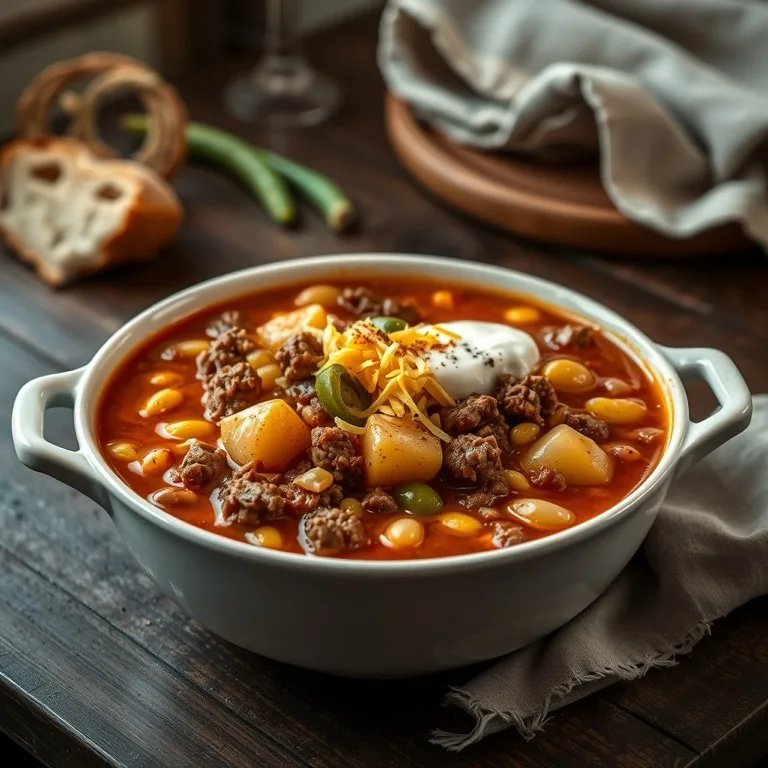
Taco soup is the canonical dump soup: brown your meat, open your cans, dump everything in, simmer. The approach goes back to church potluck cookbooks of the 1980s and 1990s, where it was prized for exactly the same reasons it performs on TikTok — feeds a crowd, uses pantry staples, requires almost no skill, and produces a result that tastes like you actually cooked.
The two-packet system — taco seasoning plus ranch dressing mix — is the recipe’s defining move. Taco seasoning brings heat, cumin, and chili pepper. Ranch mix brings a dairy-tangy, herbaceous quality from dried buttermilk, dill, and garlic. Together they create a flavor profile that’s more complex than either packet alone and unmistakably delicious.
Why the Three-Bean Combination Matters
Using three different beans — black, pinto, and kidney — isn’t just for color. Each variety has a distinct texture and flavor. Black beans are firm and earthy. Pinto beans are softer and creamier, and their liquid thickens the broth. Kidney beans are the largest and most substantial, giving the soup a chili-like chunkiness. If you only have one type of bean, use it — the soup will still be good. But three beans make a noticeably better soup.
Drain and rinse all canned beans before adding them. The liquid in the cans is starchy and can make the soup murky. Rinsed beans keep the broth clear and bright.
Rotel Is Non-Negotiable
Rotel — canned diced tomatoes with green chiles — is the ingredient that separates taco soup from just being bean and beef soup. The green chiles add a mild, vegetal heat and a slightly smoky background note that makes the broth taste like Tex-Mex. Original Rotel is mild enough for kids; the hotter varieties add real burn. If you can’t find Rotel, use a small can of diced green chiles plus a regular can of diced tomatoes.
The Toppings Are Half the Dish
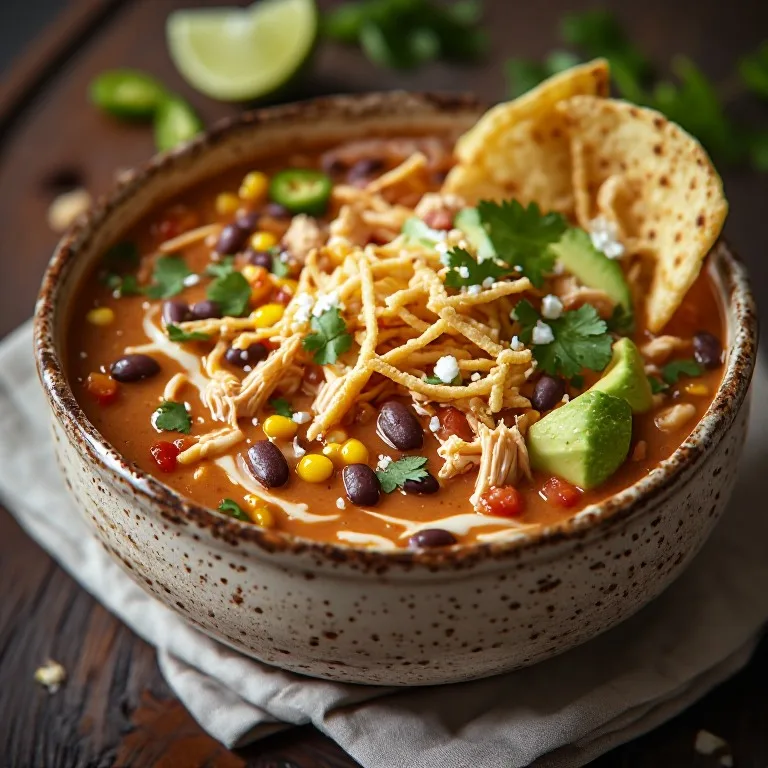
Taco soup is a vessel for toppings, and the toppings should be taken seriously. Sour cream melts into the hot broth and adds richness. Shredded sharp cheddar pools and stretches. Crushed tortilla chips provide crunch that transforms with every bite as they absorb broth and soften from the outside in. A spoonful of fresh salsa or pico de gallo brightens the whole bowl with acid. Sliced jalapeño adds sharpness.
Set up a topping bar when serving a crowd — this is the move that makes taco soup feel festive and interactive rather than just a weeknight dump dinner.
Slow Cooker and Freezer Notes
Brown the beef before it goes in the slow cooker — the Maillard browning contributes flavor that simmering alone can’t achieve. Once browned, combine everything in the slow cooker and set it to low for 6 to 8 hours. The long, slow cook melds all the flavors into something that tastes like it was simmered on the stove all day.
Taco soup freezes better than almost any other soup. The beans and beef are hardy; there’s no dairy or pasta to degrade. Portion it into quart-sized freezer bags laid flat. A frozen portion defrosts in the refrigerator overnight or in a pot over low heat from frozen in about 20 minutes.
Variations
Chicken Taco Soup: Use 1.5 lbs boneless chicken breasts, cooked in the broth and shredded — add raw chicken to the pot with everything else and shred after 25 minutes. Lighter and slightly leaner.
Extra Spicy: Add 1/4 cup pickled jalapeño brine along with the broth, and use hot Rotel. The brine adds vinegar tang and heat simultaneously.
Creamy Version: Stir in 4 oz of cream cheese (cubed) in the last 5 minutes and let it melt into the broth. The result is a creamier, thicker soup that feels closer to white chicken chili in texture.