


Pin It

Viral TikTok Avgolemono Soup — Greek Lemon Chicken Soup

Viral TikTok Avgolemono Soup — Greek Lemon Chicken Soup
Jump to Recipe
Prep 10 min Cook 40 min Serves 4
Quick answer: Poach 1½ lbs of chicken thighs in 8 cups of low-sodium chicken broth with one halved onion, 2 celery stalks, 2 garlic cloves, and a bay leaf — about 20 minutes at a low simmer. Remove the chicken and shred it; strain the broth and return it to the pot. Bring to a simmer, add ¾ cup of long-grain white rice, and cook 18 minutes until tender. Make the avgolemono: in a bowl, whisk 3 large eggs and ½ cup fresh lemon juice together vigorously until frothy — about 2 minutes. Temper the mixture by slowly ladling 2 cups of hot (not boiling) broth into the egg-lemon bowl, one ladle at a time, whisking constantly. Turn the heat to the lowest setting, then pour the tempered egg-lemon mixture back into the pot in a slow stream, stirring constantly. Add the shredded chicken back and stir gently. Heat over the lowest possible flame for 2–3 minutes — the soup will thicken to a silky, velvet consistency. Never boil after the eggs are in. Season with salt and white pepper, taste for lemon (most people want it brighter — add more juice a tablespoon at a time), and serve immediately with fresh dill and lemon wedges. Serves 4, total time 50 minutes.

Shop the tools

Gear matched to this recipe. These are Amazon affiliate links — we may earn a small commission if you buy, at no extra cost to you.

As an Amazon Associate, Copycat Spices earns from qualifying purchases. Product images are generic illustrations, not the exact item listed.

Viral TikTok Avgolemono Soup — Greek Lemon Chicken Soup

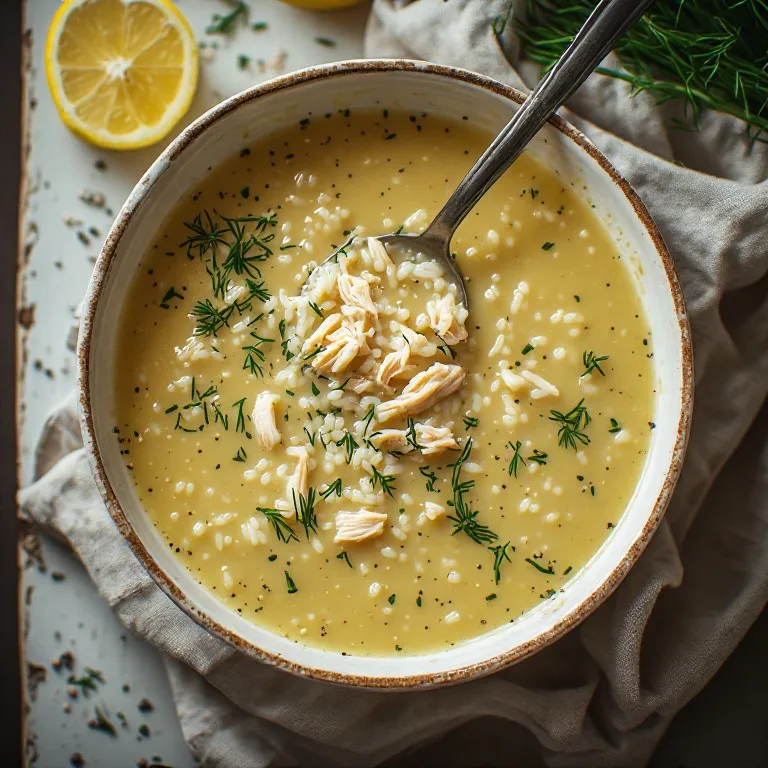
The viral TikTok avgolemono soup: Greek lemon chicken rice soup made silky and creamy without any dairy, using the ancient egg-lemon tempering technique. High-protein, dairy-free, ready in 50 minutes. The soup that looks like cream — but isn't.

Easy Prep: 10 min Cook: 40 min Total: 50 min4 servings ~$4.50/serving
Prep10 min
Cook40 min
Total50 min
Servings
4
At home~$4.50/serving
vs
Restaurant~$20.25/serving
You save ~78%

The Story Behind the Recipe

Avgolemono — from the Greek "avgo" (egg) and "lemono" (lemon) — is both a sauce technique and a soup, and it is the most fundamental thing in the Greek home kitchen. The method of stabilizing hot broth with a beaten egg-and-acid emulsion appears across the ancient Mediterranean: in Sephardic Jewish cooking (agristada), in Syrian and Lebanese cuisine (tarbiya), and in variations across North Africa and Turkey. The Greek version became the most famous, and the soup form — chicken, rice, broth thickened with the egg-lemon mixture — became what Greeks make when someone is sick, what yiayias have been making before anything else, the Greek equivalent of chicken noodle soup. It has been on Greek tables for at least three hundred years, possibly much longer.

Its TikTok moment came when food creators realized what Greek grandmothers have always known: this silky, deeply comforting soup that looks like it was finished with a cup of heavy cream contains absolutely no dairy. The videos showing thin, translucent chicken broth transform — in real time — into something that looks like velvet, purely through the egg-lemon tempering, earned tens of millions of views in 2025 and 2026 under #avgolemono and #greeklemonchickensoup. For the high-protein, dairy-free corner of #FoodTok, it was a revelation. At a Greek restaurant in New York or Chicago, a bowl runs $14–18. This recipe serves four for about $14 total.

Nutrition Facts

Per serving (4 servings)
Calories395
Total Fat13g
Total Carbs28g
Dietary Fiber1g
Sugars3g
Protein34g
Sodium850mg

* Estimated values based on standard recipe preparation. Actual values may vary.

Ingredients

  • For the soup
  • For the rice
  • For the avgolemono
  • To finish

Instructions

💡
Pro tip: This recipe tastes even better the next day. The flavors need time to meld together in the fridge.
❄️
Storage: Keeps in an airtight container in the fridge for up to 2 weeks. Freezer-friendly for up to 3 months.
🎃 Free Halloween cookbook — download now The Copycat Halloween Cookbook A ready-made, photo-illustrated PDF of our best halloween copycat recipes — free to download, no building required. Pay what you want to support if you love it.

Free PDF — instant download. We'll also send new seasonal copycat recipes now and then; unsubscribe anytime. Or just download it →

Avgolemono is a Greek lemon chicken soup that looks and tastes like it was finished with a cup of heavy cream — but contains absolutely no dairy. The silky, velvety consistency comes entirely from the egg-lemon tempering technique: beaten eggs and fresh lemon juice incorporated into hot broth through a gradual heat transfer that turns thin broth into something that coats a spoon like velvet. It is the most beloved soup in Greek home cooking, it went viral on TikTok because the no-cream reveal is genuinely surprising, and it takes about 50 minutes from start to bowl.

What Avgolemono Actually Is

Avgolemono — from the Greek “avgo” (egg) and “lemono” (lemon) — is both a sauce and a soup, and the technique behind it is one of the oldest in Mediterranean cooking. The method of stabilizing hot liquid with a beaten egg-and-acid emulsion appears across the ancient Mediterranean: in Sephardic Jewish cooking (agristada), in Syrian and Lebanese cuisine (tarbiya), and in variations across North Africa and Turkey. The Greek version became the most famous, and the soup form — chicken, rice, broth made creamy through the egg-lemon mixture — became what Greeks make when someone is sick, the comfort food Greeks grow up eating, the dish that travels intact from generation to generation.

It went viral on TikTok in 2025 and 2026 because the visual reveal is hard to believe: you watch thin, translucent chicken broth transform in real time into something that looks exactly like cream of chicken soup, with no cream anywhere in the recipe. For the high-protein, dairy-free corner of #FoodTok, it was a revelation. The hashtag #avgolemono accumulated tens of millions of views from people who had made it for the first time and couldn’t quite process the result.

The Tempering Technique: Why It Works

The creaminess of avgolemono is not magic — it is chemistry. Egg yolk proteins are natural emulsifiers: they contain molecules (lecithins) that bond to both water and fat, creating stable emulsions. When you whisk eggs with lemon juice, the acid begins to partially denature the proteins, making them more receptive to incorporating liquid without curdling. When you then slowly add hot broth to that mixture, the proteins finish denaturing into a stable, continuous emulsion that gives the broth body and opacity.

The reason this looks and feels like cream is the same reason that hollandaise, béarnaise, and a properly mounted butter sauce look like cream: emulsified fat-protein molecules suspended in liquid scatter light differently than a clear broth. No dairy required.

The critical variable is temperature control. Egg proteins begin to coagulate around 140°F and are fully set by 180°F. Cold eggs added directly to 200°F broth hit that full-set temperature in seconds and scramble. Tempering — adding hot broth to the eggs gradually, a ladle at a time — raises the egg temperature to about 155–165°F over 90 seconds, which is enough to create the emulsion without curdling.

The whole tempering step takes under two minutes. It is not difficult. It just requires you to pour slowly and keep whisking.

Building the Best Broth

The depth of an avgolemono depends entirely on the broth you start with, because there are no other major flavor contributors. A box of watery, vague store-bought broth makes a bland soup. A rich, well-seasoned broth — even from a good brand — makes a great one.

The poaching step helps here: cooking the chicken thighs directly in the broth enriches it with gelatin, fat, and chicken flavor. By the time the chicken is done, you have a better broth than you started with. This is why the recipe uses thighs rather than breast — thighs have more connective tissue, more fat, and more flavor to contribute during poaching.

For an even richer broth: add a Parmesan rind to the poaching liquid. It sounds Italian, and it is, but the practice crosses into Greek cooking too, particularly in the north. The rind dissolves into the liquid and adds a low-level umami depth that rounds the lemon without announcing itself.

After poaching, strain the broth. The cooked aromatics (onion, celery, garlic, bay leaf) have given everything they have — leaving them in produces a slightly muddy, bitter flavor over time. Straining takes 90 seconds and produces a clean, clear base.

Rice vs. Orzo: What the Choice Changes

Both are correct; the choice is regional and personal.

Long-grain white rice is the more common version in northern Greece and at most Greek-American restaurants. Rice grains stay distinct and contribute less starch, so the final broth is cleaner-tasting and the texture is lighter — the silkiness comes almost entirely from the egg emulsion.

Orzo (kritharaki in Greek, “little barley”) is common in central and southern Greece. Orzo releases more starch as it cooks, giving the broth a slightly thicker, silkier baseline before the eggs even go in. The finished soup is marginally richer. Orzo also cooks faster — 10–12 minutes vs. 18–20 for rice — which matters when you want dinner on the table quickly.

For a lighter, more restrained soup: rice. For something heartier and slightly starchier: orzo. The egg-lemon technique works identically with either.

Lemon: More Than You Think

Greeks are not shy with lemon in avgolemono. The soup should taste bright — noticeably tart, the lemon a presence rather than a whisper. Most first-timers underdo it.

½ cup of fresh lemon juice is the baseline for four servings. Taste after adding the egg mixture back to the pot: if it tastes like a vaguely thick chicken soup, add more lemon juice, one tablespoon at a time, until the brightness comes forward. The flavor profile you’re aiming for is: savory chicken foundation, creamy body, and a clean, forward citrus finish that makes your mouth water slightly.

Use only fresh lemon juice. Bottled lemon juice is an entirely different product — flat, slightly bitter, with none of the volatile aromatic compounds that make fresh lemon juice bright. The lemon is the other half of the name of this dish.

What to Serve Alongside

Avgolemono is a complete meal with just a good loaf of crusty bread for dipping. Greeks eat it with the bread directly in the broth. Beyond that:

  • Greek salad (horiatiki): tomatoes, cucumber, red onion, Kalamata olives, feta, dried oregano, olive oil and red wine vinegar — made in 5 minutes while the soup finishes.
  • Spanakopita (spinach and feta phyllo pie): the classic taverna pairing for avgolemono.
  • Roasted vegetables: anything from zucchini to broccolini roasted with olive oil and lemon zest echoes the soup’s flavor profile.
Leftovers and Reheating

Avgolemono keeps in the fridge for 3 days. The rice continues to absorb liquid as it sits, so leftovers will be thicker than the original — stir in a splash of warm broth before reheating to restore the consistency. Reheat over low heat, stirring frequently, until hot but not boiling. Never bring it to a boil after the eggs are in — the emulsion breaks and the eggs overcook into grainy threads.

Avgolemono does not freeze: the egg proteins break down during freezing and thawing, producing a separated, grainy soup on reheating. Make only what you’ll eat within three days.

Cost Breakdown

1½ lbs chicken thighs ($5), 8 cups good chicken broth ($4 for a 48 oz box), ¾ cup rice (pantry), 3 lemons ($1.50), 3 eggs ($1), fresh dill (~$1.50) — about $13–14 for four generous bowls, under $4 per serving. At a Greek taverna in New York or Chicago, the same bowl runs $14–18.

Related Recipes
🥗

Make It Healthier

Love Viral TikTok Avgolemono Soup — Greek Lemon Chicken Soup but want a lighter version? Try these simple swaps:

  • ✓Swap chicken thighs for boneless, skinless chicken breast — poach for 18 minutes instead of 25 (breast cooks faster and toughens if overdone), and you'll save roughly 80 calories and 5g of fat per serving while keeping the same 30g+ protein.
  • ✓Use ½ cup rice instead of ¾ cup to cut carbs by about 15g per serving without losing the silky avgolemono consistency — the rice thickens the soup, but the eggs do most of that work.
  • ✓Add 2 extra egg yolks instead of a whole third egg — extra yolks increase the richness of the emulsion and add more fat-soluble vitamins (especially A and D) without adding significant calories compared to a whole egg.
  • ✓Stir in 2 cups of fresh baby spinach with the shredded chicken at the end — it wilts in 60 seconds and adds iron, folate, and volume for essentially zero calories, making each bowl more filling.

Frequently Asked Questions

What does avgolemono mean and how do you pronounce it?

Avgolemono (ah-vo-LEM-oh-no) is a Greek compound word: 'avgo' means egg, and 'lemono' means lemon. It describes both the technique — whisking eggs with lemon juice and tempering it into hot liquid — and the finished soup. The avgolemono method is used across Greek cuisine, not just in soup: it also appears as a sauce for stuffed grape leaves (dolmades), braised lamb, and fricassee. The soup form, which adds chicken and rice to a broth finished with the egg-lemon mixture, is the most internationally recognized version and the one that went viral on TikTok.

Why is avgolemono soup creamy without any cream?

The silky, creamy texture of avgolemono comes entirely from the emulsification of egg yolk proteins and lemon juice into the hot broth. When you beat whole eggs (or a combination of whole eggs and extra yolks) with lemon juice and slowly incorporate hot liquid, the proteins in the egg yolks partially denature and form a stable emulsion that binds the liquid into a unified, velvety consistency — exactly the same mechanism that makes hollandaise sauce or a French pan sauce 'monté au beurre' silky without cream. The lemon juice's acidity helps keep the proteins from curdling. The result is body and richness that registers as creamy even though the bowl has zero dairy.

What is the tempering technique and why does it matter?

Tempering means raising the temperature of the eggs gradually so they cook into a smooth emulsion rather than scrambling into curds. Cold or room-temperature eggs added directly to 200°F broth will instantly overcook — you'll get strands of scrambled egg in the soup, not velvet. The fix: ladle hot broth into the egg-lemon bowl slowly, one ladle at a time, whisking constantly. This brings the egg mixture up to about 140–160°F over 60–90 seconds, gently denaturing the proteins into a stable sauce. Then add that tempered mixture back to the pot. The entire tempering step takes under 2 minutes and is the single technique that separates creamy avgolemono from egg-drop soup.

Can avgolemono soup be reheated and does it freeze well?

Avgolemono reheats well if done carefully: warm it over low heat, stirring frequently, and stop as soon as it's hot — never bring it to a boil after the eggs are incorporated, or the emulsion will break and the eggs will overcook into threads. If your leftover soup has thickened significantly in the fridge (which it will — the eggs and rice absorb liquid), stir in a splash of warm chicken broth to loosen it before reheating. Avgolemono does not freeze well: the egg proteins break down during freezing and thawing, and the soup becomes grainy and separated on reheating. Make it fresh or keep leftovers in the fridge for up to 3 days.

Rice vs. orzo in avgolemono — which is traditional?

Both are traditional and vary by region and family. Long-grain white rice is the most common version served in northern Greek households and at most Greek-American restaurants. Orzo (called 'kritharaki' in Greek, meaning 'little barley') is the version common in central and southern Greece, and many Greek-Americans make it this way. Orzo cooks faster (10–12 minutes vs. 18–20 for rice) and gives the soup a slightly silkier texture because it releases more starch. Rice produces a cleaner, lighter broth with more distinct grains. Both are equally correct. For a different texture, small pasta like stelline or even fideo works well.

How do I prevent the eggs from scrambling when I add them to the broth?

Two things prevent scrambled eggs in avgolemono. First, whisk the eggs and lemon juice together vigorously until genuinely frothy — this creates a more stable emulsion before any heat is added, and the lemon acid protects the proteins. Second, temper slowly: ladle the hot broth into the egg bowl one ladle at a time (about ½ cup per ladle), whisking constantly after each addition. At least 2 cups of hot broth should be incorporated into the egg mixture before it goes back into the pot. When it goes back in, the soup should be off the boil — either turned off or on the lowest possible setting. Pour it in a slow stream, not all at once, while stirring. If you see any sign of the soup boiling after the eggs are in, remove the pot from the heat immediately.

Is avgolemono soup healthy?

Avgolemono is one of the more nutritionally complete soups in Mediterranean cooking. A serving made with chicken thighs provides around 32–35g of protein and 390–420 calories, with no saturated fat from dairy (there is none). The lemon juice provides vitamin C; the eggs provide choline, fat-soluble vitamins, and additional protein. The glycemic load of the rice is moderate. For a lower-calorie version, use chicken breast instead of thighs (saves about 80 calories per serving) and reduce the rice to ½ cup. For extra protein, add a fourth egg or use 3 whole eggs plus 1 extra yolk — more yolk adds richness without significantly changing the nutrition.

Love this recipe? Share it!

Free PDF: our 12 most-wanted copycat recipes — instant download.

Made it? Buy us a coffee

Every recipe here is free, with no paywalls. If this one was a hit at your table, a small tip keeps new copycats coming.

$

Ratings & Reviews

—
No ratings yet

Rate this recipe

Click a star to rate

Leave a Review

0/500

CS

Copycat Spices Editorial

Researched + fact-checked. Every recipe on Copycat Spices is built from published sources — official ingredient lists, brand-published recipes, interviews and food-science references — and fact-checked before it goes live, then written as clear, step-by-step instructions for home cooks of all skill levels.

Learn more about our mission →