

Whataburger Honey Butter Chicken Biscuit (Copycat)
Two things most copycat recipes get wrong: the honey butter has cinnamon in it (Whataburger’s doesn’t), and the chicken uses a single dredge (Whataburger’s has a thicker, more complex crust that requires two passes through the flour).
The other thing worth knowing before you start: Whataburger’s actual honey butter is not a simple butter-and-honey spread. The commercial product’s ingredient list reads like a condiment sauce — soybean oil, high-fructose corn syrup, honey, egg yolks, vinegar, preservatives, xanthan gum. It’s essentially a honey mayo: oil-emulsified, pourable, and designed to drizzle. The best home approximation is softened butter whipped with honey and a small amount of vanilla extract, which gets you to the right flavor without the emulsion chemistry. No cinnamon, confirmed by both the official ingredient list and the flavor of the original.
What Actually Makes This Sandwich Work
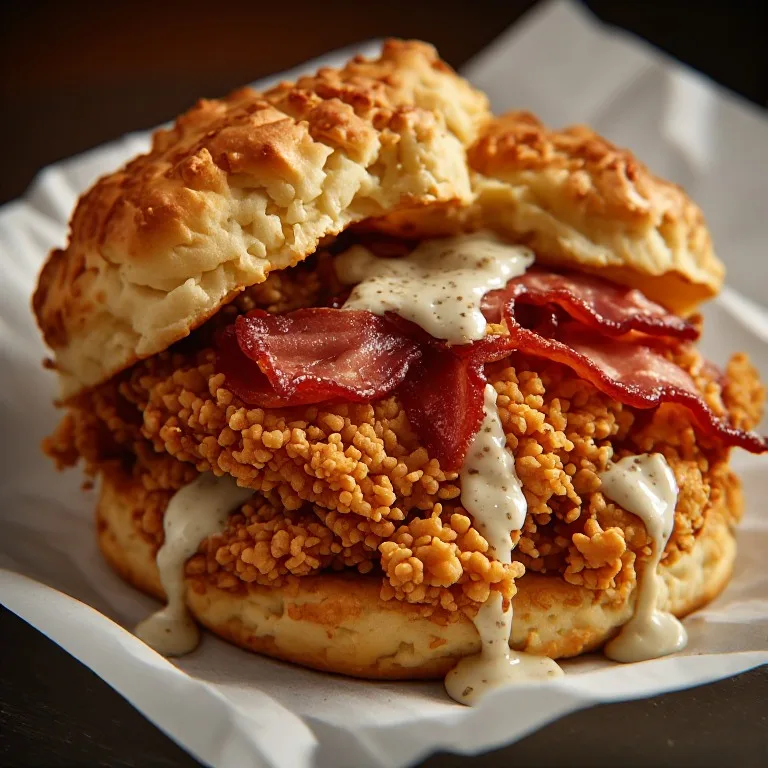
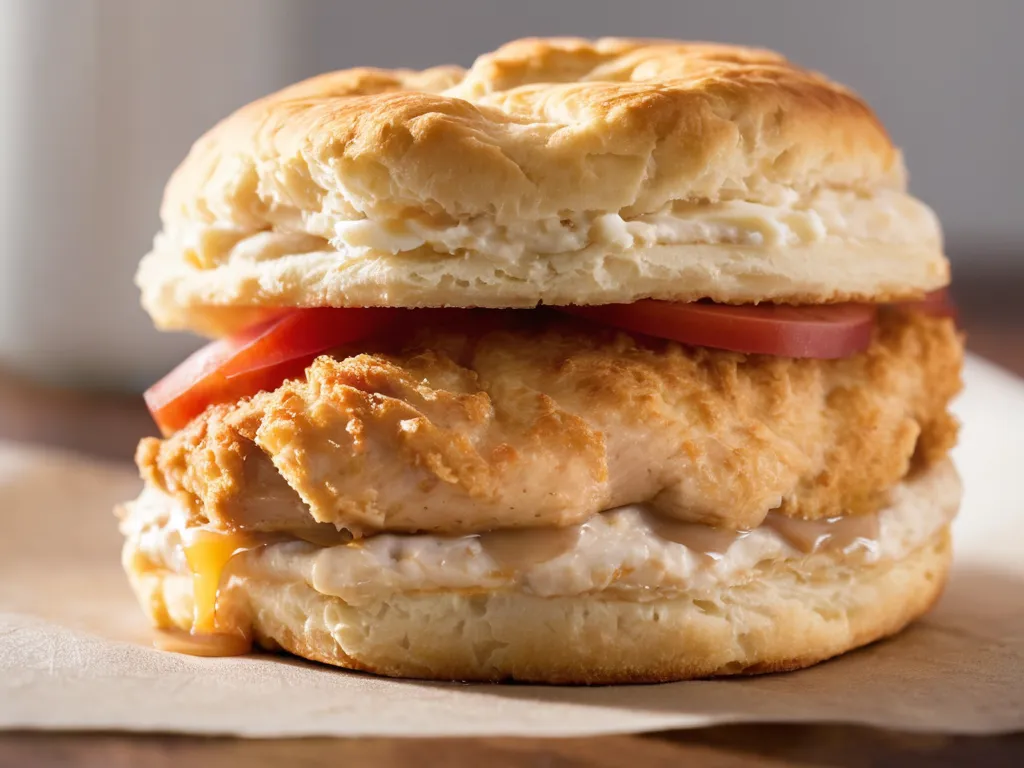
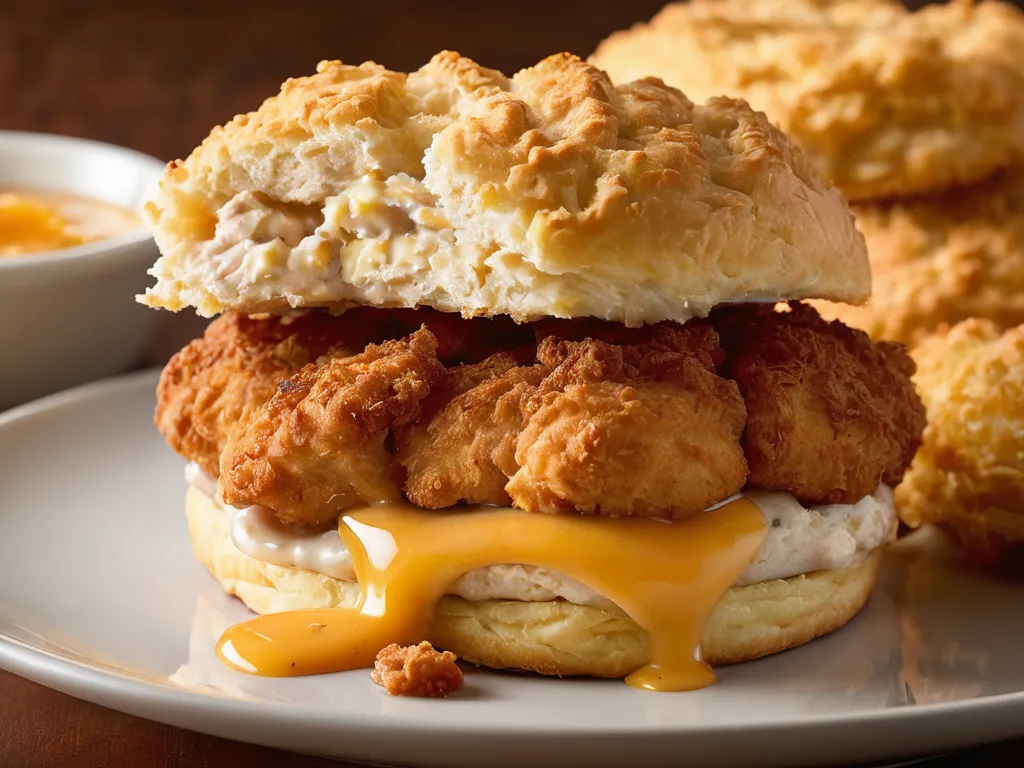
The Honey Butter Chicken Biscuit is a study in sweet-savory contrast: the chicken is salty, the honey butter is aggressively sweet, and the biscuit is buttery-neutral enough to not compete with either. The key is that the sweet element (honey butter) comes in large quantity — not a thin smear but a genuine drizzle on both cut surfaces of the biscuit plus another drizzle on top of the chicken. If you apply honey butter like a condiment, you get a chicken biscuit with a faint sweetness. If you apply it like Whataburger does, you get a dessert-meets-breakfast experience that explains why the item has its own holiday (February 4) and a Change.org petition demanding 24-hour availability.
The Honey Butter: What the Real Thing Is
The commercial Whataburger honey butter is an emulsified oil sauce, not a compound butter. The fat base is soybean oil (not dairy butter); the sweeteners are high-fructose corn syrup and honey; the emulsifier is egg yolk. This formulation allows it to be stored at room temperature, poured from a packet or squeeze bottle, and drizzled warm rather than applied cold from a refrigerator. The result is a pourable, glossy sauce that clings to chicken and soaks into warm biscuit rather than sitting on top as a solid.
The home approximation — butter + honey + vanilla — produces a qualitatively different texture (firmer, sets cold) but achieves the same flavor profile. For the closest drizzle-style consistency at home: melt the butter fully, warm the honey until loose, combine with vanilla extract and a pinch of salt, and drizzle while warm. This version pools and soaks like the original rather than staying put as a spread. The trade-off: you lose the ability to apply it ahead of time, since warm honey butter is runny. The solution is to drizzle it just before serving.
The vanilla note. The commercial product lists “natural flavors (milk, egg, soy)” — a vague catch-all that can include vanillin or other flavor compounds. A 1/4 teaspoon of vanilla extract in the home version adds a bakery-sweet undertone that aligns with the original’s flavor and is broadly the correct approximation. It’s subtle; you won’t taste “vanilla” as a distinct note, but the sandwich will taste more complete than the same recipe without it.
The Double Dredge
A single-dredge coating — buttermilk soak, one pass through flour, fry — produces a thin, smooth exterior. Fine for many applications; not what Whataburger produces. The double dredge builds a thicker, more complex crust:
The first flour coat adheres to the wet chicken and creates a base layer. The return to buttermilk dampens the flour slightly and creates a sticky surface. The second flour coat bonds to that sticky layer and builds up in irregular, uneven peaks — those peaks fry crunchier than the valleys, producing the characteristic cratered surface that holds up against the drizzled honey butter rather than absorbing it into mush immediately.
The resting step (5 minutes on a rack after the second dredge) allows the coating to dry slightly and grip the surface more firmly before the chicken hits oil. Skip this and you risk coating separation in the fryer.
Frying at 350°F rather than 375°F is deliberate. Chicken breast tenderloins are thicker than wing pieces; 375°F produces a properly colored exterior with an undercooked center. At 350°F, the crust has time to develop and the interior reaches 165°F before the outside burns.
The Biscuit: Why the Restaurant Version is Industrial
Whataburger’s biscuit ingredient list includes palm oil, food starch, artificial butter flavor, guar gum, and potassium sorbate — the signature of a par-baked or delivered frozen product. This is not a criticism; it’s logistics. The restaurant serves thousands of biscuits per location daily.
This means the scratch biscuit you make at home is meaningfully better than the restaurant’s, not worse. Real cold butter produces steam during baking that pushes the layers apart; artificial butter flavor does not replicate this process. The lamination technique (two letter-folds before cutting) creates visible layers in the finished biscuit that the restaurant version lacks. The trade-off is effort: biscuits from scratch take 15 minutes of hands-on time plus 30 minutes of bake-plus-rest time.
If you want a legitimate shortcut: Pillsbury Grands Flaky Layers (the refrigerated canned biscuits, not the buttermilk style) are the closest commercial approximation. Bake per package directions, then split and griddle the cut sides for 60–90 seconds. The result is a reasonable facsimile of the sandwich for a weekday morning.
The Toasting Step You Cannot Skip
Split the baked biscuit and place it cut-side down on a dry griddle over medium heat for 60–90 seconds. This is the most commonly omitted step in copycat recipes, and it’s the one that most directly determines whether the sandwich holds up through the first few bites.
The toasted surface acts as a moisture barrier. A raw cut biscuit is porous and soft; it begins absorbing the honey butter within seconds of contact, becoming limp by the time you take your second bite. A lightly toasted cut surface has enough structure to absorb the honey butter more slowly — the sandwich stays texturally intact for the entire eating window.
Whataburger vs. Chick-fil-A: What They’re Each Optimizing For
| Whataburger HBCB | Chick-fil-A Chicken Biscuit | |
|---|---|---|
| Chicken | Strip format, injected brine, double-dredge | Marinated fillet, pickle brine, powdered sugar in dredge |
| Biscuit | Larger (3”+), more layered, industrial base | Smaller, denser crumb, buttermilk-forward |
| Primary flavor | Honey butter sweetness | Seasoned chicken, slight sweetness from dredge |
| Spread | Oil-emulsified honey sauce (drizzle) | Plain butter |
| Availability | 11pm–11am (includes late night) | ~6:30–10:30am (no late night option) |
| Official calories | 755 cal | ~450 cal |
| Price range (2026) | ~$3.49–$4.69 | ~$4.29–$4.99 |
Neither is the better sandwich — they’re built for different cravings. The Chick-fil-A version is about the chicken (the pickle brine and pressure-fry technique make the meat the focus). The Whataburger version is about the honey butter contrast (the chicken is the delivery vehicle for an aggressively sweet-savory experience). The Whataburger’s late-night availability also makes it the default choice for the 1am post-event or road-trip scenario where Chick-fil-A is simply closed.
More Breakfast and Chicken Sandwiches
- Copycat Chick-fil-A Chicken Biscuit — pickle-brine and powdered-sugar dredge, the competing classic
- Copycat Whataburger Breakfast on a Bun — sausage, egg, and cheese on a toasted bun, the savory counterpart
- Bojangles’ Cajun Filet Biscuit — the Southeastern competitor, Cajun-spiced chicken on a scratch biscuit
- Copycat Whataburger Spicy Ketchup — the condiment that defines the non-breakfast Whataburger experience
- Copycat KFC Biscuits — deeper dive into from-scratch Southern biscuit technique