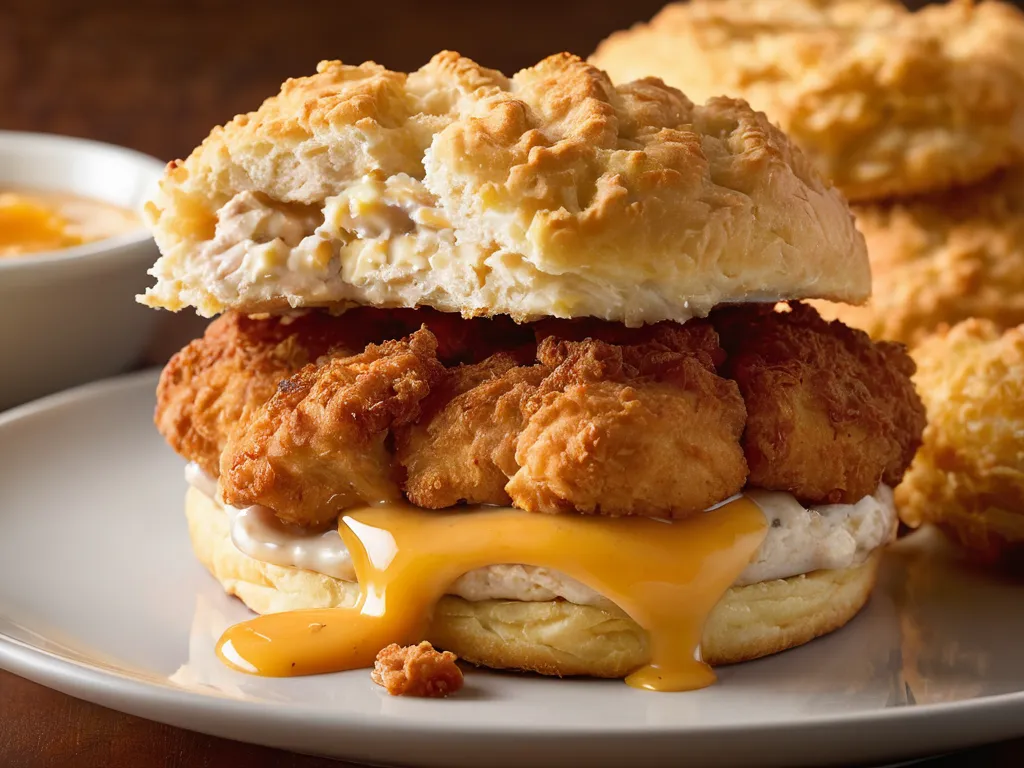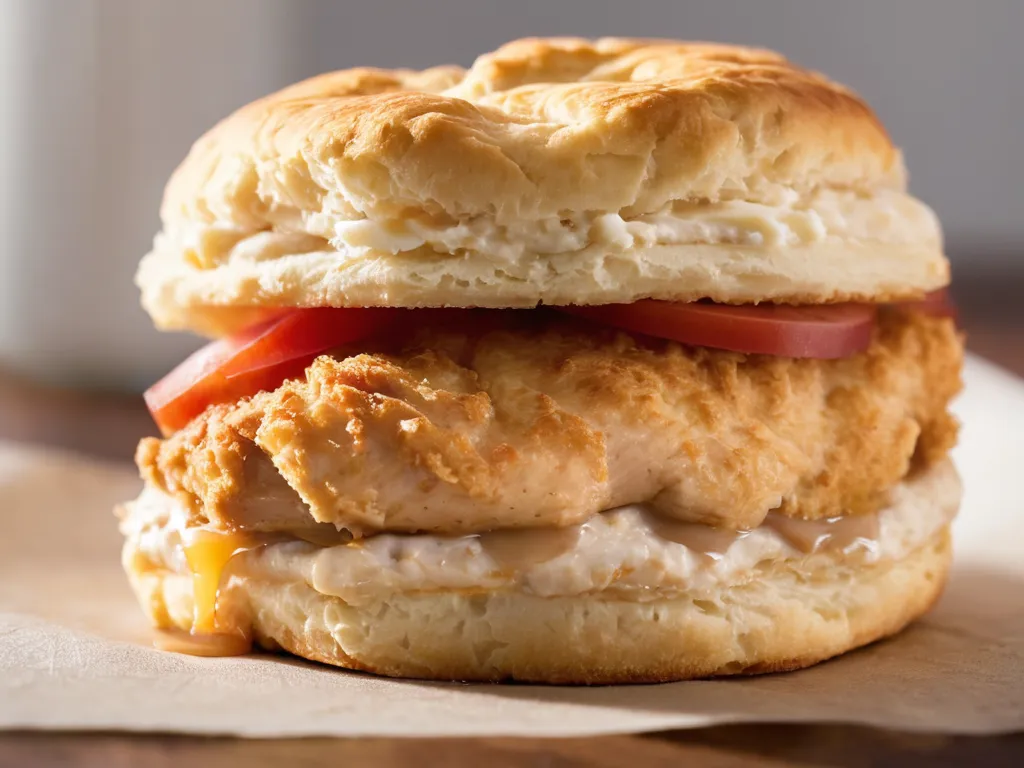
Copycat Chick-fil-A Chicken Biscuit
Prep time: 20 min | Brine: 30 min – 4 hours | Cook time: 25 min | Makes: 4 biscuits
Chick-fil-A’s Chicken Biscuit is a breakfast-only item, available Monday through Saturday until 10:30 AM. On Sundays — when Chick-fil-A is always closed — it exists only as a memory and a craving. This recipe fixes that.
The biscuit is the piece most copycat recipes shortcut or ignore. Chick-fil-A bakes biscuits from scratch each morning at every restaurant — the ingredient list includes enriched flour, palm oil shortening, buttermilk, and natural butter flavor. The result is a tall, golden biscuit baked fresh daily, which is part of why the Chicken Biscuit became the brand’s top-selling breakfast item (133 million sold in 2018 alone). At home, the scratch cold-fat lamination biscuit in this recipe replicates that texture better than most shortcuts.
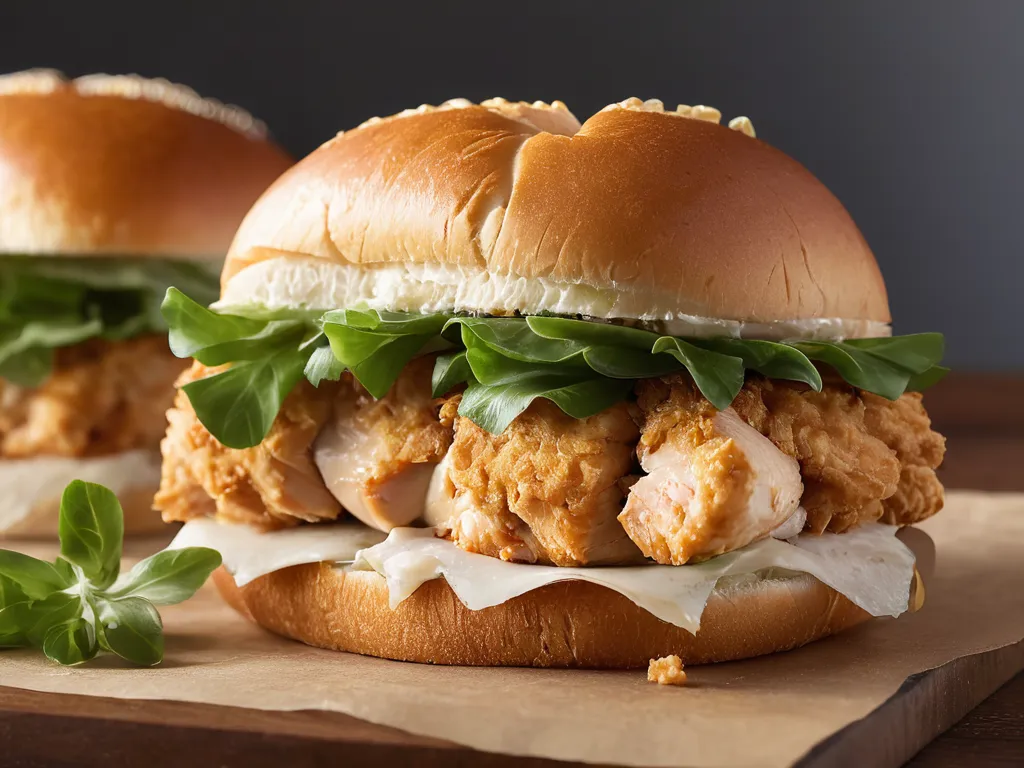
The chicken technique is identical to the Chick-fil-A Original Chicken Sandwich: pickle-juice brine, powdered-sugar dredge, peanut oil at 350°F. The difference is the size of the chicken (sized for the biscuit opening, not the full-breast sandwich portion) and the absence of pickles. The biscuit gets the honey.
The Chicken Biscuit’s History
Chick-fil-A launched its breakfast menu in 1986, when it opened its first stand-alone restaurant in Atlanta — years after McDonald’s and Burger King had established fast-food breakfast as a category. The Chicken Biscuit concept was developed a year earlier, in 1985, as a way to bring CFA’s signature fried chicken to morning customers with a “distinctive Southern twist,” as Chick-fil-A’s menu development team described it at the time.
It became the brand’s top-selling breakfast item. In 2018 alone, Chick-fil-A sold 133 million Chicken Biscuits across the US — a number that has continued to grow as breakfast has become a larger share of fast-food revenue.
Why Chick-fil-A Closes on Sundays
Truett Cathy, who founded Chick-fil-A in 1946 and opened the first mall-based restaurant in 1967, instituted the Sunday closure from the beginning. His reasoning was explicit: he wanted employees to have a guaranteed day off to attend church, rest, or spend time with family. The policy has remained unchanged across every Chick-fil-A location — company-owned or franchised — since the brand’s founding. The irony is that Sunday mornings are when the Chicken Biscuit craving tends to hit hardest. This recipe was built for that reason.
The Biscuit: Home Options
Chick-fil-A makes biscuits fresh from scratch each morning. At home, you have two options:
Option 1 — Scratch buttermilk biscuits (recommended): The cold-fat lamination method in this recipe takes about 10 extra minutes and produces a genuinely good biscuit with flaky pull-apart layers. This is the closest you can get to what Chick-fil-A achieves.
Option 2 — Canned Grands Homestyle Biscuits: A widely used shortcut in copycat recipes. Bake per the can directions (375°F, 11–13 minutes). The result is slightly softer and less layered than scratch, but still works well once the fried chicken and honey are inside. This is the faster path on a weekday morning.
The key rules for scratch biscuits:
- Everything cold. Cold butter, cold buttermilk, cold hands. Room-temperature butter melts into the flour and creates a denser, crumbly biscuit instead of a flaky one.
- Do not overwork the dough. Once the buttermilk goes in, stop stirring when the dough barely holds together. Overmixed biscuit dough is tough.
- Cut, do not twist. When using a biscuit cutter, push straight down and lift straight up. Twisting seals the edges and prevents the layers from separating as they rise.
- Brush immediately. Butter the tops the moment the biscuits leave the oven — the heat of the biscuit melts the butter into the top crust and creates the glistening, rich top that makes restaurant biscuits look and taste the way they do.
The Chicken: Brine First
The pickle-juice brine is the non-negotiable step for Chick-fil-A chicken. It does two things simultaneously:
Brining (the salt): Dissolved salt in the pickle brine penetrates the chicken muscle fibers over time, dissolving some of the proteins and allowing the meat to hold more moisture during frying. A brined chicken breast loses less juice when you cut into it.
Tenderizing (the acid): Pickle juice is mildly acidic (pH around 3.5–4.0). The acid partially denatures surface proteins, which helps the flour coating adhere more tightly and keeps the outermost layer of chicken tender rather than rubbery.
The sweet spot is 30 minutes minimum to 4 hours maximum. Under 30 minutes and the brine has not had time to work. Over 4 hours and the acid starts to break down the internal protein structure, making the chicken mushy at the edges. For a standard weekday morning, start the brine the night before (refrigerate overnight — the 8-hour soak stays within the safe range because the refrigerator slows the acid’s effect). For the morning itself, 30 minutes at room temperature while you make the biscuit dough is enough.
The Coating: What the Powdered Sugar Does
The flour dredge for Chick-fil-A chicken includes powdered sugar — about 2 tablespoons per cup of flour. Most copycat recipes include it because they know it is part of the original, but fewer explain why it matters.
Fine-ground sugar caramelizes at a lower temperature than granulated sugar. In a 350°F fry, the powdered sugar in the coating browns faster than the flour alone would, contributing to the deep, mahogany-gold color that makes Chick-fil-A chicken visually distinctive. The second effect is flavor: the very small amount of sugar rounds the salt-and-spice blend, giving the coating a subtle complexity that plain seasoned flour lacks. The finished chicken does not taste sweet — the sugar is too small a quantity for that — but you notice its absence when you omit it.
White pepper is the second ingredient many recipes skip. It adds a quiet warmth that sits differently than black pepper — more floral and less sharp, integrating into the coating rather than sitting on top of it.
Sizing the Chicken for a Biscuit
The Chick-fil-A Chicken Sandwich uses a full breast fillet (about 5–6 oz), pounded to an even 1/2-inch thickness to fit the potato bun. The Chicken Biscuit uses a smaller portion — sized to fit the biscuit opening without overhanging awkwardly.
At home, two approaches work:
- Chicken tenderloins: The tenderloin (the smaller strip that runs under the breast) is naturally sized for a biscuit. Four tenderloins cost less than two full breasts and require no pounding.
- Halved breasts: Buy two large chicken breasts and slice each in half horizontally. Each half will be about 3–4 oz — the right size for a biscuit without overwhelming it.
Either way, pound or press to an even thickness so the piece cooks uniformly. Uneven chicken means the thin end is overdone by the time the thick end hits 165°F.
No Pickles on the Biscuit
The Chick-fil-A Chicken Biscuit does not include pickles. That is the Chicken Sandwich (two dill chips on a potato bun). The Biscuit is chicken, butter, and biscuit. Honey is the traditional condiment — Chick-fil-A has always offered honey packets at the counter for biscuit orders.
If you want pickles on your homemade version, add two or three dill chips — it is genuinely good, particularly if you like the dill-and-butter combination. But if you are trying to replicate the original, leave them off and use honey.
The Spicy Version
Chick-fil-A’s Spicy Chicken Biscuit replaces the original fillet with the chain’s spicy chicken — same brine, same powdered-sugar dredge, same peanut oil, but with cayenne and chili powder added to the coating. It was discontinued in 2016, brought back regionally, and added permanently to the national breakfast menu in June 2023 after becoming the most-requested breakfast item to return.
To make the spicy version at home: add 1 teaspoon cayenne pepper and 1/2 teaspoon chili powder to the seasoned flour. The heat level is moderate — you will notice it on the first bite and feel it build through the biscuit, but it is not aggressive. If you want restaurant-level spicy, go to 1.5 teaspoons cayenne. If you want only a hint of heat, use 1/2 teaspoon.
For a loaded version, add a slice of pepper jack cheese to the chicken in the last minute of frying, cover the pan briefly to melt it, then assemble as usual.
Cost Comparison
A Chick-fil-A Chicken Biscuit costs approximately $4.00–$5.09 depending on market (US average 2026), with combo meals (hash browns + drink) running $6.79–$7.19. A homemade batch of four uses about $7–$9 in ingredients (chicken, oil, buttermilk, flour, butter), which is $1.75–$2.25 per biscuit — roughly half the drive-through price. The bigger saving is on Sundays, where the cost of not having a Chick-fil-A Chicken Biscuit is incalculable.
What to Serve It With
- Chick-fil-A Waffle Fries — technically a lunch side, but fries and a chicken biscuit at 9 AM is a legitimate choice
- Chick-fil-A Chicken Minis — the other classic CFA breakfast item; make both for a proper Sunday spread
- Chick-fil-A Sauce — not the traditional condiment for the biscuit (that’s honey), but a good dipping option if you prefer savory
Make-Ahead Notes
Chicken: Fry the chicken up to 24 hours ahead and refrigerate uncovered on a wire rack. Reheat on a wire rack in a 375°F oven for 7–8 minutes. The crust softens slightly during refrigeration but re-crisps in the oven well enough.
Biscuits: Bake the same morning — biscuits do not refrigerate or reheat gracefully. The good news is they take 13–15 minutes from start to oven, and you can have the dough cut and ready to go while the chicken brines.
Full assembly ahead: Not recommended. A built chicken biscuit steams itself soggy within 15 minutes. Keep chicken and biscuits separate until the moment before eating.
See all Chick-fil-A copycat recipes →