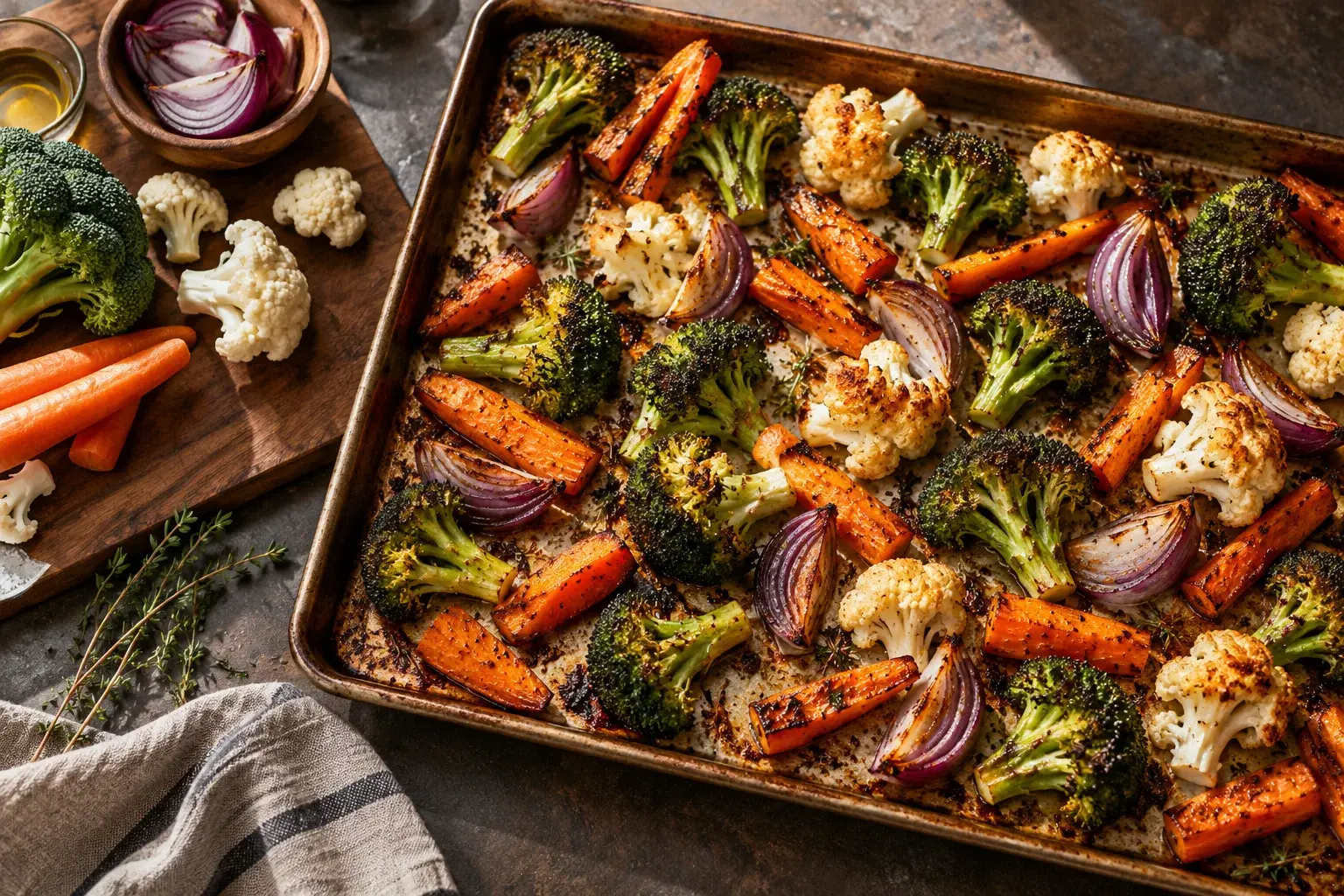
The difference between a pale tray of vegetables and a deeply browned one is not a secret seasoning blend. It is moisture management.
Roasting works when the oven can drive water away fast enough for the surface to rise above the boiling point. Once the surface dries, browning begins. If water stays trapped around the food, the vegetables steam instead.
Start with dry vegetables
Wash produce early enough to let it drain, then pat it dry. This matters most for broccoli, cauliflower, mushrooms, and leafy vegetables, which hold water in crevices.
Frozen vegetables can still roast well, but do not thaw them first. Roast straight from frozen on a preheated pan so surface ice turns to steam and escapes quickly.
Cut for the cooking time
Pieces should be similar in size, but different vegetables need different sizes.
- Dense vegetables: cut carrots, potatoes, winter squash, and beets smaller.
- Medium vegetables: use 1-inch pieces for cauliflower, broccoli stems, and onions.
- Tender vegetables: keep zucchini, peppers, asparagus, and broccoli florets larger.
The goal is for the center to become tender around the same time the outside browns.
Use enough oil, but not too much
Oil improves contact with the hot pan and helps heat move across an uneven surface. Use enough to coat each piece with a thin sheen. Puddles are unnecessary and can make the food greasy.
Season with salt before roasting. Add pepper and sturdy dried spices now, but save delicate herbs, grated cheese, and most minced garlic for later so they do not burn.
Give every piece room
Spread the vegetables in a single layer with visible space between pieces. If the pan looks crowded before it enters the oven, it will steam.
Use two pans rather than stacking food. If using two oven racks, switch the pans halfway through so they brown evenly.
Place flat cut sides against the metal. That direct contact creates the deepest color, especially on Brussels sprouts, cauliflower, squash, and potatoes.
Roast hot
For most vegetables, 425°F to 450°F is the useful range. Lower temperatures can cook the interior before the surface develops color.
Preheating the sheet pan gives the first side a head start. This is especially helpful for frozen vegetables and potatoes. Carefully add the oiled vegetables to the hot pan and listen for a faint sizzle.
Stop moving them
Color needs contact and time. Roast the first side for 15 to 20 minutes before checking. If a piece resists when you try to turn it, give it a few more minutes. Properly browned food often releases more easily.
Turn once, then finish until the centers are tender and the edges are dark brown, not merely golden.
Finish with contrast
Roasted vegetables are sweet and rich. They usually improve with a final contrasting note:
- Lemon juice or vinegar for brightness
- Parmesan, miso, or toasted nuts for savory depth
- Fresh herbs for aroma
- Chili crisp or pepper flakes for heat
- Yogurt or tahini for cool richness
Add these after roasting so their fresh flavors stay distinct.
The repeatable formula
Dry food + high heat + enough space + direct pan contact + patience. Follow that formula and almost any vegetable becomes sweeter, crisper, and more satisfying.