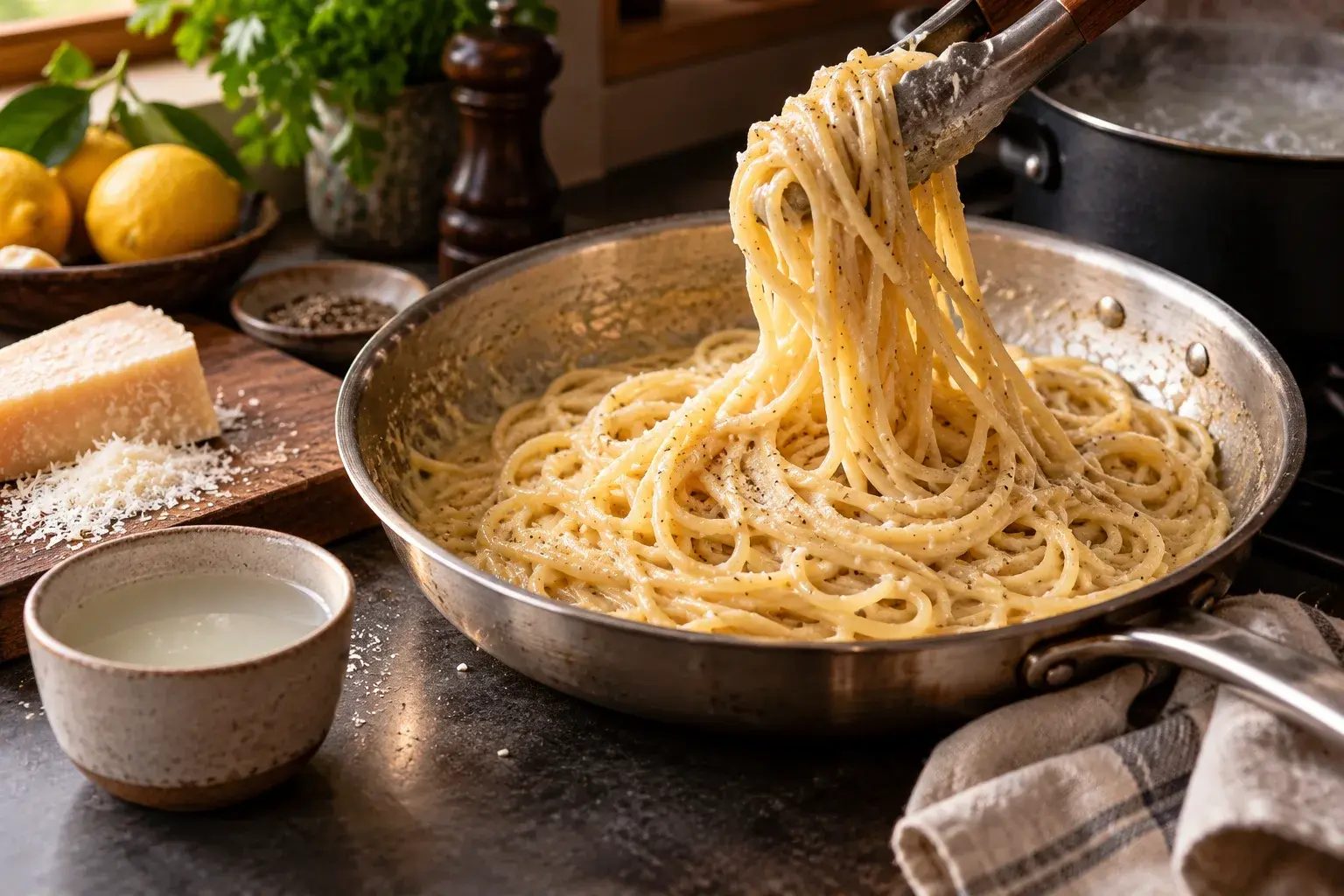
Restaurant pasta often arrives with a sauce that seems to be part of the noodles. It is glossy, cohesive, and light enough to cling without pooling. At home, the same ingredients can produce oily noodles with watery sauce underneath.
The missing step is often a small cup of cloudy cooking water and a minute of vigorous tossing.
What is in pasta water?
As pasta cooks, starch leaves its surface and disperses into the water. That starch thickens liquid slightly and helps droplets of fat stay suspended instead of separating.
It is not magic and it is not glue. It is support for an emulsion: a mixture of water and fat that normally resist each other.
Use less water for a stronger tool
Pasta does not need a huge stockpot to cook well. A wide pot with enough water for the noodles to move freely produces starchier water than an oversized pot.
Stir during the first two minutes to prevent sticking. By the end, the water should look noticeably cloudy.
Before draining, scoop out at least one cup. Make this automatic. Once the water is gone, it is hard to recreate.
Move pasta before it is fully done
Transfer the pasta to its sauce one or two minutes before it reaches your preferred texture. Use tongs or a spider instead of draining when practical. The water clinging to the noodles is useful.
The pasta finishes cooking in the sauce and absorbs its flavor. It also releases more starch exactly where you need it.
Add, toss, and judge
Start with about 1/4 cup pasta water for a pound of pasta. Toss or stir vigorously over medium-low heat. The sauce may look loose at first, then become glossy as the pasta moves and the liquid reduces.
Add more water a tablespoon or two at a time. The finished sauce should look slightly looser in the pan than you want on the plate because it will tighten as it cools.
Handle cheese off the heat
For parmesan, pecorino, or butter-based sauces, reduce the heat or remove the pan entirely before the final addition. Finely grated cheese melts more evenly.
Add cheese in small handfuls while tossing. If the mixture becomes tight or stringy, add warm pasta water and keep moving it. Direct high heat is the enemy here. It can turn smooth cheese into clumps and separated oil.
Three classic uses
Tomato sauce
Finish pasta in the sauce with a splash of cooking water and olive oil. The result is lighter and more cohesive than simply spooning sauce over drained noodles.
Garlic and oil
Garlic-infused olive oil plus pasta water becomes a sauce when tossed vigorously. Without water, the oil slides off. Without motion, it stays separate.
Butter and cheese
Warm pasta water melts butter into a creamy base, then helps grated cheese disperse. You can create a rich texture without adding cream.
Common mistakes
- Rinsing the pasta removes useful surface starch.
- Letting drained pasta sit makes it dry and sticky.
- Adding all the water at once can drown the sauce.
- Boiling after adding cheese encourages clumping.
- Forgetting that the water is salted can lead to an oversalted finish.
The technique is simple: finish the pasta and sauce together. Pasta water is the bridge that makes them one dish instead of two separate components.