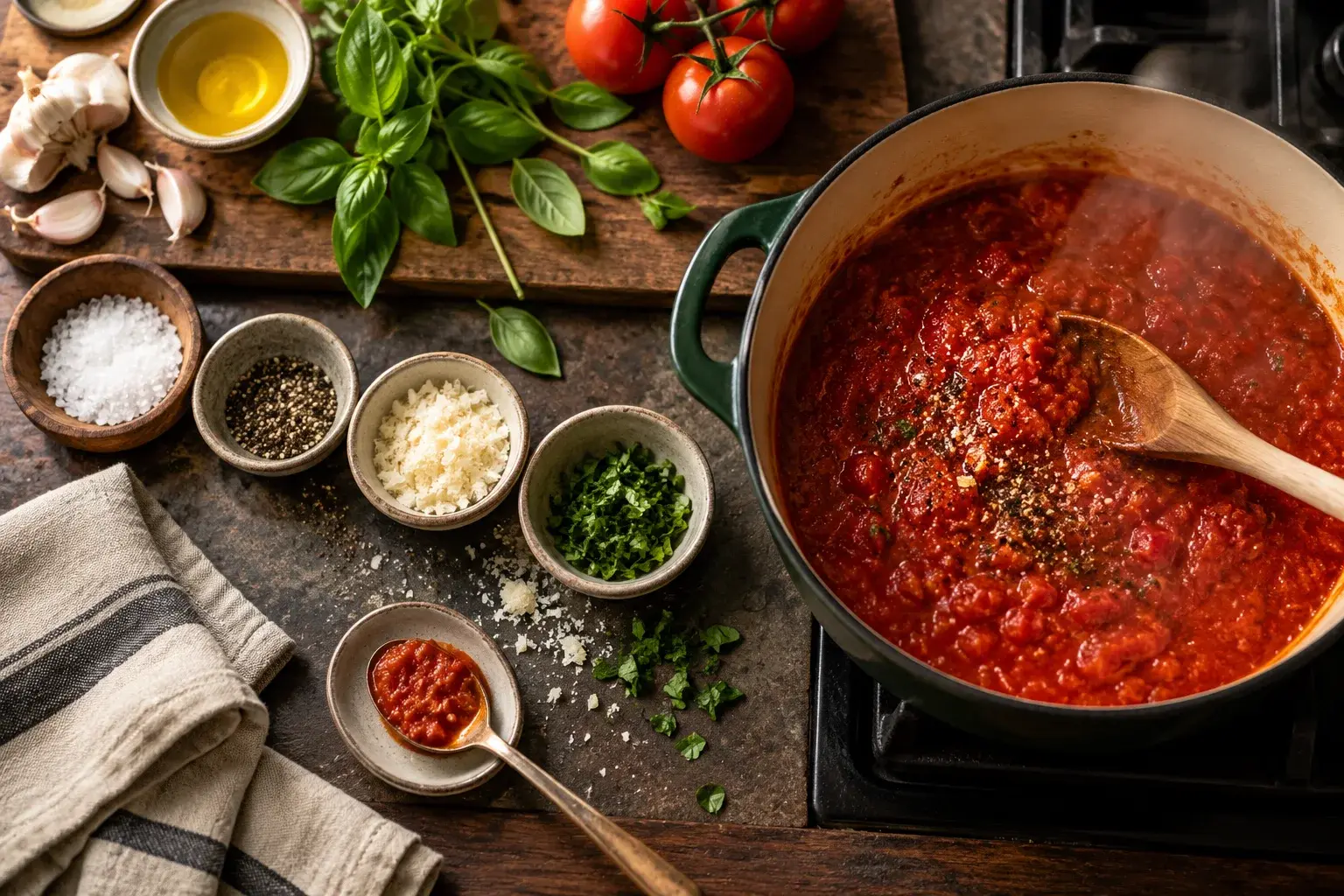
A dish salted only at the end often tastes salty on the surface and bland underneath. A dish seasoned in layers tastes complete. The salt does not announce itself because it has been working with the ingredients from the beginning.
Layered seasoning is simply the habit of making small adjustments as a dish develops instead of waiting for one dramatic correction at the finish.
What salt does during cooking
Salt is not only a final flavor. Given time, it moves into food. It helps onions release moisture, penetrates meat, seasons beans and pasta as they absorb water, and makes aromatic compounds easier to notice.
That is why a potato boiled in salted water tastes different from an unsalted potato dusted with the same amount afterward. One is seasoned throughout. The other has a salty exterior.
A simple four-stage method
1. Season the main ingredient
Salt meat before it enters the pan. Season vegetables shortly after they begin cooking. Salt pasta water before the pasta goes in.
Use less than the final amount. You are establishing a base, not finishing the dish.
2. Season the aromatic base
Onion, garlic, celery, peppers, and spices form their own layer. A pinch of salt helps vegetables soften and release moisture. Taste the base once it is cooked enough to be safe.
3. Reassess after adding liquid
Stock, canned tomatoes, soy sauce, cheese, and prepared condiments all bring salt. Taste after they are incorporated. This is the moment to pause instead of automatically reaching for another pinch.
4. Finish after reduction
Water evaporates. Salt does not. A sauce that tastes perfect before a 20-minute simmer may become too salty after it reduces by half.
Make the final adjustment only when the dish is close to its serving consistency. Then consider acid before adding more salt. Lemon or vinegar often provides the lift you were looking for.
Use a salt budget
Imagine that every dish has a limited salt budget. Spend a little on the protein, a little on the vegetables, and reserve some for the finish.
If the recipe contains parmesan, bacon, olives, capers, miso, soy sauce, or store-bought stock, those ingredients are already spending part of the budget. Add them before making your final call.
Taste with a clean sample
Use a clean spoon and take a complete bite, not just a sip of broth. A pasta sauce should be tasted with a piece of pasta. A stew should include meat, vegetable, and liquid. The goal is to evaluate the food as it will be eaten.
Temperature matters too. Very hot food can hide salt and acid. Let the spoonful cool for a few seconds before deciding.
What to do if you go too far
There is no ingredient that removes salt, but you can rebalance it:
- Add unsalted volume, such as more vegetables, beans, pasta, or stock.
- Add fat to soften the perception of salt.
- Add acid to make the dish feel brighter and less one-note.
- Serve the salty component with a plain starch or unsalted garnish.
Do not add a raw potato and expect it to absorb only salt. It absorbs seasoned liquid, just like any other ingredient.
The habit that changes everything
Keep a small bowl of salt near your prep area. Use your fingers so you can feel how much you are adding. Taste after each stage and notice what changed.
Layered seasoning is not a rigid formula. It is a conversation with the food. Small, informed adjustments beat one desperate shake at the end.