
Copycat Bouchon Bakery TKO Cookies (Thomas Keller’s Oreo, Made at Home)
Prep time: 30 min (plus 4+ hours for ganache to set and 1 hour for dough to chill) Cook time: 18 min per sheet Servings: 24 sandwich cookies
The TKO is Thomas Keller’s Oreo. The name is a pun — TK is his initials, O is for Oreo, and TKO is also “technical knockout,” which is very on-brand for a chef whose restaurants have held a combined twelve Michelin stars. The cookie was developed with Sébastien Rouxel, Keller’s executive pastry chef, for the 2012 Bouchon Bakery cookbook, and it became the signature item at Bouchon Bakery — the flagship in Yountville, California is still open, and the brand has run bakeries in New York, Beverly Hills, and Las Vegas over the years.
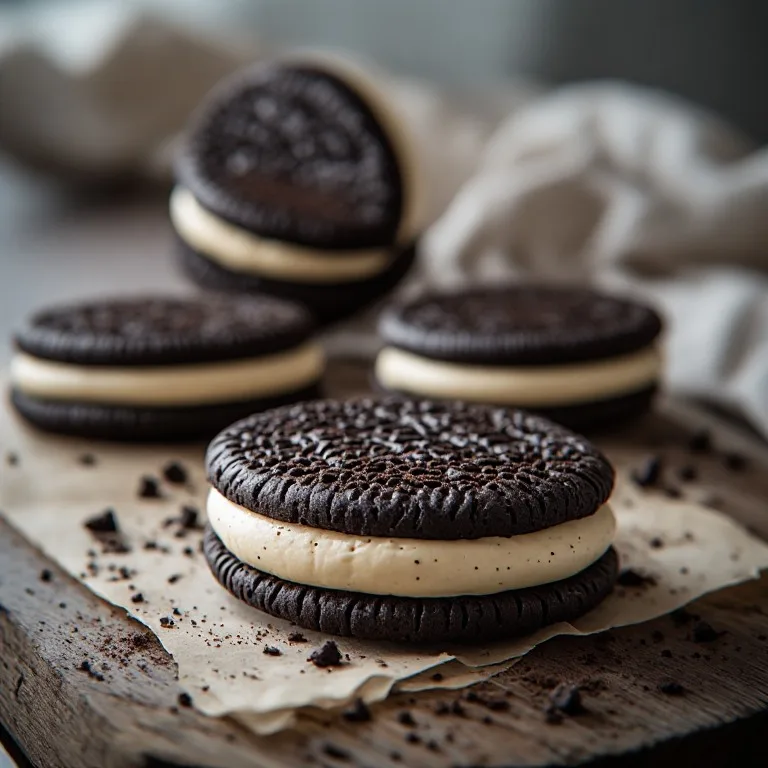
The concept is simple: make an Oreo from scratch, with real ingredients, to the standard of a three-Michelin-star pastry kitchen. On paper it’s the same structure — chocolate wafer, cream filling, chocolate wafer. In practice, two things make it entirely different.
The first is the cocoa. Not Dutch-process, not regular cocoa powder — black cocoa, a heavily alkalized variety that has been processed until it turns near-black. It is essentially the same cocoa that goes into actual Nabisco Oreos. Most copycat TKO recipes stop at regular Dutch-process and wonder why their cookies come out brown instead of near-black. Black cocoa is not optional; it is the recipe.
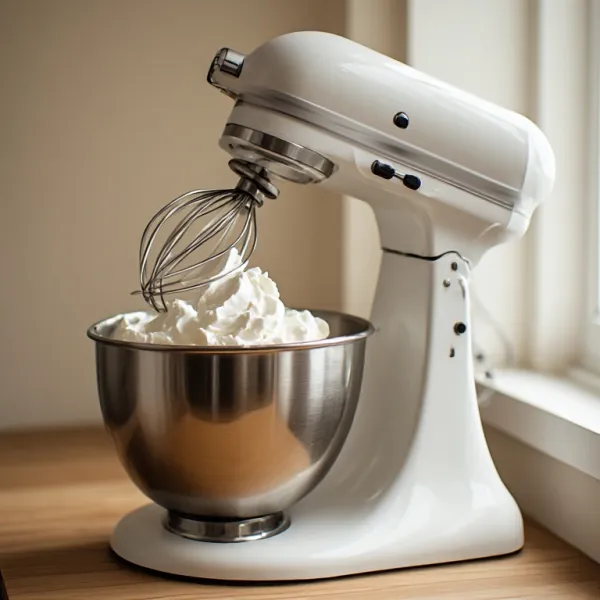
The second is the filling. Most copycat recipes use buttercream (butter + powdered sugar) or shortening, because that reads as “Oreo filling.” The Bouchon Bakery filling is a whipped white chocolate ganache — heavy cream poured over quality white chocolate, emulsified with cold butter, chilled overnight, and briefly whipped to lighten it. The result tastes nothing like commercial Oreo filling. It is richer, less sweet, and more complex, with a silky texture from the white chocolate’s cocoa butter.
Black Cocoa: What It Is and Where to Get It
Black cocoa is Dutch-process cocoa that has been alkalized far beyond the standard process — to the point that the color becomes near-black and most of the acidic sharpness disappears. The flavor is smooth, intensely chocolatey, and subtly bitter without the astringent tang that regular cocoa has. When baked into a cookie, it produces a wafer that smells like an Oreo and looks like one.
The brand Keller’s team specifically recommends is Guittard Cocoa Noir. King Arthur Baking Company’s black cocoa is widely available, excellent, and can be ordered online. Both work interchangeably in this recipe.
Do not substitute standard Dutch-process cocoa. The cookies will taste fine but bake up dark brown, not near-black, and the flavor will lack the particular depth that makes TKOs taste like they came from a $500-a-night restaurant’s bakery counter.
Black cocoa is available at Whole Foods (in some locations), specialty baking shops, King Arthur’s website, and Amazon. Buy a bag — it keeps for a year in a sealed container and transforms brownies and chocolate cakes too.
The Ganache Filling: Not Buttercream
This is the mistake most TKO copycat recipes make. The Bouchon Bakery filling is a white chocolate ganache, not a buttercream. They are structurally different:
- Ganache: cream + fat from the white chocolate + emulsifying butter. Sets firm, slices cleanly, tastes of cocoa butter and cream. Less sweet than buttercream.
- Buttercream: butter + powdered sugar, possibly with vanilla. Lighter, fluffier, sweeter. Tastes nothing like the bakery version.
- Shortening filling: the commercial Oreo approach. Do not.
Making ganache takes slightly more planning (it needs a few hours to set in the fridge before you can whip and pipe it), but the actual work is minimal — heat cream, pour over chocolate, stir, chill, whip briefly. The overnight timing means you can make the ganache one evening and bake the cookies the next morning.
White chocolate quality matters. The ganache is mostly cream and white chocolate; if the white chocolate is poor (palm kernel oil instead of cocoa butter, waxy and one-note), the filling will be poor. Use Valrhona Ivoire, Guittard white wafers, or Callebaut W2. Do not use white chocolate chips from the baking aisle.
The Two Things Most Home Bakers Get Wrong
1. Using the wrong cocoa. Covered above. If the cookie is brown instead of near-black, it’s the cocoa.
2. Underbaking the wafers. Sablé cookies are easy to underbake because they brown on the outside before they’ve dried through, and because they look and feel slightly fragile when first pulled from the oven. The result is a cookie that bends instead of snaps — pleasant enough but wrong. The TKO wafer should be crisp and snap cleanly when cool.
At 325°F, these cookies need 17 to 19 minutes. The test is not color (they’re very dark from the start). It’s feel: the center should be just barely firm under a gentle touch. The snap develops as they cool on the pan — don’t try to snap them hot. If you’re baking for the first time, pull one test cookie at the 17-minute mark and let it cool for 5 minutes before testing. If it snaps, the rest are done. If it bends, give the batch 2 more minutes.
The Assembly: Pipe, Don’t Spread
The signature look of a Bouchon Bakery TKO — small ganache pearls visible around the edge of the sandwich — comes from piping the filling in concentric rings of ½-inch teardrops, not spreading it. Spreading works perfectly well for flavor, but the piped version looks like the bakery version and the pearls at the edge tell you immediately that the filling is ganache and not frosting.
Use about 18 grams (1 tablespoon) of ganache per cookie. More than that and the filling squeezes out when the wafers are pressed together. Less and the cookies feel stingy.
After assembly, rest the sandwiches for 30 minutes before serving. The ganache re-firms slightly at the edges and the cookie holds together better when you bite into it. They keep for 3 days at room temperature and a week refrigerated; bring them to room temperature before eating.
What You’re Getting for the Work
A single TKO at Bouchon Bakery runs roughly $5 to $6. One batch of this recipe makes 24 sandwich cookies for about $12 to $16 in ingredients — under $0.75 each. More to the point, the cookies you make at home will be fresher than anything sitting in a bakery case, and you’ll have complete control over the one variable that matters most at the professional level: baking time.
The recipe is medium difficulty — not technically demanding, but with two components (the ganache must be made ahead) and one critical variable (baking until crisp). If your first batch comes out chewy, bake the next one 2 minutes longer. The rest is assembly.