


Pin It

J. Kenji López-Alt's Crispy Roast Potatoes

J. Kenji López-Alt's Crispy Roast Potatoes
Jump to Recipe
Prep 15 min Cook 45 min Serves 4
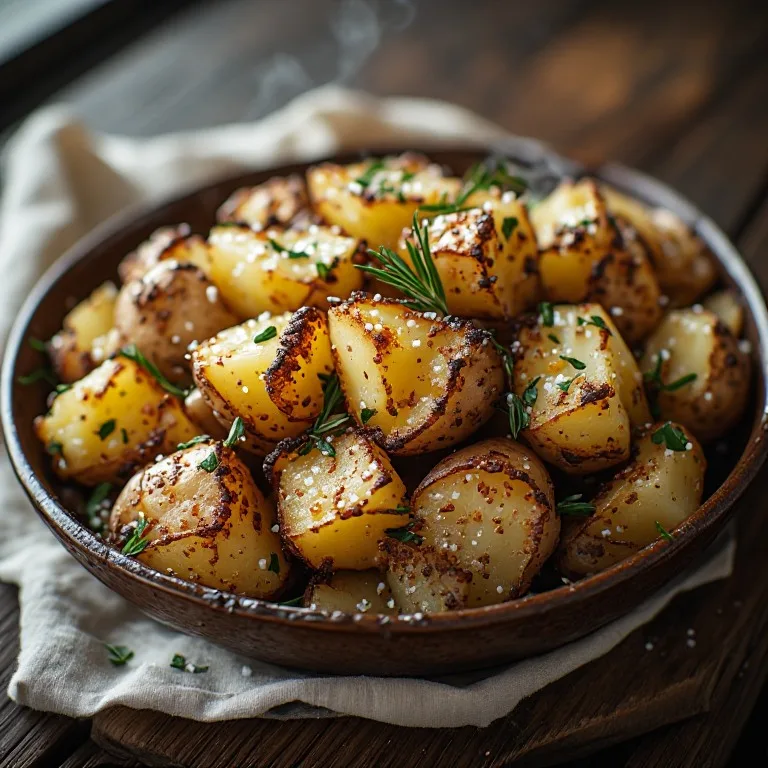
Quick answer: Bring a large pot of water to a boil and add 1 tsp kosher salt and ½ tsp baking soda. Add 3 lbs peeled, 2-inch potato chunks (Russet or Yukon Gold). Boil 10–15 minutes until the edges are visibly crumbling but the centers are still firm. Drain and return to the pot (off the heat). Shake vigorously until the surface looks fluffy and paste-like, about 30 seconds. Preheat your oven to 450°F (230°C) with a rimmed baking sheet and 5 tablespoons fat (duck fat, goose fat, or olive oil) inside. Season potatoes with salt, black pepper, and optional rosemary. Tip directly onto the hot fat-coated pan, turning to coat. Roast 20 minutes undisturbed. Flip and roast another 20–25 minutes until deeply golden and crunchy all over.

Shop the tools

Gear matched to this recipe. These are Amazon affiliate links — we may earn a small commission if you buy, at no extra cost to you.

As an Amazon Associate, Copycat Spices earns from qualifying purchases. Product images are generic illustrations, not the exact item listed.

J. Kenji López-Alt's Crispy Roast Potatoes

J. Kenji López-Alt's Food Lab method for the crispiest roast potatoes you can make at home: parboil with baking soda to break down the surface, shake aggressively to roughen the exterior, then roast in preheated fat at 450°F. The alkaline water is the single step that separates these from every other roast potato recipe.

Easy Prep: 15 min Cook: 45 min Total: 1h 0m4 servings ~$3.50/serving
Prep15 min
Cook45 min
Total1h 0m
Servings
4
At home~$3.50/serving
vs
Restaurant~$15.75/serving
You save ~78%

The Story Behind the Recipe

J. Kenji López-Alt spent months testing roast potato recipes for The Food Lab, the landmark book he published in 2015 and the column he built at Serious Eats. He wanted to understand what made British-style roast potatoes — the kind served alongside a Sunday roast — dramatically crispier than anything American home cooks were making. The answer turned out to be chemistry: the water you boil potatoes in is normally neutral, and neutral water barely touches the potato's outer structure. Alkaline water — raised to a high pH with just half a teaspoon of baking soda — attacks the pectin in the potato's cell walls, breaking them down and producing a fuzzy, starch-rich paste on the surface. That paste dehydrates and fries in the oven, creating a thick, shattering crust instead of the thin, papery skin that normal parboiled potatoes develop. The recipe was published under the title "The Best Crispy Roast Potatoes Ever" and has been reproduced, cited, and adapted more than almost anything else Kenji has written — a rare case where a technique that sounds gimmicky is genuinely transformative.

The roughing-up step works in tandem with the alkaline parboil: you drain the potatoes and shake them hard in the pot, deliberately bruising the softened exterior into a thick slurry. It looks like you're ruining them. You're not. That slurry is what becomes the crust. Kenji's original recipe calls for goose or duck fat, which is traditional for British-style roasties and produces an unbeatable savory depth; olive oil or a neutral vegetable oil works nearly as well and is what most home cooks will use. The technique, not the fat, is the non-negotiable part.

Nutrition Facts

Per serving (4 servings)
Calories285
Total Fat12g
Total Carbs42g
Dietary Fiber3g
Sugars2g
Protein4g
Sodium520mg

* Estimated values based on standard recipe preparation. Actual values may vary.

Ingredients

  • Optional aromatics (add after draining)

Instructions

💡
Pro tip: This recipe tastes even better the next day. The flavors need time to meld together in the fridge.
❄️
Storage: Keeps in an airtight container in the fridge for up to 2 weeks. Freezer-friendly for up to 3 months.
🦃 Free Thanksgiving cookbook — download now The Copycat Thanksgiving Cookbook A ready-made, photo-illustrated PDF of our best thanksgiving copycat recipes — free to download, no building required. Pay what you want to support if you love it.

Free PDF — instant download. We'll also send new seasonal copycat recipes now and then; unsubscribe anytime. Or just download it →

J. Kenji López-Alt’s roast potatoes are different from every other roast potato you’ve made, and the difference comes down to a single step: adding baking soda to the parboiling water.

The alkaline water breaks down the potato’s outer structure faster than neutral water would, creating a thick, starchy paste on the surface when you rough the potatoes up after draining. That paste dehydrates in the oven’s heat and then fries in the surrounding fat, building a crackly, shatteringly crisp crust that’s unlike anything a thin-skinned parboiled potato can produce.

The technique in plain language: boil with baking soda → drain and shake until the surface looks ruined → tip onto screaming-hot fat in a preheated pan → don’t move them for 20 minutes → flip and finish.

Everything else — the fat you choose, the aromatics you add, whether you use Russet or Yukon Gold — is secondary. The baking soda and the aggressive roughing-up are the two steps that cannot be skipped or softened.

Why the Baking Soda Works

At neutral pH, potato pectin holds the cell walls together firmly. Raise the pH with baking soda and those same walls begin to dissolve faster during the parboil, releasing a slurry of broken starch that coats the outside of each chunk. That starchy coating is the raw material for the crust.

Without the baking soda, parboiling produces a thin, slightly sticky layer on the potato surface. With it, you get a thick, fuzzy, almost mashed-potato-looking exterior. More surface area = more contact with hot fat = more browning = more crunch.

Make-Ahead Notes

You can parboil and rough up the potatoes up to 8 hours ahead. After roughing up, spread them on a parchment-lined sheet pan and refrigerate uncovered — the exposed surface dries out in the fridge, which actually makes the final crust crispier. When you’re ready, preheat the pan and fat, and proceed from step 4. The cold-from-the-fridge potatoes will need an extra 5 minutes of roasting time.

The Fat

Duck fat or goose fat produces the crispiest, most flavorful crust and is traditional for British Sunday roasties. It’s sold in jars at most specialty grocery stores. Extra-virgin olive oil is the next-best option for most home cooks and works well at this temperature. Avocado oil (smoke point 520°F) is the most heat-stable and produces a neutral-flavored crust. All three produce excellent results; the technique is what makes the potato, not the fat.

🥗

Make It Healthier

Love J. Kenji López-Alt's Crispy Roast Potatoes but want a lighter version? Try these simple swaps:

  • ✓Reduce fat to 3 tablespoons instead of 5 and use olive oil: you'll still get excellent crunch, cutting about 60 calories per serving. The crust will be slightly thinner but the technique still works — the baking soda is what creates the crunch, not the quantity of fat.
  • ✓Use Yukon Gold potatoes instead of Russets: Yukons have a waxier cell structure that holds together slightly better, so you can parboil them a little longer to develop more surface starch without the chunks falling apart. The result is a creamier interior at the same exterior crunch.
  • ✓Parboil and rough up the potatoes up to 8 hours ahead: let them cool on a sheet pan lined with parchment (don't stack), refrigerate uncovered to dry the surface further, then proceed with the hot-fat roasting step. A drier surface actually crisps more aggressively than freshly roughed-up potatoes.
  • ✓Skip the duck/goose fat and use avocado oil (smoke point 520°F): it withstands the 450°F oven longer than olive oil without any bitterness, produces a nearly identical crust, and costs a fraction of specialty poultry fat.

Frequently Asked Questions

Why does baking soda make roast potatoes crispier?

Baking soda raises the pH (alkalinity) of the boiling water. At higher pH, the pectin in potato cell walls breaks down much faster than it would in neutral water. The potato's surface develops a layer of ruptured, starch-rich cells that create a fuzzy paste when you rough them up after draining. That paste dehydrates in the oven's dry heat and then fries in the surrounding fat, forming a thick, crackly crust. Neutral-water parboiled potatoes develop a thin, leathery skin instead — not much surface area for browning. The alkaline crust has dramatically more surface area, which means more Maillard reaction, more color, and more crunch.

What's the right amount of baking soda for roast potatoes?

Kenji's recipe calls for ½ teaspoon of baking soda in enough water to cover the potatoes — roughly 2 quarts (8 cups). That's a very small amount of baking soda for a large volume of water, but it's enough to meaningfully change the pH. More baking soda does not produce proportionally better results and can give the potatoes a faint soapy or metallic off-flavor. Stick to ½ tsp per 2 quarts. You can go up to ¾ tsp if you want to push it, but avoid 1 full teaspoon or more.

Russet or Yukon Gold for crispy roast potatoes?

Both work well, with different trade-offs. Russets are high-starch, low-moisture: they produce a thicker crust and very fluffy interior, but the chunks are more fragile after parboiling and can fall apart if you're too aggressive during the roughing-up step. Yukon Golds are medium-starch, medium-moisture: the crust is slightly thinner and the interior is denser and creamier rather than fluffy. Most people prefer Yukons for eating quality; Russets for maximum crunch. Avoid waxy potatoes (red, fingerling) — they don't develop enough surface starch.

Do I have to preheat the fat in the pan?

Yes — this is one of the two non-negotiable steps (along with the baking soda). When cold potatoes hit a cold pan, they steam for several minutes before the fat gets hot enough to actually fry the surface. When potatoes hit already-hot fat, the crust starts forming immediately. The aggressive initial sizzle is what seals the surface and prevents the starchy paste from turning gluey instead of crispy. Preheat your baking sheet and fat together in the oven for at least 5 minutes before adding the potatoes.

Can I use olive oil instead of duck or goose fat?

Yes. Duck and goose fat are traditional for British-style roast potatoes and produce a slightly richer, more savory crust, but extra-virgin olive oil gets you 90% of the way there on crunch and is what most home cooks will use. Olive oil's smoke point (around 375°F for extra-virgin) is technically below the 450°F roasting temperature, but in practice the fat is not fully exposed — it's insulated by the potatoes — so it doesn't reach full smoke point during the roast. You may notice a faint bitterness at the edges of very well-done spots; if that bothers you, use light olive oil or avocado oil instead.

How do I get the potatoes evenly golden on all sides?

Two things: cut even chunks (2–2½ inches — not smaller, which dries out, and not larger, which has one giant face that doesn't get enough contact with the pan) and flip only once, at the 20-minute mark. The first 20 minutes build the primary crust on the bottom face — disrupting that early breaks the crust before it's set. After flipping, the bottom becomes the new top and will brown in the next 20–25 minutes from the oven's radiant heat and hot air. If you want to brown a third face, flip again and roast another 10–12 minutes. For a more uniform 360° crunch, transfer to a rack set over a sheet pan for the last 5 minutes.

Why do these roast potatoes need to rest after roughing them up?

They don't always need it, but a short rest (5–10 minutes on a rack or sheet pan before hitting the hot fat) lets surface moisture evaporate. Wet potato paste hitting hot fat sputters and steams rather than frying cleanly. If you're making these ahead (up to 8 hours), a longer dry rest in the fridge actually improves crust formation — the surface becomes almost dry-looking. This is the same principle behind drying chicken skin before roasting.

Love this recipe? Share it!

Free PDF: our 12 most-wanted copycat recipes — instant download.

Made it? Buy us a coffee

Every recipe here is free, with no paywalls. If this one was a hit at your table, a small tip keeps new copycats coming.

$

Ratings & Reviews

—
No ratings yet

Rate this recipe

Click a star to rate

Leave a Review

0/500

CS

Copycat Spices Editorial

Researched + fact-checked. Every recipe on Copycat Spices is built from published sources — official ingredient lists, brand-published recipes, interviews and food-science references — and fact-checked before it goes live, then written as clear, step-by-step instructions for home cooks of all skill levels.

Learn more about our mission →