


Pin It

Gordon Ramsay Scrambled Eggs (The Soft, Creamy Pull-Off-Heat Technique)

Gordon Ramsay Scrambled Eggs (The Soft, Creamy Pull-Off-Heat Technique)
Jump to Recipe
Prep 3 min Cook 5 min Serves 2

Shop the tools

Gear matched to this recipe. These are Amazon affiliate links — we may earn a small commission if you buy, at no extra cost to you.

As an Amazon Associate, Copycat Spices earns from qualifying purchases. Product images are generic illustrations, not the exact item listed.

Gordon Ramsay Scrambled Eggs (The Soft, Creamy Pull-Off-Heat Technique)

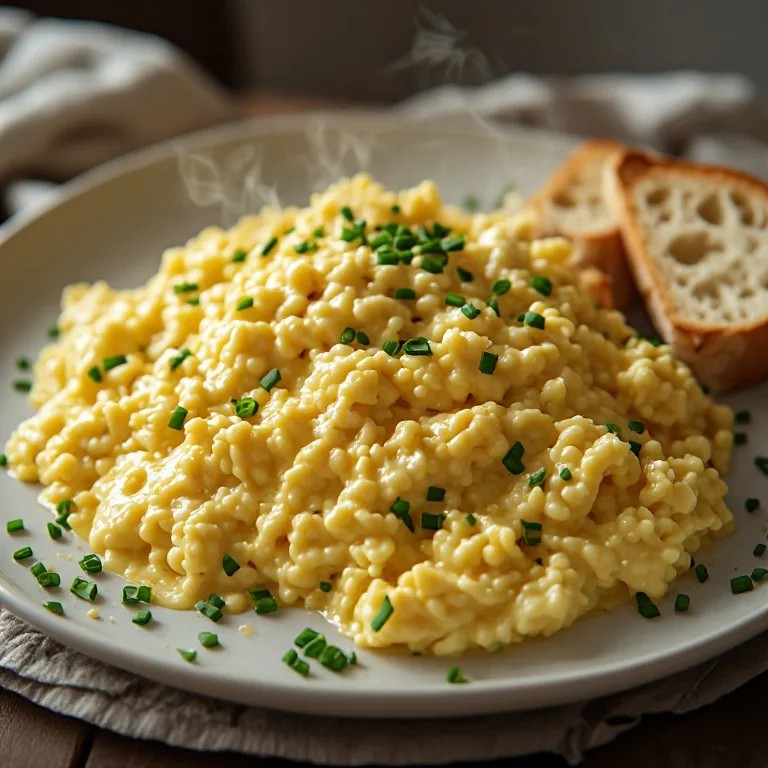
Gordon Ramsay's scrambled eggs technique — start cold, pull the saucepan off the heat every 30 seconds while stirring constantly, finish with crème fraîche — produces the softest, creamiest eggs imaginable. His YouTube version is one of the most-watched recipe videos online; this is the exact method, step by step, in under 10 minutes.

Easy Prep: 3 min Cook: 5 min Total: 8 min2 servings ~$2.80/serving
Prep3 min
Cook5 min
Total8 min
Servings
2
At home~$2.80/serving
vs
Restaurant~$12.60/serving
You save ~78%

The Story Behind the Recipe

Gordon Ramsay's scrambled eggs video became one of the most-watched cooking clips on the internet — tens of millions of views, routinely ranked among the most-viewed recipe videos on YouTube. In it, he demonstrates a technique most home cooks had never seen: starting the eggs cold in a cold pan, pulling the saucepan on and off medium heat every 30 seconds, stirring constantly, and finishing with crème fraîche to halt the cooking and add a glossy creaminess. The video crystallized his teaching philosophy — master technique with the simplest possible ingredients. Restaurant Gordon Ramsay at 68 Royal Hospital Road in Chelsea has held three Michelin stars since 2001; but this egg method, rather than any tasting-menu dish, became the thing most associated with his name in home kitchens worldwide.

The technique is counterintuitive: cold eggs in a cold pan, heat applied and removed repeatedly in short intervals, the whole process taking barely five minutes. But each step has exact logic. Starting cold gives you maximum time before the proteins set. The 30-second on-off cycles prevent the pan from overheating and running away from you. And the crème fraîche — added at the exact moment the eggs are still slightly underdone — drops the temperature of the pan, halts further cooking, and leaves each curd glossy and soft rather than chalky. A plated soft-scramble-with-smoked-salmon brunch at a London hotel dining room runs well north of £20; the home version, for two people, costs roughly £1.50 in ingredients.

Nutrition Facts

Per serving (2 servings)
Calories285
Total Fat23g
Total Carbs2g
Dietary Fiber0g
Sugars1g
Protein18g
Sodium290mg

* Estimated values based on standard recipe preparation. Actual values may vary.

Ingredients

  • To serve

Instructions

💡
Pro tip: This recipe tastes even better the next day. The flavors need time to meld together in the fridge.
❄️
Storage: Keeps in an airtight container in the fridge for up to 2 weeks. Freezer-friendly for up to 3 months.
🎃 Free Halloween cookbook — download now The Copycat Halloween Cookbook A ready-made, photo-illustrated PDF of our best halloween copycat recipes — free to download, no building required. Pay what you want to support if you love it.

Free PDF — instant download. We'll also send new seasonal copycat recipes now and then; unsubscribe anytime. Or just download it →

The short version: Gordon Ramsay’s scrambled eggs are made by cracking cold eggs straight into a cold saucepan with cold butter — no bowl, no whisking, no pre-salting — then cooking over medium heat while stirring constantly and lifting the pan off the burner every 20–30 seconds so it never overheats. When the eggs are about 60–70% set and still glossy and pourable, you pull the pan for good, stir in a spoonful of crème fraîche to stop the cooking, season, and serve within a minute. The whole thing takes five minutes and produces eggs far softer and creamier than the usual stovetop scramble.

What makes Gordon Ramsay’s scrambled eggs different

Most home scrambles fail the same way: the eggs are whisked with milk, poured into a hot pan, left to set, then stirred a few times and served — by which point they’re firm, slightly rubbery, and weeping a little water. Ramsay’s method inverts almost every one of those moves. Here’s what each change is actually doing.

  • No bowl, no whisk. Cracking the eggs directly into the pan and folding them with a spatula keeps air out. Whisking builds a foam that cooks up spongy; folding keeps the curds dense and custardy.
  • Cold start. Cold eggs and cold butter in a cold pan mean the eggs spend the maximum possible time below the setting temperature, so the proteins coagulate slowly and you keep control the whole way.
  • The on-off cycle. Lifting the pan every 20–30 seconds is the heart of the technique. A pan left on the burner keeps climbing in temperature and will overshoot; pulling it off lets the residual heat do gentle work while you catch up with the spatula. You are essentially hand-regulating the temperature in short bursts instead of trusting a dial.
  • Crème fraîche at the end. Added while the eggs are still underdone, the cold cultured cream drops the pan temperature, halts the carryover cooking, and loosens the curds into a loose, glossy, spoonable texture. Its mild acidity also keeps the eggs from tasting flat.
The one mistake that ruins them: cooking too long

If you take only one thing from Ramsay’s method, make it this — pull the eggs while they still look underdone. The residual heat in the pan and in the eggs keeps cooking them for roughly 60–90 seconds after the last time you lift the pan. Home cooks almost universally wait until the eggs look finished, which means they’re already overcooked by the time they hit the plate. When the curds are glossy, soft, barely formed, and still flow when you tilt the pan, they’re done. Season, add the crème fraîche, and plate immediately. This is also why the dish can’t be made ahead or held warm: unlike a casserole or a braise, scrambled eggs have no holding window — they overcook from their own heat within minutes.

Saucepan vs. skillet, and what to use instead of crème fraîche

A saucepan (around 2 quarts, 7 inches across) is what Ramsay uses because its taller curved walls and slower heat transfer make the pan easier to control than a wide, fast-conducting skillet — you can scrape the eggs back to the center instead of chasing a thin layer across a flat surface. A nonstick skillet still works; just lift it off the heat more often and for slightly longer each time.

For the finish, crème fraîche is ideal, but the substitutions are forgiving because the quantity is small: full-fat sour cream is the closest match, mascarpone is richer and less tangy, and full-fat Greek yogurt works while adding a little protein. Skip plain heavy cream (too thin, no acid) and cream cheese (it clumps). A cold pat of butter stirred in at the very end is the dairy-free version — it won’t add tang, but it will add gloss and stop the cooking.

What to serve with them

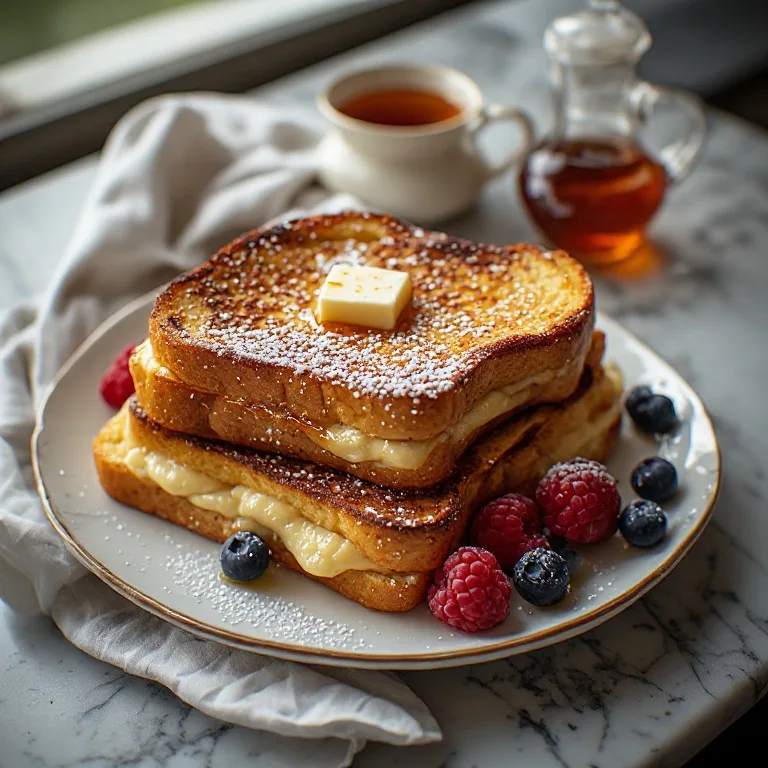
The classic plating is soft eggs over toasted brioche or sourdough, finely snipped chives on top, and smoked or cured salmon alongside — the salt and smoke of the fish against the soft butter-rich egg is the combination from Ramsay’s most-watched video. For a fuller breakfast spread, these eggs sit comfortably next to a stack of diner-style pancakes or a sweeter plate like Balthazar’s brioche French toast. If you want a sandwich instead of a plate, the same soft curds are excellent piled into an egg-and-cheese.
🥗

Make It Healthier

Love Gordon Ramsay Scrambled Eggs (The Soft, Creamy Pull-Off-Heat Technique) but want a lighter version? Try these simple swaps:

  • ✓Use 4 whole eggs + 2 egg whites to cut fat to about 14g per serving with nearly identical texture.
  • ✓Swap crème fraîche for full-fat Greek yogurt — same tang and creaminess, slightly more protein.
  • ✓A teaspoon of olive oil in place of butter shaves saturated fat without sacrificing the soft set.
  • ✓Serve on whole-grain toast instead of brioche for an extra 3g fiber per serving.

Frequently Asked Questions

Why does Gordon Ramsay use a saucepan instead of a skillet for scrambled eggs?

A saucepan has a smaller surface area, higher curved walls, and transfers heat more slowly and evenly than a flat skillet. Those high walls make it easy to scrape the eggs back toward the center rather than chasing them across a wide surface. A skillet works well for omelets, where quick, even heat is the goal — but for soft scrambles, the faster heat conduction of a skillet makes the pull-off-heat technique harder to execute because the pan gets hotter faster and stays hotter longer. A 2-quart saucepan (about 7 inches in diameter) is ideal for 6 eggs. If you only have a skillet, it still works — you just need to be more aggressive about pulling the pan off the heat more frequently and for slightly longer intervals.

What is crème fraîche and what can I substitute?

Crème fraîche is a thick, cultured cream — roughly 30% fat — with a mild tang similar to sour cream but richer and less acidic. It integrates smoothly into hot eggs without curdling or leaving lumps. The acid in it also helps neutralize the richness of butter and egg yolk. Best substitutes: full-fat sour cream is the closest match in flavor and texture; mascarpone is richer and less tangy, giving an even more luxurious result; full-fat Greek yogurt works and adds protein, though it's slightly more acidic. Do not use regular heavy cream — it is too thin and doesn't add the acid that balances the dish. Do not use cream cheese — it clumps rather than incorporating smoothly. The quantity is small (1 tablespoon per serving), so the substitution won't dramatically change the final dish.

Why doesn't Gordon Ramsay add salt to his eggs before cooking?

Ramsay's reasoning is that salt added to raw eggs that then sit draws moisture out of the proteins, which can weep into the pan as the eggs cook and leave you with a watery scramble instead of a cohesive, creamy mass. Seasoning at the very end — after the crème fraîche has stopped the cooking — lets him control the final texture precisely. It's worth knowing this is actually a point of genuine debate among cooks, not settled science: food scientist J. Kenji López-Alt (The Food Lab) found the opposite in testing — salting beaten eggs 10 to 15 minutes before cooking produced noticeably more tender eggs that held their moisture better, because the salt interferes with proteins bonding too tightly, while salting at the very end tended to make eggs tougher and weepier. Both camps agree on one thing: do not salt and then let the eggs sit for a long time (hours), which does draw out excess liquid. For this recipe, follow Ramsay and season at the end; if you want to experiment, try salting 15 minutes ahead in a side-by-side batch and judge for yourself.

How do I know when to stop cooking and add the crème fraîche?

The eggs are ready for the crème fraîche when they look about 60 to 70 percent set — soft, glossy, with large, barely-formed curds, and still somewhat pourable. If you tilt the pan slightly, the eggs should flow slowly toward the low side rather than holding their shape. This will look underdone to most home cooks. That is correct: the moment you think they need another 30 seconds is usually the moment they are already done. The crème fraîche you are about to add will chill the pan slightly and halt the cooking, and carryover heat from the pan itself will finish the eggs over the next 60 to 90 seconds as you plate them. If you wait until the eggs look done, they are overdone. Err dramatically on the side of too soft.

Can I make Gordon Ramsay's scrambled eggs ahead of time?

No — this is the one dish that genuinely does not hold. The residual heat in the pan and in the eggs themselves continues cooking them for about 90 seconds after you pull them off heat for the last time. If you hold them warm, even in a low oven or on a warming rack, they overcook from the inside and become dry and chalky within minutes. The solution is mise en place before you start: toast made and plated, chives chopped, salmon sliced, everyone at the table. Then cook and plate within 60 seconds of finishing. If you're cooking for more than two people, do it in batches of one saucepan per two portions, staggered by a few minutes, rather than trying to scale up in one pan.

Does Gordon Ramsay really serve scrambled eggs in eggshells?

In several of his television demonstrations, yes — the eggs are served in cleaned-out eggshell cups: the top third of the shell is removed with a sharp tap and a small knife, the raw egg is poured into the pan, and the cleaned, dried shell becomes the serving vessel, usually with toasted brioche soldiers (thin strips cut from thick-sliced brioche) alongside for dipping. It's a plating flourish for the camera more than a fixed restaurant standard. For home cooks it is completely optional — a slice of brioche or sourdough toast on the side serves the same function. The cured salmon accompaniment featured in his most-watched video is also optional but highly recommended: the salinity and smoke of smoked salmon against the soft, buttery egg is one of the better flavor combinations in a simple breakfast.

Love this recipe? Share it!

Free PDF: our 12 most-wanted copycat recipes — instant download.

Made it? Buy us a coffee

Every recipe here is free, with no paywalls. If this one was a hit at your table, a small tip keeps new copycats coming.

$

Ratings & Reviews

—
No ratings yet

Rate this recipe

Click a star to rate

Leave a Review

0/500

CS

Copycat Spices Editorial

Researched + fact-checked. Every recipe on Copycat Spices is built from published sources — official ingredient lists, brand-published recipes, interviews and food-science references — and fact-checked before it goes live, then written as clear, step-by-step instructions for home cooks of all skill levels.

Learn more about our mission →