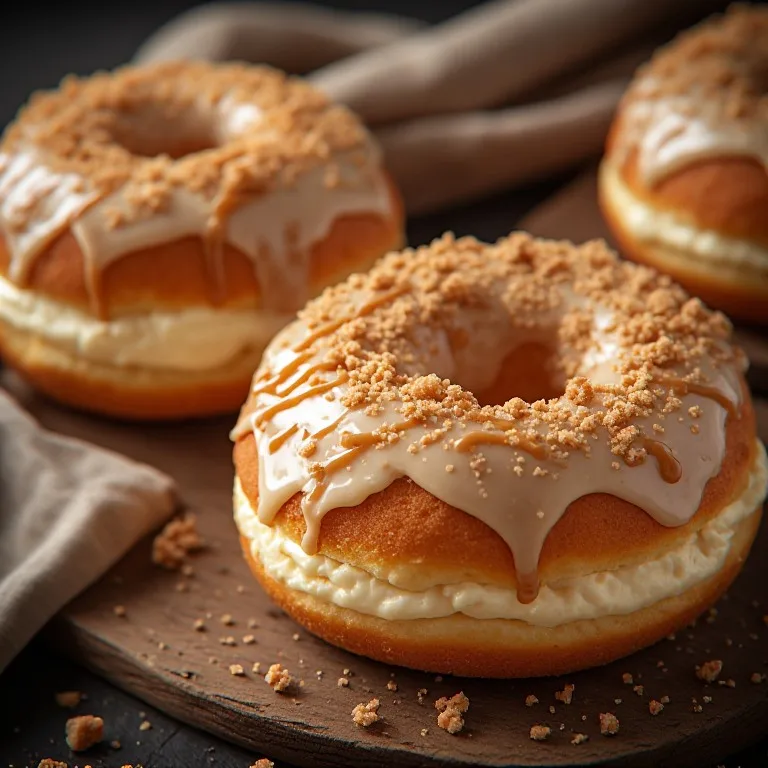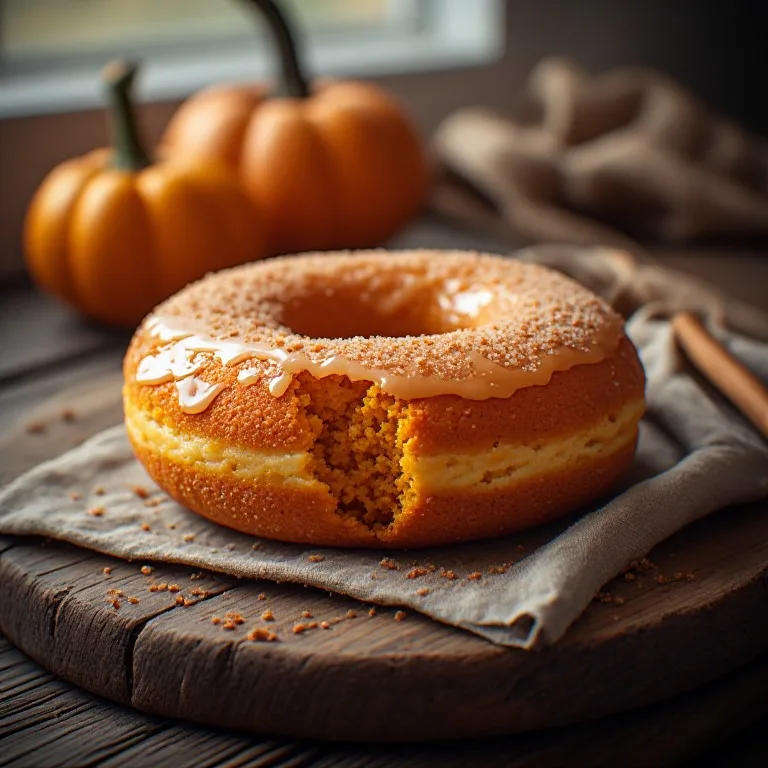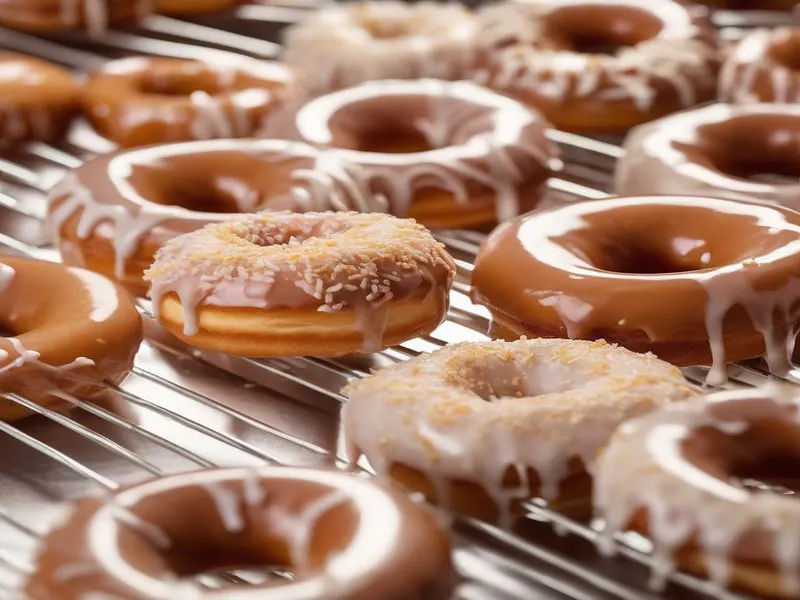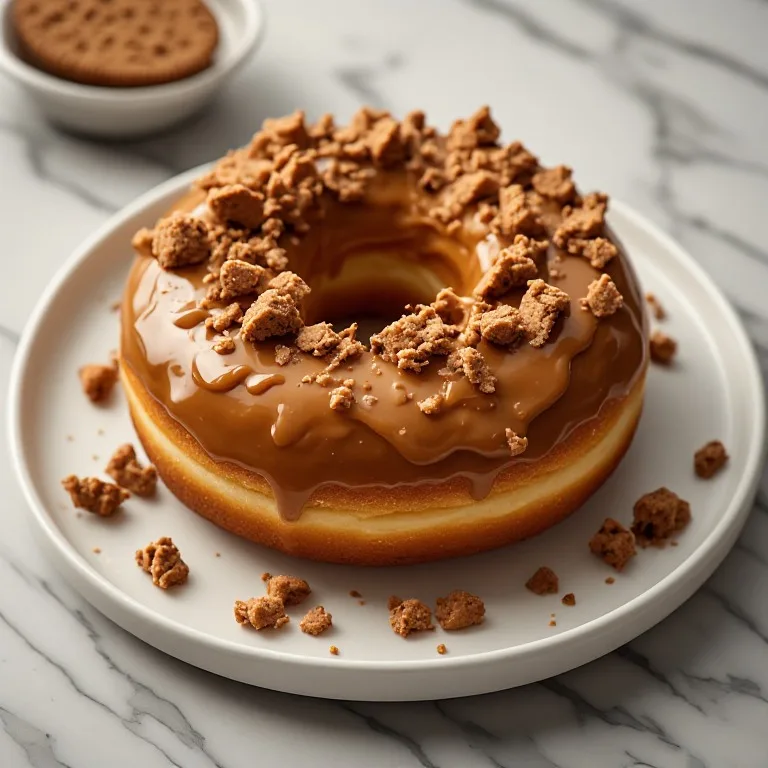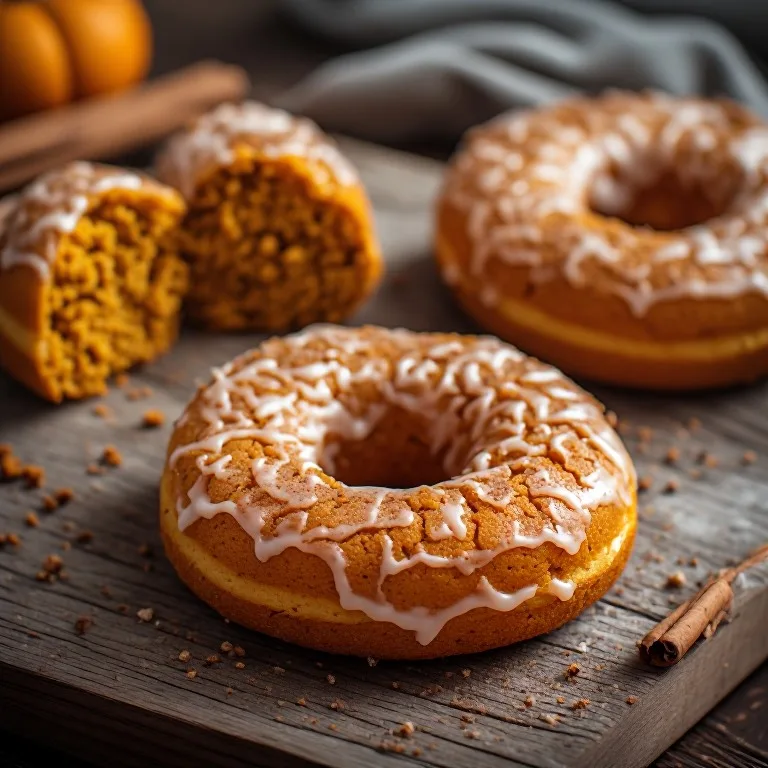



Krispy Kreme’s Pumpkin Spice Cake Doughnut is an Old Fashioned — the original American cake donut, pre-dating the smooth ring style by decades. It returned to the fall 2026 Autumn Seasonal Collection on August 11 alongside three other new donuts.
The craggy exterior is the entire point. Where a smooth ring cake donut has a uniform, even surface that glazes cleanly on the outside, an Old Fashioned has ridges and crevices that KK’s thin Original Glaze fills from inside. Every bite carries glaze from the surface and from inside the cracks — a fundamentally different texture experience than any smooth donut can produce.
What makes this an Old Fashioned
The Old Fashioned format comes from three choices: sour cream as the fat-and-acid base (not buttermilk alone), a stiffer dough with less hydration, and the way you cut and fry it. The sour cream gives the batter a slightly denser, tangier quality. The low hydration means the exterior sets fast when it hits oil. When the interior keeps expanding from leavening and steam, it has nowhere to go except through the weakest points — the cut edges left by the donut cutter — tearing the surface into the craggy ridges you can see on every KK Old Fashioned.
This recipe uses both sour cream and a small amount of pumpkin purée. The pumpkin adds moisture and natural orange color without softening the dough to the point where it stops cracking. The pumpkin pie spice in the batter provides a warm background — it’s lighter-handed than Dunkin’s version, which is part of why the KK donut comes in around 290 calories versus Dunkin’s 380.
The glaze pools differently on a craggy surface
KK’s Original Glaze is the same thin, translucent sweet glaze used on their classic Original Glazed yeast donut. On a smooth yeast donut, it forms a uniform coat. On an Old Fashioned, it works differently: the crevices catch and hold glaze while the ridged peaks carry less. Each ridge has a pool of glaze at its base and a thinner coat at its peak, which creates sweet pockets that you hit at random intervals in every bite.
That’s the unique thing about dipping an Old Fashioned: more total glaze adheres per bite, but it’s distributed unevenly by the surface texture. The result feels more dynamic than any smooth-coated donut — you get sweet bursts where the glaze pooled and a more muted sweetness at the ridges. The pumpkin spice in the dough plays into this pattern: the spice hits harder where the glaze is thinner, softer where it pooled.
The rolling and cutting step controls cracking
The biggest lever on how many cracks your Old Fashioned develops is thickness and how you use the cutter. Rolling to 3/4 inch (instead of the 1/2 inch you would use for a smooth ring) gives the interior more mass to push outward during frying. Pressing the cutter straight down — lifting cleanly rather than twisting or dragging — leaves the cut edge completely unsealed. That unsealed edge is the starting point for every crack that opens during frying.
If you twist the cutter, the friction seals the edge and the interior expands uniformly without finding a weak point. The donut still fries fine, but it comes out looking more like a smooth ring than an Old Fashioned. Press, lift, do not twist.
Tips for better cracking and deeper pockets
Start a few degrees below target. Oil at 340°F for the first 30 seconds lets the interior start cooking before the exterior sets too hard. Then the natural temperature rebound to 350°F drives the rapid exterior set that forces cracking. Starting at full 360°F can set the shell before the interior has enough steam pressure to push through.
Flip when you see the cracks opening. The crevices develop on the top face while the bottom is in contact with the oil. When you see ridges forming on the visible side — usually around the 80–90 second mark — that is the moment to flip. Waiting longer locks the bottom color in but doesn’t improve cracking.
Double-dip for deeper glaze pockets. Glaze the donuts once, let set for 5 minutes on the rack, then dip a second time. The first layer provides a base that the second layer bonds to. The crevices fill from both passes, building pockets twice as deep. This adds roughly 40 calories per donut from the extra glaze.
Krispy Kreme vs. Dunkin’: two different cake donut philosophies
The pumpkin cake donuts at KK and Dunkin’ represent two distinct American cake donut traditions. Dunkin’s is the modern smooth-ring style — engineered for uniformity, easy to glaze on a production line, available at 9,000+ locations where consistency matters more than artisan texture. It delivers a tender, moist crumb with even spicing throughout.
KK’s Old Fashioned goes back to the original — irregular, craggy, glazed by hand-dipping rather than machine coating. The texture is denser, the exterior slightly crisp at the ridge peaks, the glaze distribution deliberately uneven. Flavor-wise the pumpkin is lighter in the KK version (about 290 cal vs. 380 cal reflects a less purée-heavy batter), but the texture complexity more than compensates.
Neither is wrong. They answer different cravings. If you want a moist, intensely pumpkin-forward cake donut, Dunkin’s version is the target. If you want the more complex texture of a craggy Old Fashioned where the glaze lives inside the donut as much as on it, this is the recipe.
Storage
Old Fashioned cake donuts keep well at room temperature in a loosely covered container for up to 18–24 hours — slightly better than smooth ring cake donuts because the craggy surface loses moisture less uniformly and the sour cream base stays tender longer. After 24 hours the ridges begin to harden noticeably.
Do not refrigerate. Cold stales cake donuts rapidly through starch retrogradation. For longer storage, freeze unglazed donuts in a single layer until solid, then transfer to zip-top bags. Frozen unglazed donuts keep 6 weeks. Microwave from frozen for 15–20 seconds, then dip in fresh glaze while still warm.