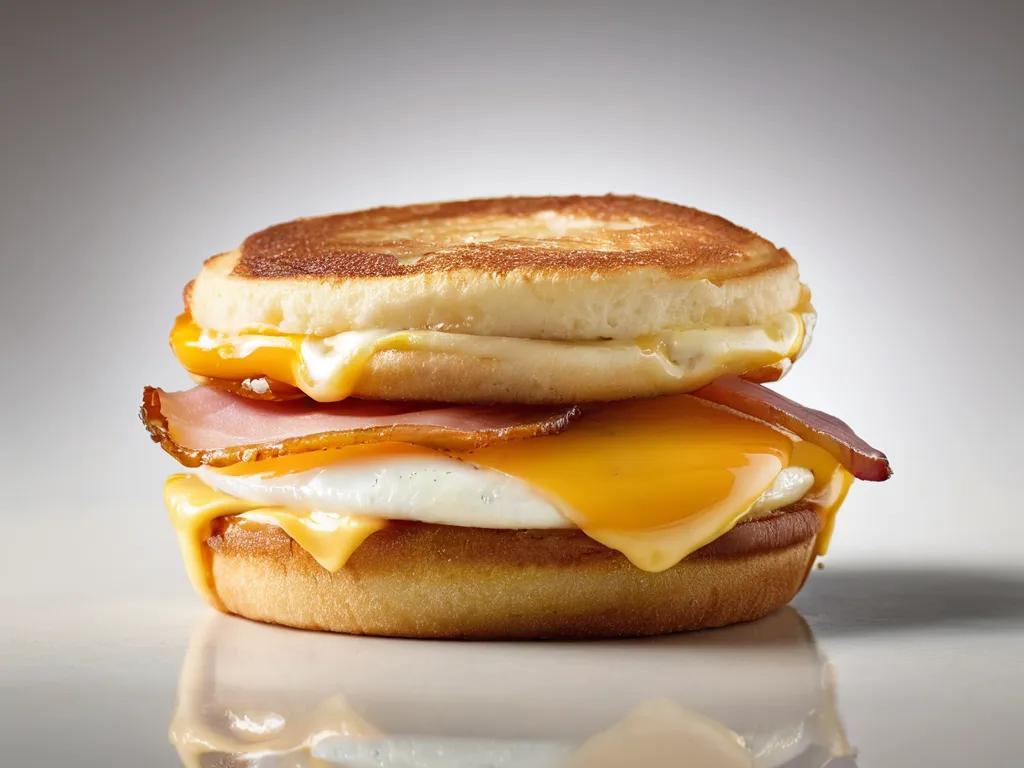
Copycat McDonald’s Egg McMuffin
Prep time: 5 min | Cook time: 10 min | Makes: 4 sandwiches | Cost: ~$1.30 each vs. $4.79–$4.89 at McDonald’s
The Egg McMuffin has two things that set it apart from every other breakfast sandwich: a freshly cracked round egg, steam-cooked without flipping, and a 1-minute foil rest that melts the cheese into something structurally integral rather than a slab balanced on top. Both techniques are easy to replicate at home with a ring mold and a lid. Every other ingredient is exactly what you’d expect.
The Invention: How the Egg McMuffin Changed American Breakfast
Herb Peterson, a McDonald’s franchisee in Goleta, California (adjacent to Santa Barbara), invented the Egg McMuffin. It first sold to the public on January 31, 1972, at Peterson’s Fairview Avenue location. Peterson was specifically trying to replicate the flavor structure of Eggs Benedict in a fast-food format: the English muffin for the base, Canadian bacon where the ham would go, and a round egg in place of the poached one. He substituted American cheese for hollandaise — a practical decision that made the sandwich assembly fast, consistent, and durable under heat.
When Ray Kroc first tried Peterson’s invention, he was enthusiastic enough to push it toward a national launch. McDonald’s began testing breakfast in 1975 and eventually built it into the system-wide breakfast menu that now generates billions annually. The Egg McMuffin remained the anchor of that menu — and the only item on it that uses a freshly cracked whole egg rather than a pre-cooked egg product.
Two Techniques That Separate McDonald’s Egg from Every Other Egg Sandwich
The Ring Mold
McDonald’s cooks the McMuffin egg in a round metal ring on their flat-top griddle, which produces the perfectly circular egg that fits wall-to-wall inside the English muffin. At home, a mason jar lid ring (the outer threaded ring, not the flat disc) is the most accessible equivalent — it’s the right diameter (about 3.5 inches) and conducts heat reliably.
Before placing any egg, grease the ring with butter or cooking spray. Even a well-seasoned nonstick skillet will stick if the ring isn’t greased. After you’ve cracked the egg into the ring and it’s set, run a thin spatula around the inner edge before lifting the ring off — if you just pull the ring straight up, it tears the white.
The Steam Set
The second technique is what cooks the top of the egg without flipping it: add a tablespoon of water to the pan (outside the ring), immediately cover the skillet, and the water turns to steam. That steam rises and cooks the upper surface of the egg from above, setting the white completely and cooking the yolk through gently.
One detail that matters: pierce the yolk with a toothpick the moment the egg goes in. An unpierced yolk expands during steaming into a dome, which makes the assembled sandwich top-heavy and prone to slipping. A single puncture releases the pressure and keeps the egg flat.
The Ingredients, and Why They Work
English muffin — fork-split, not knife-cut. Thomas’ English Muffins are the best supermarket choice for this recipe. (McDonald’s doesn’t sell Thomas’ — its restaurants are supplied by large commercial bakeries like Bimbo Bakeries USA, and the McMuffin was originally built on muffins from the Bays brand — but Thomas’ is the closest widely available match at home.) Always fork-split: insert a fork all the way around the equator and pry apart. The torn, rough surface creates the textured “nooks and crannies” interior that toasts with peaks and valleys, holds butter, and grips the egg yolk better than a knife-cut smooth surface. A knife-cut muffin produces a flat, dense toast. Fork-splitting is not optional.
Canadian bacon. Also called back bacon, Canadian bacon is cured pork cut from the lean loin rather than the fatty belly. It arrives pre-cooked and perfectly round — the right diameter for an English muffin. In the pan, it only needs 30–45 seconds per side to warm through and pick up a little color. The flavor is closer to ham than to standard streaky bacon: milder, less fatty, with a clean brine. If you substitute regular bacon, the sandwich still works, but the round structure of the assembly falls apart and the fat profile shifts significantly.
American cheese. Processed American cheese — Kraft Singles, Land O’Lakes deli American — is specifically engineered to melt at low temperatures without breaking. This matters for the wrapped-rest step: the cheese needs to fully melt using just the residual heat from the egg and the toasted muffin, with no additional heat source. Natural cheddar, Swiss, or provolone won’t melt the same way in a 1-minute rest; they soften but don’t reach that fully cohesive layer that holds the sandwich together. If you want the closest result to McDonald’s, use a real American cheese. If you want a flavor upgrade, Land O’Lakes deli American is a step above Kraft Singles while still melting identically.
Eggs — whole, freshly cracked. McDonald’s uses whole cracked eggs on the Egg McMuffin, not the pre-cooked folded egg patty used on the Sausage McMuffin or McGriddles. The whole egg produces a more tender, irregular texture — more like a proper fried egg than a molded disk. Use large eggs; extra-large eggs may overflow the ring mold.
The 1-Minute Wrap
After assembly, wrap each sandwich in foil for exactly 1 minute before opening. This step is not about keeping things warm — it’s about finishing the construction. In that minute:
The American cheese softens from the retained heat of the egg and the steam inside the wrapping, melting into the spaces between the egg and the Canadian bacon and adhering to both muffin halves.
The English muffin exterior softens slightly from the trapped steam, matching the give of a McDonald’s original rather than the stiffness of a sandwich built from a freshly toasted muffin left open to air.
The egg’s residual heat distributes evenly so you don’t get a hot center and cool edges.
Skip the wrap and the cheese stays in a solid slice, the muffin stays stiff, and the whole sandwich feels like its components rather than a unified thing.
Making Them Ahead: Freezer McMuffins
McDonald’s Egg McMuffins freeze well if made correctly:
Cook everything as directed. Let sandwiches cool completely — at least 30 minutes. Wrap each individually in parchment and then foil, or in a small freezer bag. Freeze for up to 1 month.
To reheat: unwrap the foil but leave in parchment, and microwave on 50% power for 90 seconds, then full power for 30 seconds. Alternatively, wrap in foil and reheat in a 325°F oven for 15 minutes. The lower-power microwave approach avoids the rubbery egg that full-power reheating causes.
Prep 8 sandwiches at once on a Sunday — two weeks of weekday breakfasts for roughly the cost of three at the drive-through.
Variations
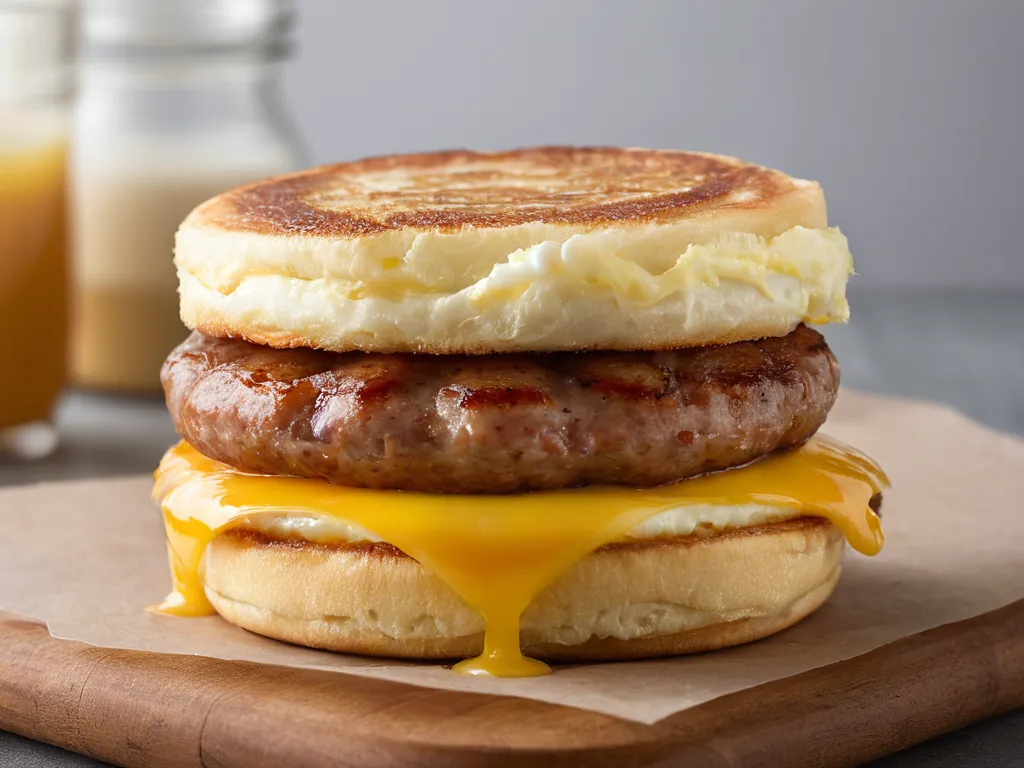
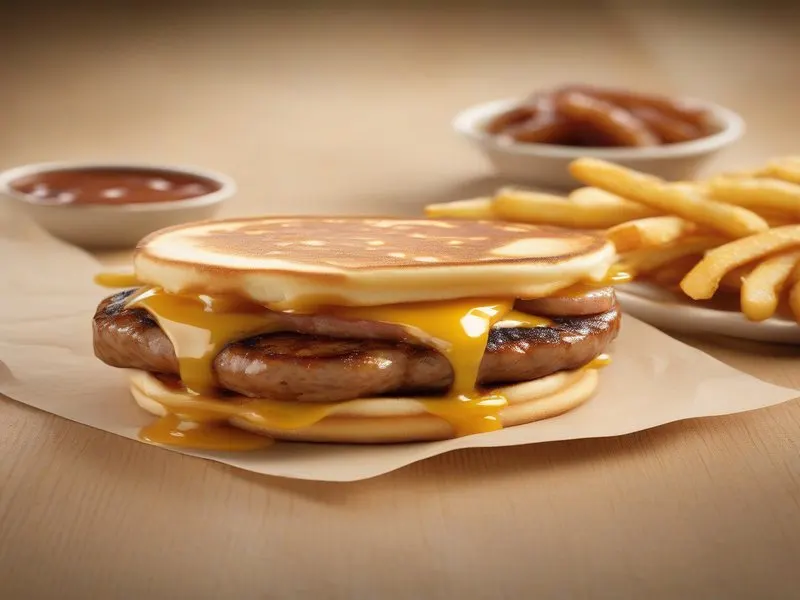
Sausage McMuffin with Egg — replace the Canadian bacon with a round seasoned pork sausage patty. Mix 1/2 lb ground pork with 1/2 tsp salt, 1/4 tsp black pepper, 1/4 tsp sage, 1/4 tsp thyme, pinch of cayenne. Press into 3.5-inch discs and cook in the same pan before the eggs, 3 minutes per side until cooked through.
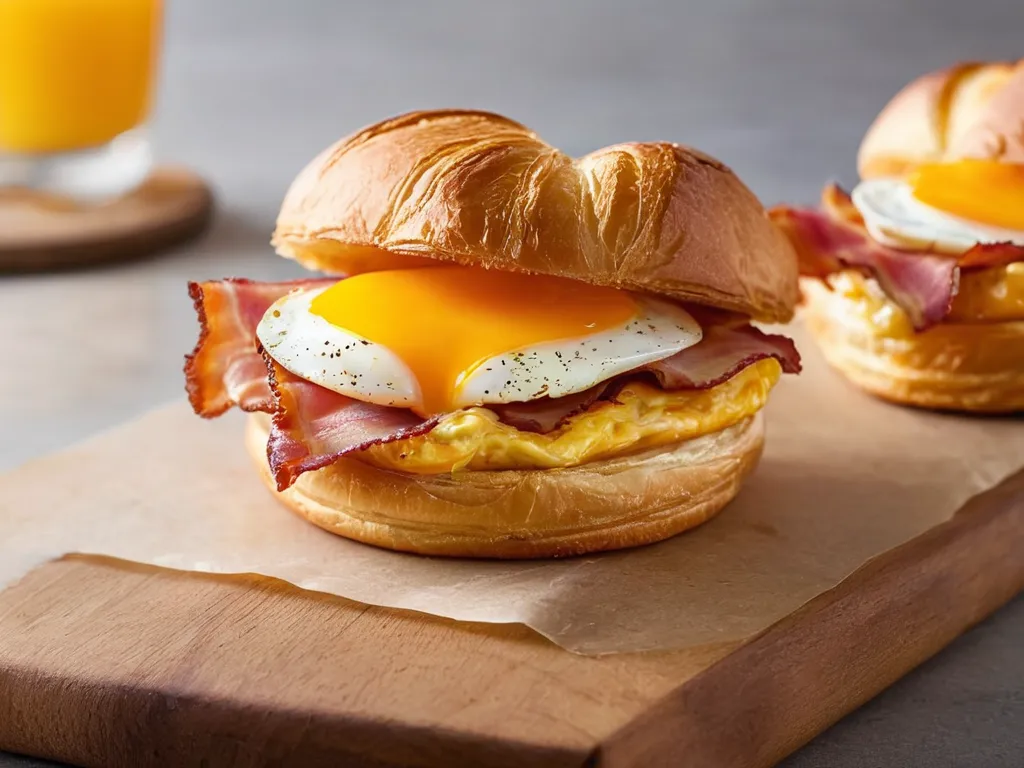
Bacon, Egg, and Cheese McMuffin — replace the Canadian bacon with two slices of regular streaky bacon, cooked crisp and folded to fit the muffin.
Egg White McMuffin — use 3 tablespoons of liquid egg whites instead of a whole egg in the ring mold. Steam-cook the same way. McDonald’s offers an Egg White Delight McMuffin with egg whites, Canadian bacon, and white cheddar — replicate it by swapping American cheese for a thin slice of white cheddar (it won’t melt as completely, but the flavor combination is worth it).
Spicy McMuffin — add 1/2 teaspoon sriracha to the finished egg surface while still in the ring, just before assembly. Or add a smear of hot sauce to the bottom muffin half before assembly.
What to Serve With It
The Egg McMuffin is complete as a standalone sandwich, but if you’re building out the full McDonald’s breakfast experience:
- McDonald’s Hash Browns — the thin potato disk, fried until the exterior is crackling-crisp
- McDonald’s Hotcakes — the full pancake stack with the butter/syrup situation
- McDonald’s Sausage McMuffin — the same technique with a seasoned pork patty instead of Canadian bacon
See all McDonald’s copycat recipes →