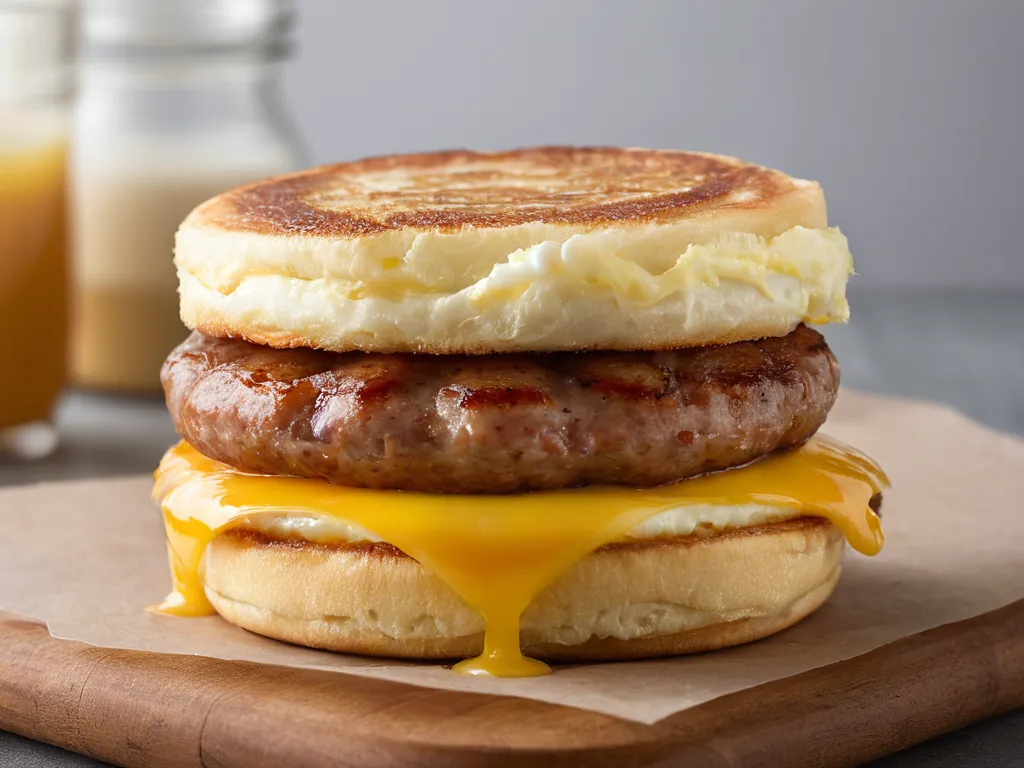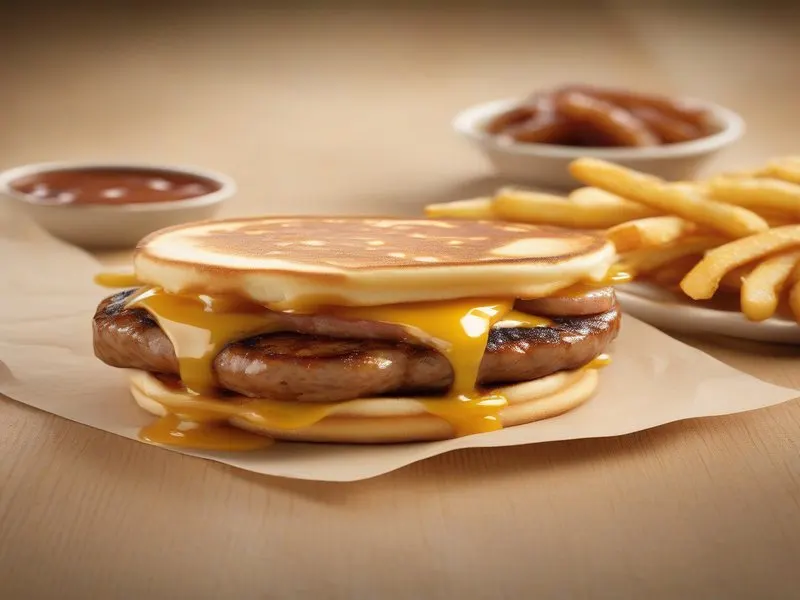
McDonald’s Sausage McGriddle (Copycat)
Prep: 20 min (plus 20–25 min maple candy cooling) | Cook: 20 min | Servings: 4
The McGriddle solved a problem McDonald’s had been thinking about for years: how do you put maple syrup inside a breakfast sandwich without making it sticky and impossible to eat while driving? The answer was a piece of food science that took genuine research — crystallized maple inclusions engineered to stay solid in the batter at room temperature, then melt into sweet pockets the moment the griddle cake hits the flat-top.
Most copycat recipes miss this entirely. They tell you to drizzle maple syrup on the warm griddle cake or stir it into the batter. Both are shortcuts that get you part of the way there but not to the actual internal-pocket structure that makes the McGriddle what it is. This guide covers the hard-candy method that actually replicates those pockets, and explains the science behind why it works.
TL;DR
- Make maple candy from pure maple syrup heated to 280°F. Break into shards.
- Pour batter into hot ring molds, let it set 60 seconds, add maple shards, pour more batter on top.
- Cook 2–2.5 min, flip, cook 1.5–2 min more. Repeat for 8 cakes.
- Cook sausage patties in parallel. Assemble, wrap in paper towel, microwave 15 seconds.
- The steam-wrap step is not optional if you want that unified, restaurant texture.
The Maple Pocket Problem (and How McDonald’s Solved It)
Tom Ryan, the McGriddle’s creator and McDonald’s Chief Concept Officer in 2003, explained the original challenge in interviews: “The only little piece of technology we needed was how do you get the syrup inside the pancakes so you don’t have to have syrup in one hand, sandwich in the other. We worked hard to get those little syrup crystals — we talked to companies that do inclusions and said ‘we want a syrup crystal that melts at this temperature.’”
The inclusions are a proprietary product from commercial food ingredient companies. The maple crystals are solid at room temperature and during batter mixing, but are engineered to melt only under griddle heat — which is why the griddle cakes come out with distinct internal pools of maple rather than a diffuse maple flavor throughout.
In McDonald’s ingredient list, these crystals appear as “Natural Flavors” — the specific formulation is not disclosed. No actual maple syrup appears in the ingredient list. The griddle cake contains:
Enriched Flour (bleached wheat), Water, Sugar, Dextrose, Palm Oil, Brown Sugar, Baking Powder (Baking Soda, Sodium Acid Pyrophosphate, Monocalcium Phosphate), Modified Tapioca Starch, Rice Flour, Whey Powder, Salt, Natural Flavors (the maple), Buttermilk Powder, Soybean Oil, Caramel Color, Soy Lecithin.
At home, you can replicate the melt-on-heat behavior by taking pure maple syrup to hard-candy stage. Sucrose in candy form behaves similarly to the commercial inclusions: solid when cold, melts cleanly under heat, produces concentrated sweet pools.
The Hard Candy Method Step by Step
Pure maple syrup heated to 280°F (soft-crack stage) will cool into a glassy, brittle candy that you can break into rough shards. Those shards, sandwiched between two batter pours inside a ring mold, melt into the griddle cake during cooking exactly as the commercial crystals do.
Critical temperature notes:
- Below 250°F: stays soft and sticky — won’t form workable shards
- 265–280°F: the sweet spot — brittle when cooled, melts cleanly at griddle temperatures
- Above 310°F: burns, loses maple flavor, turns bitter
Use pure maple syrup (100% maple, not pancake syrup, which is corn syrup with added flavor). Corn syrup behaves differently at candy temperatures and produces an inferior result.
A small 2-cup saucepan gives you better control than a large one. The syrup climbs the thermometer faster in a smaller vessel, so watch it carefully in the last 2 minutes before 280°F.
The Sausage Patty
McDonald’s sausage is sage-dominant with a peppery edge — a classic American breakfast sausage seasoning. The McGriddle patty is distinct from the McMuffin patty only in size (the smaller griddle cake diameter means a smaller, thinner patty). Both use the same seasoning profile.
If making from scratch, the key variables:
Fat ratio: 80/20 ground pork. Leaner pork makes a dry, crumbly patty that doesn’t hold together well. The fat is what keeps the patty juicy and produces the browned exterior.
Sage type: Rubbed sage (not ground sage). Rubbed sage has a coarser texture and more volatile oils — it delivers a more pronounced sage note than ground. This matters because the patty is small and the seasoning needs to carry against the sweet maple griddle cakes.
Form, don’t pack: Gently combine the seasoning with the pork, then form into 3.5-inch rounds. Pressing hard activates myosin proteins and binds the patty too tightly — you get a denser, more rubbery texture instead of the slightly loose crumble of a restaurant breakfast sausage.
The Steam-Wrap Finish
Wrap the assembled sandwich in a paper towel and microwave for 15 seconds. This step is widely skipped in copycat recipes and it’s the one that makes the biggest texture difference.
McDonald’s holds their McGriddles in a warming station after assembly. The combination of heat and moisture within the wrapper causes the components to compress together — the griddle cakes soften slightly against the sausage, the cheese melts fully, and the whole sandwich becomes a cohesive unit rather than two pancakes with a patty inside.
The paper towel absorbs some moisture while allowing enough steam to stay trapped against the sandwich. Do not use plastic wrap — it traps too much moisture and makes the griddle cakes soggy.
The Sausage, Egg & Cheese McGriddle
The full-stack version adds a round egg and American cheese. It’s 550 calories vs. 430 for the base, and 1,280mg sodium vs. 990mg.
The egg technique is the same as the Egg McMuffin and Sausage Egg McMuffin: crack the egg into a greased ring mold (no batter) directly on the griddle, pierce the yolk immediately with a toothpick or fork so it sets flat rather than doming, and cook 2–3 minutes. Flip, cook 30 more seconds, lay the cheese slice on the cooked side, and let residual heat melt it before assembling.
American cheese is correct — not cheddar, not provolone. Pasteurized processed American cheese contains emulsifying salts that cause it to melt into a continuous liquid rather than breaking into oily strings. For a breakfast sandwich where the cheese needs to meld with the other components during the steam-wrap step, the melt behavior of American is better suited than any natural cheese.
McGriddle Comparison: Which Version to Make?
| Version | Calories | Sodium | Build |
|---|---|---|---|
| Sausage McGriddle | 430 | 990mg | Maple cakes + sausage only |
| Sausage, Egg & Cheese McGriddle | 550 | 1,280mg | + round egg + American cheese |
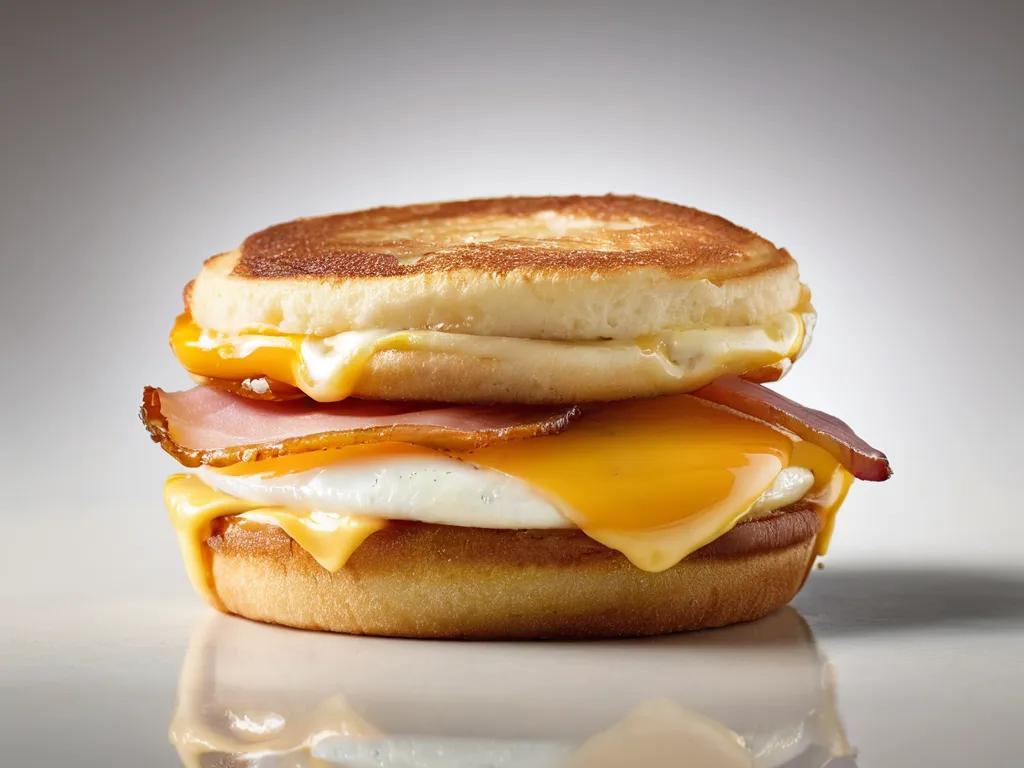
| Bacon, Egg & Cheese McGriddle | 460 | 1,110mg | Bacon strips + round egg + cheese |
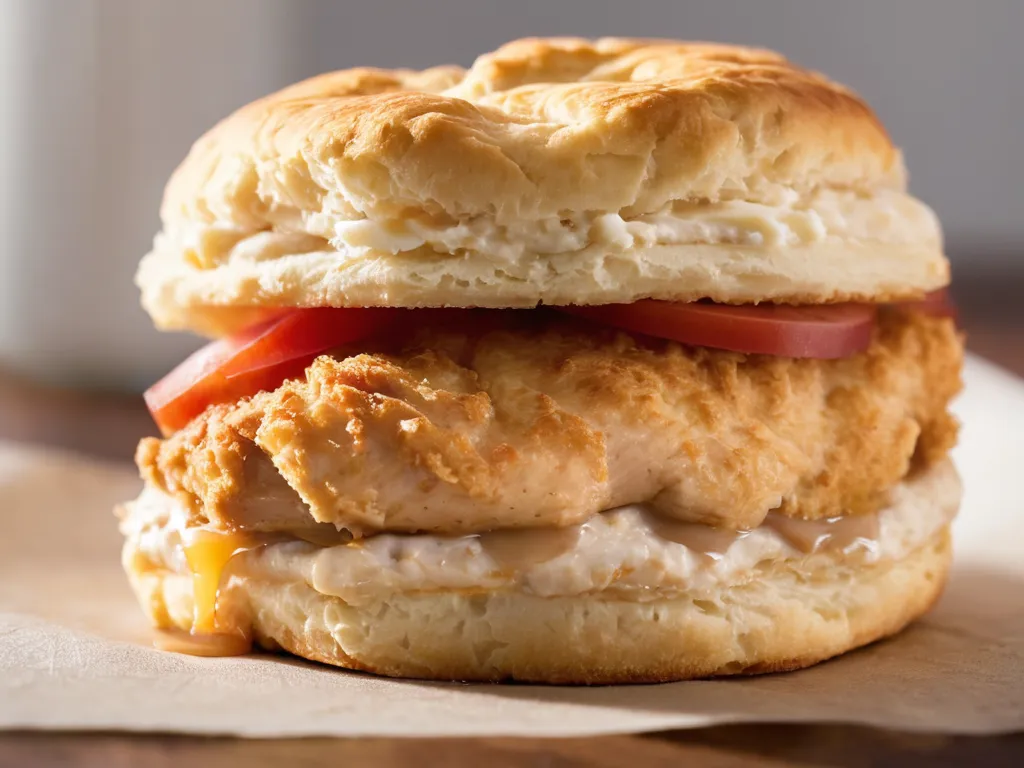
| Chicken McGriddle | 390 | 1,000mg | Crispy chicken fillet instead of sausage |
For the Bacon version at home: use 2 strips of regular-cut bacon, cooked flat. The smaller McGriddle diameter means a full strip would overhang — fold in thirds so it fits within the 3.5-inch round.
History: The Portable Breakfast Problem
McDonald’s rolled out the McGriddle nationally in June 2003 after testing in select markets since 2001. The product came from a real operational insight: breakfast at McDonald’s was growing, but most of the volume was drive-through, and customers with maple syrup packets were creating a mess in their cars. The crystallized inclusion technology was the enabling piece — once food scientists could produce a maple crystal that would stay stable during mixing and storage but melt under griddle heat, the product concept became viable.
The McGriddle remains one of McDonald’s most distinctive products precisely because the crystallized maple inclusion is difficult to replicate at home without a candy thermometer and some patience. The hard-candy method in this guide is as close as home cooking gets.
Troubleshooting
Maple pockets didn’t form — just sweet batter. Either the candy didn’t reach hard enough stage (below 265°F, it melts into batter during mixing instead of holding as shards), or the shards were placed too close to the edge of the ring where they cooked off before the batter encased them. Add shards to the center of the batter layer, not the perimeter.
Griddle cakes spread beyond the ring mold. The ring wasn’t heated first, or there’s too much batter. Fill the ring to about 1/3 full for the first layer — you’re not making a thick pancake, just a sturdy thin cake. Preheat the oiled ring on the griddle for at least 1–2 minutes before pouring.
Griddle cakes are rubbery. The batter was overworked (develops gluten) or the leavening was dead. Stir just until the dry streaks disappear and let it rest 5 minutes before using.
Sausage patty falls apart in the sandwich. Either the fat ratio is too low (use 80/20, not lean ground pork) or the patty was packed too tightly before cooking. Form gently.
Cheese doesn’t melt. Don’t skip the steam-wrap step. The microwave-and-paper-towel finish is what produces enough residual heat to melt American cheese that was room temperature when assembled.
Cost Comparison
| McDonald’s | Homemade | |
|---|---|---|
| Sausage McGriddle | ~$5.09–5.79 | ~$1.35/sandwich |
| Sausage, Egg & Cheese McGriddle | ~$5.49–6.29 | ~$1.65/sandwich |
| Availability | Breakfast hours only (~10:30 AM cutoff) | Any time |
More McDonald’s Breakfast Recipes
- Copycat McDonald’s Sausage Egg McMuffin — the English muffin version; 480 cal, same sage sausage but a different bread platform. Easier than the McGriddle for a weekday.
- Copycat McDonald’s Egg McMuffin — Canadian bacon + round egg + American cheese. The lighter option at ~310 cal.
- Copycat McDonald’s Hotcakes — the triple-leavened flat pancakes with butter and syrup. A different use of similar McDonald’s batter technology.
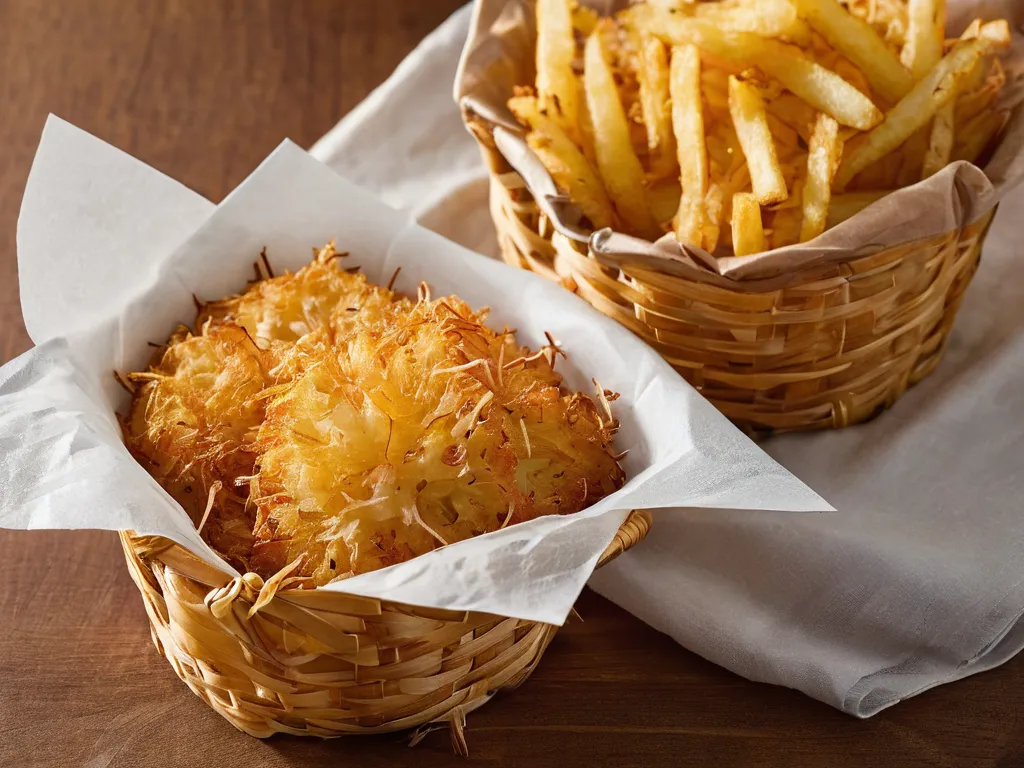
- Copycat McDonald’s Hash Browns — the crispy shredded-potato disk that belongs next to any McGriddle.
See all McDonald’s copycat recipes →