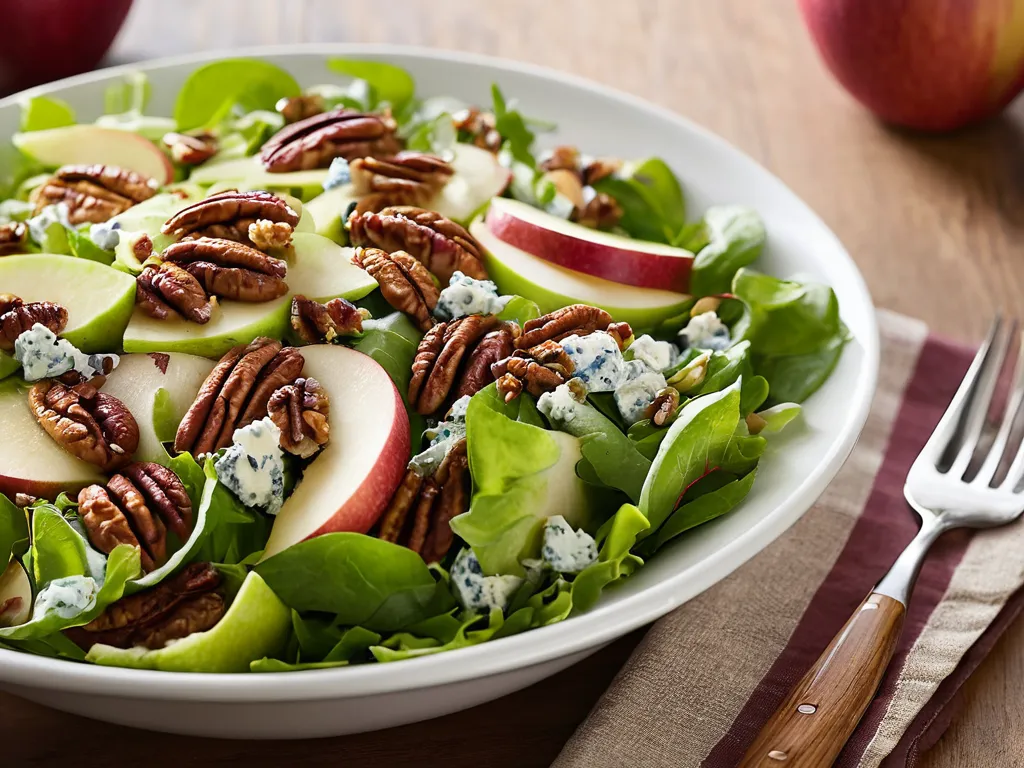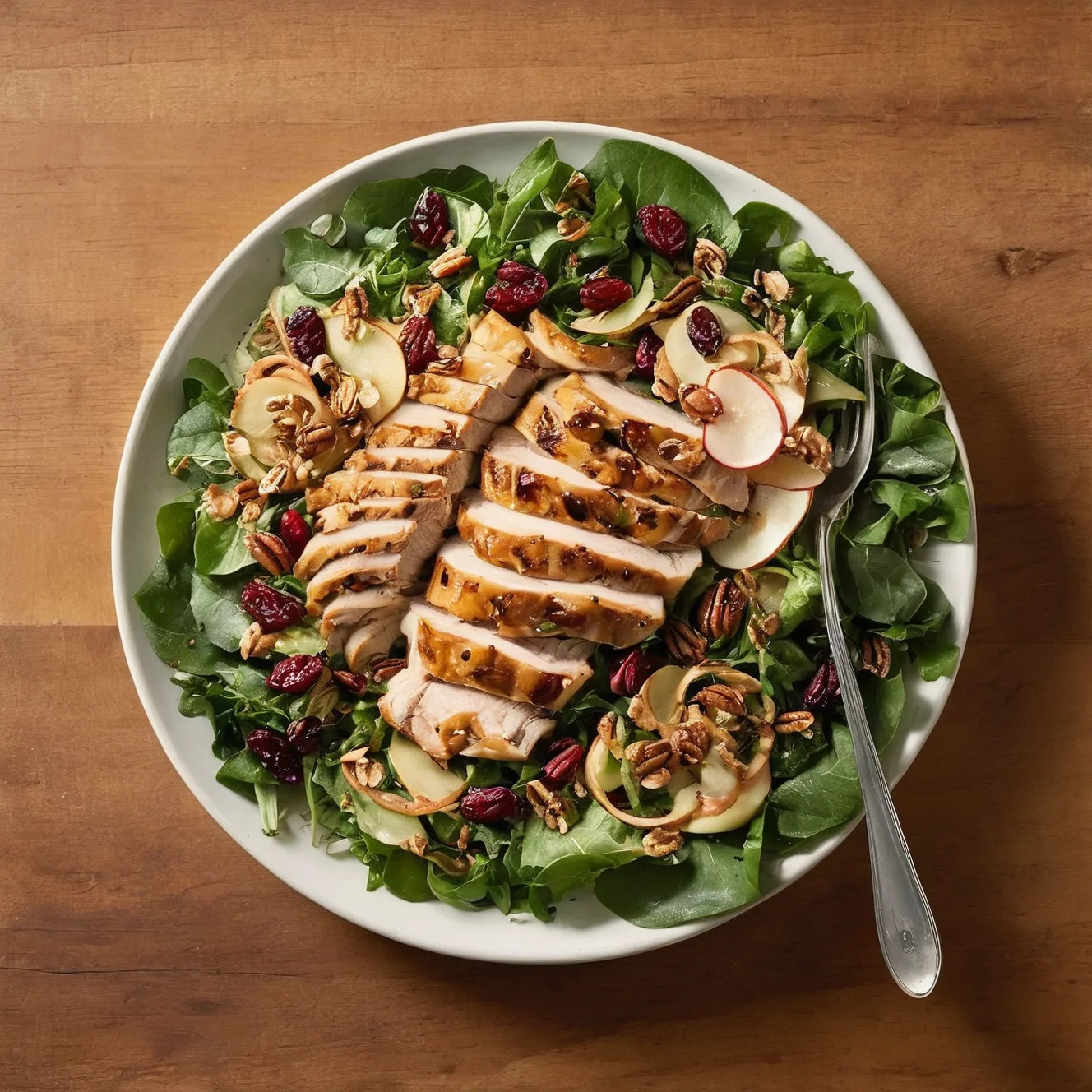
Copycat Panera Fuji Apple Chicken Salad
Panera charges about $12–14 for this salad depending on where you live. At home it costs about $4–5 per serving and takes 35 minutes — and the result is noticeably better because the apple chips are still crisp, the pecans are freshly toasted, and the chicken is warm instead of refrigerator-cold.
The Fuji Apple Chicken Salad has been on the Panera menu for years for a reason. It hits every flavor register in a single bowl: sweet apple and honey, salty Gorgonzola, bitter arugula, crunchy pecans, and tangy white balsamic vinaigrette. Nothing about it is complicated, but every component has to be right or the whole salad collapses. If you like this sweet-savory-nuts-and-cheese combination, it’s the same idea behind Wendy’s Apple Pecan Salad — the two are direct cousins with different dressings.
TL;DR
Grilled chicken, apple chips (not fresh apple), crumbled Gorgonzola, toasted pecans, red onion, and field greens in a white balsamic apple vinaigrette. The dressing takes 3 minutes. The chicken takes 15. Total time: about 35 minutes.
The Detail That Makes or Breaks This Salad: Apple Chips vs. Fresh Apple
Almost every home copycat recipe gets this wrong. They see “apple” in the name and use fresh apple slices. The restaurant uses dehydrated apple chips, and this matters.
Fresh Fuji apple slices are juicy — the moment they contact the dressed greens, they release liquid. Within 15 minutes, the bottom of the bowl is pooling with diluted dressing and the leaves are soggy. Apple chips have had virtually all their moisture removed. They stay crunchy for the full duration of a meal, never release juice, and deliver concentrated apple flavor — more apple per chip than you get from three times the volume of fresh slices.
The texture contrast also does real work. The chips snap when you bite them, which is an entirely different experience from the soft crunch of a fresh apple slice. Against the creamy Gorgonzola and tender greens, that snap is a satisfying bite.
For buying apple chips: Seneca and Bare both make unsweetened Fuji apple chips. Look for single-ingredient versions (just apples, sometimes with a touch of vitamin C to prevent browning) in the snack or produce section. Avoid sweetened varieties — the salad already has honey in the dressing and enough sweetness from the Gorgonzola-and-nut combination.
To make your own: slice a Fuji apple paper-thin with a mandoline (aim for 1–2mm), lay on a parchment-lined sheet pan in a single layer, and bake at 225°F for 1.5–2 hours until completely dry. The chips continue to crisp as they cool — do not judge their texture right out of the oven.
The White Balsamic Apple Vinaigrette
This dressing is what earns the salad its name. Panera’s official ingredient list reads: soybean oil, water, sugar, apple juice concentrate, cider vinegar, white balsamic vinegar, dried onion, dried garlic, natural flavors, lemon juice concentrate, rosemary extract, ginger, salt.
The key is white balsamic — not red. White balsamic is made from white Trebbiano grapes and aged for a shorter period than traditional dark balsamic. The result is lighter in color, milder in acidity, and fruitier in character. Dark balsamic would turn the dressing brown and add deep caramel-molasses notes that would clash with the apple and honey. White balsamic is the correct choice.
The homemade approximation: white balsamic vinegar, apple juice, honey, Dijon mustard, minced shallot, a pinch of ginger, salt, and olive oil. The Dijon functions as an emulsifier — it helps the oil and vinegar stay combined rather than separating immediately. The shallot adds the onion-garlic savory depth that Panera’s “natural flavors” and dried onion/garlic provide.
Shake everything in a jar. Taste. The dressing should read sweet first, then tart, with a clear apple note and a very faint warmth from the ginger. If it tastes flat, add a pinch more salt. If it is too sweet, add a small splash more vinegar. If the apple flavor is too subtle, add a teaspoon of apple juice concentrate.
The dressing keeps for two weeks refrigerated — make a double batch and use it on any grain bowl or green salad through the week.
Getting the Chicken Right
The chicken in Panera’s version is grilled breast, sliced thin. “Antibiotic-free” is the brand claim; for home cooking, this simply means standard boneless skinless chicken breasts cooked correctly.
Pounding to an even ¾-inch thickness is the critical step. A grocery-store chicken breast is typically thick at one end and thin at the other — you cannot cook it to the right temperature throughout without either overcooking the thin end or undercooking the thick end. Five minutes of pounding with a meat mallet eliminates this entirely. Season generously and grill over medium-high for 5–6 minutes per side.
The temperature target is 160°F when you pull it off the heat. Carryover cooking during the 5-minute rest brings it to 165°F — which is the USDA safe threshold and also the point where the breast is still juicy rather than chalked out. Every minute of overcooking past 165°F measurably reduces moisture. Use a thermometer.
Slice against the grain into ½-inch pieces. “Against the grain” means cutting perpendicular to the direction the muscle fibers run — you can see them as parallel lines across the surface of the breast. Cutting against them shortens the fibers, which makes each piece tender. Cutting with the grain leaves long fibers intact, which is what makes chicken chewy.
Add the chicken to the salad warm or at room temperature, not straight from the refrigerator. Cold chicken in a salad tastes rubbery and dense; the texture improves significantly once it’s above 60°F.
Assembling the Salad
Toss the greens with the vinaigrette in a large bowl first — coating the leaves before plating is the key difference between a salad where every bite has dressing and one where the dressing pools at the bottom. Use 4–5 tablespoons of dressing for 10 oz of greens; more than that and the salad becomes heavy.
Divide the dressed greens between four plates or wide shallow bowls. Arrange the components in distinct sections rather than mixing everything together — this is how Panera presents it and it also lets each person get a bit of everything in each forkful without one ingredient disappearing under another. The apple chips go on last, right before serving.
Variations Worth Knowing
No Gorgonzola: Substitute goat cheese for a creamier, tangier result that is less pungent. Feta is sharper and saltier — it works but changes the character noticeably.
No pecans: Candied walnuts are the closest substitute — the sweetness echoes the honey in the dressing. Plain walnuts work but are more bitter.
Lower calorie: Use 2 tablespoons of dressing instead of 4–5, and reduce pecans to 2 tablespoons per serving. This drops the salad to approximately 380–400 calories without losing any of the key flavor elements.
Vegetarian: Omit the chicken and add a cup of chickpeas per serving for protein. The chickpeas pair well with the apple-and-Gorgonzola flavor profile and add substance.
No-cook option: If you have leftover roasted or rotisserie chicken, use it. Shred rather than slice — shredded chicken distributes more evenly through the greens and catches the vinaigrette in the fibers.
Make It a You Pick Two
At Panera, this salad is most often ordered as half of a You Pick Two with a cup of soup. To recreate the full combo at home, pair a half portion of the Fuji Apple salad with copycat Panera Broccoli Cheddar Soup — the rich, cheesy soup is the classic counterpoint to the bright, sweet-tart salad. For a lighter pairing, copycat Panera Lemon Chicken Orzo Soup keeps the whole meal fresh, or go with copycat Panera Tomato Soup for the most-ordered combination on the menu.