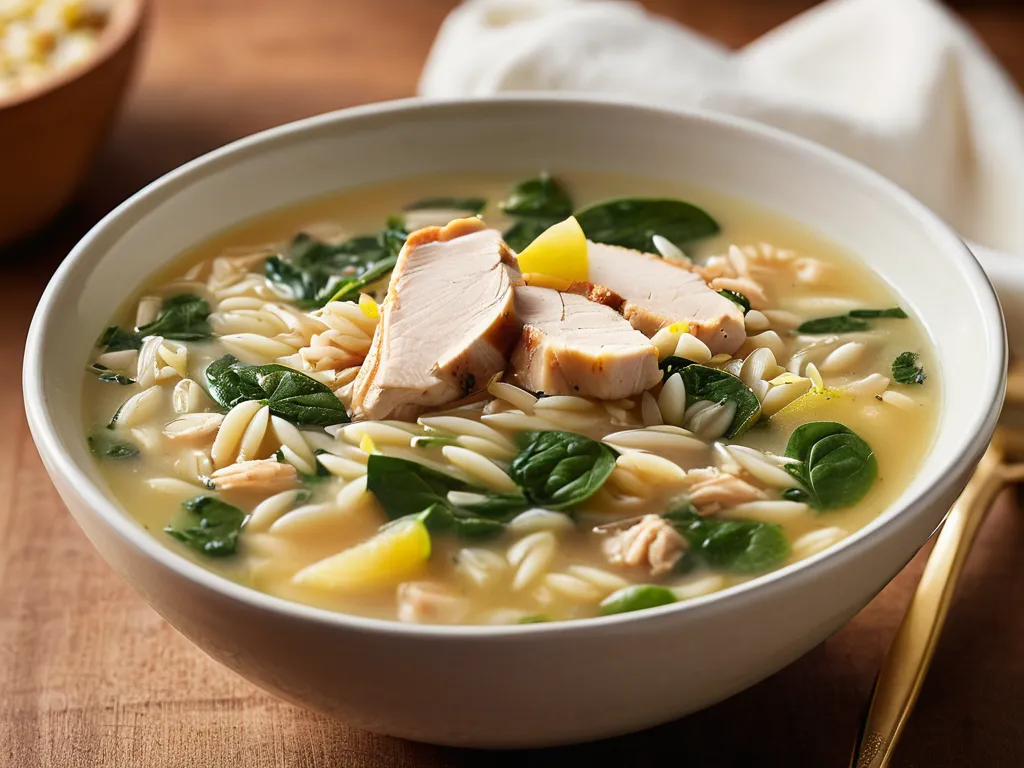
Copycat Panera Lemon Chicken Orzo Soup
Prep time: 10 minutes Cook time: 30 minutes Servings: 6
Panera’s Lemon Chicken Orzo Soup was pulled from restaurant menus in April 2024, a casualty of the chain’s biggest menu overhaul in its history, which cut dozens of items to speed up kitchen service. It’s still produced as a retail refrigerated soup — you can find it at Target, Walmart, and some grocery chains — but it’s gone from the dining room menu, and a lot of people miss it.
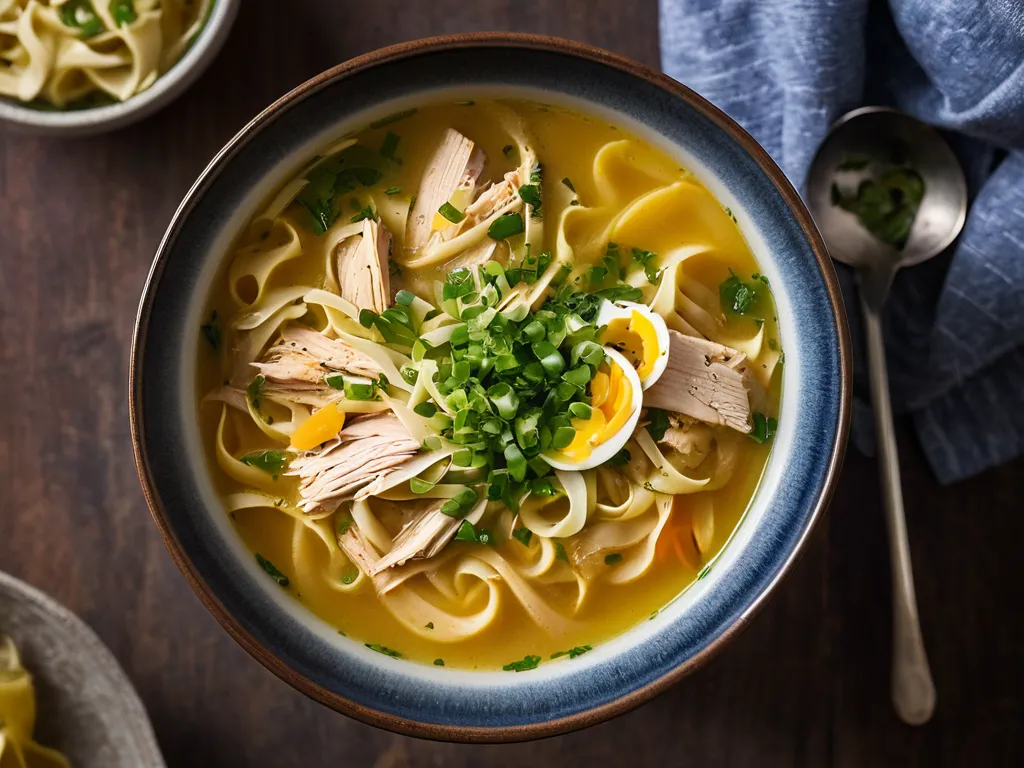
What made it stand out among Panera’s soup lineup: it was bright and citrus-forward in a way that cream-based soups like Broccoli Cheddar never are. Clear golden broth, orzo (not egg noodles, not rice — orzo), wilted baby spinach, and a genuine lemon punch that you could taste from the first spoonful. It was the soup you ordered when you wanted something that felt light but still filling.
This copycat hits all of that in about 30 minutes.
This Is Not Avgolemono — Don’t Add Eggs
The most common mistake in copycat recipes for this soup: adding beaten eggs.
Avgolemono is a Greek lemon chicken soup that gets its thick, creamy, velvety consistency from eggs — specifically from a mixture of beaten eggs and lemon juice whisked into hot broth, which tempers and emulsifies into a cloudy, protein-thickened liquid. It’s delicious. It’s also completely different from Panera’s soup.
Panera’s Lemon Chicken Orzo Soup has a clear golden broth, not a creamy one. The official retail ingredient list (Blount Fine Foods, who manufactures Panera’s retail soups) shows rice starch as the thickener — a small amount that adds just enough body to keep it from being watery, without clouding the broth or adding richness.
One thing that trips people up reading the retail label: it does list “egg white” — but that’s inside the orzo pasta (a lot of dried pasta is enriched with egg white), not eggs whisked into the broth avgolemono-style. The broth itself is thickened with a little rice starch, full stop. So the distinction holds: no eggs are whisked into the liquid the way avgolemono demands. (The soup does carry an egg allergen statement — that’s the enriched orzo, not an egg-thickened broth.)
If you add eggs to this recipe, you get a soup that tastes eggy, looks opaque, and has a heavier mouthfeel. Not Panera. Skip the eggs. Use the optional cornstarch slurry (an easy home stand-in for the rice starch on the retail label) if you want a slightly thicker broth.
The Lemon Timing Is the Whole Thing
Most chicken soup recipes that call for lemon add it with everything else and simmer it in. The result tastes vaguely citrusy but not actually bright — because lemon juice’s aromatic compounds boil off during extended cooking, leaving behind acidity without the fresh citrus flavor.
The fix: split the lemon work.
Lemon zest goes in early, when you build the broth. Zest contains essential oils in the peel — more heat-stable than juice — that infuse into the broth during cooking and give it a background citrus complexity.
Lemon juice goes in at the very end, off the heat. Fresh juice added just before serving stays vivid and sharp in a way that cooked juice doesn’t. The broth should taste noticeably, unmistakably lemony — not a hint, not a suggestion. If you taste it and think “that could use more lemon,” add more juice. This is the soup’s defining characteristic.
Three tablespoons is the starting point. Many people prefer four.
Orzo Over Egg Noodles — Why It Matters
Egg noodles are tender and slightly chewy. Orzo is small and starchy, and it behaves differently in broth: each grain absorbs the surrounding liquid and becomes slightly plush rather than distinctly chewy. The overall texture of the soup is smoother — the orzo tends to disappear into the bowl in a way that noodles don’t, which is part of why the soup reads as lighter even at the same calorie count.
The practical issue: orzo absorbs broth aggressively, especially in leftovers. See the FAQ and Storage section below for how to handle this.
How to Build the Right Broth
Panera’s soups are richer than homemade partly because of yeast extract in the base — a common commercial flavor enhancer that adds savory depth. You won’t be adding yeast extract, but a few things bring you close:
Use the chicken poaching liquid as your broth. When you simmer chicken in broth, the broth picks up fat, collagen, and chicken flavor that a plain carton of broth doesn’t have. Don’t discard it — it’s the foundation of everything.
Don’t skip the aromatics. Onion, celery, carrots, and garlic sautéed in olive oil (rather than just simmered in liquid) build a deeper flavor base. The brief sauté caramelizes the natural sugars in the vegetables and creates a complexity you can’t get from raw vegetables added to a broth.
Season at the end, not just at the beginning. The lemon juice you add at the end is a flavoring agent, not just an acid. Taste after adding it, then adjust salt. Lemon and salt work synergistically — a dish that seems to need more lemon often actually needs a small pinch more salt alongside it.
The Spinach Window
Baby spinach wilts in about 60 seconds in hot broth. Add it at the very end — after the orzo is done and the chicken is back in — and stir just until it goes from bright raw green to slightly-darker wilted. That’s it. Longer than that and it turns khaki-colored and loses its fresh flavor.
Chopped fresh kale, stirred in 2–3 minutes before the spinach step, also works if you prefer a sturdier green. Kale holds its texture better in leftovers but needs a little extra time.
Rotisserie Chicken Shortcut
The recipe above poaches raw chicken in the broth, which produces the richest result. But a store-bought rotisserie chicken — about 2.5–3 cups of shredded white and dark meat — saves 20 minutes and works very well.
If using rotisserie: skip steps 1 and 5 (poaching and shredding), and use a full 8-cup carton of store-bought low-sodium chicken broth directly. Sauté your aromatics, build the broth, cook the orzo, then add the pre-cooked rotisserie chicken with the spinach at the end just to warm through. Total active time: about 20 minutes.
The roasted flavor note from rotisserie chicken doesn’t clash with the lemon — it actually adds depth that plain poached chicken can’t deliver.
Storage and the Orzo Problem
Refrigerator: The soup keeps for 3–4 days, but the orzo will absorb nearly all the broth by the next morning. The workaround:
Option 1 — Store separately. Cook the orzo in salted water, drain, rinse briefly with cold water (to stop cooking), and refrigerate it in a separate container. Add 2–3 tablespoons of cooked orzo to each bowl at serving time and ladle the hot broth over it. This completely solves the leftover-orzo problem and is the cleaner approach if you’re meal-prepping.
Option 2 — Undercook by 2–3 minutes. If you prefer one-pot, pull the orzo about 2–3 minutes before package al dente. It will carryover-cook in the hot soup, and the residual firmness gives you a little buffer against mushiness in leftovers.
Freezer: Freeze the broth and chicken without the orzo and spinach (both suffer badly from freezing). When reheating from frozen, cook fresh orzo separately and add fresh spinach to the hot reheated broth. Freezes well for up to 3 months.
Cost Comparison
A cup of Panera Lemon Chicken Orzo Soup at restaurants was $8–10. A bowl ran $10–13. The retail refrigerated version (Safeway, Walmart, Target) runs about $5–7 for a 16 oz container (roughly 2 cups / 1–2 servings) or $8–10 for 32 oz.
This homemade recipe: roughly $8–10 for the whole pot (6 generous servings), or about $1.50–1.75 per serving. The chicken is the main cost; the orzo and vegetables are inexpensive.
| Restaurant (when available) | Retail packet | Homemade | |
|---|---|---|---|
| Per cup | $8–10 | $3–4 | ~$1.50 |
| Per bowl | $10–13 | $5–7 | ~$1.75 |
| 6 servings | $60–78 | $24–40 | $8–10 |
How Lemon Chicken Orzo Compares to Panera’s Other Soups
The Lemon Chicken Orzo fits into a very specific spot in the Panera lineup: the lightest broth soup with the lowest sodium — which made it surprisingly diet-friendly for a chain restaurant. Here’s how the five main Panera soup copycats compare:
| Soup | Cal per cup | Sodium per cup | Base | Status |
|---|---|---|---|---|
| Lemon Chicken Orzo | 110 | 650mg | Clear broth | Discontinued from restaurants; retail only |
| Chicken Noodle | 110 | 930mg | Clear broth | On current menu |
| Creamy Tomato | 230 | 560mg | Purée + cream | On current menu |
| Broccoli Cheddar | 230 | 840mg | Cream-based | On current menu |
| Autumn Squash | 230 | 840mg | Purée + cream | Seasonal (fall) |
The Lemon Chicken Orzo and Chicken Noodle are calorie-for-calorie identical at Panera — but Lemon Chicken Orzo has significantly less sodium (650mg vs. 930mg per cup), making it the better pick for anyone watching sodium. The Creamy Tomato is the lowest-sodium option overall and is vegetarian. The cream-based soups (Broccoli Cheddar, Autumn Squash) are richer and more filling but carry more fat and calories.
Nutrition note: the 110 cal / 650mg sodium figures above are from the Blount Fine Foods retail packaging (per 8 oz cup serving). The home recipe on this page yields a larger, denser portion — approximately 175 cal / 720mg sodium per serving — because it uses a full 8-cup pot stretched across 6 people.
More Panera Bread Copycat Recipes
- Panera Chicken Noodle Soup — the permanent menu counterpart; turmeric-golden broth with curly egg noodles and a soy sauce umami trick.
- Panera Tomato Soup — the smooth roasted-tomato version; dairy-free and simpler if you want a lighter option.
- Panera Broccoli Cheddar Soup — the flagship; cream-based, sharp cheddar, the opposite of this light broth soup in every way.
- Panera Autumn Squash Soup — roasted butternut squash with warm spices and a touch of apple; the one to make in September when the weather turns.
Browse all Panera Bread copycat recipes →