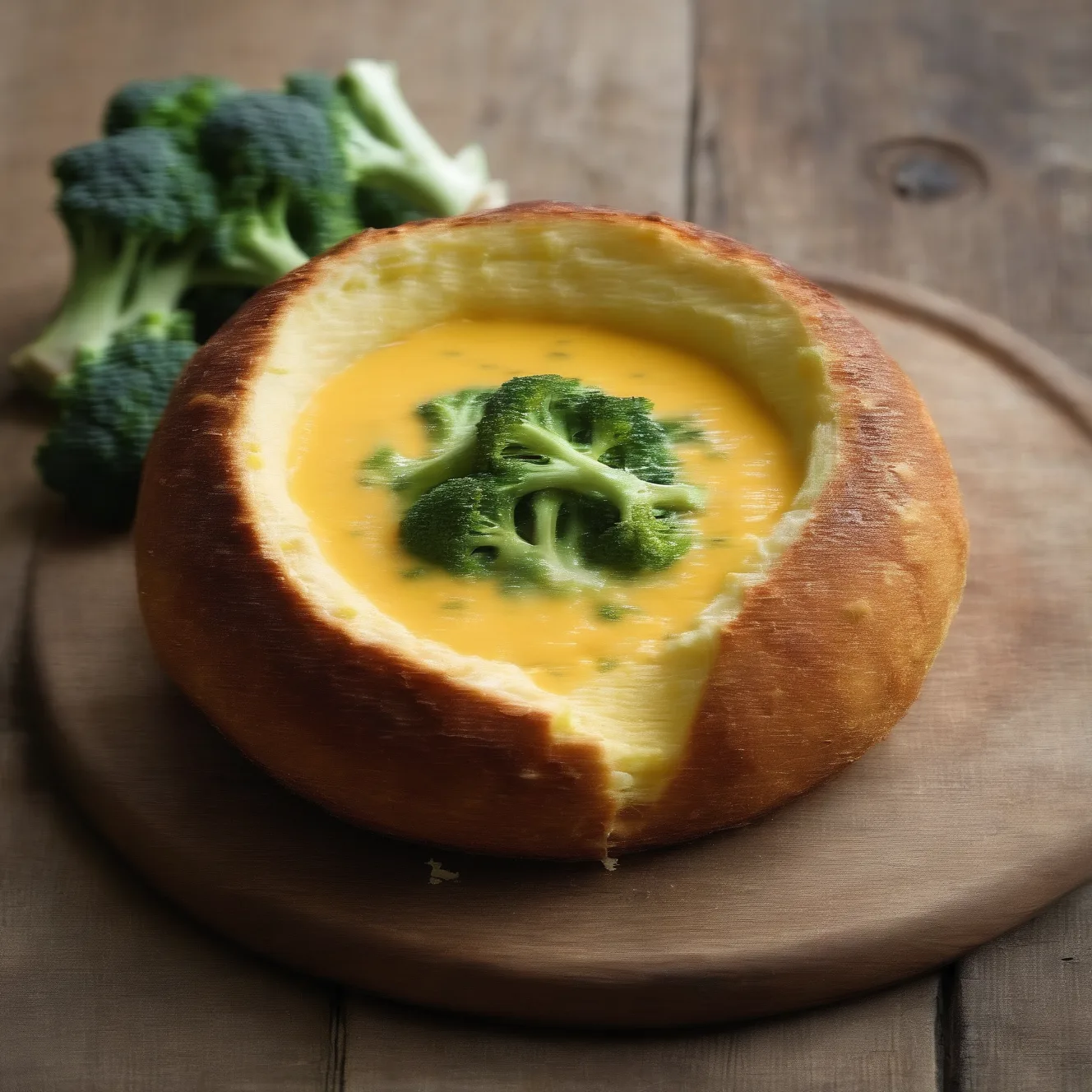
Copycat Panera Bread Bowl
Prep: 30 min active (plus 12–16h rise for sourdough; 2h for yeast version) Bake: 35 min Serves: 4
The Panera bread bowl is a sourdough boule — a round, crusty loaf hollowed out to serve soup in. The concept is simple; the execution has one step most copycat recipes miss.
That step is toasting the interior.
After you hollow the bowl, you brush the inside walls with oil and bake them at 375°F for 8–10 minutes until the interior surface is lightly golden and firm. This seals the inner crust against the soup and buys you 15–20 minutes of eating time before the bread softens. Skip this step and the soup soaks through in 5 minutes.
Everything else — the bread itself, the hollowing, the filling — is straightforward.
The Three Approaches
From-scratch sourdough takes 16 hours total but most of that is unattended fermentation. The result is a genuinely tangy, complex boule with the thick crust and chewy crumb that Panera’s bread bowl is built on. Worth doing if you have time.
Same-day active yeast takes about 2.5 hours start to finish. The flavor is milder (no fermentation), but the structure is solid and the crust bakes up properly. Good option when you decide at noon to have bread bowls for dinner.
Store-bought round sourdough takes 15 minutes total: hollow, brush, toast, fill. A grocery-store sourdough boule from the bakery section works well. This is the right call on a weeknight when you already made the soup.
What Panera Actually Uses
Panera’s bread bowl is their sourdough bread — the same product used in their Tomato Basil sandwich and served as a side loaf. It’s a classic sourdough boule made daily in-store using a proprietary culture. The bread has:
- A hard, crackly crust that holds its shape under liquid pressure
- A slightly open, chewy interior crumb (not dense)
- A mild tang from the sourdough fermentation
- No cheese, herbs, or flavoring — plain sourdough
The boule weighs roughly 8 ounces and is sized to hold about 1.5 cups of soup comfortably. This is also the format for the from-scratch version below.
The Bread: From-Scratch Sourdough Method
If you have an active sourdough starter, this is the method that matches Panera’s bread bowl most closely.
What Makes Sourdough Right for This
Sourdough fermentation produces acids (lactic and acetic) that strengthen the gluten network beyond what yeast alone can achieve. This gives the boule a crust that doesn’t just look hard — it resists moisture penetration better than a yeasted crust. For a bread bowl that has to hold liquid for 15+ minutes, this structural difference matters.
The fermentation also creates the tang that makes sourdough taste like sourdough, not just bread.
The Starter Question
Your starter needs to be active and bubbly — fed within 4–8 hours of use, doubled in size, with a domed top just starting to fall. A starter that has been in the refrigerator untouched for a week will need 1–2 feedings over 24 hours before it’s ready to leaven bread. An under-active starter produces a dense loaf with poor oven spring — not what you want for a bread bowl.
The 1:1 hydration ratio for this recipe (100g starter : 100g flour + 100g water) is standard for most home starters. If yours is thicker or more liquid, adjust the water in the main dough by 10–20g in either direction.
Why Bread Flour
Bread flour (12–14% protein) versus all-purpose (10–12%) gives you more gluten development, a chewier texture, and better oven spring — meaning the loaf rises more in the oven rather than spreading flat. For a bread bowl that needs structural walls, bread flour is the right call. All-purpose works as a substitute but produces a slightly softer, lower-rise boule.
The Letter on Rise Times
Rise times in bread recipes are temperature-dependent, not absolute. The guidance of “4–6 hours bulk ferment at room temperature” assumes your kitchen is around 70°F. At 65°F, add 1–2 hours. At 75°F, subtract 1–2 hours. In summer kitchens that hit 78°F+, the bulk ferment can finish in 3 hours. Judge doneness by the dough, not the clock: look for 50–75% volume increase and a slightly domed, airy appearance.
The Bread: Same-Day Yeast Method
If you don’t have a sourdough starter, this version produces a good bread bowl. The crust bakes up properly in a Dutch oven; the only real trade-off is flavor depth.
Key differences from the sourdough method:
- Uses commercial active dry yeast instead of starter
- No autolyse period — knead immediately after mixing
- One rise of ~1 hour versus two rises over 12–16 hours
- Milder flavor, no tang
The yeast method is also more predictable for people who don’t bake bread regularly. The dough is ready when it doubles in size, full stop — you don’t need to read the dough the way sourdough requires.
Hollowing the Bowl Correctly
Two rules:
Use your hands, not a knife, to pull out the interior. A knife compresses the crumb as it cuts, creating a dense interior wall that’s harder to toast evenly. Pulling tears along natural gluten strands and leaves a slightly rougher surface that holds the oil better.
Leave at least 3/4 inch of bread on all sides. More than that and the bowl-to-soup ratio gets off. Less than that and the walls risk cracking under the weight of the soup. Panera’s walls are substantial — this isn’t a thin-walled restaurant trick, it’s structural.
Save everything you pull out. The torn interior chunks and the bread lid are for dipping, which is half the experience of a bread bowl.
The Toasting Step (Do Not Skip)
After hollowing, every bread bowl needs to go back in the oven.
Brush the interior walls and bottom with olive oil or melted butter. Bake at 375°F for 8–10 minutes until the inside surface looks lightly golden and feels firm when you press it.
What this does: the oil partially seals the inner crust, slowing moisture penetration. The heat drives off surface moisture and sets a slightly harder layer on the walls. Combined, these two effects buy you the eating window you need.
Without this step, even a properly baked boule goes noticeably soft within 5 minutes of filling — you end up eating the bottom of the bowl with a spoon.
Which Soups Work Best
Panera’s official bread bowl lineup covers their thicker soups for a reason. Thinner, more watery soups penetrate the walls faster regardless of how well you toast the interior.
The soups that hold up:
Copycat Panera Broccoli Cheddar Soup — the classic combination. The thick, creamy base sits on the bread walls rather than soaking through. The cheese and fat in the soup also create a slight barrier of their own.
Copycat Panera Tomato Soup — smooth and creamy; slightly thinner than the broccoli cheddar but still holds well for 15–20 minutes.
Copycat Panera Autumn Squash Soup — the seasonal butternut squash and apple version; thicker than the tomato and slightly sweet against the sourdough’s tang.
Copycat Panera Chicken Noodle Soup — brothier than the others; works but requires faster eating. Fill the bowl just before sitting down.
Broccoli cheddar is the correct default. The creaminess and density of the cheese sauce hold up longer than any broth-based option.
Cost Comparison
| Panera | Homemade | |
|---|---|---|
| Bread bowl alone | ~$5–6 | ~$0.70 (from scratch) / ~$2.50 (store-bought boule) |
| Broccoli Cheddar combo | ~$10–12 | ~$4.50 |
| Time | 10 min drive | 30 min active (2.5h yeast) or overnight (sourdough) |
The cost difference is real. The sourdough version from scratch is the biggest quality upgrade because you control the fermentation; the store-bought shortcut is the best value when the soup is already the focus.
More Panera Bread Copycat Recipes
- Panera Broccoli Cheddar Soup — the most iconic bread bowl filling; thick, creamy, and loaded with broccoli and sharp cheddar
- Panera Tomato Soup — smooth roasted tomato version; lighter and slightly thinner but excellent in a bread bowl
- Panera Autumn Squash Soup — the seasonal butternut squash and apple soup; a natural bread bowl candidate with great sweet-savory balance
- Panera Mac and Cheese — pipette rigate pasta in a sodium citrate white cheddar sauce; a surprisingly workable bread bowl filling for a heartier option
See all Panera Bread copycat recipes →