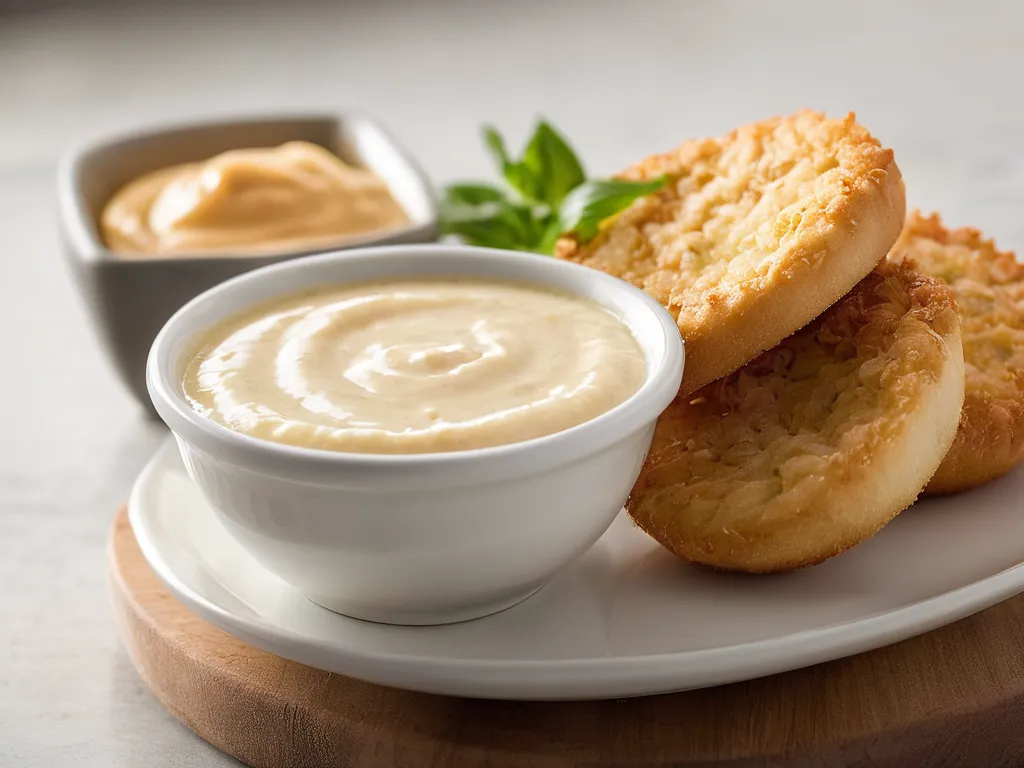
Papa John’s Special Garlic Sauce has one of the most persistent myths in fast-food history attached to it: everyone assumes it’s garlic butter. It isn’t. There’s no butter. There’s no dairy of any kind.
The sauce that comes in those tiny plastic cups — the one that may be more beloved than the actual pizza — is made from a soybean oil base, emulsifiers, dehydrated garlic, and a precise combination of acids that give it that distinctive golden, slightly tangy, melt-in-your-mouth quality. It tastes buttery because of how the oils and emulsifiers are combined, not because butter is involved.
That distinction matters for two reasons: it makes the sauce completely dairy-free and vegan, and it changes how you should copycat it.
What’s Actually in Papa John’s Garlic Sauce
The official ingredient list from Papa John’s website is: Soybean Oil, Water, Salt, Hydrogenated Soybean Oil, Garlic, Natural Flavors, Soy Lecithin, Vegetable Mono and Diglycerides, Lactic Acid, Sodium Benzoate (Preservative), Calcium Disodium EDTA, Citric Acid, Beta Carotene, and Vitamin A Palmitate.
Breaking that down:
Soybean oil and hydrogenated soybean oil form the fat base — this is essentially margarine, not butter. The hydrogenated version has been partially solidified to give the sauce body, while the liquid soybean oil keeps it pourable.
Garlic is listed as dehydrated — not garlic powder. Dehydrated garlic granules are coarser and have a slightly milder, more rounded flavor when incorporated into fat. Garlic powder is ground finer and has a sharper edge.
Soy lecithin and vegetable mono and diglycerides are emulsifiers — they’re what keep the water and oil from separating and what give the sauce its smooth, consistent texture rather than a greasy, separated mess.
Lactic acid and citric acid provide the subtle tang that makes the sauce taste more complex than just melted fat and garlic. This acidity is why the sauce tastes slightly bright on the tongue even though there’s nothing citrus-forward about it.
Beta carotene is the colorant — it’s what gives the sauce that pale golden color. Not turmeric, not egg yolk, not artificial dye. Beta carotene is a plant pigment (the same compound that makes carrots orange) and it’s completely vegan.
Two Versions: Which One to Make
Because the real Papa John’s sauce is margarine-based, a faithful copycat should use margarine too. But there’s a strong argument for making the butter version instead — it simply tastes richer.
Version 1: Faithful Dairy-Free Copycat (Closest to Papa John’s)
Ingredients:
- 1/2 cup plant-based margarine or vegan buttery spread (Earth Balance Buttery Spread, Country Crock Plant Butter, or Parkay Squeeze are all good)
- 1/2 teaspoon garlic powder or 1 teaspoon dehydrated garlic granules (granules are more accurate; powder is easier to find)
- 1 teaspoon soybean oil or vegetable oil
- Pinch of salt (skip if your margarine is salted)
Method: Mix everything into softened margarine at room temperature, then microwave 15–20 seconds until just melted. Stir and serve.
Character: This is the version that tastes like walking into a Papa John’s. The margarine base gives it that smooth, slightly neutral fat character with the garlic riding over the top, and none of the dairy richness that real butter brings.
Version 2: Upgraded Butter Version (Better, But Different)
Ingredients:
- 1/2 cup (1 stick) unsalted butter
- 1/2 teaspoon garlic powder
- 1/4 teaspoon onion powder
- 1 teaspoon canola or vegetable oil
- 1/4 teaspoon dried parsley (optional, for color and herb note)
- Pinch of kosher salt
Method: Melt butter over low heat in a small saucepan — do not let it brown. Remove from heat, whisk in seasonings, then add the oil. Serve immediately.
Character: Richer and more indulgent than the original. The dairy fat in real butter adds complexity and roundness that soybean oil can’t replicate. This version tastes less like Papa John’s and more like a very good garlic butter you’d get at a good restaurant. Neither version is wrong — they’re just different target flavors.
Why the Oil Is Essential in Either Version
Pure melted butter or margarine solidifies quickly. Butter solidifies around 68°F (20°C); margarine typically a bit lower because of its specific fat blend. Adding even a small amount of liquid vegetable oil raises the ratio of unsaturated fats enough to keep the sauce pourable at room temperature.
This is the most commonly skipped step in copycat recipes, and it’s why a lot of homemade versions congeal into a solid disc by the time you’ve eaten half the pizza. The oil doesn’t change the flavor in any meaningful way — you’re only adding a teaspoon — but it’s the difference between a sauce and a congealed slab.
Papa John’s solves this problem with its specific oil/hydrogenated oil ratio and the emulsifiers that keep everything in suspension. At home, a teaspoon of neutral oil gets you most of the way there.
What to Dip (Beyond the Pizza Crust)
The garlic sauce became a cultural phenomenon because of what you dip in it. The obvious answer is the pizza crust, but the sauce’s range is wider than most people use it for.
Breadsticks and garlic knots. The intended pairing. The sauce soaks into the airy dough interior while coating the exterior — this is the best use of the sauce that exists. Homemade Domino’s garlic knots, Little Caesars Crazy Bread, or Olive Garden breadsticks make a perfect base if you want the whole thing from scratch.
Fried chicken tenders or nuggets. Garlic butter and fried chicken is a combination that predates fast food entirely. The sauce’s mild garlic flavor doesn’t compete with the chicken coating.
Roasted or grilled vegetables. Broccoli, asparagus, zucchini — any vegetable that benefits from butter benefits from this sauce, and the dairy-free version makes it accessible to more diets than you’d expect.
Crusty bread. Pull-apart bread or a French baguette dipped in warm garlic sauce is a crowd-pleaser that takes no effort.
Boiled or steamed shrimp. This is an underrated use. Garlic butter and shrimp is a classic combination; the sauce’s smooth, mild garlic character works especially well with delicate seafood. If you want to lean into it, our Benihana garlic butter shrimp uses the same flavor logic on the hibachi.
Pasta. A tablespoon or two tossed into hot pasta (with some pasta water to loosen) makes a simple garlic butter pasta. Add Parmesan and black pepper and it’s a complete side dish.
Flavor Variations
The base formula accepts modifications without much effort.
Spicy garlic sauce: Add 1/4 teaspoon crushed red pepper flakes and a pinch of cayenne to either version. The heat builds slowly against the fat and rounds out after 10–15 seconds on the palate.
Lemon garlic sauce: Add 1 teaspoon of fresh lemon juice and 1/4 teaspoon of lemon zest to the butter version. The acidity brightens the sauce and makes it particularly good with seafood and vegetables.
Herb and Parmesan: Add 1/4 teaspoon dried Italian herbs (or a mix of basil, oregano, and thyme) plus 2 tablespoons of finely grated Parmesan after melting. Parmesan is not vegan, so this variation only works with the butter version.
Roasted garlic: Roast a full head of garlic (cut top off, drizzle with oil, wrap in foil, 400°F for 40 minutes), then squeeze the roasted cloves into the butter and mash into the sauce. The flavor is completely different — deeply sweet, mellow, and complex. This is not a Papa John’s copycat anymore, but it’s extraordinary.
Storage and Reheating
Both versions keep for 1 week refrigerated in an airtight container. The margarine version stays semi-soft even when cold; the butter version solidifies into a spread.
To reheat, microwave 15–20 seconds and stir. If it looks separated (oil pooling on top, white solids below), whisk vigorously while warm — it will re-emulsify. If it doesn’t come back together, start fresh — once the emulsification is fully broken, no amount of whisking recovers it.
Do not leave either version at room temperature for more than 2 hours. The water content creates a window for bacterial growth, especially in the dairy-containing butter version.
Both versions can be used cold as a spread on sandwiches or toast, in which case they behave more like a compound butter (or margarine) than a dipping sauce.
Cost Comparison
At Papa John’s, an extra garlic sauce cup costs $0.75. One stick of butter or margarine yields 8 serving-sized portions of homemade sauce for roughly $0.50–$0.75 total — about 6–9 cents per serving versus 75 cents per cup. The gap is wide.
In May 2026, Papa John’s announced a retail bottled version — Papa John’s Garlic Flavored Sauce — set to reach grocery shelves in summer 2026 in a 14-ounce refrigerated squeeze bottle at Walmart, Kroger, Albertsons, Safeway, and H-E-B. It’s convenient for keeping on hand. But making it at home lets you adjust the garlic level, add herbs and heat, and scale up to any amount you need — and it costs a fraction per serving.
Internal Temperature Tip
The sauce tastes best served between 120°F and 140°F — warm enough to stay fully liquid but not so hot the garlic flavor turns harsh. Fresh from the microwave at 140°F is close to ideal. At Papa John’s, the cups sit near warm pizza boxes during delivery — that passive heat is why the sauce arrives at roughly the right temperature even if it’s been sitting for 20 minutes.
If you’re serving this at a gathering, keep the sauce in a small slow cooker on its lowest setting. It stays perfectly liquid and warm for hours.