Pin It

Copycat Popeyes Red Beans and Rice

Copycat Popeyes Red Beans and Rice
Jump to Recipe
Prep 15 min Cook 45 min Serves 6
Quick answer: Copycat Popeyes red beans and rice is andouille sausage simmered with the Cajun Holy Trinity (onion, celery, green bell pepper), small red beans, and Louisiana spices until about one-quarter of the beans break down naturally into a thick, glossy sauce β€” then served over white rice. Two things most copycat recipes skip: the Holy Trinity and the natural bean breakdown. Note: Popeyes' actual restaurant recipe uses pork fat + chicken broth with no sausage β€” andouille is the home cook's upgrade that makes this dish richer and more satisfying as a full meal. Makes 6 servings in 1 hour for about $1.20 each, versus $3.19+ as a Popeyes side.
Copycat Popeyes Red Beans and Rice

Copycat Popeyes Red Beans and Rice

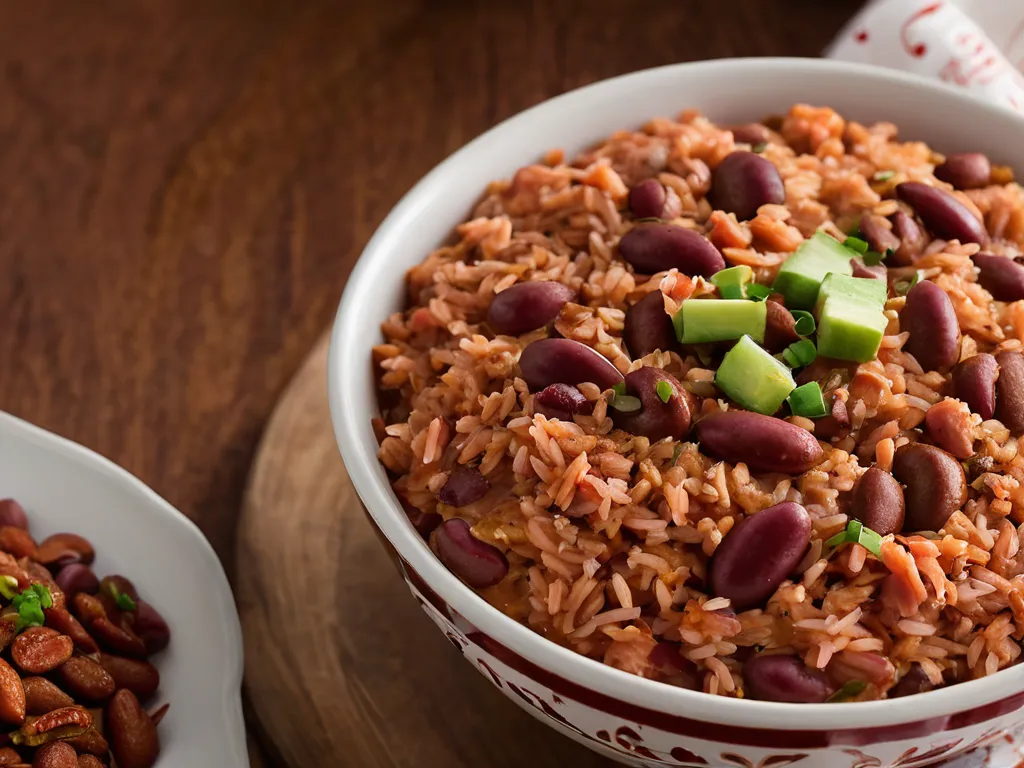
The only copycat that gets the Holy Trinity right β€” onion, celery, and bell pepper plus andouille sausage slow-simmered until small red beans break down naturally. The New Orleans Monday dish Popeyes built its side menu on.

Easy Prep: 15 min Cook: 45 min Total: 1h 0m6 servings ~$4.50/serving
Prep15 min
Cook45 min
Total1h 0m
Servings
6
At home~$4.50/serving
vs
Restaurant~$20.25/serving
You save ~78%

Ingredients

Instructions

💡
Pro tip: This recipe tastes even better the next day. The flavors need time to meld together in the fridge.
❄️
Storage: Keeps in an airtight container in the fridge for up to 2 weeks. Freezer-friendly for up to 3 months.
~200-400 cal/serving

The Story Behind the Recipe

TL;DR

The two techniques every other copycat misses: the Cajun Holy Trinity (onion + celery + green bell pepper, not just onion) and natural bean breakdown β€” simmering long enough that a quarter of the beans release their starch and thicken the liquid themselves, rather than mashing everything at the end into a paste. Get those two things right and the rest falls into place.

Official Popeyes Red Beans and Rice nutrition per regular side: approximately 230 calories, 14g fat, 23g carbs, 7g protein, 7g fiber, 680mg sodium. The homemade version with andouille sausage runs higher β€” roughly 390 calories per serving β€” because the recipe includes more sausage and a larger serving than a fast-food side portion. Note: Popeyes’ actual restaurant recipe does not include andouille sausage β€” it uses pork fat and chicken broth as the cooking base. Andouille is a home cook’s upgrade that makes this a heartier, standalone dish rather than a side; it’s how the best copycat recipes (and most New Orleans home cooks) make it, but it is a deliberate departure from what’s in the box.


Popeyes did not invent red beans and rice. New Orleans did, 200 years before Popeyes existed. What Popeyes did was build their entire side dish identity on it β€” and for good reason. It is the emblematic dish of the Louisiana city where Popeyes was born.

What Popeyes actually puts in their red beans and rice: pork fat and chicken broth, no sausage. That is what keeps the calorie count at 230 per regular side. The dish draws its smokiness from rendered pork fat rather than whole-cut sausage. Most copycat recipes β€” including this one β€” add andouille because it makes the dish richer, more satisfying as a standalone, and far closer to what you would get at an actual New Orleans restaurant. It is an upgrade, not a faithful recreation. If you want to stay truer to the official version, skip the andouille and substitute 1 tablespoon of lard or bacon fat for the oil at the sautΓ© step.

The New Orleans Monday Tradition

Red beans and rice is eaten on Mondays in New Orleans. This is not a guideline; it is an institution. Restaurants that have been open for 80 years put it on the menu only on Monday. It shows up in Louis Armstrong’s letters β€” he signed many of them β€œRed Beans and Ricely Yours.” When locals travel, it is the first dish they ask for when they get back.

The reason is practical: Monday was washday. Laundry in the 19th and early 20th century was an all-day physical labor job. Red beans could soak overnight, go on the stove in the morning with Sunday’s leftover pork bones or ham hock, and simmer on low heat for 6 to 8 hours while the washing was done. Nothing burned. Nothing needed attention. You came back to dinner already made.

Sunday dinner in New Orleans was typically a pork roast or baked ham. The ham bone, pork tasso (smoked and spiced cured pork shoulder), or pickled pork ended up in Monday’s beans. Popeyes uses andouille sausage instead β€” a pragmatic modern substitution that delivers similar smokiness without requiring a leftover ham bone.

Popeyes was founded in 1972 in Arabi, Louisiana, a suburb of New Orleans, by Al Copeland. The first location was called β€œChicken on the Run.” The restaurant was renamed Popeyes β€” not after the cartoon sailor, but after Gene Hackman’s character Jimmy β€œPopeye” Doyle in the 1971 film The French Connection. Putting red beans and rice on the menu was not a marketing decision; it was a geographic one. In New Orleans, you serve red beans and rice. It is not optional.

The Holy Trinity (and Why It Matters)

In French cooking, the flavor base is mirepoix: onion, carrot, and celery. In Cajun and Creole cooking, it is the Holy Trinity: onion, celery, and green bell pepper. The carrot is replaced entirely with green bell pepper, and the ratio shifts β€” roughly equal parts of all three rather than the 2:1:1 onion-heavy French ratio.

The green bell pepper does something carrot cannot: it adds a vegetal bitterness and a grassy, slightly sharp note that balances the richness of pork fat and the sweetness of slow-cooked onion. In red beans and rice, which is already rich from the andouille, the bell pepper’s bitterness is the counterweight that keeps the dish from tasting heavy or one-dimensional.

Many copycat red beans and rice recipes include only onion and garlic. They end up tasting flat β€” the same flavors as a dozen other bean dishes. If the Holy Trinity is what separates New Orleans cooking from generic American Southern cooking, it is also what separates a Popeyes-adjacent version from just a can of beans with sausage.

The standard proportion for a batch serving 6: half a medium onion, 2 stalks of celery, and half a green bell pepper, all cut to the same fine dice so they soften evenly.

What Makes Andouille Different

Andouille (pronounced β€œan-DOO-ee”) is a double-smoked pork sausage with a coarse grind. Pork shoulder is cured with salt, pepper, and garlic, then stuffed and cold-smoked at low temperature for up to 12 hours, removed from the smoke, then hot-smoked again. The double smoke gives it a more pronounced, deeper smokiness than kielbasa or basic smoked sausage, which typically go through only one smoke. It also has a noticeably spicier, more peppery flavor profile.

If you cannot find andouille, ranked substitutes in order of similarity:

SubstituteHow it comparesAdjustment needed
Smoked kielbasaMilder, sweeter, less spicyAdd 1/4 tsp extra cayenne + smoked paprika
Smoked sausage (rope style)Very mild, similar textureAdd 1/2 tsp each cayenne + black pepper
Chorizo (Spanish-style, dried)Spicier and more paprika-forwardReduce Cajun seasoning by half
Smoked turkey sausageLeaner, lower fat, lighter flavorAdd extra oil at the sautΓ© step

Chicken andouille is widely available and works well β€” the smoke flavor is similar; you get less fat in the pan but the recipe compensates easily with a tablespoon of oil.

Natural Breakdown vs. Mashing

The goal is a sauce that is thick and glossy β€” something that clings to the rice β€” without being smooth. You want to see whole beans. This is a texture you cannot get by mashing: mashing creates a uniform paste, and then you have to thin it with water to get it pourable, and then it tastes watery.

The technique is to let the beans simmer long enough that some of them start to fall apart on their own, then use the back of a wooden spoon to press a portion against the side of the pan. The beans that are ready will yield with almost no pressure. The starch they release thickens the surrounding liquid naturally, creating a sauce that has body without being heavy.

Two conditions make this work with canned beans:

  1. The beans need to be in motion β€” simmering, not just sitting in liquid. The agitation helps the exteriors of the softer beans abrade against each other.
  2. The bean-to-liquid ratio needs to be right. Too much liquid and the beans float and simmer without contact; too little and they sit dry and scorch. The target is that the beans are just barely submerged with about 1 inch of liquid over the top.

After 20 to 25 minutes, press the back of your spoon against beans in a dozen spots around the pan. You should break down roughly a quarter to a third of the beans. The liquid will visibly thicken within a minute of stirring.

Popeyes vs. Homemade: Side by Side
FactorPopeyes (Regular)Homemade (this recipe)
Calories~230~390 per serving
Fat~14g~11g
Protein~7g~19g
Sodium~680mg~820mg (lower with adjustments)
Sausage in recipeNone (pork fat + chicken broth)~1 oz andouille per serving
Cost per serving$3.19+~$1.20
Bean varietySmall red beansSmall red beans (kidney also works)
Serving sizeSmall fast-food sideLarger dinner serving
Wait time2 minutes1 hour

The homemade version has more calories and more protein primarily because it contains twice the andouille per serving. It is a fuller dish; the Popeyes side is sized as an accompaniment, not a standalone.

Making the Rice

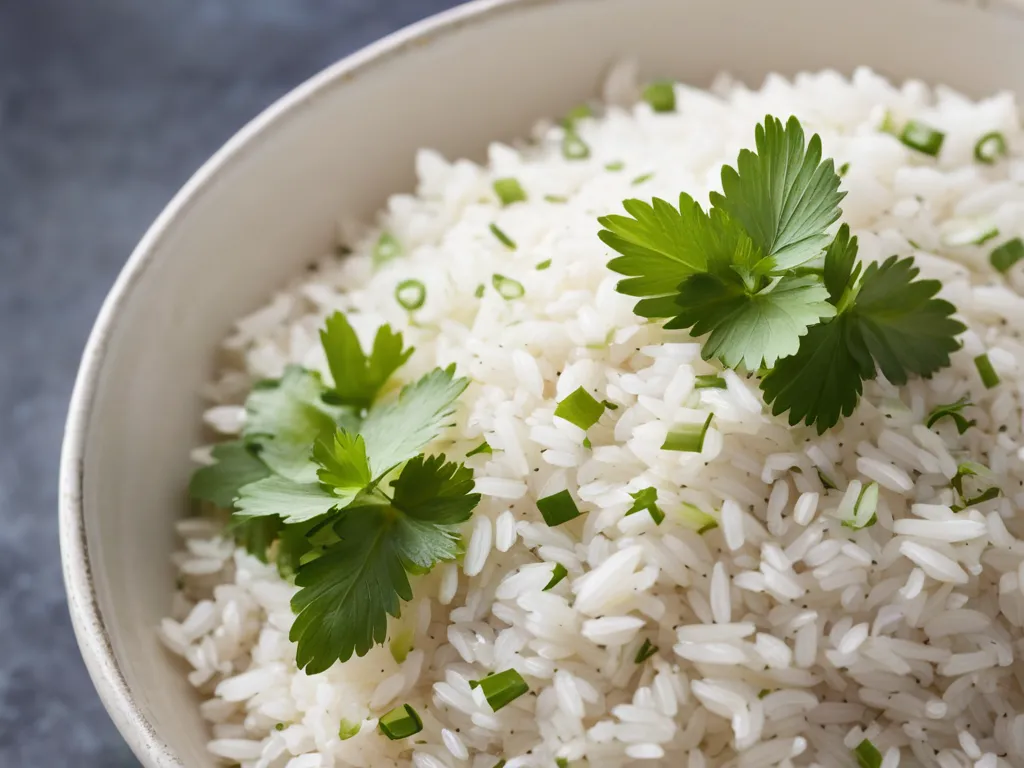
White long-grain rice cooked in chicken broth instead of water adds a layer of savory flavor that plain water cannot. The ratio is 1 cup rice to 2 cups liquid for long-grain white rice cooked by absorption.

Two things matter for rice-and-beans texture:

  1. Separate cooking. Rice is cooked on its own, not stirred into the beans. When mixed early, the starch from the rice can absorb the bean liquid and make everything gluey. The beans are ladled over the rice at serving.
  2. The rest period. After the rice is done, take it off the heat and let it sit covered for 5 minutes. The steam redistributes evenly through the pot, and the bottom grains (which cook slightly hotter) finish relaxing without overcooking. This 5-minute rest produces fluffy, separate grains.
Cajun Seasoning Blend (Make Your Own)

Store-bought Cajun seasoning varies widely in salt content. For better control:

  • 2 teaspoons paprika
  • 1 teaspoon garlic powder
  • 1 teaspoon onion powder
  • 1/2 teaspoon cayenne pepper
  • 1/2 teaspoon dried oregano
  • 1/2 teaspoon dried thyme
  • 1/2 teaspoon black pepper
  • 1/4 teaspoon white pepper

Mix and use 1 teaspoon for this recipe. Store the remainder in a sealed jar for up to 6 months. This blend contains no salt, so you control the seasoning entirely.

Troubleshooting
ProblemLikely causeFix
Beans are watery and thinNot enough simmering timeContinue uncovered on medium heat; mash more beans against the pan
Sauce turned into pasteToo much mashing, too little liquidAdd broth 1/4 cup at a time and stir over medium heat
Bland flavorSpices not bloomed in fat, or undersaltedAdd 1/4 tsp more Cajun seasoning and taste again; a splash of hot sauce at the end lifts the whole dish
Sausage tastes rubberyAdded with the vegetables instead of browned firstAlways render andouille separately first; the browned exterior texture is what you want
Beans are still firm after 25 minutesCanned beans were too firm to start, or too little liquidAdd 1/4 cup broth, cover, and simmer 10 more minutes
Rice is gummyToo much water, or uncovered during cookingNext time use a tight-fitting lid and remove from heat exactly at 18 minutes; the carry-over steam finishes the top layer
Rice and beans taste flat togetherRice was cooked in waterCook rice in chicken broth β€” the flavor difference is significant
Variations

Vegetarian: Omit the andouille. Use 1 tablespoon of olive oil or butter to sautΓ© the Trinity. Add 1/2 teaspoon of liquid smoke and an extra 1/4 teaspoon of smoked paprika to the beans. The smoke is what does most of the work in the sausage, and both of those substitutes deliver it. Use vegetable broth for the rice.

Dry red beans (the traditional method): Soak 1 cup of dried small red beans overnight in cold water. Drain and rinse. Simmer with the Holy Trinity, sausage, and 4 cups of broth for 2 to 3 hours until the beans are completely tender and a quarter have broken down naturally. The liquid that develops from dried beans cooking in the pot has a depth and minerality that canned beans cannot replicate. Camellia Brand dried small red beans (from New Orleans) are the closest to what local restaurants use.

Spicier Cajun version: Add 1/2 teaspoon each of white pepper and extra cayenne. Include 2 dashes of Crystal hot sauce or Louisiana Brand hot sauce directly into the simmering beans. Serve with hot sauce on the table.

New Orleans restaurant-style (with pickled pork): Replace the andouille with 4 oz of pickled pork shoulder, cubed. Pickled pork (salt-cured pork shoulder, available at many Southern grocery stores) is what many old New Orleans restaurant recipes use. It adds a tangier, more delicate flavor than the smoke-forward andouille.

Make-Ahead and Storage

Red beans and rice stores and reheats exceptionally well β€” arguably better the next day as the flavors continue to meld.

Storing: Keep the beans and rice in separate containers in the refrigerator. If stored together, the rice absorbs the bean liquid overnight and the two become one heavy mass. Separate storage takes 30 extra seconds and makes a significant quality difference for leftovers. Both keep 4 days refrigerated.

Reheating: Add a splash of chicken broth or water to the beans (about 2 tablespoons per cup) before reheating on the stovetop or microwave. The beans thicken further as they cool and need a little liquid to return to the right consistency. Reheat rice with 1 tablespoon of water per cup, covered, in the microwave for 60 to 90 seconds.

Freezing: The beans freeze well for up to 3 months. Freeze in individual portions with the bean liquid. Rice does not freeze as well β€” better to cook a fresh batch when serving. Defrost the beans overnight in the refrigerator and reheat on the stovetop with a splash of broth.

More Popeyes Copycat Recipes
  • Popeyes Chicken Sandwich β€” pickle-brine, buttermilk double-dredge, and the fry technique that gets thick thigh meat cooked through without burning the crust.
  • Popeyes Biscuits β€” letter-fold lamination, cold butter, and honey-butter glaze; the flakiest fast-food biscuit replicated at home in 30 minutes.
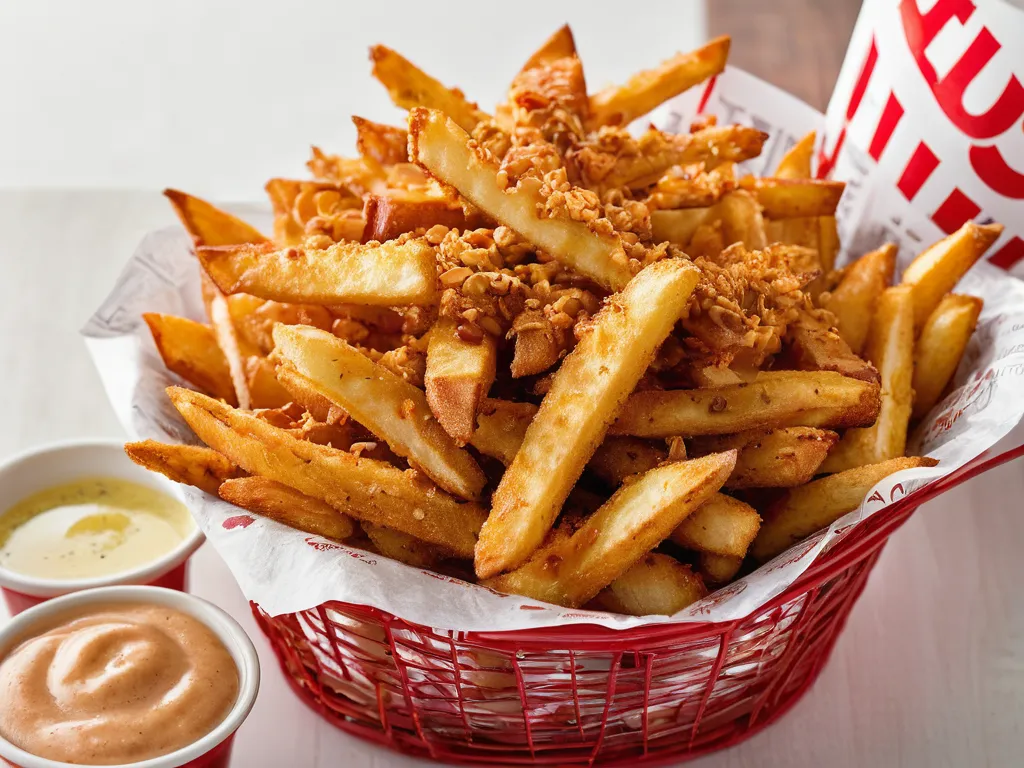
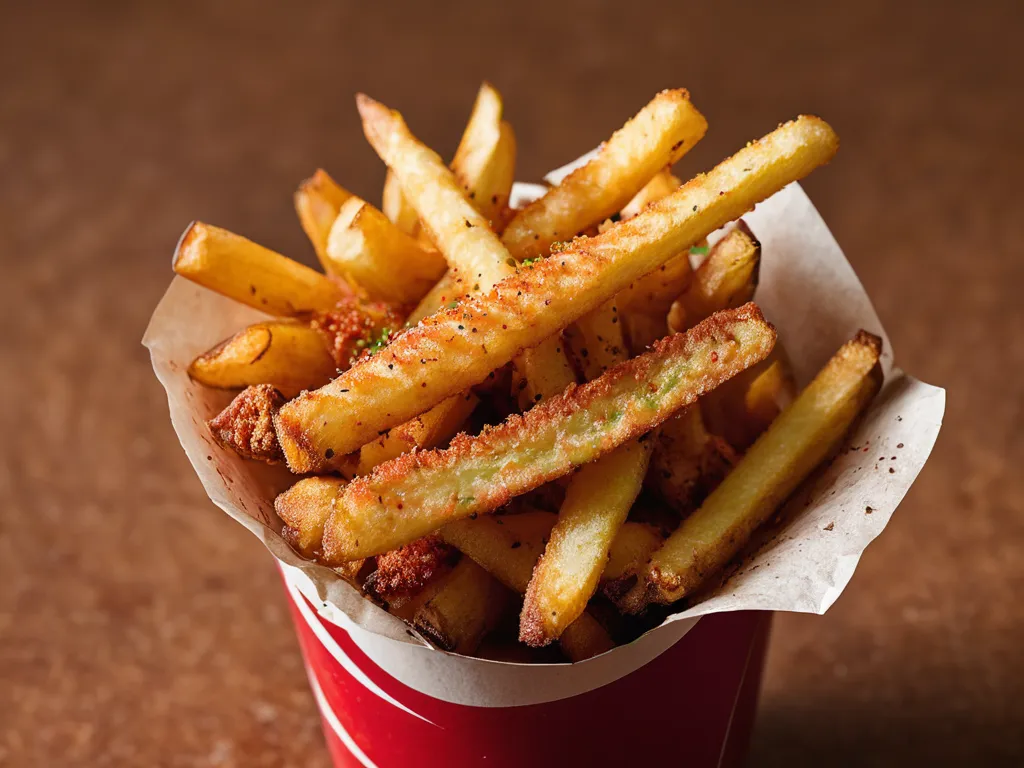
  • Popeyes Cajun Fries β€” boldly seasoned battered fries with the same Louisiana spice blend that runs through all Popeyes sides.
  • Popeyes Mashed Potatoes β€” rich, buttery mashed potatoes with Cajun brown gravy.
  • Popeyes Blackened Chicken Tenders β€” the no-fry alternative with a cast iron char and the same spice profile.

See all Popeyes copycat recipes β†’

Nutrition Facts

Per serving (6 servings)
Calories390
Total Fat11g
Total Carbs52g
Dietary Fiber9g
Sugars3g
Protein19g
Sodium820mg

* Estimated values based on standard recipe preparation. Actual values may vary.

πŸ₯—

Make It Healthier

Love Popeyes Red Beans and Rice but want a lighter version? Try these simple swaps:

  • βœ“Use brown rice for 3–4 extra grams of fiber per serving; increase liquid to 2.5 cups and cooking time to 40 minutes.
  • βœ“Swap andouille for chicken andouille (about 30% fewer calories and significantly less saturated fat with nearly identical smoke-spice flavor).
  • βœ“Use low-sodium chicken broth and rinse the canned beans twice to drop total sodium to around 500mg per serving.
  • βœ“Replace half the red beans with black-eyed peas for a lighter texture and a more traditional New Orleans Friday-meal variation.

Equipment You'll Need

Large, heavy-bottomed skillet or Dutch oven (12-inch)

For even heat distribution during the long simmer β€” thin pans scorch the beans

Medium saucepan with tight-fitting lid

For cooking the rice without steam escape

Wooden spoon

For pressing beans against the pan to break them down naturally

Instant-read thermometer (optional)

Useful for checking rice doneness by steam temperature

Frequently Asked Questions

What type of beans does Popeyes use in their red beans and rice?

Popeyes uses small red beans β€” smaller, softer, and less intensely red than kidney beans. Small red beans are sometimes labeled 'red chili beans' in grocery stores. They break down more evenly during a simmer and produce a creamier final sauce. Kidney beans are widely used in home copycat recipes and work fine, but they hold their shape more firmly and have a slightly earthier flavor. If you can find small red beans at your store, use them for the closest result; if not, kidney beans are a solid substitute.

Why is red beans and rice a Monday dish in New Orleans?

The tradition dates to the 19th and early 20th centuries when Monday was washday β€” an all-day physical labor chore. Red beans could soak overnight Sunday, go on the stove Monday morning with leftover Sunday pork bones or ham hock, and simmer for 6 to 8 hours without needing attention. When the laundry was done, dinner was ready. The tradition is so entrenched that many New Orleans restaurants still only serve red beans and rice on Mondays, and Louis Armstrong reportedly signed letters 'Red Beans and Ricely Yours.'

What is the Holy Trinity in Cajun cooking and does it really matter for red beans?

The Holy Trinity is onion, celery, and green bell pepper β€” the flavor base of Cajun and Creole cooking. It differs from French mirepoix (onion, carrot, celery) in that carrot is replaced with green bell pepper, which adds vegetal bitterness that balances the richness of pork fat. Most copycat recipes skip celery and bell pepper entirely, which is why they taste flat compared to the real thing.

Can I use kielbasa instead of andouille sausage?

Yes, with adjustments. Kielbasa is milder, sweeter, and has only one smoke rather than andouille's double-smoke. Compensate by adding an extra 1/4 teaspoon each of cayenne pepper and smoked paprika. Smoked kielbasa or rope sausage works better than fresh kielbasa, which has almost no smoke flavor. The dish will taste good but will have a softer flavor profile than andouille provides.

Should I mash the beans or let them break down naturally?

Let them break down naturally β€” or at most use the back of a spoon pressed against the pan wall to break a quarter to a third of them. Active mashing creates a uniform paste that you then have to thin with water, which dilutes the flavor. The natural breakdown method releases bean starch into the liquid, thickening it to a glossy sauce without losing the whole-bean texture.

Is the dish better with dried beans or canned beans?

Dried beans produce a richer, more mineral flavor β€” the liquid they cook in develops complexity that canned beans cannot match. The trade-off is 2 to 3 hours of cooking time vs. under an hour with canned. For a weeknight copycat, canned beans are the right choice. If using dried: soak 1 cup of small red beans overnight, drain, then simmer with the Holy Trinity and andouille in 4 cups of broth for 2 to 3 hours until a quarter have broken down naturally.

How do I make this dish vegetarian without losing the smoky depth?

Omit the andouille and add 1/2 teaspoon of liquid smoke plus an extra 1/4 teaspoon of smoked paprika to the bean simmer. The smoke compound in liquid smoke delivers the wood-smoke flavor the same way andouille does. Use olive oil or butter to sautΓ© the Holy Trinity in place of the sausage fat, and switch to vegetable broth for both the rice and beans.

Love this recipe? Share it!

Shop the tools

The right tools make all the difference. We earn a small commission if you buy through these links β€” at no extra cost to you.

Free PDF: our 12 most-wanted copycat recipes β€” instant download.

Ratings & Reviews

β€”
No ratings yet

Rate this recipe

Click a star to rate

Leave a Review

0/500

CS

Copycat Spices Test Kitchen

Every recipe on Copycat Spices is developed and tested in our home test kitchen. We reverse-engineer beloved restaurant dishes and refine each one until the flavors and the instructions work reliably for home cooks of all skill levels.

Learn more about our mission →