


Copycat Shake Shack Crinkle-Cut Fries
Prep time: 20 min (plus 1-hr freeze) | Cook time: 20 min | Makes: 4 servings | Cost: under $3 vs. $5–6 per order
Here’s the thing most copycat recipes get wrong about Shake Shack fries: they are frozen, and that’s on purpose. Shake Shack has fried frozen crinkle-cut fries since it opened, famously tried switching to fresh-cut in 2013, got buried in complaints, and switched right back. So the best way to make them at home isn’t to fry fresh potatoes straight through — it’s to recreate a frozen fry in your own kitchen, exactly the way their cookbook lays out.
This recipe follows the real method from Shake Shack: Recipes & Stories: simmer, fry, freeze, then fry again.
Why Shake Shack Fries Are Frozen — and Why That Matters at Home
In 2013, Shake Shack CEO Randy Garutti made what he later called a mistake: he switched the chain’s crinkle-cut fries from frozen to fresh, hand-cut potatoes, double-fried in-house. It fit the brand’s natural-ingredient story. Customers hated it. The fries were the best-selling item on the menu, and the fresh version tanked — one fan started an online petition to bring the old ones back. Within a year the company reverted to frozen crinkle-cut fries, reformulated with the manufacturer to strip out artificial ingredients and preservatives.
The lesson Garutti talks about openly is counterintuitive: for this product, frozen tastes better than fresh. Frozen fries are blanched and par-fried at the factory, then flash-frozen. That freezing step pulls moisture out of a crust that’s already been set, so when the fry hits the fryer it crisps hard instead of steaming. A fresh-cut fry fried straight through never gets that same shatter.
So the smart home copycat doesn’t fight that — it copies it. You par-fry your own crinkle strips, freeze them, and finish them from frozen. You are, in effect, making a bag of Shake Shack fries and keeping it in your freezer.
The Potato
Shake Shack’s fries are made from Yukon Gold potatoes, and the cookbook’s from-scratch recipe calls for Yukons too. They have thin skin, golden flesh, and a creamy interior that survives both a simmer and a double-fry without going mushy or hollow.
If you can’t find Yukons, russets are the best substitute — starchier, so they fry up a bit fluffier and less waxy, which is still an excellent fry. Pick the biggest, most uniform potatoes you can so the crinkle strips come out even. One thing to skip: Kennebec potatoes. They’re a terrific frying potato, but they’re the signature of In-N-Out, not Shake Shack — don’t let other copycat recipes tell you otherwise.
Why Crinkle-Cut?
Danny Meyer chose crinkle-cut fries when Shake Shack opened in Madison Square Park for two reasons: nostalgia and surface area.
The nostalgia was strategic. Meyer wanted Shake Shack to feel like the Platonic ideal of a classic American burger stand — the kind with a line out the door because the food is genuinely good, not because of marketing. Crinkle-cut fries carry that reference instantly. They’re the fry of boardwalk stands, school cafeterias, and roadside diners. Straight-cut fries can feel aspirational; crinkle-cut fries feel like a memory.
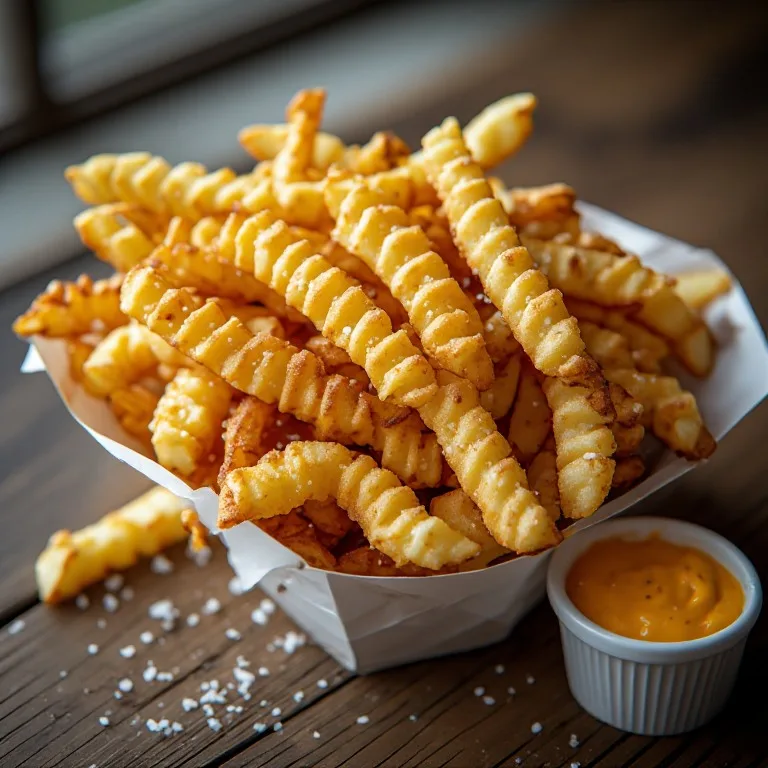
The surface area is physics. A ridged fry has more exposed surface than a straight fry of the same width, so there’s more crust per bite and a more pronounced crisp-to-fluffy contrast. Thin shoestring fries are all crunch and little interior; thick steak fries are the reverse. The crinkle cut lands in the middle: real interior, extra crust.
The Method, Step by Step
1. Simmer first
The cookbook starts the fries in water, not oil. A gentle 4–6 minute simmer par-cooks the interior so it turns fluffy and floury later, and it does so evenly — far more reliably than trying to cook the center through in hot oil alone. Pull them while they’re just tender and still holding their shape; mushy strips won’t survive the fryer.
2. First fry (350°F, 3–5 minutes)
This fry sets the crust and finishes cooking the interior without browning it. You want pale gold, not color. Keep batches small and let the oil climb back to 350°F each time — dumping in too many strips at once crashes the temperature and the fries absorb oil and braise instead of frying.
3. Freeze (at least 1 hour) — the secret step
Spread the par-fried strips on a tray in a single layer and freeze until solid. This recreates exactly what happens to a commercial frozen fry: moisture migrates out of the set crust, leaving it bone-dry. A frozen strip hits the second fry with no surface water to boil off, so the oil goes straight to browning and crisping. Skip this step and you have decent diner fries; include it and you have Shake Shack fries. Bonus: bagged and kept frozen, these last weeks — fry straight from frozen anytime.
4. Second fry (350°F, 2–3 minutes)
Finish the frozen strips in 350°F oil until deep golden and audibly crisp. The ridges brown first and end up slightly darker than the valleys — that’s the look you want. Two to three minutes is the window: under two and the crust is thin, over three and the ridges scorch before the base catches up.
5. Salt the instant they’re out
Season while the fries are still hot and oily so the salt actually sticks — the surface oil is the binder. Wait a minute and most of it slides right off onto the tray.
The Cheese Sauce
Shake Shack released its real cheese sauce recipe, and the base is simple: a blend of American cheese and sharp cheddar melted into heavy cream. American cheese brings the emulsifying salts that keep the sauce glossy and pourable; sharp cheddar brings the tang and the color. The restaurant steeps the cream with onion, jalapeño, peppercorns, and a splash of white wine and vinegar, then strains it before melting in the cheese.
The quick home version below skips the aromatics and gets you about 90% of the way in ten minutes. If you want the full flavor, warm the cream with a couple of onion slices, a coin of jalapeño, and a few peppercorns for 10 minutes, strain, then melt in the cheeses. Use deli-counter cheese, not individually wrapped singles — the singles contain fillers that make a gummier sauce. Keep the finished sauce over the lowest possible heat and loosen it with a splash of cream if it tightens up.
Serving
Pour the cheese sauce over the fries right before serving — sauce them early and the steam softens the crust fast. For fries that stay crisp longer, serve the sauce in a ramekin for dipping. Either way, these are best within about five minutes of the second fry. The freeze step makes them more resistant to going soft than most fries, but nothing is immune.
More Shake Shack Copycat Recipes
- Shake Shack Burger — the double smash burger with the signature thin patties and toasted potato bun
- Shack Sauce — the house sauce of mayo, ketchup, yellow mustard, pickle brine and garlic; goes on the burger and makes an excellent fry dip
- Shake Shack Shroom Burger — the crispy portobello mushroom cap stuffed with muenster and cheddar
More Classic Fries to Try
- Five Guys Cajun Fries — fresh-cut Idaho russets in peanut oil with the paprika-garlic-cayenne seasoning blend tossed hot
- McDonald’s French Fries — the sugar blanch + beef-flavored oil + double-fry that produces the world’s most recognizable fry
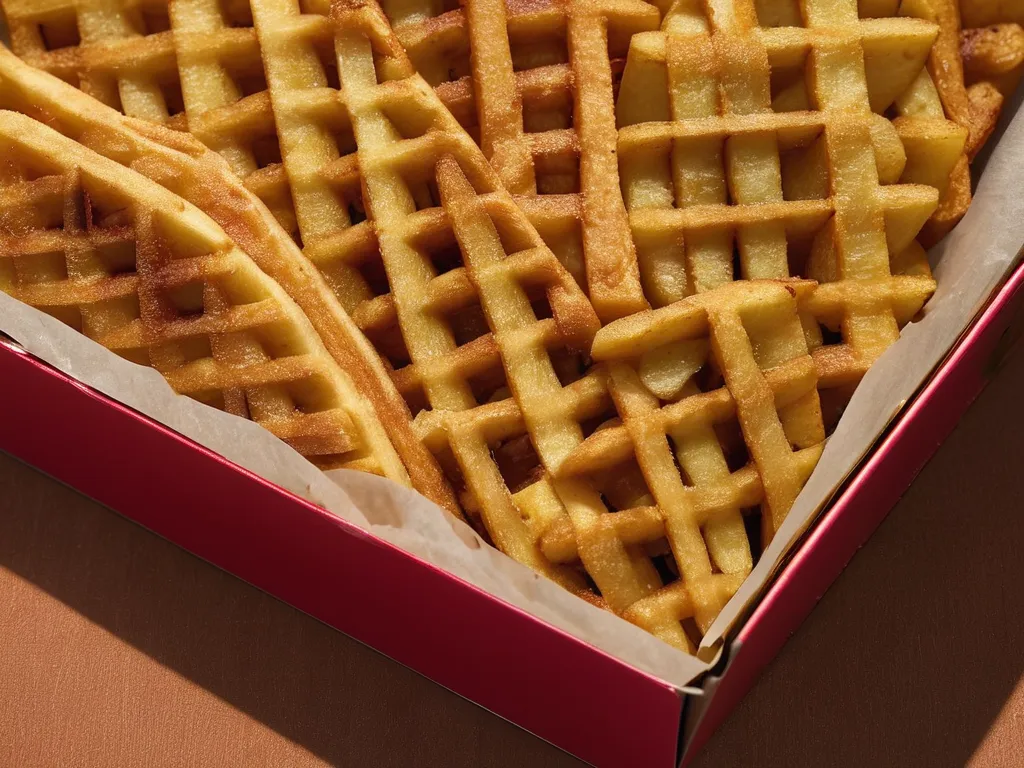
- Chick-fil-A Waffle Fries — the grid-cut thick waffle fry with the lattice crust that absorbs sauce without going soggy