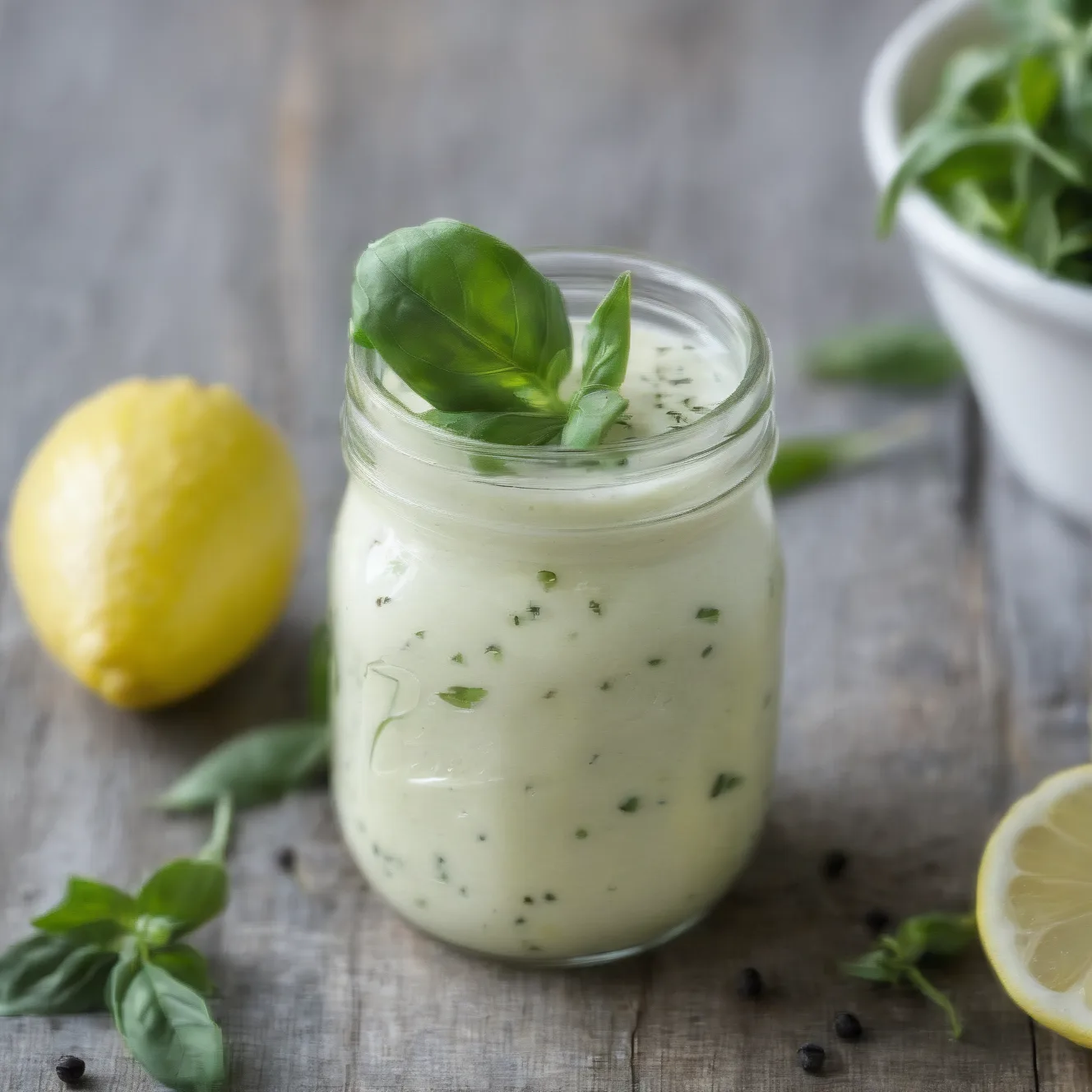
Olive Garden’s unlimited salad has its own fanbase, separate from everything else on the menu. The reason is the dressing — a tangy, herby, slightly creamy Italian that coats iceberg lettuce without weighing it down. It is genuinely one of the most replicated restaurant dressings in home kitchens, and for good reason: the from-scratch version takes five minutes and the ingredients cost about $1.50 per batch.
TL;DR: Mix neutral oil, white wine vinegar, lemon juice, finely grated Pecorino Romano, mayonnaise, and dried herbs in a jar. Shake. Refrigerate 30 minutes. The Romano is the non-negotiable ingredient — it is what makes this taste like Olive Garden and not like every other Italian dressing. (Skip the extra-virgin olive oil; a neutral oil is what the restaurant actually uses.)
What Actually Goes Into It
The Olive Garden signature Italian dressing — both the restaurant version and the bottled retail product — contains Romano cheese. This is confirmed on the label of the bottled version sold in grocery stores (Olive Garden Signature Italian, made by the T. Marzetti Company): water, soybean oil, distilled vinegar, sugar, salt, eggs, Romano cheese (pasteurized part-skim milk, cheese cultures, salt, enzymes), dehydrated garlic, spice, xanthan gum, dextrose, annatto color, and natural flavor.
Three things stand out from that list:
Neutral oil, not olive oil. The bottled version uses soybean oil. The restaurant version uses a neutral or blended oil. Extra-virgin olive oil — the first instinct for an “Italian” recipe — actually produces the wrong flavor. The olive fruitiness competes with the herbs and Romano; a neutral oil lets those flavors come forward. This guide uses neutral oil with a small amount of light olive oil for a hint of authenticity.
Eggs as the emulsifier. The bottled product uses eggs directly. At home, mayonnaise (which is an egg-based emulsion) is the practical substitute — it provides the same lecithin-based emulsification in a shelf-stable form.
Annatto for color. The characteristic golden-amber color of Olive Garden dressing comes from annatto, a natural food coloring derived from achiote seeds. A pinch of turmeric at home produces a nearly identical visual result.
Romano cheese is the flavor. Without it, you’re making a generic Italian vinaigrette. With it, you get something that actually tastes like the restaurant. Most generic Italian dressings contain no cheese at all; the Romano is what separates Olive Garden’s formula from the shelf.
The Romano Cheese: Why It Works
Pecorino Romano is a hard Italian sheep’s milk cheese — aged, intensely salty, and sharp in a way Parmesan is not. Grated to a fine powder, it dissolves into the dressing and contributes three things simultaneously:
Salt. Romano is saltier by weight than Parmesan. Two tablespoons of finely grated Romano adds enough background salinity that you don’t need much additional salt in the recipe.
Umami. Aged cheeses are rich in glutamates — the same compounds responsible for the savory depth in Parmesan rinds, anchovies, and soy sauce. Two tablespoons is enough to push an Italian dressing from “bright and herby” to “craveable.”
Cling. Fine cheese particles have physical substance that helps the dressing coat lettuce without pooling at the bottom of the bowl.
Grating note: The Romano must be grated as finely as possible — a Microplane or the smallest side of a box grater. Coarse shreds will not incorporate into the dressing and will either clump at the bottom or sit on top of salad greens unevenly. The goal is a powder that disperses fully when shaken.
How Emulsification Works (And Why It Matters)
Standard vinaigrette is an oil-and-vinegar mixture that separates every time it sits for more than a minute. This is physics: oil and water-based liquids (vinegar, lemon juice) don’t mix because their molecules repel each other.
An emulsifier is a molecule that bonds with both oil and water simultaneously, creating a stable mixture. The most common food emulsifier is lecithin, which is concentrated in egg yolks. Mayonnaise is essentially oil emulsified with egg yolk lecithin — so adding 2 tablespoons of mayonnaise to the dressing provides ready-made emulsification without the need for raw eggs.
The result is a dressing that stays semi-creamy for longer, coats lettuce rather than sliding off, and has the slightly thickened consistency that restaurant Italian dressings are known for.
If you prefer not to use mayonnaise:
- Raw egg yolk: 1 egg yolk provides stronger emulsification but requires the dressing to be used within 3 days
- Greek yogurt: 2 tablespoons of full-fat plain Greek yogurt emulsifies adequately and adds a slight tang; the dressing will be thinner
- No emulsifier: A perfectly acceptable separated vinaigrette — just shake hard before each use
The Herb Profile
Italian dressing herbs should taste herby but balanced — oregano is the dominant note, basil softens it, and red pepper flakes add a very faint background heat without making the dressing actually spicy.
| Herb | Role | What Happens If You Overdo It |
|---|---|---|
| Dried oregano (1/2 tsp) | Primary flavor; sharp, slightly bitter floral | Becomes medicinal and overwhelming |
| Dried basil (1/4 tsp) | Sweetness; rounds the oregano | Loss of the sharp Italian character |
| Garlic powder (1/2 tsp) | Savory base note | Harshness; fresh garlic amplifies this risk |
| Red pepper flakes (pinch) | Background warmth | Turns the dressing noticeably spicy |
| Sugar (1/4 tsp) | Balances the acidity | Sweetness becomes detectable; not Italian-style |
Fresh vs. dried herbs: Fresh oregano and basil are not improvements here — dried herbs are more concentrated and meld into the oil better over the resting period. Fresh herbs work well if you make the dressing and use it within 24 hours, but they give the batch a shorter shelf life (5 days vs. 2 weeks) and a slightly different flavor profile that is closer to chimichurri than Italian vinaigrette.
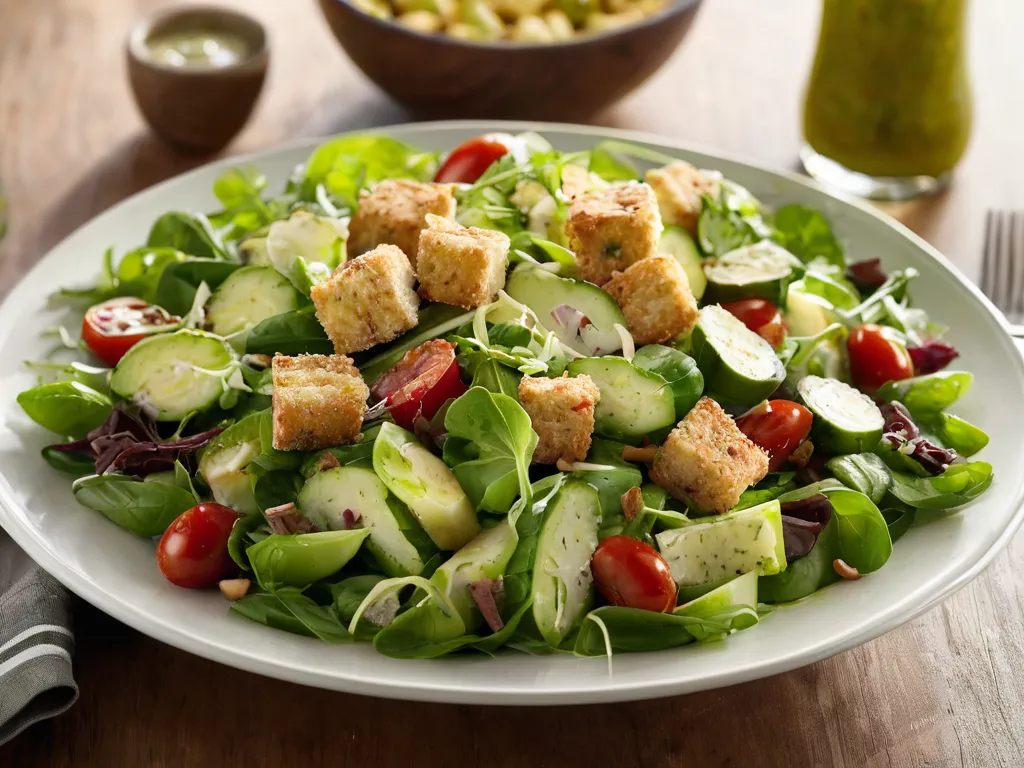
The Complete Olive Garden House Salad
The dressing is only half the picture. The salad build is specific and worth replicating exactly.
Greens: A blend of chopped iceberg and chopped romaine, roughly 70% iceberg to 30% romaine. The iceberg provides the cold crunch and stays crisp under dressing; the romaine adds body and a slightly more substantial texture. All-romaine is not the same — it wilts faster and gets limp. All-iceberg is too close to water.
The toppings:
- Grape or cherry tomatoes — halved, or left whole if small. Roma tomatoes sliced can substitute.
- Pitted black olives — canned California black olives, sliced in halves. Not Kalamata (too briny and assertive) and not castelvetrano (too buttery).
- Red onion — thin half-rings, not diced. The thin slice softens quickly in the dressing without becoming overwhelming.
- Pepperoncini — 2 to 3 per serving. The tangy brine from the jar is a bonus; a small splash in the dressing adds acidity authenticity.
- Croutons — medium-sized, seasoned. Made at home by cubing day-old bread, tossing with olive oil, garlic powder, and Italian seasoning, and baking at 375°F for 12 minutes until golden.
How Olive Garden dresses the salad: The salad is tossed with dressing in the kitchen before it comes to the table — it arrives pre-dressed. At home, add 2 to 3 tablespoons of dressing per serving directly to the greens and toss thoroughly. The dressing should coat every leaf without pooling at the bottom. Add croutons last, after dressing, so they stay crisp on top.
Timing: Dress the salad immediately before serving. Do not dress in advance — iceberg breaks down in about 15 minutes under acid and loses its crunch. The Olive Garden serving bowl arrives at the table immediately after being tossed.
Variations
Extra garlic: Double the garlic powder to 1 teaspoon, or use 1 small fresh garlic clove minced very fine on a Microplane. Fresh garlic has more bite than powder and a slightly different character — sharper when fresh, rounder when powdered.
More lemon, less vinegar: Swap 1 tablespoon of white wine vinegar for an additional tablespoon of fresh lemon juice. The result is more citrus-forward and brighter. Good for summer salads and fish.
Creamy version: Increase mayonnaise from 2 tablespoons to 4 tablespoons. The dressing becomes noticeably thicker and coating — closer to a Caesar in body than a vinaigrette. This version works particularly well on grain bowls and hearty greens.
Herbed-up version: Add 1/4 teaspoon each of dried thyme and dried parsley to the base recipe. Thyme adds a slightly woodsy depth; parsley adds a fresh green note without dominating. This is closer to an Italian-American “house dressing” than strictly an Olive Garden copycat.
Lower acid version: Reduce white wine vinegar to 2 tablespoons and increase water to 2 tablespoons. Milder tang, softer flavor — better if you find standard Italian dressing too sharp.
As a marinade: Use the dressing as-is for chicken, pork tenderloin, or vegetables before grilling. The acid tenderizes and the herbs infuse during 30–60 minutes of marinating. Do not marinate beyond 2 hours — the acid begins to break down surface proteins and creates a mushy texture.
Storage and Shelf Life
Stored in a sealed jar in the refrigerator, this dressing keeps for up to two weeks. The acid content (vinegar + lemon juice) acts as a natural preservative. After two weeks, the herbs begin to lose potency and the flavor becomes noticeably muted.
Shake before each use — the dressing will separate on standing, and shaking re-emulsifies it in 10 seconds.
The dressing does not freeze well — the emulsion breaks on thawing and the dressing becomes permanently separated and watery.
Cost Comparison
| Version | Per Serving (2 tbsp) | Per 16-oz Bottle |
|---|---|---|
| Olive Garden restaurant | Included in salad price | — |
| Olive Garden bottled (Marzetti) | ~$0.33 | ~$4.00 |
| This from-scratch recipe | ~$0.17 | ~$2.00 |
The from-scratch version costs roughly half the bottled retail price, uses fresher ingredients (fresh lemon juice and freshly grated Romano instead of shelf-stable concentrate), and lets you dial the salt, acid, and creaminess to taste.
History: How the Unlimited Salad Became a Thing
Olive Garden opened its first location on December 13, 1982, in Orlando, Florida — founded by General Mills’s restaurant division. The chain was conceived as a casual-dining Italian-American concept positioned between fast food and fine dining.
The unlimited salad and breadsticks offering was tied to the brand from early on. Blaine Sweatt, one of Olive Garden’s founding executives, is widely credited with the “unlimited first course” idea, and it became a core brand promise — bottomless salad, soup, and breadsticks with every lunch and dinner entrée.
The bottled dressing that sits on grocery shelves is produced for Olive Garden by the T. Marzetti Company, which packages the Signature Italian and other Olive Garden dressings for retail. It is sold at major chains including Walmart, Target, and Kroger, and — per Olive Garden — is intended to match the flavor guests get in the restaurant.
Related Olive Garden Recipes
For the full unlimited-salad experience at home, the dressing is the starting point but the table needs breadsticks and something to follow:
- Copycat Olive Garden Salad — the complete house salad build with exact proportions and tossing technique
- Copycat Olive Garden Breadsticks — the brushed, garlic-salted rolls that belong on the same table
- Olive Garden Zuppa Toscana — the Italian sausage and kale soup; pairs with salad as the classic unlimited-soup-salad-breadsticks combination
- Olive Garden Chicken Gnocchi Soup — the creamy, spinach-and-gnocchi soup; the other soup option in the unlimited pairing
- Copycat Olive Garden Chicken Alfredo — the pasta for after the salad course
See all Olive Garden copycat recipes →