TL;DR
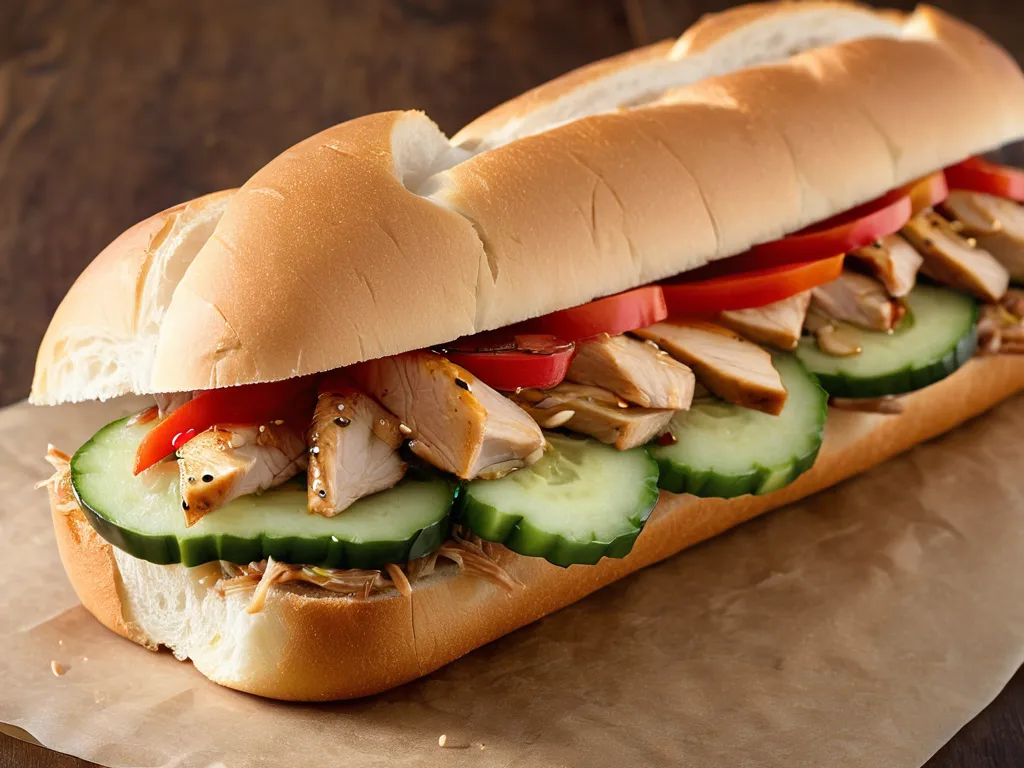
Two sauces, not one: teriyaki glaze caramelizes on the chicken during cooking; scratch sweet onion sauce goes on at assembly. Use chicken tenders (easier than breasts, closer to Subway’s cut). Marinate 30–60 min. Pan-sear over medium-high, add thickened glaze in the last minute. Toast the bread. Layer: lettuce, chicken, tomatoes, onion, pepper, sweet onion drizzle. For the Subway Series #16 build, add double American cheese before the sweet onion sauce. 340 cal / 24g protein per 6-inch (no cheese).
What Most Copycat Recipes Get Wrong
One sauce instead of two. Subway’s Sweet Onion Chicken Teriyaki is named for both sauces. The chicken is marinated and glazed in teriyaki sauce. The sweet onion sauce is a separate vinegar-based condiment drizzled on at assembly. Every recipe that uses only teriyaki sauce is rebuilding the wrong sub.
The sweet onion sauce is not creamy. It contains no mayonnaise, no ranch, no sour cream. Subway’s official ingredient list shows: sugar, vinegar, dried onion, poppy seeds, mustard seeds, cucumber juice. It’s thin and lightly syrupy — closer to a sweet pickling liquid than a dressing. Recipes that make it with mayo or buttermilk have no connection to the original.
Mozzarella cheese. The stub recipe this replaced used shredded mozzarella. Subway uses American cheese (if any cheese at all on this sub). American’s processing agents give it a specific smooth melt and mild flavor that blends into a teriyaki build without competing. Mozzarella is wrong, and broiling it adds a step the sandwich doesn’t need.
Dill pickles. Pickles are not a standard component of this sub. They are an add-on available to customers who want them, but the named build does not include pickles — that’s the Italian BMT. Don’t list them as a default ingredient.
Oven-baking the chicken. The stub’s 375°F/20-minute oven method turns chicken strips into dry, flour-dusted pieces with no surface browning. Subway’s chicken develops its sticky exterior from the teriyaki glaze coating strips in direct contact with heat. At home, a hot skillet accomplishes this in 8–10 minutes total with better texture than oven cooking.
Not toasting the bread. A soft, untoasted sub roll absorbs the sweet onion sauce in about 90 seconds and turns the bottom into a wet sponge. Toasting is not optional.
The Chicken
Subway uses thin all-white-meat chicken breast strips that arrive at stores pre-cooked and marinated. They’re reheated on a steam pan before serving, which means they are tender but have no sear.
At home you have a heat advantage. Use chicken tenders rather than full breasts: they’re already cut to a close approximation of Subway’s strip size, they cook faster (3–4 minutes per side instead of 6–8), and they’re harder to accidentally overcook into dryness. If using breasts, slice each breast horizontally and then into strips about an inch wide, and pound to even thickness.
Marinate 30 minutes at room temperature for a quick session, or up to 2 hours in the refrigerator for deeper flavor. The teriyaki glaze doesn’t need longer than that — the salt and acid in the soy and vinegar are sufficient penetrants; longer marinating doesn’t improve flavor and can make the surface mushy.
The Teriyaki Glaze
Subway’s commercial teriyaki glaze contains (among other things): corn syrup, soy sauce, rice vinegar, tomato paste, ginger, garlic, sesame oil, and sesame seeds. The tomato paste is the non-obvious ingredient — you won’t taste tomato, but it adds a specific umami roundness that distinguishes the glaze from basic soy-honey sauces.
The home shortcut for that same effect is pineapple juice. It provides a similar sweet-tart-umami quality (natural bromelain breaks down protein slightly, improving the surface texture of the chicken), and it’s something most people have or can easily find. That’s why most credible copycat recipes use it.
A batch of this glaze splits in two: half goes raw onto the chicken for the marinade, half gets thickened with cornstarch into a cooking glaze. The cooking portion caramelizes onto the chicken in the skillet’s last minute — that’s what creates the sticky exterior Subway’s steam-reheated chicken can’t achieve.
The Sweet Onion Sauce
This is the sauce the sandwich is actually named for, and the one most recipes omit.
Subway’s ingredient list for the sweet onion sauce reads: sugar, water, corn vinegar, dehydrated onion, corn starch, mustard seed, poppy seed, onion juice, spices, dehydrated red bell pepper, cucumber juice. There is no fat in this sauce. It is a sweetened vinegar reduction with onion, seeds, and mild aromatics.
The home version takes about 5 minutes: dissolve sugar in vinegar and water, add dried onion, poppy seeds, mustard seeds, and a pinch of salt, heat just enough to combine, cool. Make it ahead — 24 hours in the refrigerator deepens the onion and poppy seed flavors noticeably. It keeps for 2 weeks.
At assembly, drizzle it generously over the top of the built sub. It does not go on the bread first, and it does not go on the chicken during cooking.
Building the Sub
Bread: Hearty multigrain is the Subway Series #16 default. Italian white is the most popular customer pick. Honey oat’s mild sweetness works well with teriyaki. Avoid Italian herbs and cheese — the herbed crust competes with the glaze. Whatever you choose, toast it.
Toasting: Cut the roll open and toast cut-side down in a dry skillet over medium heat, or cut-side up under the broiler for 1–2 minutes. You want the interior surface golden and slightly firm, not soft. This is what keeps the sandwich together through the sweet onion drizzle.
Layering order: Lettuce first (it creates a waterproof layer between bread and wet ingredients). Then chicken. Then tomatoes, red onion, green pepper. Sweet onion sauce last, drizzled across the length. Close immediately and serve — the clock starts once the sauce hits the bread.
The Subway Series #16 Build
The official Subway Series #16 “All-Pro Sweet Onion Teriyaki” adds one ingredient: American cheese — and as an “All-Pro” sandwich it uses a double portion (two slices per 6-inch). It goes on the chicken before the vegetables so the warm chicken softens it slightly. The full build is: toasted hearty multigrain + double American cheese + chicken strips + lettuce + tomatoes + red onion + sweet onion sauce. No additional condiments are specified.
If you want the official build exactly: lay two slices of American cheese directly on top of the hot chicken strips right when they come off the heat, and let the residual warmth melt them partially before building the rest of the sub. That double-cheese version runs about 430 calories per 6-inch versus 340 for the no-cheese build.
Cost vs. the Restaurant
A 6-inch Subway Sweet Onion Chicken Teriyaki runs approximately $8–10 depending on location and whether it’s ordered as a meal. A footlong is $13–15. The homemade version costs about $3–4 per 6-inch serving: chicken tenders, soy sauce, pineapple juice, pantry spices, and a sub roll. The sweet onion sauce batch (makes enough for 4–6 subs) costs about $0.50 total.
Variations
Footlong: Double the chicken and toppings. The sweet onion sauce recipe here makes enough for two footlongs if drizzled rather than poured.
Spicy teriyaki: Add 1/2 teaspoon sriracha and 1/4 teaspoon crushed red pepper to the cooking glaze. Drizzle Subway’s Sweet Onion Sauce as normal — the sweet-heat contrast is sharper than using Subway’s own sweet chili sauce.
Teriyaki chicken bowl: Skip the bread entirely. Serve the glazed chicken strips over rice with cucumber, shredded cabbage, edamame, and sweet onion sauce. The glaze and sauce work as a rice bowl dressing with no modification.
Swap the sauce: The copycat Subway chipotle southwest sauce works here as an alternative to sweet onion — teriyaki chicken with a smoky chipotle finish is an off-menu combination worth trying.
Storage
The sweet onion sauce stores refrigerated in a sealed jar for up to 2 weeks.
The teriyaki chicken (no bread, no toppings) stores for up to 3 days in the refrigerator. Reheat in a skillet over medium heat for 2–3 minutes to bring back the glaze’s stickiness — the microwave makes the chicken rubbery. Do not build the sub ahead; the bread will absorb the sauce and go soggy.
Freeze the cooked and glazed chicken only (no sauce) in a freezer bag for up to 1 month. Thaw in the refrigerator overnight and reheat in a skillet.
More Subway Copycat Recipes
- Copycat Subway Italian BMT — the cold-cut build: Genoa salami, pepperoni, and ham with oil and vinegar; no cooking required
- Copycat Subway Meatball Marinara — the other Subway hot sub, with scratch meatballs in marinara sauce
- Copycat Subway Bread — make the rolls from scratch if you want to control the full build
- Copycat Subway Chipotle Southwest Sauce — the creamy, smoky sauce that swaps in beautifully for sweet onion
- Copycat Subway Cookies — finish the meal with the chain’s soft-baked chocolate chip cookies
See all Subway copycat recipes →