

Pin It

Viral TikTok Botox Jelly

Viral TikTok Botox Jelly
Jump to Recipe
Prep 10 min Cook 2 hr 30 min Serves 4
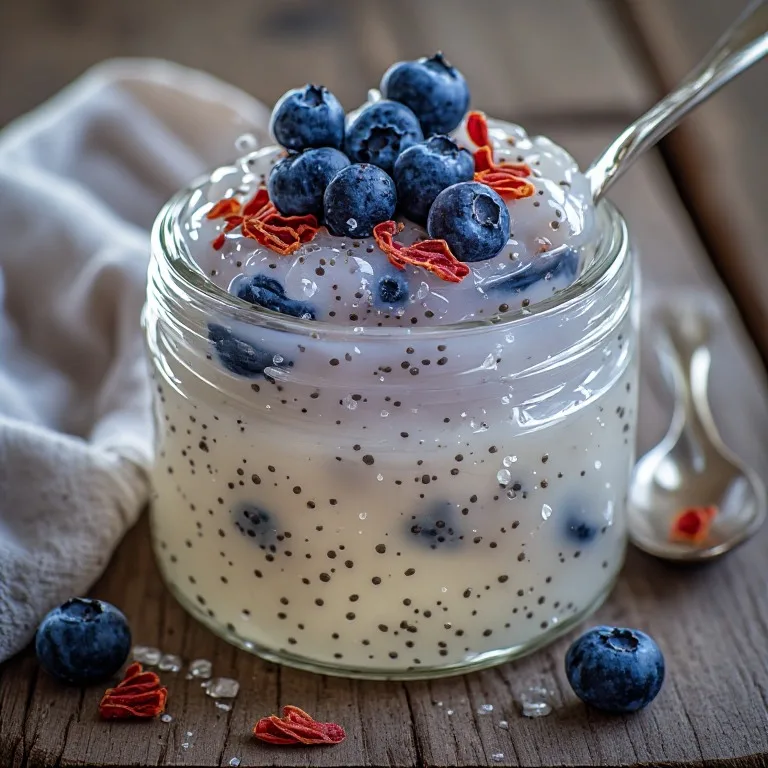
Quick answer: Pour 1 cup of hot chamomile tea or hot water into a bowl. Sprinkle 2 tablespoons of unflavored beef gelatin powder over the surface and let it sit undisturbed for 1 minute, then whisk until fully dissolved — no granules. Let it cool at room temperature for 15 minutes; the liquid should feel warm but not hot when you press the bowl with your palm. Stir in 1 cup of plain whole-milk kefir, 2 tablespoons of chia seeds, and ¾ cup of fresh blueberries. Pour into a glass container or 4 small silicone molds. Refrigerate 2 to 3 hours until set and firm. Top with the remaining blueberries and optional goji berries before serving.

Shop the tools

Gear matched to this recipe. These are Amazon affiliate links — we may earn a small commission if you buy, at no extra cost to you.

As an Amazon Associate, Copycat Spices earns from qualifying purchases. Product images are generic illustrations, not the exact item listed.

Viral TikTok Botox Jelly

The viral TikTok botox jelly recipe: beef gelatin, kefir, chia seeds, and blueberries set into a jiggly, high-protein collagen snack with 8g protein and 105 calories per serving. The two techniques that make it work.

Easy Prep: 10 min Cook: 2 hr 30 min Total: 2h 40m4 servings ~$2.45/serving
Prep10 min
Cook2 hr 30 min
Total2h 40m
Servings
4
At home~$2.45/serving
vs
Restaurant~$11.02/serving
You save ~78%

The Story Behind the Recipe

The viral TikTok Botox Jelly was popularized in 2026 by Mariana Smith, a 40-year-old author and wellness creator whose recipe video attracted over 3 million views and spawned thousands of recreations under the hashtag #botoxjelly. The premise: a snack loaded with collagen-building amino acids from beef gelatin, probiotics from kefir, antioxidants from blueberries, and fiber from chia seeds — framed as "food Botox" because the collagen in your skin is made from amino acids like glycine and proline, which beef gelatin delivers in higher concentrations than almost any other food.

The science is more nuanced than the name implies. Dermatologists note that when you eat collagen or gelatin, the body breaks it into amino acids and redistributes them where they're needed — eating gelatin doesn't send it directly to your skin. But the underlying claim has merit: beef gelatin is a legitimately high-glycine food, glycine is a rate-limiting amino acid in collagen synthesis, and most people don't get much of it from boneless, skinless proteins. As a high-protein, low-calorie snack with real probiotics from kefir and one of the highest antioxidant fruits by weight, the recipe is genuinely nutritious regardless of whether you buy the beauty marketing. At around $3 to make four servings — versus $60 to $90 per unit at a collagen supplement boutique or wellness café — the home version has a practical edge.

Nutrition Facts

Per serving (4 servings)
Calories110
Total Fat4g
Total Carbs11g
Dietary Fiber3g
Sugars7g
Protein7g
Sodium35mg

* Estimated values based on standard recipe preparation. Actual values may vary.

Ingredients

Instructions

💡
Pro tip: This recipe tastes even better the next day. The flavors need time to meld together in the fridge.
❄️
Storage: Keeps in an airtight container in the fridge for up to 2 weeks. Freezer-friendly for up to 3 months.
🎃 Free Halloween cookbook — download now The Copycat Halloween Cookbook A ready-made, photo-illustrated PDF of our best halloween copycat recipes — free to download, no building required. Pay what you want to support if you love it.

Free PDF — instant download. We'll also send new seasonal copycat recipes now and then; unsubscribe anytime. Or just download it →

What the “Botox Jelly” Trend Actually Delivers (and What It Doesn’t)

The name is marketing. Botox relaxes facial muscles through injection; this snack delivers dietary amino acids through digestion. Those are fundamentally different mechanisms, and no amount of beef gelatin will replicate what a cosmetic dermatologist does.

What the recipe does deliver, without the hype: beef gelatin is among the highest dietary sources of glycine and proline, two non-essential amino acids that are nonetheless conditionally essential for collagen synthesis. Most modern diets are low in both — boneless chicken, whey protein, and fish fillet are low-glycine proteins, which means many people eating “clean” diets are quietly underserving their connective tissue. Adding a glycine-rich food alongside probiotics (kefir), antioxidants (blueberries), and omega-3 fatty acids plus fiber (chia seeds) makes for a legitimately well-designed snack, regardless of whether the beauty framing is oversold.

The creator who went most viral with this, Mariana Smith, has been consistent about what she’s actually claiming: not that the snack replaces professional skincare, but that it replaced her mid-afternoon granola bar habit with something higher in protein and lower in sugar. That’s a defensible claim. Whether it plumped her skin or just happened to correlate with better sleep and hydration is impossible to know from one creator’s experience.

The One Technique That Separates Good Batches from Failed Ones

Temperature management when adding the kefir is the only place this recipe goes wrong. There are two failure modes:

Too hot: Adding cold kefir to gelatin liquid that’s still very hot (above 130°F or so) causes the milk proteins to partially denature. The kefir curdles slightly, creating a mottled, curdled-looking gel instead of a smooth, creamy one. The texture becomes unpleasantly grainy. The 15-minute cooling wait isn’t optional.

Too cold: If the gelatin liquid fully cools to room temperature before you add the kefir, it starts gelling prematurely and you end up pouring a semi-solid slurry into the mold instead of a liquid. The chia seeds and blueberries won’t distribute evenly. The target is warm but not hot — the “comfortable palm test,” where you can hold the bowl against your palm for several seconds without discomfort.

If you want precision: 100°F to 110°F is the ideal temperature for adding the kefir. At that range, the gelatin stays fully liquid for another 20 to 30 minutes at room temperature before beginning to set, giving you enough time to mix thoroughly and pour.
🥗

Make It Healthier

Love Viral TikTok Botox Jelly but want a lighter version? Try these simple swaps:

  • ✓Use 0% kefir instead of whole-milk kefir to cut about 1.5g fat per serving. The jelly sets just as firmly — gelatin structure is determined by the gelatin concentration, not the fat content of the liquid.
  • ✓Swap the ¼ cup of topping blueberries for pomegranate arils: equal antioxidant punch with a more visually striking result, and pomegranate polyphenols have better clinical evidence for skin and cardiovascular benefits than blueberries (though both are excellent).
  • ✓Reduce or skip the honey entirely — the kefir provides enough natural lactose sweetness, and the blueberries add about 4g of sugar per serving on their own. Omitting 1 tbsp honey saves about 60 calories and 17g of sugar across the whole recipe (15 cal / 4g sugar per serving).
  • ✓Add ¼ tsp turmeric and a crack of black pepper to the warm gelatin liquid before cooling. Turmeric's curcumin is a researched anti-inflammatory, and the black pepper piperine increases curcumin bioavailability by up to 20x. The flavor is mild in a sweet gelatin — faint and earthy, not overpowering.

Frequently Asked Questions

Does eating beef gelatin actually improve your skin like Botox?

The name oversells it. Botox is a paralytic injected directly into facial muscles to smooth wrinkles. Eating gelatin supports collagen synthesis rather than injecting anything into your skin. Beef gelatin is very high in glycine and proline, the two amino acids most used to build collagen — but when you eat them, your body breaks them down and allocates them where metabolic priority dictates, which is not necessarily your face. What is documented: people with low dietary glycine intake (most people eating boneless proteins like chicken breast and whey powder) may have suboptimal collagen synthesis, and supplementing glycine can improve it. Whether that shows up on your skin depends on whether glycine was actually your bottleneck. The recipe is a high-quality snack regardless of the marketing angle.

What's the difference between beef gelatin and collagen powder?

Chemically, they come from the same source — boiled connective tissue — but they behave differently in recipes. Beef gelatin (like Great Lakes Gold) is a gelling agent: it sets liquids into a firm, sliceable jelly when cooled. Collagen powder (like Vital Proteins Collagen Peptides) is hydrolyzed, meaning the protein chains are broken down into shorter peptides that dissolve instantly and never gel. You can stir collagen powder into a smoothie or coffee and it disappears. You cannot make this jelly with collagen peptides — it will stay liquid in the fridge. If you only have collagen peptides, you can add them alongside the gelatin (not instead of it), which increases the protein count but doesn't change the texture.

Can I use regular milk instead of kefir?

Yes. Whole milk produces a slightly milder, less tangy result with no probiotics but the same protein and fat profile. The jelly will still set correctly. You can also use full-fat coconut milk for a dairy-free version: it adds a faint coconut sweetness and a creamier set, though the sodium and saturated fat content increases. Unsweetened almond milk works but produces a much firmer, less creamy jelly since it's mostly water — you may want to reduce the gelatin to 1½ tbsp to avoid a rubbery texture.

Can I make a vegan version?

Yes, but you need to replace beef gelatin with agar-agar, which is seaweed-derived and sets differently. Use 1 tsp agar-agar powder per 1 cup of liquid (the recipe uses 2 cups total liquid, so 2 tsp). Unlike gelatin, agar needs to be boiled to activate: bring it to a full boil in the tea for 2 minutes, stirring constantly, before adding the cold kefir or plant-based milk. Agar sets firmer and at room temperature (unlike gelatin, which requires refrigeration to set), and produces a slightly more brittle, less wobbly texture. The result is still delicious and far cleaner than a commercial agar jelly — you just lose the collagen-amino-acid component.

How long does it keep in the fridge?

3 to 4 days, covered. The chia seeds continue absorbing liquid over time and the texture gets slightly denser by day 3, but it remains safe and flavorful. The blueberries folded into the jelly will leach color gradually — by day 2 the surrounding jelly turns a soft blue-purple, which many people find appealing. The topping blueberries are better added per serving rather than left on the set jelly, where they can weep into the surface.

Why did my jelly not set? It's still liquid after 3 hours.

Three likely causes: (1) The gelatin wasn't fully dissolved — undissolved granules produce a grainy jelly that never fully firms. Whisk vigorously for a full 2 minutes and check against light before proceeding. (2) You added the kefir while the liquid was still very hot, which denatures some of the gelatin proteins before they could form a network. The temperature on adding should be 110°F or below. (3) You added fresh pineapple, kiwi, papaya, or mango — these fruits contain bromelain or papain, enzymes that break down gelatin. Frozen versions of these fruits are enzyme-deactivated and work fine; fresh versions will prevent setting entirely. Blueberries, raspberries, strawberries, and pomegranate are all safe.

Love this recipe? Share it!

Free PDF: our 12 most-wanted copycat recipes — instant download.

Made it? Buy us a coffee

Every recipe here is free, with no paywalls. If this one was a hit at your table, a small tip keeps new copycats coming.

$

Ratings & Reviews

—
No ratings yet

Rate this recipe

Click a star to rate

Leave a Review

0/500

CS

Copycat Spices Editorial

Researched + fact-checked. Every recipe on Copycat Spices is built from published sources — official ingredient lists, brand-published recipes, interviews and food-science references — and fact-checked before it goes live, then written as clear, step-by-step instructions for home cooks of all skill levels.

Learn more about our mission →