


Pin It

Greek Yogurt Jello (Fluffy Protein Jello)

Greek Yogurt Jello (Fluffy Protein Jello)
Jump to Recipe
Prep 5 min Cook 2 hr Serves 2
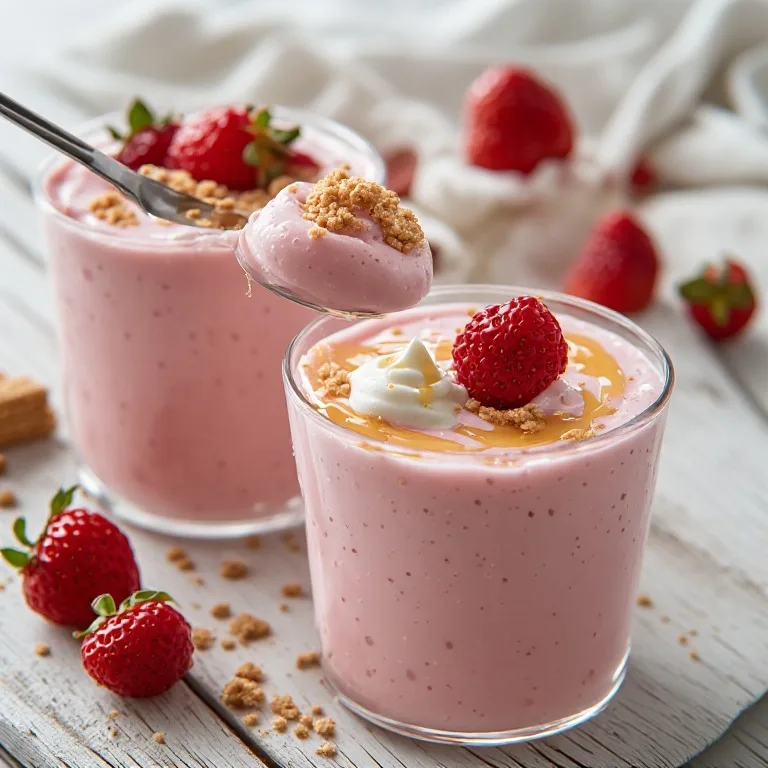
Quick answer: Dissolve one packet of sugar-free Jell-O in 1 cup of boiling water; whisk for 2 full minutes until no granules remain. Let the liquid cool at room temperature for 10 to 15 minutes — this is the step most people skip and the reason the recipe fails when the yogurt curdles. Whisk in 1 cup of plain 0% Greek yogurt until completely smooth. Pour into a container or two individual cups and refrigerate 1 to 2 hours until set. The result is light, jiggly, and slightly mousse-like, with roughly 12 grams of protein per serving and 70 calories.

Shop the tools

Gear matched to this recipe. These are Amazon affiliate links — we may earn a small commission if you buy, at no extra cost to you.

As an Amazon Associate, Copycat Spices earns from qualifying purchases. Product images are generic illustrations, not the exact item listed.

Greek Yogurt Jello (Fluffy Protein Jello)

The viral TikTok Greek yogurt Jello recipe — just a Jell-O packet, boiling water, and Greek yogurt for a fluffy, jiggly dessert with 12g protein and 70 calories per serving. The exact technique, best flavors, and why the cooling step is non-negotiable.

Easy Prep: 5 min Cook: 2 hr Total: 2h 5m2 servings ~$3.15/serving
Prep5 min
Cook2 hr
Total2h 5m
Servings
2
At home~$3.15/serving
vs
Restaurant~$14.17/serving
You save ~78%

The Story Behind the Recipe

The Greek yogurt Jello trend took off in 2026, driven by content creator Chef Erin Morley (@chef.erinmorley on TikTok), whose video of a two-ingredient fluffy jello — one packet of sugar-free Jell-O, one cup of Greek yogurt, one cup of boiling water — picked up millions of views almost overnight. The appeal is obvious in the comment sections: it looks like a fancy mousse or a panna cotta, it takes five minutes of active time, and the nutrition label reads like something a registered dietitian designed on purpose. Around 70 calories and 12 grams of protein per serving from a recipe anyone can make between getting home and sitting down.

What makes the texture work is the interaction between the gelatin and the yogurt proteins. Instead of a firm, translucent jello you'd cut with a fork, the yogurt's natural creaminess produces something lighter and slightly mousse-like — it holds its shape but trembles when you tap the cup. The flavor is bright from the Jell-O and mildly tangy from the yogurt, with none of the artificial aftertaste that straight sugar-free gelatin can have. Strawberry and raspberry are the most popular flavors because they match the yogurt's tang cleanly. Lime has a following in the summer months for the same reason a good key lime pie does, and lemon comes closest to a cheesecake flavor.

Nutrition Facts

Per serving (2 servings)
Calories70
Total Fat0g
Total Carbs5g
Dietary Fiber0g
Sugars4g
Protein12g
Sodium155mg

* Estimated values based on standard recipe preparation. Actual values may vary.

Ingredients

  • Optional toppings

Instructions

💡
Pro tip: This recipe tastes even better the next day. The flavors need time to meld together in the fridge.
❄️
Storage: Keeps in an airtight container in the fridge for up to 2 weeks. Freezer-friendly for up to 3 months.
🎃 Free Halloween cookbook — download now The Copycat Halloween Cookbook A ready-made, photo-illustrated PDF of our best halloween copycat recipes — free to download, no building required. Pay what you want to support if you love it.

Free PDF — instant download. We'll also send new seasonal copycat recipes now and then; unsubscribe anytime. Or just download it →

Two ingredients and a patience window of 15 minutes. That’s the whole recipe.

Dissolve a packet of Jell-O in boiling water. Wait until it’s warm, not hot. Whisk in Greek yogurt until smooth, then refrigerate until it sets. What you get is a light, jiggly dessert that looks like panna cotta, tastes like a fruit-forward yogurt mousse, and has 12 grams of protein per serving for about 70 calories.

The recipe went viral on TikTok in 2026, associated most with content creator Chef Erin Morley, who posted a video under #fluffyjello. The comment sections are a reliable guide to why this took off: people kept saying they were skeptical, tried it anyway, and couldn’t believe how good something this simple tasted.

Why the texture is the point

Plain sugar-free Jell-O sets firm and translucent, more like a sliceable cube than a dessert. Greek yogurt alone is thick and spoonable. The combination produces something neither of those things: a set that’s light and airy but holds its shape when unmolded, with a surface sheen that actually looks like it came from a restaurant kitchen. The yogurt’s natural tartness cuts the Jell-O’s sweetness down to something that tastes like real fruit flavor rather than artificial candy.

The technical reason is that gelatin and yogurt proteins form an interlocked network as the mixture chills. The fat and moisture in the yogurt (even at 0%) create small air pockets in the set that give it that mousse-like lightness. It’s the same principle behind a cold-set cheesecake, and the result is closer to that than to the quivering, translucent Jell-O of elementary school cafeterias.

The one thing that breaks this recipe

Adding the yogurt while the gelatin liquid is still hot.

Boiling water does two things: it dissolves the gelatin and it raises the liquid to a temperature that denatures proteins on contact. When cold Greek yogurt hits liquid hotter than about 130°F (55°C), the whey proteins in the yogurt seize immediately. The result looks like scrambled eggs in your Jell-O bowl — white, grainy, broken, and totally unworkable. No amount of whisking fixes it.

The fix is simple: let the dissolved gelatin cool on the counter for 10 to 15 minutes before adding the yogurt. The gelatin stays liquid long past room temperature (it sets somewhere below 60°F / 15°C), so you have a big window to work with. Warm-to-the-touch is fine; steaming is not. When in doubt, wait an extra 5 minutes.

Flavor combinations that actually work

Strawberry: The most popular version by a wide margin. The bright, fruity acidity of strawberry Jell-O and the yogurt’s tang layer cleanly — the result reads like a creamy fresh strawberry dessert, not like artificial candy.

Raspberry: Similar principle to strawberry, slightly more tart. Pairs especially well with a few fresh raspberries on top that bleed their juice into the first spoonful.

Lime: The most refreshing version. Lime plus yogurt is essentially a deconstructed key lime pie — the tartness is pronounced, the set is firm enough to hold its shape. Best in warmer months.

Orange: Works in fall when you want something a little warmer in flavor. Orange Jell-O with a small amount of honey drizzled over the set jello and a sprinkle of graham cracker crumbs is the closest this recipe gets to a creamsicle cheesecake.

Cherry: Deep, slightly medicinal in flavor (cherry Jell-O always is), but the yogurt softens that edge into something genuinely pleasant. Best with dark cherries on top.

Lemon: The most versatile. Less sweet than other fruit flavors, almost savory compared to strawberry. If you’ve made it a few times and want a more grown-up version, start here.

Flavors to approach carefully: Watermelon and grape Jell-O both have a pronounced artificial quality that the yogurt can’t fully smooth out. They work, but the flavors are more obviously from a box.

Serving it and scaling up

The recipe as written makes two generous cups — enough for two people as a light dessert or one person as a meal-prep protein snack across two days. To scale up for a week of meal prep, double or triple the recipe and set it in individual cups.

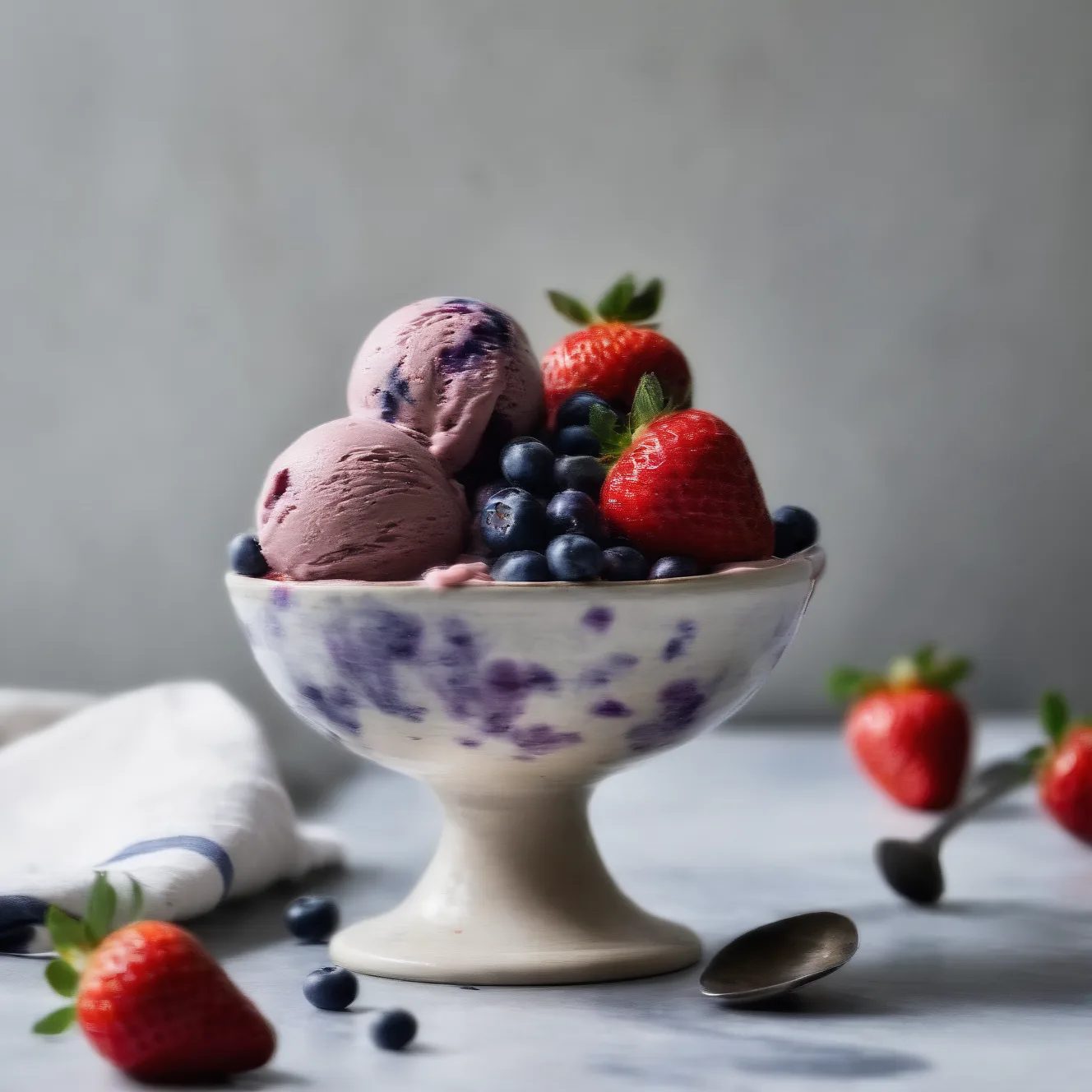
For an impressive-looking version, set it in a taller container, invert it onto a plate after it sets (run hot water briefly over the outside of the container), and serve with fresh berries. It unmolds cleanly and holds its shape at room temperature for about 15 minutes before starting to soften.

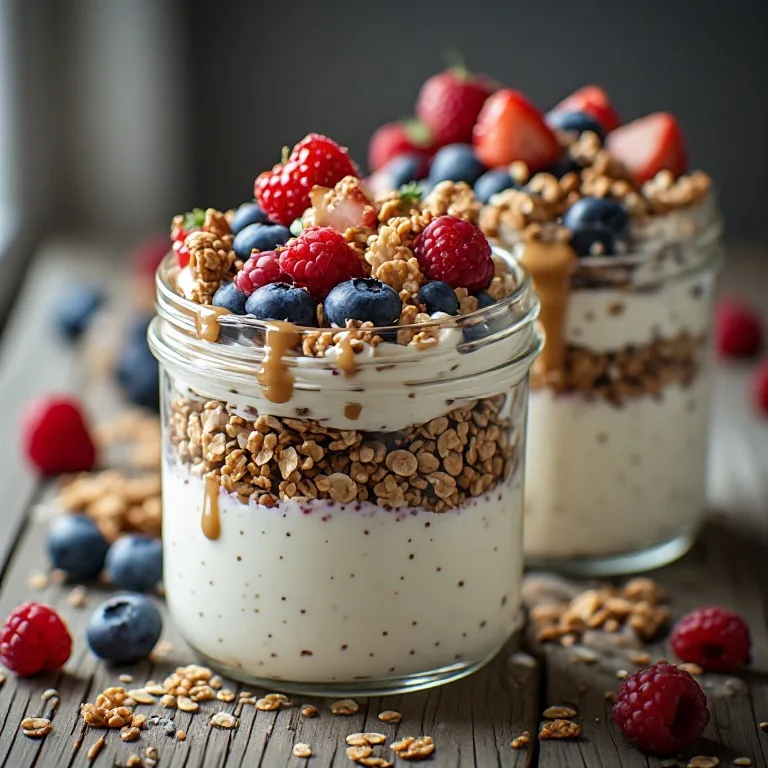
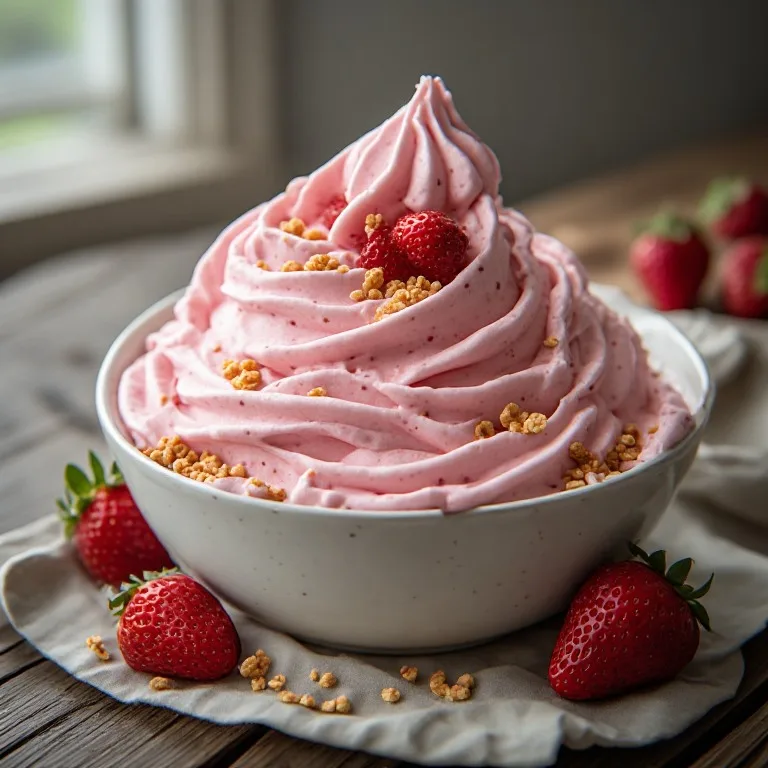
For toppings that add more than decoration: fresh berries add fiber; a tablespoon of granola adds texture and roughly 50 calories; a light honey drizzle adds sweetness without making it overly sweet; fat-free whipped cream keeps the calorie count near zero while making it feel indulgent.
🥗

Make It Healthier

Love Greek Yogurt Jello (Fluffy Protein Jello) but want a lighter version? Try these simple swaps:

  • ✓The entire protein count comes from the Greek yogurt — choose one with 22g or more protein per cup (Fage 0% Total has 23g) to maximize the per-serving number. Flavored Greek yogurts add sugar and reduce the effect.
  • ✓The flavor base is where the calories hide. A regular (full-sugar) 3 oz box of Jell-O adds roughly 320 calories and about 74g of sugar across the whole batch — close to 160 calories and 37g sugar per serving when split in two. The sugar-free 0.3 oz box adds only about 40 calories and no sugar to the entire batch. Use sugar-free if the goal is a low-calorie, high-protein snack; regular only if you don't mind the extra sweetness and carbs.
  • ✓For extra protein, stir 1 scoop of unflavored or vanilla whey isolate into the cooled gelatin before adding the yogurt. It dissolves cleanly and the flavor blends in without tasting like a protein shake.
  • ✓Divide into four small cups instead of two — the 35-calorie / 6g protein per cup makes this an almost guilt-free something-sweet when you need it mid-afternoon.

Frequently Asked Questions

What is the viral TikTok Greek yogurt Jello recipe?

The recipe is a two-ingredient protein dessert: one packet of Jell-O dissolved in boiling water, cooled, then whisked together with one cup of plain Greek yogurt and refrigerated until set. The result is a light, jiggly dessert that has roughly 24 to 25 grams of protein for the entire batch (about 12g per serving split in two). It went viral on TikTok in 2026, attributed most widely to Chef Erin Morley, who shared it with the tags #fluffyjello and #proteingoals.

Why does the yogurt need to cool before I add it?

Gelatin is a heat-dissolved protein network. When Greek yogurt — which is already cold from the fridge — hits still-hot gelatin liquid (above roughly 130°F / 55°C), the rapid temperature difference causes the whey proteins in the yogurt to denature and tighten instantly. The visual result is white, grainy curdles that will not dissolve no matter how much you whisk. Letting the gelatin cool to warm-not-hot (10 to 15 minutes on the counter) before adding the yogurt lets the temperature equalize slowly enough that the proteins stay smooth. You can let it cool to full room temperature if you prefer — it'll still mix cleanly and set correctly.

Can I use regular Jell-O instead of sugar-free?

Yes — regular Jell-O works identically in terms of technique and texture. The difference is nutritional: a regular-size 3 oz box of strawberry Jell-O adds roughly 320 calories and about 74g of sugar across the whole batch (close to 160 calories and 37g sugar per serving when split in two), while the sugar-free 0.3 oz box adds only about 40 calories and negligible sugar to the entire batch. Both set at the same rate and produce the same jiggly result. If you're making this as a high-protein low-calorie snack, sugar-free makes more sense. If you're making it for kids or want a sweeter dessert, regular Jell-O is fine.

What flavors work best for Greek yogurt Jello?

Strawberry and raspberry are the most popular because the fruit-forward brightness plays off the yogurt's natural tang cleanly, like a creamy strawberry panna cotta. Cherry produces a deep, slightly tart flavor that's equally good. Lime is bright and works especially well in warm weather. Orange is popular in fall and pairs naturally with the slightly creamy yogurt. Lemon is the most versatile and the closest in flavor to a lemon cheesecake. Flavors that trend toward very sweet — watermelon, grape — can read as artificial against the yogurt, so start with fruit-citrus flavors if you're new to this.

How long does Greek yogurt Jello keep in the fridge?

Up to 3 days covered in the refrigerator. After that, the yogurt starts to weep (separate from the gelatin) and the texture becomes watery. Make it the day you plan to eat it or the night before for best results. Do not freeze it — freezing breaks the gelatin structure and produces a granular, icy texture when thawed.

Can I use flavored Greek yogurt instead of plain?

You can, but the result is often too sweet — flavored yogurts already have added sugar, and stacking them with Jell-O pushes it into cloying territory. They also tend to have less protein per cup than plain 0% versions. If you want more sweetness without using flavored yogurt, use regular (not sugar-free) Jell-O, or stir a teaspoon of honey into the plain yogurt before mixing.

Can I make this dairy-free or vegan?

Sort of. Jell-O is made from animal-derived gelatin, which is not vegan. You can substitute agar agar (a seaweed-based gel) at roughly 1 teaspoon per 2 cups of liquid, but the set will be firmer and less jiggly. For the yogurt, coconut-based or almond-based Greek-style yogurts work texturally, but the protein count drops significantly (most plant-based yogurts have 2 to 5g protein per cup vs. 22g for dairy Greek yogurt). The resulting dessert will be dairy-free but not the high-protein version of the trend.

Love this recipe? Share it!

Free PDF: our 12 most-wanted copycat recipes — instant download.

Made it? Buy us a coffee

Every recipe here is free, with no paywalls. If this one was a hit at your table, a small tip keeps new copycats coming.

$

Ratings & Reviews

—
No ratings yet

Rate this recipe

Click a star to rate

Leave a Review

0/500

CS

Copycat Spices Editorial

Researched + fact-checked. Every recipe on Copycat Spices is built from published sources — official ingredient lists, brand-published recipes, interviews and food-science references — and fact-checked before it goes live, then written as clear, step-by-step instructions for home cooks of all skill levels.

Learn more about our mission →