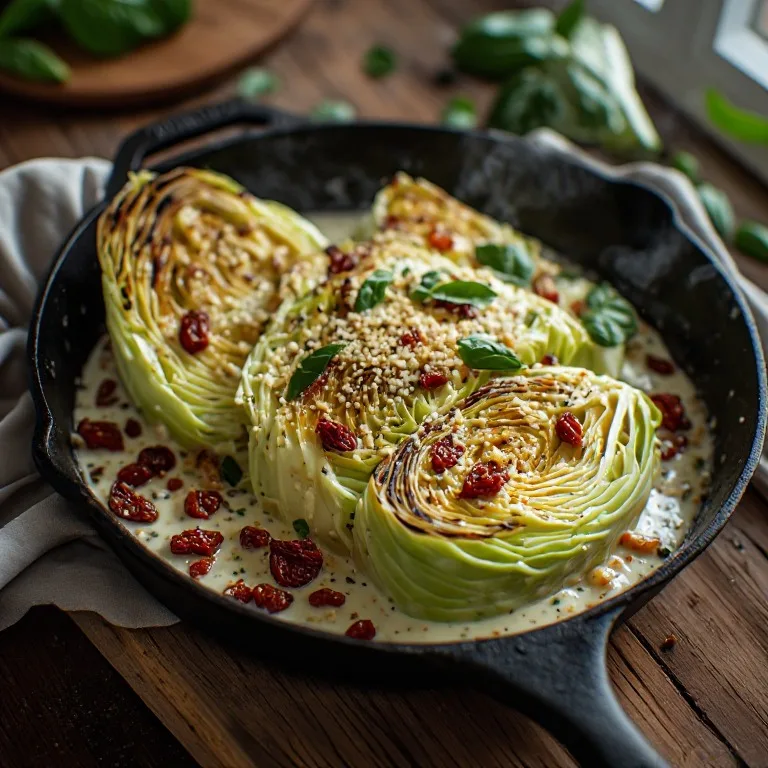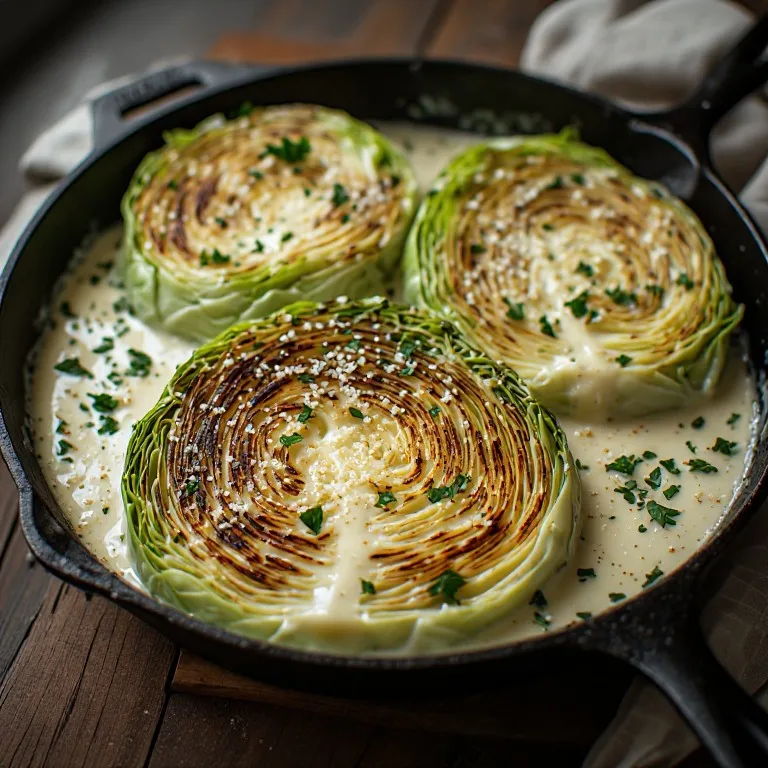



This is the TikTok creamy baked cabbage recipe that turned cabbage from a side dish no one thought about into one of the most-saved recipes in the healthy-eating corner of the app. It sears thick cabbage steaks until deeply golden, then bakes them in a cream cheese and parmesan sauce until the cabbage turns fork-tender, the sauce is bubbling, and the whole thing looks far more expensive than the $8 in groceries it took to make it.
Why This Recipe Went Viral
The melting cabbage trend spread fast on TikTok because it solves a real problem: how do you make a healthy, high-volume meal that actually looks like something worth eating? Cabbage has all the structural qualities of a satisfying dinner — it’s cheap, filling, and holds up to heat — but it usually looks like diet food. The cream cheese sauce changes that completely. The caramelized sear on the outside, the tender-silky interior, the glossy sauce bubbling in the pan: the dish photographs like something from a French restaurant and costs about $2.50 a serving.
The recipe spread primarily under #meltingcabbage, #alfredocabbage, #lowcarbdinner, and #highproteinmeals, with the macro-tracking and healthy-eating communities sharing it as a legitimate weeknight solution rather than a “weight-loss hack.”
The Sear Is the Whole Game
Most TikTok versions of this recipe skip the sear — they pour the sauce over raw cabbage and bake it cold. This works, but it produces pale, soft cabbage with minimal flavor. The sear is what separates average baked cabbage from something people ask you to make again.
When you put a thick cabbage steak on a hot, oiled skillet and leave it alone for two to three minutes, several things happen simultaneously. The surface moisture evaporates, browning begins, and the natural sugars in the cabbage start to caramelize. The outer cell walls collapse slightly and develop a lightly chewy, deeply flavored crust. That crust holds up during the baking step and keeps each steak distinct — they don’t turn to mush in the sauce. They “melt” on the inside while staying structured on the outside. That contrast is the texture the dish is known for.
Do not rush the sear by using too much oil, too low heat, or moving the cabbage around. High heat, minimal oil, no touching — that’s the formula.
Building the Cream Cheese Sauce
The sauce has four components: the fat base (butter and onion), the cream cheese, the liquid (bone broth), and the seasoning (parmesan, garlic powder, onion powder, lemon). Each step matters:
Softened cream cheese: Cold cream cheese breaks into rubbery clumps in hot liquid and takes forever to smooth out. Leave it at room temperature for 20 minutes before you start cooking. When you add softened cream cheese to the broth and whisk, it melts in under 2 minutes. Cold cream cheese can take 6–8 minutes of active whisking to fully incorporate.
Chicken bone broth vs. regular broth: Both work, but bone broth adds about 10g of additional protein per cup and a more gelatin-rich body to the sauce. As the sauce reduces in the oven, a bone broth base becomes noticeably glossier and clings to the cabbage better. Regular chicken broth is fine and has no flavor deficit.
The parmesan: Add it off high heat — at medium, not a rolling boil — and whisk it in immediately. Parmesan at high heat can seize into a stringy, grainy texture if the pan is too hot.
The lemon juice: One tablespoon of fresh lemon juice at the end of the sauce step cuts through the richness of the cream cheese and parmesan and makes the whole dish taste brighter. It’s not detectable as “lemony” in the final dish — it just removes the flat, heavy quality that cream cheese sauces can have.
Making It a Complete Meal (The Chicken Option)
The cabbage alone is a substantial side at about 280 calories and 10g of protein. To make it a complete dinner, season two boneless chicken breasts with garlic powder, smoked paprika, salt, and pepper. While the cabbage bakes in the oven, sear the chicken in a separate skillet over medium-high heat — 5–6 minutes per side until golden and cooked to 165°F internal temperature. Slice and serve alongside the cabbage steaks. This brings the total per serving to approximately 330 calories and 40g of protein.
Some creators pour the sauce over the cabbage AND add the raw chicken to the skillet before baking, letting everything cook together in one pan. This works — the chicken takes about 20–22 minutes at 400°F to cook through — but the chicken’s surface won’t brown as well without a prior sear and the texture is noticeably softer. One pan versus better chicken: your call.
Variations
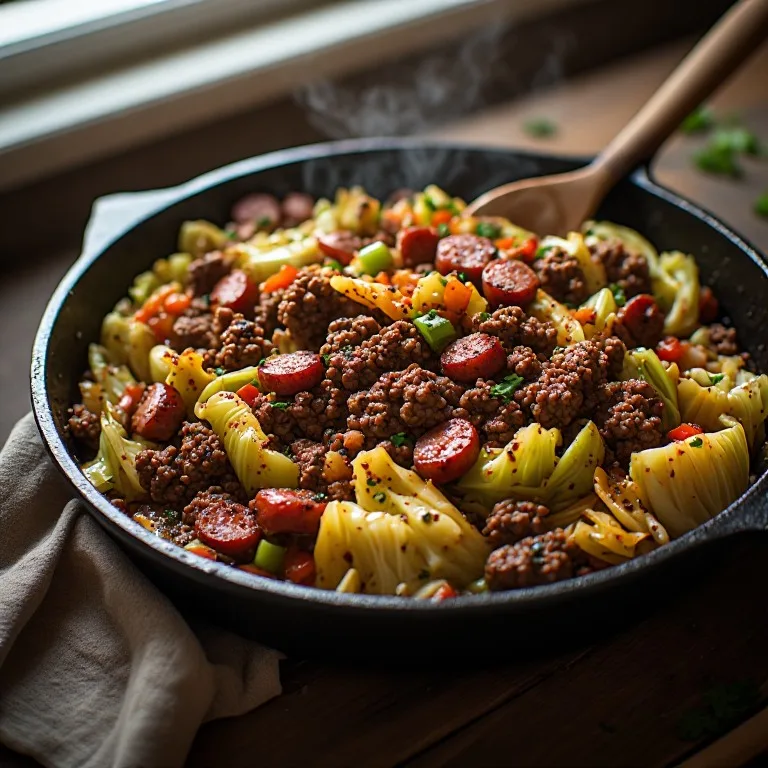
Add chorizo or spicy chicken sausage: Slice 4 oz of chorizo or spicy chicken sausage into rounds and brown them in the skillet before making the sauce. They add a smoky, slightly spicy undertone that complements the cream cheese tanginess.
Vegetarian version: Use vegetable broth (mushroom-based for the best depth) instead of bone broth. The protein drops, but the dish gains a more neutral flavor that works well with a sprinkle of toasted pine nuts for texture.
Add sun-dried tomatoes: Stir 2 tablespoons of chopped sun-dried tomatoes into the sauce for a slightly sweet, umami burst. This is the direction marry me melting cabbage takes the concept — the sun-dried tomato version has a more Italian character.
Spicy version: Add ½ teaspoon red pepper flakes to the sauce when you add the garlic, or drizzle Calabrian chili oil over the top before serving.
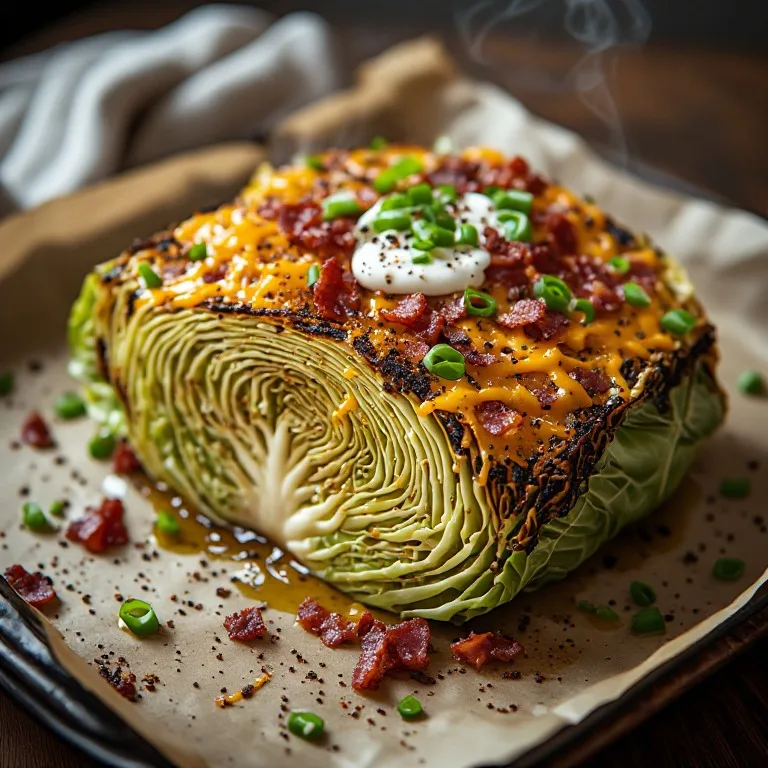
The same high-oven-heat approach that makes this cabbage melt is the principle behind roasted cabbage steaks too — a simpler take that skips the cream sauce entirely and lets the caramelization speak for itself.