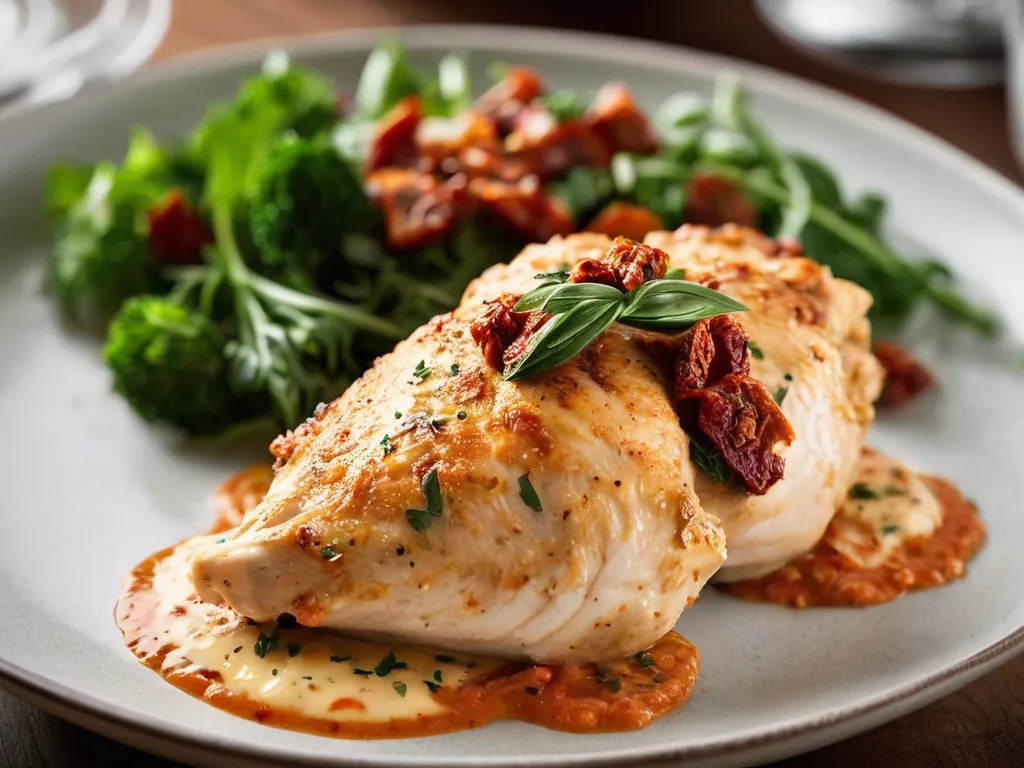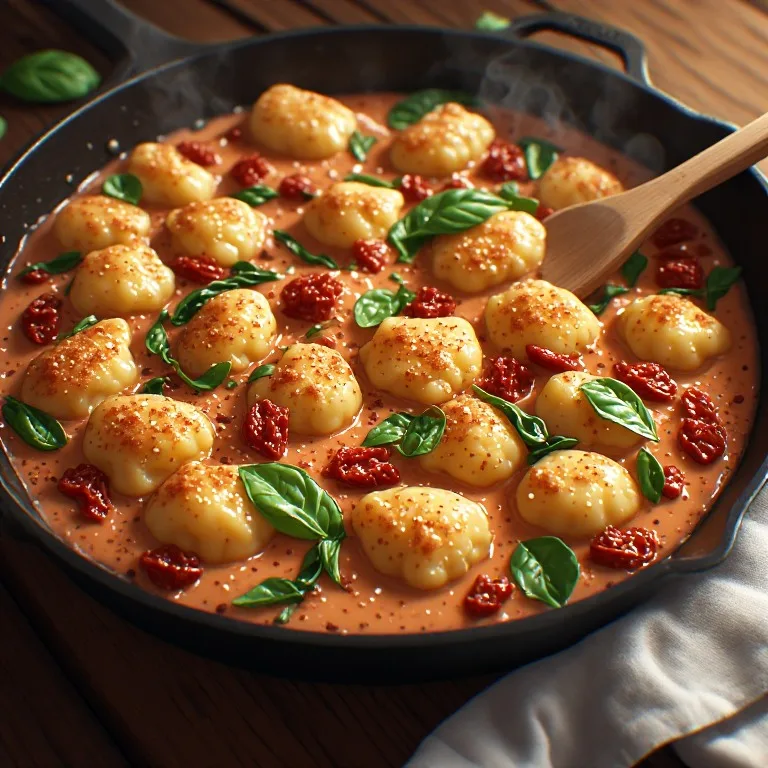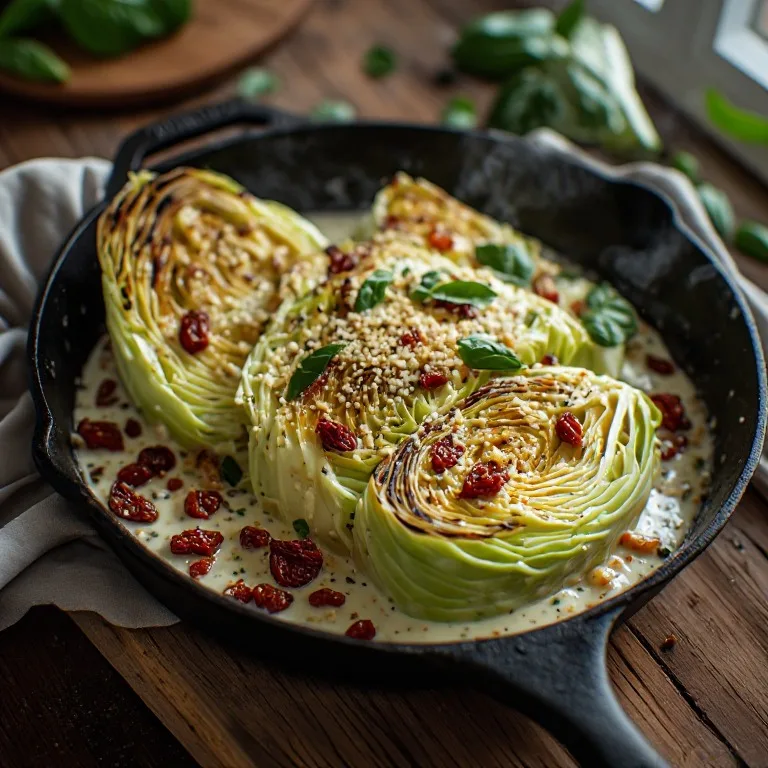



Quick answer: Marry me melting cabbage is seared green cabbage wedges oven-braised in a creamy sun-dried tomato parmesan sauce — the same “marry me” sauce formula that made marry me chicken famous, applied to a $2 head of cabbage. It takes about 55 minutes total, uses one pan, and produces cabbage so tender and sauce-soaked that it barely resembles the raw vegetable you started with.
Why TikTok called 2026 “the year of the cabbage”
The cabbage revolution on TikTok was partly accidental and partly inevitable. Accidental because nobody predicted that a $2 head of green cabbage would become a status ingredient. Inevitable because TikTok food culture rewards the transformation story — the cheap, underestimated ingredient elevated into something extraordinary.
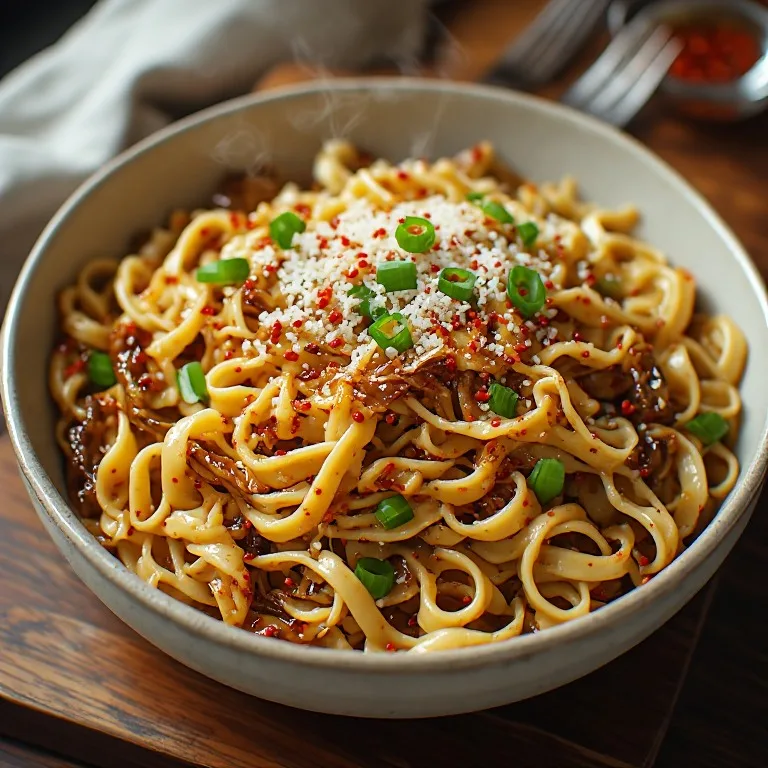
Caramelized cabbage noodles kicked things off. Then braised cabbage steaks with various sauces. Then this recipe: the marry me cabbage, which applied the most-viral sauce formula of the past three years to a vegetable that costs less than a bus fare. The result was the same proposal-worthy result people got from marry me chicken — minus the chicken.
The dish works because of what braising does to cabbage chemistry. Raw cabbage is peppery and firm, with a sharp brassica edge. Braised in a cream sauce at 400°F for 30 minutes, the cellular structure softens completely, the sulfur compounds that give cabbage its sharpness dissipate, and the natural sugars caramelize into sweetness. You get something that tastes more like caramelized onions than the stuff in a coleslaw bag.
The sear is not optional
Every version of this recipe that underperforms starts with pale, unseared cabbage. The sear does three things the oven can’t:
Creates Maillard flavor. The browned surface on each cut face is a layer of concentrated, sweet, nutty flavor compounds that don’t exist in steamed or boiled cabbage. This is why restaurant-braised vegetables taste nothing like home-cooked ones — the pre-sear step.
Sets the structure. Cabbage that goes into the oven without searing tends to fall apart as the layers loosen under heat. Three minutes of high-heat contact firms the outer leaves enough to hold the wedge shape through 30 minutes of braising.
Builds the pan fond. The browned bits left in the pan after searing — the fond — dissolve into the sauce base when you add the broth and cream. That concentrated caramelized vegetable flavor is built directly into the sauce without any extra effort.
The marry me sauce formula
The sauce is the same formula as marry me chicken: oil-packed sun-dried tomatoes as the concentrated umami anchor, heavy cream as the body, parmesan as the salt and thickener, garlic as the backbone. What makes it work with cabbage differently than with chicken is the extended oven time — the cabbage releases its own liquid as it braises, which integrates into the sauce and adds a subtle sweetness that chicken doesn’t produce.
The key ratio: roughly equal parts broth and cream (¾ cup each for 4 servings). Too much cream and the sauce is cloying; too much broth and it’s thin. Parmesan added before the oven (not after) gives the sauce time to reduce and concentrate around it, producing a thicker, more cohesive texture at the end than you’d get by stirring in cheese at the last moment.
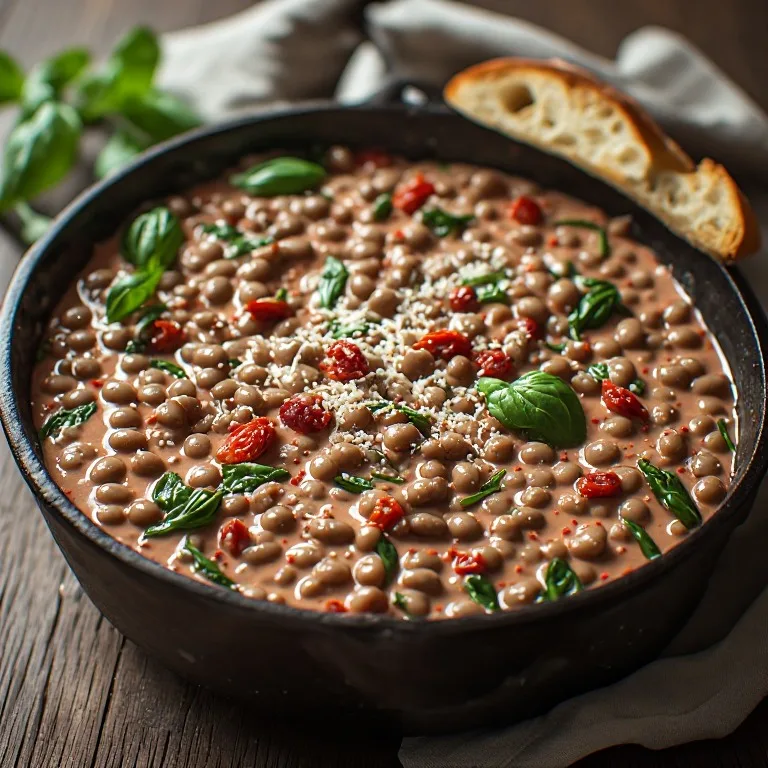
For a full dinner, add a can of drained white beans to the sauce before baking — they absorb the marry me flavors and turn the dish into a complete protein-and-vegetable meal in one pan.