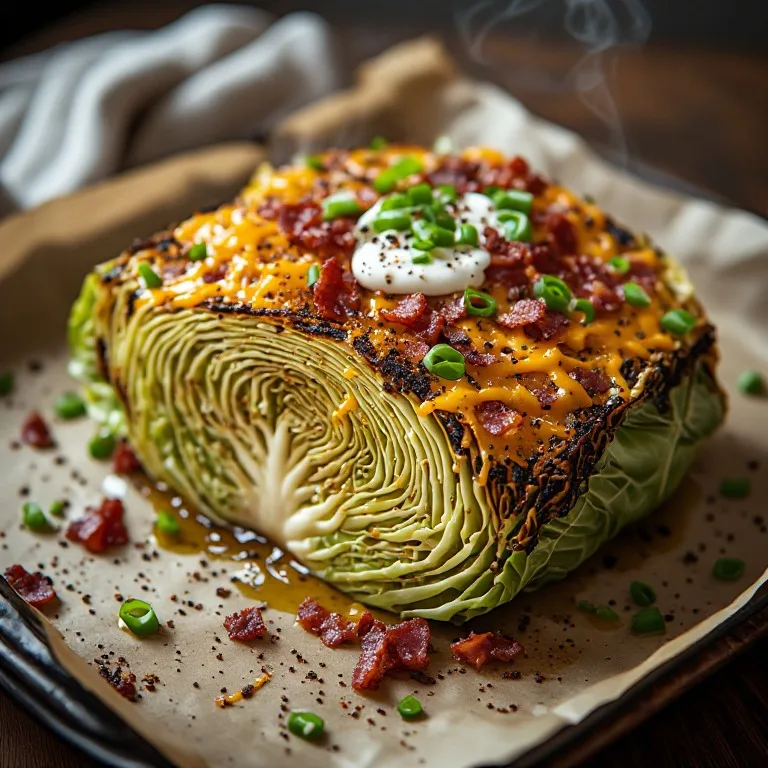


Cabbage makes a surprisingly convincing steak. A 3/4-inch slab of green cabbage, cut through the core to keep all the layers locked together, roasted at 425°F for 45 minutes until the outer edges caramelize and char while the center turns completely soft — it looks and eats like something you’d order at a farm-to-table restaurant, for about 75 cents a serving.
The loaded baked potato version went most viral: cheese melted directly on top in the final minutes, bacon and scallions piled on, sour cream on the side. The gochujang glaze version is the one that keeps you going back. The herby compound butter version is what you make when you want the cabbage to stay the main character.
All three start the same way: one head of cabbage, one hot oven, one non-negotiable rule about the core.
The one rule that makes or breaks this recipe
Cut through the core, not around it. The core is the dense, pale center section that runs from the stem to the top of the cabbage. When you slice the cabbage vertically into 1-inch steaks, the core appears as a solid white triangle in the center of each slice. Leave it there. It acts as the spine that holds all the layered leaves in place throughout the roasting and the flip.
Every recipe that tells you to trim out the core before roasting will give you loose leaves scattered across a sheet pan. Leave the core in and each steak holds together like a single piece all the way from pan to plate.
The core is fully edible when roasted — it softens significantly and has a mild, slightly sweet flavor. At this thickness and temperature, it’s not tough.
Why the edges get crispy and the center stays soft
Cabbage is about 92% water. At 425°F, the surface moisture evaporates rapidly and the natural sugars in the outer leaves undergo the Maillard reaction — the same browning that happens on a seared steak or toasted bread. The outer leaves, exposed directly to dry oven heat, lose moisture fast and crisp up. The inner layers, insulated by the dense cabbage structure, lose moisture more slowly and stay tender.
This is why temperature matters. At 350°F, the moisture evaporates slowly enough that the cabbage steams in its own liquid — it cooks through but never develops the caramelized edges that make this recipe work. At 425°F, the surface moisture is gone fast and browning starts within the first 15 minutes.
How to get the flip right
Cabbage steaks are more flexible than a beef steak — they bend slightly when lifted. Two spatulas are the answer. Slide one spatula under the left half of the steak and one under the right half simultaneously, so you’re supporting the full width when you flip. Flip in one smooth motion. The steak will flex slightly in transit — that’s normal. It holds together.
If the steak tears slightly during the flip, press the leaves back together on the pan. The core will keep the main structure intact and it will re-fuse as it continues roasting.
The four variations
Loaded baked potato: After the second side develops color (total roasting time about 45 minutes), scatter a generous handful of shredded sharp cheddar over each steak and return to the oven for 3 to 4 minutes until the cheese is melted and beginning to bubble at the edges. Remove from oven, top with chopped bacon and sliced scallions, and serve with sour cream. This version was the most-shared on TikTok because the toppings make it read as a complete dish rather than a side.
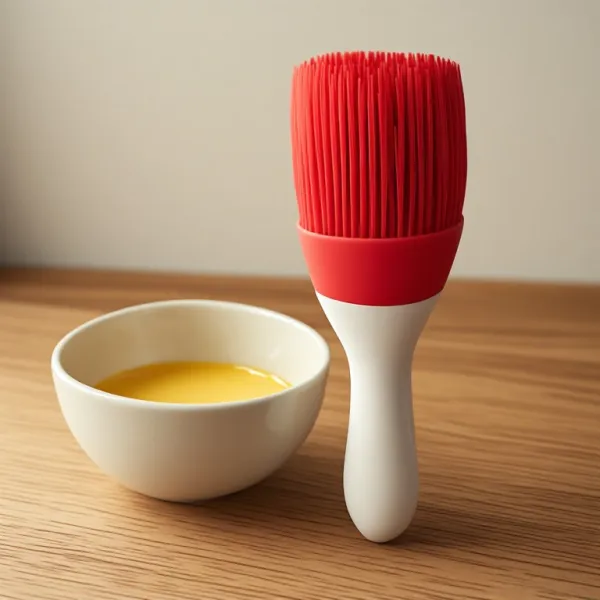
Gochujang glaze: Whisk 2 tablespoons gochujang with 1 tablespoon honey, 1 tablespoon soy sauce, 1 tablespoon sesame oil, and 1 teaspoon rice vinegar until smooth. In the last 5 minutes of roasting, brush this glaze over the upward-facing side of each steak. The sugars in the glaze caramelize against the already-hot surface. Remove from oven and finish with sesame seeds and scallions. The gochujang cuts through the sweetness of the caramelized cabbage and adds a fermented heat that makes the whole dish more complex.
Herby compound butter: Beat 4 tablespoons softened unsalted butter with 2 minced garlic cloves, 2 tablespoons finely chopped fresh herbs, 1 teaspoon lemon zest, and a pinch of red pepper flakes until combined. Lay a tablespoon-sized portion of compound butter on each steak straight from the oven. The residual heat melts the butter into the crevices and the garlic-herb aroma immediately fills the kitchen. Serve within 2 minutes of adding the butter while it’s still pooled and glossy.
Tahini-lemon: Whisk 3 tablespoons tahini with 2 tablespoons lemon juice, 1 minced garlic clove, and enough water to achieve a pourable consistency (about 3 tablespoons). Drizzle over finished steaks, add pickled onions and fresh parsley. This version pairs best with the base seasoning (no smoked paprika) — keep it light so the tahini is the featured flavor.
What to serve with roasted cabbage steaks
The loaded baked potato version is substantial enough to eat as a light dinner alongside a simple salad. The gochujang version pairs well with white rice and a fried egg. The herby butter version works alongside roasted chicken or seared salmon — it has the flavor profile of a classic French vegetable side.
The base version (no toppings, just the seasoned roasted steak) is excellent as a platform: serve it on a smear of hummus, top with a soft-boiled egg and chili crunch, or slice it and fold it into a grain bowl. The cabbage picks up whatever flavors surround it.