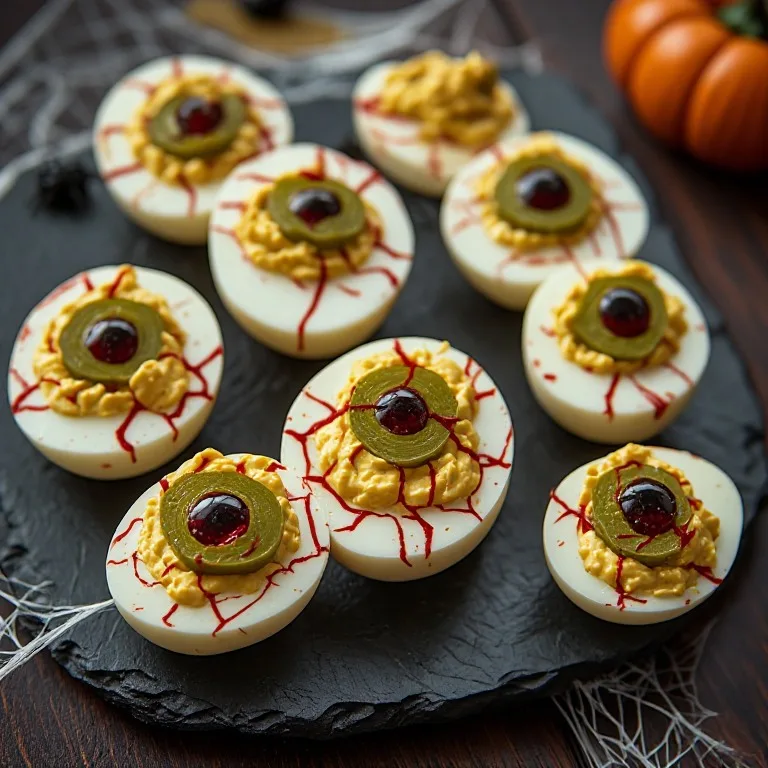


Deviled eggs are the appetizer that everyone eats and nobody brings enough of. TikTok’s contribution to a century-old recipe: a steam hack that eliminates the frustrating peeling problem, an extra-yolk trick that produces the mounded, generous fill you see in every viral video, and a short catalog of topping variations that update the classic without abandoning what makes it work.
The underlying recipe doesn’t change. What changes is how reliably and elegantly you execute it.
Why the Steam Hack Actually Works
The reason eggs are hard to peel is bonding — specifically, the inner membrane (a thin elastic layer just inside the shell) fusing to the egg white during cooking. Fresh eggs peel poorly because the albumen is more tightly bound to the membrane at lower pH. Older eggs peel better. But when you boil eggs, the white proteins denature fast and grip the membrane regardless of egg age.
Steaming applies heat indirectly: the egg surface heats more gently, the interior comes up to temperature more gradually, and the membrane-white bond doesn’t form as tightly. The result is a shell that lifts cleanly away in sections rather than tearing out chunks of white. J. Kenji López-Alt documented this in controlled side-by-side tests and the finding has been confirmed in dozens of home cooking communities.
The ice bath does the other half of the work: the rapid cool-down contracts the egg white slightly, pulling it inward and away from the membrane, which creates the tiny gap that lets you slip the shell off cleanly.
Crack the fat end first. There’s an air pocket at the fat end of every egg — once you crack it and let air in, the shell releases more easily from there and you can peel in long strips rather than tiny shards.
The Extra Yolk Trick
The problem with standard deviled eggs is quantity: twelve eggs produce exactly twelve portions of yolk, which is just enough filling to sit flush with the rim of the white. Flush looks fine. Mounded looks abundant — and that distinction matters both on camera and at the table.
Add 2 to 3 extra yolks (from separately steamed or hard-cooked eggs) to your filling batch. The whites from those bonus eggs can go in a salad, get chopped and stirred into the filling for texture, or simply be eaten. The extra yolks give the filling more body, a deeper yellow color, and — most practically — enough volume to pipe a proper dome above each white.
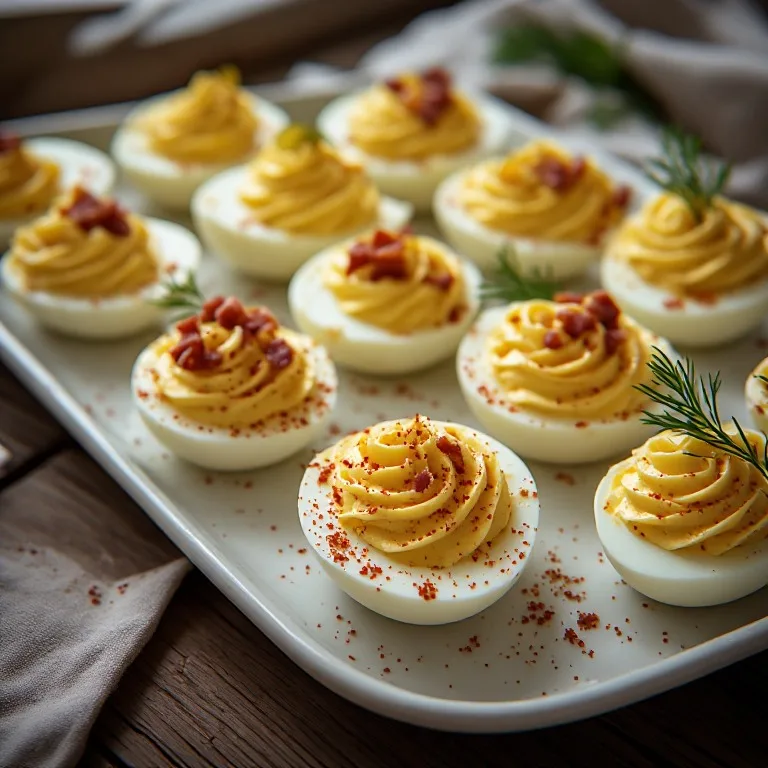
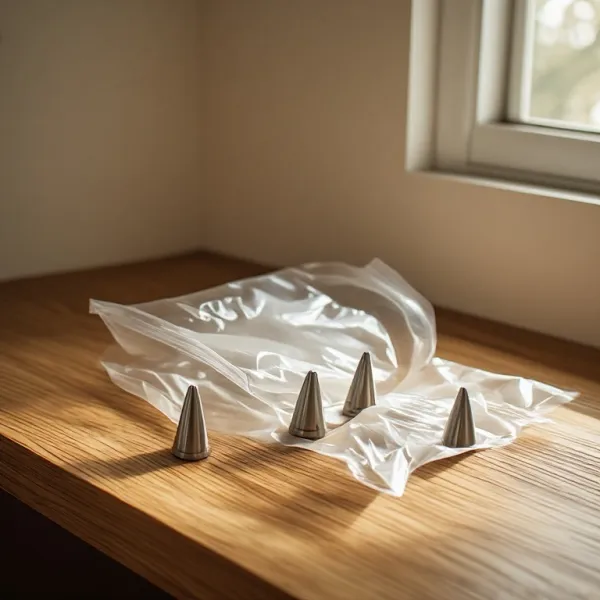
The piping makes the dome. With a filled piping bag, position the tip just inside the cavity edge and move in a clockwise spiral, applying consistent pressure, ending at the center with a slight upward pull to leave a point. The whole process takes 3 to 4 seconds per egg once you have a feel for the pressure.
The Three Variations
All three start from the same base filling. Split it into thirds and differentiate the last two:
Classic smoked paprika and chive: The baseline. Pipe the base filling, dust generously with smoked paprika (smoked, not sweet — the smokiness is the flavor), then scatter very thinly sliced chives. This is the one that tastes like the memory everyone has.
Dill pickle: Replace the apple cider vinegar with dill pickle brine from the jar. Fold in finely diced dill pickles (about 1 tablespoon per batch of filling). Garnish with a thin pickle round — the mandoline is your friend here, or a sharp knife and patience — and a small dill frond. The pickle brine is saltier than vinegar, so taste before adding the full amount of salt. The bright acidity cuts through the richness of the yolks differently than vinegar does.
Hot honey bacon: Stir 1 teaspoon of hot honey into the filling per batch. Crisp bacon very thoroughly — you want crumbles, not chewy pieces — and crumble fine. Pipe, scatter bacon crumble, drizzle hot honey with a spoon (don’t squeeze directly from the bottle, which is too much). A dusting of smoked paprika ties it together visually. This is the TikTok-era flavor combination: sweet, spicy, smoky, salty. It’s also the one that runs out first.
Make-Ahead for Thanksgiving
Deviled eggs are among the more make-ahead-friendly appetizers on the table. The full timeline:
Up to 5 days ahead: Steam and peel the eggs. Store whole, unhalved, in an airtight container in the refrigerator. Peeled steamed eggs hold well for 5 days; halved whites start to dry out at the edges after 3 days.
Up to 2 days ahead: Make the filling. Store in the piping bag, sealed at both ends with a rubber band or twist tie, in the refrigerator. The filling actually improves slightly after a day — the flavors integrate and the texture becomes creamier.
Day of, up to 4 hours ahead: Halve the whites, pat dry, pipe the filling, garnish. Cover loosely with plastic wrap (press it gently against the surface of the filling, not draped over the tops, which flattens the mounds). Refrigerate. Remove 15 minutes before serving to take the chill off.
For Thanksgiving travel: transport whites and filling separately. Pipe on-site in about 10 minutes.