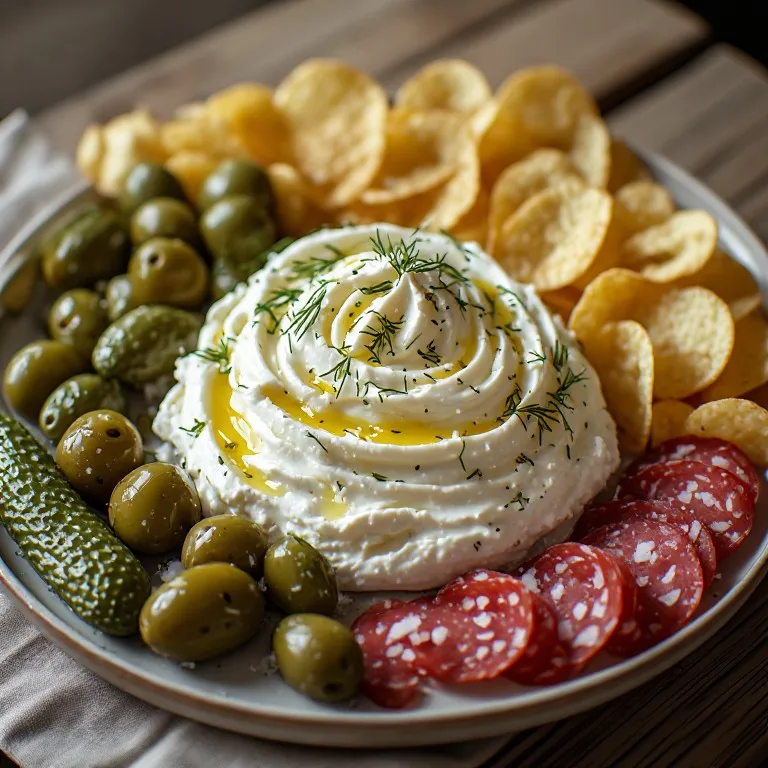


TikTok’s 2026 food pivot has a name: savory-maxxing. After years of Dubai chocolate bars, Biscoff tiramisu, and every possible iteration of pumpkin spice, food creators collectively swapped the dessert plate for something briny, salty, and assembled — the savory snack plate. Accounts like @simplystephjaye (9.5M views on a single plate video) and @savourygirll (2.3M views) made it a cultural moment. The premise: four elements, no cooking, under 10 minutes, and the kind of plate you’d pay $28 for at a wine bar built from $14 of groceries.
This page covers the formula, the whipping technique for the creamy base, and three specific pre-built versions (Mediterranean, Chili-Crisp Craver, Deli Throwback) so you can skip the improvisation on a first attempt.
- 4 elements: creamy base (whipped goat cheese, labneh, or hummus) + crunch (kettle chips or crackers) + pickled (cornichons, pickled onions) + salty hit (olives, salami, or marinated feta)
- No cooking required — total time under 8 minutes
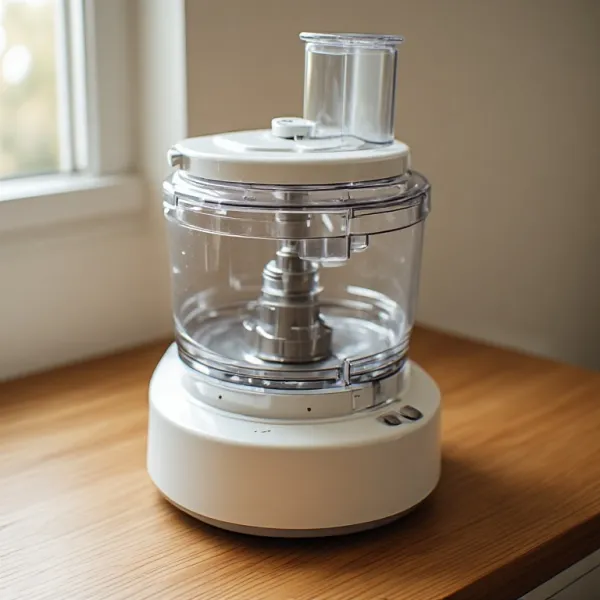
- Whipped goat cheese: 4 oz room-temp goat cheese + 1 tbsp olive oil in a food processor, 60 seconds
- Prop chips at an angle into the base — this is the one technique that separates a “TikTok plate” from a pile of snacks
- Restaurant/wine bar equivalent: $22–38; home cost: $12–18 for two
The Four-Element Formula
Every savory snack plate that works on TikTok follows the same structure, even when the specific ingredients change:
| Element | What it does | Options |
|---|---|---|
| Creamy base | Richness, tang, anchors the plate | Whipped goat cheese, labneh, hummus, full-fat cottage cheese, whipped feta |
| Crunch | Texture contrast, the delivery vehicle for scooping | Kettle chips, pita crisps, Triscuits, pretzel thins, rice crackers, endive |
| Pickled | Acidity, brightness, palate reset between bites | Cornichons, pickled red onions, capers, banana peppers, pepperoncini |
| Salty hit | Umami depth, protein, fat | Castelvetrano or Kalamata olives, salami, soppressata, marinated feta, roasted almonds |
The finish — flaky sea salt, olive oil, fresh herbs, and optional hot honey — is what shifts the plate from “snacks on a plate” to the kind of assembled thing that reads as intentional.
Making Whipped Goat Cheese (the Most-Used Base)
Whipped goat cheese is the component that shows up most consistently in viral savory plate videos. The process takes 60 seconds but has one non-negotiable rule:
Room temperature is required. Cold goat cheese stays granular and won’t turn smooth no matter how long you process it — the fat in chilled cheese doesn’t emulsify. Pull the log out of the fridge at least 15 minutes before you start.
- Add 4 oz room-temperature goat cheese to a small food processor
- Add 1 tablespoon extra-virgin olive oil and a pinch of flaky salt
- Process for 45–60 seconds, scraping down once midway
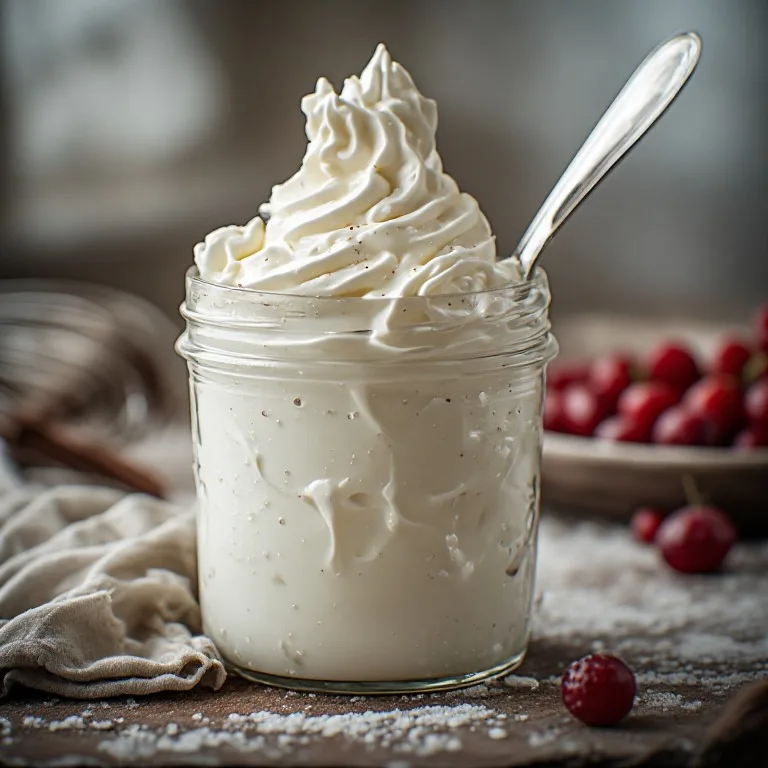
- The texture transitions: crumbly → chunky → suddenly smooth and glossy, like thick frosting
- If it’s too stiff to swoosh onto a plate, add a second tablespoon of olive oil and process 20 more seconds
For a softer, more spreadable texture: add 1–2 oz of room-temperature cream cheese alongside the goat cheese. The cream cheese acts as a plasticizer and produces something closer to a thick dip than a firm spread.
Three Specific Plate Builds
The Mediterranean Grazer
No meat, herbaceous, great with wine
- Base: Whipped feta (blend 4 oz feta + 2 tbsp Greek yogurt + 1 tbsp olive oil until smooth)
- Crunch: Pita crisps
- Pickled: Pepperoncini + thin cucumber slices (not pickled, but they act as a fresh contrast)
- Salty: Castelvetrano olives + 2 tablespoons marinated artichoke hearts
- Finish: Za’atar scattered over the feta, olive oil, fresh dill
The Castelvetrano olives (buttery, mild, no bitterness) are the key choice here — Kalamata would be too sharp against the already-tangy whipped feta.
The Chili-Crisp Craver
Spicy, high-protein, the savory-maxxing plate for the fitness crowd
- Base: 4 oz full-fat cottage cheese with 1 teaspoon chili crisp stirred in
- Crunch: Rice crackers or sesame crackers
- Pickled: Cornichons + sliced scallions (not pickled, but sharp and bright)
- Salty: 4–5 thin slices salami
- Finish: Extra chili crisp drizzle, sesame seeds, flaky salt
The cottage cheese base is deliberately underpowered on its own — the chili crisp and salami carry the flavor. This version has more protein than the goat cheese builds (~18g per serving) and reads as more casual than the others.
The Deli Throwback
Nostalgic, well-balanced, the one that uses pretzel thins
- Base: Labneh
- Crunch: Pretzel thins
- Pickled: Pickled red onions + 3–4 pepperoncini
- Salty: Roasted Marcona almonds + 4–5 slices soppressata
- Finish: Everything bagel seasoning over the labneh, olive oil, dill
The labneh-plus-everything-bagel-seasoning combination is the closest thing this plate family has to a canonical flavor pairing — the allium notes in the seasoning mirror the pickled onions and pull the whole plate together.
The Plating Technique (Why TikTok Plates Look That Way)
Most of the visual impact in viral savory plate videos comes from two things:
Height, not spread. Mounding the creamy base (rather than spreading it flat) and fanning the chips at angles (rather than laying them flat) creates the visual density that reads as “loaded” in a video thumbnail. A flat arrangement of the same ingredients looks sparse.
Clustering, not scattering. Each element should occupy its own zone of the plate — a cluster of cornichons on one side, a pile of olives on another, salami fanned in a third spot. When components are distributed randomly across the whole plate, none of them read individually. When they’re clustered, each one is identifiable and the contrast between elements is visible at a glance.
The olive oil finish. A drizzle of good olive oil over the creamy base (2–3 teaspoons) catches the light in photos and adds a glossy, restaurant look. It also adds genuine flavor — the fat carries the aromatic compounds in the oil across the whole plate.
What Goes in a Hot Honey Drizzle
If you’re using hot honey (Mike’s Hot Honey is the most-referenced brand in these videos), drizzle it specifically over the whipped goat cheese, not across the whole plate. The sweet-heat of the honey against the tangy, rich goat cheese is a specific contrast that works. Over the cornichons or olives, it conflicts.
The ratio: 1 teaspoon of hot honey over 4 oz of goat cheese. More tips the plate sweet, which defeats the savory-maxxing premise.
Cost Breakdown vs. Eating Out
| Home (serves 2) | Per person | |
|---|---|---|
| Goat cheese (4 oz) | $3.50–5 | — |
| Cornichons (jar, ~20 uses) | ~$0.50/use | — |
| Castelvetrano olives | $2–3 | — |
| Salami (5 slices) | $1.50 | — |
| Kettle chips (1.5 cups) | $1 | — |
| Olive oil, herbs, salt | ~$0.50 | — |
| Total | ~$9–11 | ~$4.50–5.50 |
| Wine bar small bites plate | — | $22–38 |