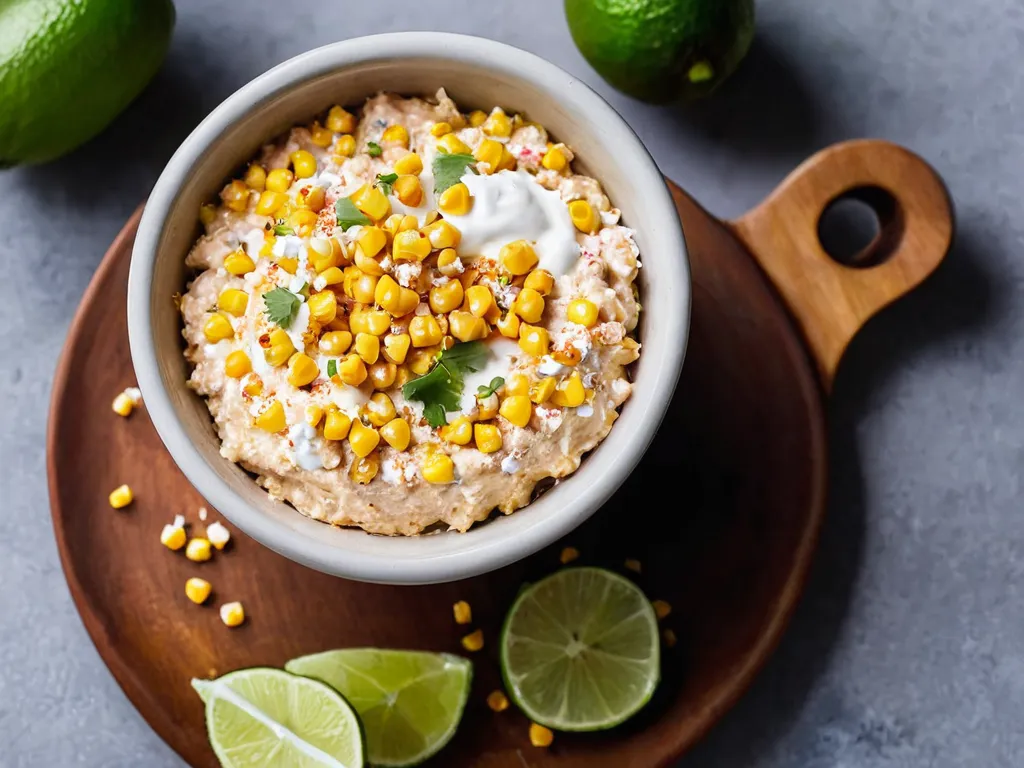
Elote corn dip is Mexican street corn in party-dip form. The original — elote en mazorca — is corn on the cob, grilled, then immediately slathered with mayo, crema, cotija cheese, chili powder, and lime juice by a street vendor while you stand there and eat it. The cup version, esquites, is the same flavors with the kernels cut off the cob, mixed with the same dressing, and served with a spoon. TikTok turned both into a party dip you serve in a bowl with chips. The transformation makes sense: all of the flavor, none of the dripping elbow situation.
The char separates this from corn salad. Without it, you have corn mixed with mayo. With it, you have something that tastes specifically of Mexican street food — sweet, smoky, slightly bitter at the edges, against the tangy coolness of crema and the sharp salt of cotija.
TL;DR
Dry the corn, char it hard in a screaming-hot cast iron pan (don’t touch it), let it cool, mix with mayo + crema + cotija + lime + Tajin + garlic + cilantro. Serve warm or cold. The char is the whole point — skip it and it’s just corn dip.
What Is Elote? What Are Esquites?
Elote (pronounced eh-LOW-teh) comes from the Nahuatl word elotl, meaning “tender cob,” used by the indigenous peoples of Mexico long before Spanish colonization — the word passed into Mexican Spanish as elote and is still in everyday use. As a street food, elote means corn on the cob grilled over an open flame, then coated with a layer of mayonnaise or crema, dusted with cotija cheese and chili powder, and squeezed with lime. Eloteros — street vendors with carts or pushcarts — sell it throughout Mexico. You eat it standing up, trying not to get mayo on your shirt.
Esquites (pronounced es-KEE-tes, from Nahuatl izquitl) are the cup version: corn kernels cut off the cob and mixed with the same dressing. Vendors fill small cups with warm corn, add a spoonful of crema, crumble cotija over the top, shake on chili powder, and squeeze lime over everything. You eat it with a plastic spoon. This is the format this dip is based on.
The party dip version is simply esquites scaled up and served with tortilla chips instead of spoons. The flavors are identical; the format is built for sharing.
The Charring Science
The flavor difference between charred and uncharred corn isn’t subtle — it’s the entire point of the dish. Two reactions happen when corn hits a very hot pan:
Maillard reaction: At temperatures above approximately 280°F on the food surface, amino acids and sugars react to form hundreds of new flavor compounds that create the brown, toasty, savory notes. This is the same reaction that makes bread crust, seared meat, and roasted coffee taste complex.
Caramelization: Corn is naturally sweet — it contains glucose, fructose, and sucrose. At surface temperatures above roughly 320°F, those sugars begin to break down into caramel compounds: sweet, nutty, slightly bitter. The dark spots on charred corn are a mix of both reactions happening simultaneously.
In a cast iron skillet at high heat, the pan surface reaches 400–500°F, which drives both reactions fast. The result is kernels that are deeply browned to black in spots on the outside while remaining tender inside. The slight bitterness at the charred edges plays against the sweet corn flavor and the rich, tangy dressing — that contrast is the dish.
You need two things to make this work: a hot pan and dry corn. Any moisture on the corn surface evaporates before the temperature can rise high enough for browning. This is why patting frozen corn completely dry is critical.
Cotija vs. Other Cheeses
Cotija is not a substitute for feta. It’s a different category of cheese.
What cotija is: An aged cow’s milk cheese made in the style of the town of Cotija in the Mexican state of Michoacán. It’s firm, dry, and crumbly, with a sharp, salty, slightly funky flavor. It doesn’t melt — you sprinkle or crumble it. The aged version (cotija añejo) is harder and saltier; the fresher version is slightly softer but still crumbly.
How it compares:
| Cheese | Milk | Texture | Saltiness | Meltable? |
|---|---|---|---|---|
| Cotija | Cow (aged) | Dry, crumbly | Very salty | No |
| Feta | Sheep (brined) | Crumbly, moist | Salty-tangy | No |
| Queso fresco | Cow (fresh) | Soft, moist | Mild | No |
| Parmesan | Cow (aged) | Hard, granular | Very salty | Grates finely |
For this recipe, cotija’s dry saltiness and crumbly texture are exactly right — it doesn’t dissolve into the dressing, it holds as distinct crumbles that you taste separately from the corn. The best substitutes, in order: grated pecorino romano, aged parmesan, or feta. Queso fresco is too mild. Regular shredded mozzarella or cheddar are not appropriate substitutes.
Find cotija at most supermarkets in the cheese case near the Mexican cheeses, or in the specialty section. Kroger, Trader Joe’s, Whole Foods, and most Latin American grocery stores carry it reliably.
Tajin vs. Chili Powder
These taste different enough that the substitution matters.
Tajín Clásico is a specific seasoning product made by Empresas Tajín in Zapopan, Jalisco (greater Guadalajara), Mexico. The brand describes it as a blend of mild chili peppers, lime, and sea salt; the full label reads chili peppers, sea salt, citric acid, dehydrated lime juice, and a little silicon dioxide (an anti-caking agent). The chili is intentionally mild — it adds gentle heat and earthy chili flavor, not spice. The dehydrated lime and citric acid give Tajín its characteristic bright, citrusy sharpness. That citrus component is what makes Tajín taste like more than chili powder.
Chili powder (the American supermarket blend) typically contains dried chili peppers, cumin, garlic powder, oregano, and sometimes salt. It’s deeper and earthier. No citrus component.
For elote, Tajin is more authentic — the original dish has lime built into almost every component. If you substitute plain chili powder, add lime zest to compensate. If you want more heat, add a pinch of cayenne on top of either.
Tajin is widely available at most supermarkets in the spice aisle or Mexican foods section, and at every Target, Walmart, and Whole Foods.
Cold vs. Warm: Which Version to Make
Warm (serve immediately): More like authentic esquites — the corn is fragrant, the dressing pools into the warm kernels, and the cotija softens slightly. Better texture contrast between the hot corn and cool dressing. More impressive if people are watching you make it. Better for a dinner party where you’re serving it fresh.
Cold (refrigerate 1+ hour): The flavors meld and actually improve overnight as the corn absorbs the dressing. More practical for cookouts and large gatherings where you need to prep ahead. Slightly less dramatic but arguably better the next day. Better texture for scooping with chips — the dressing firms up a bit as it chills.
Rule of thumb: if people are eating within 30 minutes of you finishing, serve warm. If you’re making it more than an hour ahead, make it cold. Either way, let it sit out for 10 minutes before serving — elote dip straight from the fridge is too cold.
Variations
Grilled (for the cookout): Instead of a skillet, grill whole corn cobs directly on a hot grill until charred on all sides, about 10–12 minutes, turning every 3–4 minutes. Let cool, cut the kernels off, and proceed with the recipe. The grill char is deeper and smokier than the skillet version — this is the best-tasting variant. If you’d rather keep the corn on the cob, the same elote flavors work as street corn ribs — cobs quartered lengthwise, charred, and dressed with the same mayo-cotija-Tajín mix.
Extra spicy: Add 1 finely minced jalapeño (seeds in for maximum heat) to the dressing, or add ½ teaspoon cayenne. Chopped pickled jalapeños on top add heat and acid.
Mango elote: Add 1 cup fresh diced mango to the dip. The sweetness and juice of the mango lightens the richness of the dressing and creates a tropical version popular in coastal Mexico.
Street corn nachos: Spread tortilla chips on a sheet pan, spoon the elote dip over them, and scatter extra cotija and a drizzle of crema on top. Broil for 3–4 minutes until the edges are hot and the cotija starts to brown. The nacho format makes this feel like a restaurant starter.
Lighter version: Replace the mayo with plain Greek yogurt (same quantity). The Greek yogurt adds protein and cuts fat significantly while maintaining creaminess. The flavor is slightly tangier and less rich than the mayo version — some people prefer it. The sour cream or crema stays.
What to Serve With It
Tortilla chips are the default. Thicker, restaurant-style chips (like Mission Thick and Sturdy or Tostitos Scoops) hold the weight of the dense dip better than thin chips. Fritos Corn Chips add a nice corn-on-corn quality.
For a lower-carb option: cucumber rounds, jicama sticks, or bell pepper strips. Jicama especially — its mild sweetness and crunch complement the elote flavors without competing.
For a full Mexican-style spread, elote corn dip pairs well alongside the Chipotle corn salsa (the roasted chili-corn salsa version from Chipotle), Chipotle guacamole, and jalapeño popper dip for a party spread where every dip is distinct. The corn dip is the richest and sweetest; the guac is cool and creamy; the jalapeño popper is cheesy and spicy.
Make-Ahead and Storage
Make-ahead: Char the corn up to 2 days ahead and refrigerate. Make the mayo-crema dressing and refrigerate separately. Combine 30–60 minutes before serving. Add cotija topping only at the last minute — it softens and loses texture if it sits in the dressing.
Storage: Up to 3 days in the refrigerator in a covered container. The flavor actually improves on day 2.
Leftovers: Elote dip is excellent as a taco topping (works especially well with grilled chicken or shrimp tacos), stirred into a quesadilla with black beans and pepper jack, or spooned over a burrito bowl. The rich dressing is too good to waste.