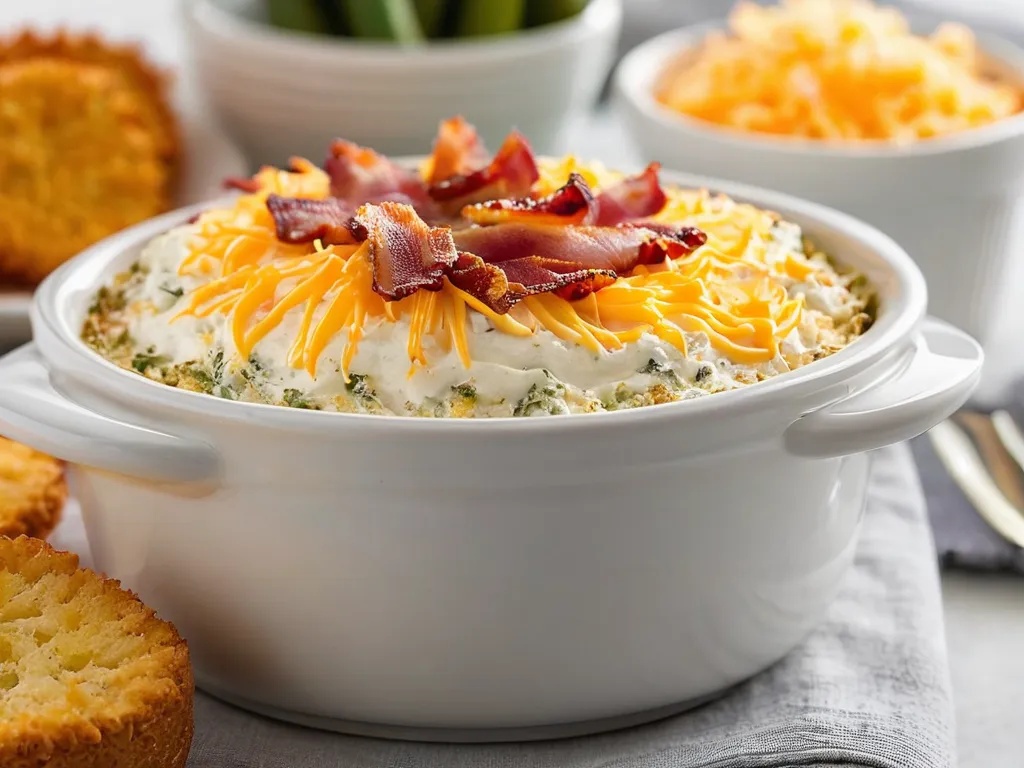
Jalapeño popper dip is what happens when you take everything people love about jalapeño poppers — the cream cheese, the cheddar, the bacon, the crunch — and scale it to feed a room. No frying required. No individual stuffing. One bowl to mix, one dish to bake, one dip that never has leftovers.
The TikTok versions went viral for good reason: it looks spectacular coming out of the oven. Golden panko topping, bubbling cheese edges, the visible green of jalapeños and the brown specks of bacon through the top layer. You put it in the center of the table and it pulls people in.
The recipe itself is simple — but there are a few things that separate a great jalapeño popper dip from a fine one: cream cheese that’s actually soft before you mix, understanding how jalapeño heat really works so you can calibrate it precisely, and a panko topping done right.
The Jalapeño Heat Myth (And How to Actually Control It)
Almost every jalapeño popper dip recipe says the same thing: “seed the jalapeños to reduce heat.” That’s only half right — and it’s the less important half.
The membrane is where the heat lives, not the seeds.
The white pith inside the jalapeño (botanically called the placenta) is the only part of the pepper that actually synthesizes capsaicin — by common estimates it holds around 85% of the fruit’s total heat. The seeds taste hot only because they sit pressed against the membrane and pick up capsaicin from contact; they produce essentially none themselves. If you remove the seeds but leave the white membrane intact, the dip will still be significantly spicy. If you remove the membrane but leave a few seeds, it’ll be mild.
This matters practically because it gives you precise control:
| Heat level | Jalapeños | What to do with the membrane | Result |
|---|---|---|---|
| Mild | 4, halved | Scrape out every trace with a spoon | Bright jalapeño flavor, little to no burn |
| Medium | 4–5 | Remove from most; leave small patches in two | A clear kick — the standard game-day level |
| Hot | 6 | Leave fully intact in two; a trace in a third | Genuine heat; taste the raw dip and pull back if needed |
Mild (kid-friendly, spice-averse crowd): 4 jalapeños, halved, every trace of white membrane scraped out with a spoon, seeds discarded. Dice and use. You’ll have noticeable jalapeño flavor — earthy, bright, slightly grassy — with minimal heat.
Medium (standard game day): 4–5 jalapeños, membrane removed from most, but with small patches of membrane left in two of the peppers. This is the target for “I like it with some kick.”
Hot (bring the heat): 6 jalapeños, remove the membrane from three, leave it fully intact in two others, and keep a small amount in the sixth. Taste the raw dip — if it’s already sharp, pull back. Capsaicin distributes unevenly through jalapeño crops; the same variety from the same store can range from almost mild to surprisingly fiery depending on growing conditions.
How to check a jalapeño’s heat before committing: Cut a thin slice from the flesh near the top (away from the membrane) and taste it. Mild flesh = mild jalapeño overall. Very hot flesh = this pepper has elevated capsaicin throughout.
One more technique: roast the jalapeños before dicing. Place them directly over a gas flame or under the broiler until the skin blisters and chars. Let them steam in a covered bowl for 10 minutes, peel off the skins, then remove membrane and seeds. Roasted jalapeños have a deeper, smokier flavor and the heat is slightly mellower — the char adds complexity without adding heat. This version of the dip reads as “jalapeño popper” but more sophisticated.
Why You Cannot Rush the Cream Cheese
The base of this dip is the cream cheese emulsion — cream cheese beaten with sour cream and mayonnaise into a smooth, fluffy mixture that holds everything together and becomes silky and creamy when baked.
Cold cream cheese appears to mix. It doesn’t. What looks like incorporation is actually small cold cream cheese lumps with the sour cream and mayo distributed around them. Those lumps won’t cook out — they stay as pockets of dense, slightly grainy cream cheese in the finished dip.
Two ways to properly soften cream cheese:
The right way: unwrap both blocks and leave them on the counter for 45–60 minutes. Room temperature cream cheese is noticeably soft when you press it — it doesn’t spring back the way cold cream cheese does.
The faster way: unwrap and cut each block into 8 cubes, spread them out on a plate. 20 minutes at room temperature and they’re workable.
The microwave way (carefully): Unwrap, place in a bowl, and microwave at 50% power for 15-second intervals, checking and turning after each one. You want soft, not warm — warm cream cheese separates slightly when you beat it. Do not go past soft.
Use a hand mixer. Beat the softened cream cheese alone for 30–45 seconds before adding anything else — this warms it slightly, smooths out any remaining firmness, and gives you the best base. Add sour cream and mayo and beat again. The result should look like a thick, fluffy frosting before you fold in the other ingredients.
The Three-Cheese Mix
The recipe above uses three cheeses — sharp cheddar, mozzarella, and Parmesan. Each one does something different:
Sharp cheddar is the primary flavor cheese. It’s tangy, savory, and melts cleanly. Use block cheddar shredded yourself if possible — pre-shredded cheddar has anti-caking agents (typically potato starch or cellulose) that slightly inhibit melting and create a less smooth texture in the finished dip.
Mozzarella adds the pull. Low-moisture mozzarella (the block kind, not the fresh water-packed variety) melts into long strings that create the texture people want in a baked cheese dip. Without it, the dip can crack slightly on the surface as it cools.
Parmesan adds depth and a slight sharpness that reinforces the cheddar without competing with it. It also browns in a way that cheddar and mozzarella don’t, contributing to the golden top.
If you want to simplify: 1 1/2 cups total of sharp cheddar works fine. The three-cheese version is noticeably richer and more complex, but the one-cheese version is still excellent.
The Panko Topping: Why It Works and How Not to Ruin It
The panko topping is what makes this jalapeño popper dip rather than a jalapeño cheese dip. It provides the textural contrast — creamy inside, crunch on top — that makes jalapeño poppers worth eating.
Panko, not regular breadcrumbs. Panko is made from crustless bread processed into flat, airy flakes rather than fine crumbs. Those flakes create more surface area that stays crunchier longer, doesn’t absorb moisture as fast, and browns more evenly. Regular breadcrumbs turn dense and damp in a baked dip. This substitution matters.
The butter ratio: 2 tablespoons of melted butter for 1/2 cup of panko. Toss until every crumb is coated — you want to see it change from dry-white to slightly glossy. Under-buttered panko comes out pale and dusty. Too much butter and it becomes oily and heavy. The 2:1/2 ratio gives you golden, crisp, light crumb.
Layer order: Panko goes on first (directly on the dip surface), then the extra cheddar, then the bacon crumbles. The cheese melts down through the panko slightly, anchoring it to the dip surface. Cheese on top of panko can create a sealed layer that steams the breadcrumbs rather than letting them crisp.
If the panko topping has browned by the time the dip is bubbling: it’s still fine. The panko at the bottom of the layer will be softer than the panko on top, which is the right gradient. If you want extra-crispy throughout, broil for the last 2–3 minutes on high — watch it closely, panko goes from golden to burned in under a minute under the broiler.
Cast Iron vs. Baking Dish: Which to Use
Cast iron skillet (9–10 inch): Holds heat longer at the table — 30–40 minutes versus 15–20 minutes for a ceramic or glass baking dish. Creates slightly crispier edges where the dip contacts the hot iron. Looks more rustic and impressive for serving. If you have one, use it. Bring it to the table on a folded kitchen towel or trivet — the handle stays hot for longer than you’d expect.
8×8 glass or ceramic baking dish: Heats more evenly throughout (glass especially). Easier to see when the edges are bubbling. Easier to clean. Fine for the task, just loses heat faster at the table.
What not to use: A 9×13 dish spreads the dip too thin (edges overcook before the center sets), and a small ramekin takes too long to heat through. 8×8 or the equivalent cast iron is the right footprint for this recipe.
The Crockpot Version (For Long Parties)
For a party lasting more than 90 minutes, the slow cooker version is worth knowing. You lose the panko topping (it goes soggy in the trapped steam), but you gain a dip that stays warm all afternoon without attention.
Add all the filling ingredients directly to the slow cooker: both packages of cream cheese (you can put them in cold — they’ll melt), the sour cream, mayonnaise, diced jalapeños, half the bacon, both cups of cheddar, mozzarella, Parmesan, and spices. No panko. Cook on low for 1.5–2 hours, stirring every 30 minutes, until fully melted and smooth. Switch to warm and leave it.
The crunch element: toast the panko in a dry skillet with butter over medium heat until golden, 4–5 minutes. Keep it in a small bowl alongside the slow cooker. People can spoon crispy panko over their own serving. It won’t stay crispy once it hits the warm dip, but it adds texture for the first few seconds.
Chicken Jalapeño Popper Dip
Add 1.5–2 cups of shredded rotisserie chicken to the base and you have a substantially different (and more filling) dip that edges toward an entree when served with bread.
The technique: pull the meat from a rotisserie chicken, shred it with two forks, season with a pinch of the same garlic powder and smoked paprika from the dip recipe. Fold into the cream cheese base before spreading. This version is best baked in a 9×13 dish (there’s more volume), and bake time extends to 28–32 minutes.
The chicken version reads as “jalapeño popper chicken dip” — a crowd-pleaser at game days and potlucks where people want something that eats like a meal alongside it.
Make-Ahead Strategy for Parties
All the prep can happen the day before. The only things you do fresh are the buttered panko topping and the bake itself.
Night before: Mix the cream cheese base with all filling ingredients. Spread into the baking dish. Cover tightly with plastic wrap and refrigerate.
Day of (30 minutes before baking): Pull the dip from the fridge and let it come toward room temperature. Cold dip from the fridge needs 10–15 extra minutes in the oven and the edges overcook before the center heats through.
Right before baking: Make the buttered panko (don’t do this the night before — the butter causes it to clump), scatter on top with the remaining cheese and bacon.
Bake and serve. The baking dish with the prepared dip can also be transported to a party — just add the topping and bake at the host’s oven.
What to Serve It With
Tortilla chips: The default. Go with thick, restaurant-style chips (Tostitos Scoops, On the Border, or a similar sturdy chip) — thin chips break on impact with the thick dip. The Scoops shape holds a particularly generous amount.
Crackers: Ritz are the reliable crowd-pleaser — buttery and neutral. Triscuits add a wheaty crunch. Pita chips or flatbread crackers for something more substantial.
Bread: Sliced French baguette toasted, or crostini. The bread-to-dip ratio is different from chips — you get more dip per bite, which works well for the first 20 minutes before the dip starts to set.
Vegetables (low-carb option): Cucumber rounds, bell pepper strips (all colors work), celery sticks, and endive leaves. The dip is so rich and flavorful that vegetables are genuinely satisfying dippers rather than a consolation prize.
Other Party Dips Worth Having Alongside
If you’re building a dip spread: Applebee’s spinach artichoke dip is the cool-toned, herby counterpart to this dip’s warm, smoky heat — they make sense served together. Copycat Chili’s queso covers the pourable cheese sauce category if you want something for nacho topping alongside a scoop dip. For a no-cook option that takes 5 minutes, copycat Chipotle guacamole rounds out a spread where the hot dip is the centerpiece and the guac is the fresh counterpoint.