

Every October, TikTok fills up with Halloween candy bark videos, and the recipe keeps going viral for the same reason: it looks like you spent hours on it, but it takes 30 minutes and requires exactly zero baking skills.
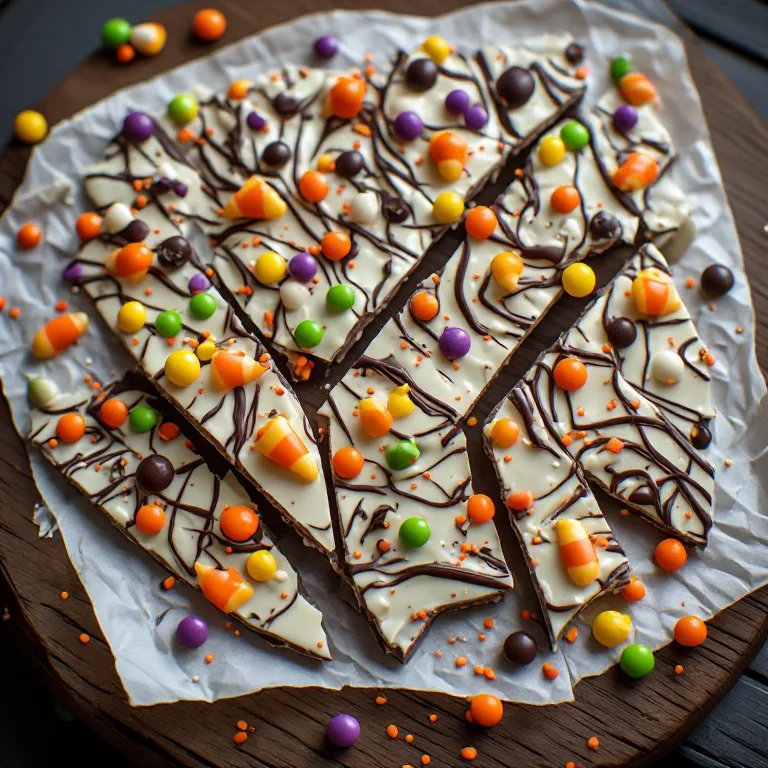
The concept is simple. Melt white chocolate, pour it thin, swirl in dark chocolate for a marbled look, then scatter Halloween candy across the surface before it sets. Refrigerate for 20 minutes, break into shards, and you have something that looks like it came from a specialty confectionery shop and costs about $1.40 per serving.
- Melt 12 oz white chocolate with coconut oil; melt 3 oz dark chocolate separately
- Pour white chocolate onto parchment-lined baking sheet, spread thin
- Drop and swirl in dark chocolate immediately for marbled effect
- Scatter candy corn, Reese’s Pieces, Halloween M&Ms, and sprinkles before the chocolate sets
- Refrigerate 20 minutes, break into shards — done
The one rule that makes this work: everything is dry. A single drop of water in melted chocolate causes it to seize into a grainy paste. Dry bowl, dry spatula, dry hands. Once you have that, the rest is candy arrangement.
What Makes Halloween Candy Bark Go Viral Every October
Chocolate bark is an old holiday tradition — Williams-Sonoma has sold peppermint bark at Christmas for decades — but the Halloween version took off on TikTok around 2021–2022. The format that went viral: a white chocolate base, dots of orange and purple melting wafers swirled with a toothpick, scattered with drugstore Halloween candy. It spread because the finished product looks like something you’d pay $24 for at a specialty shop, while the technique is demonstrably accessible — anyone watching can see themselves making it.
Since then the format has been remixed thousands of times. The most popular variations on TikTok:
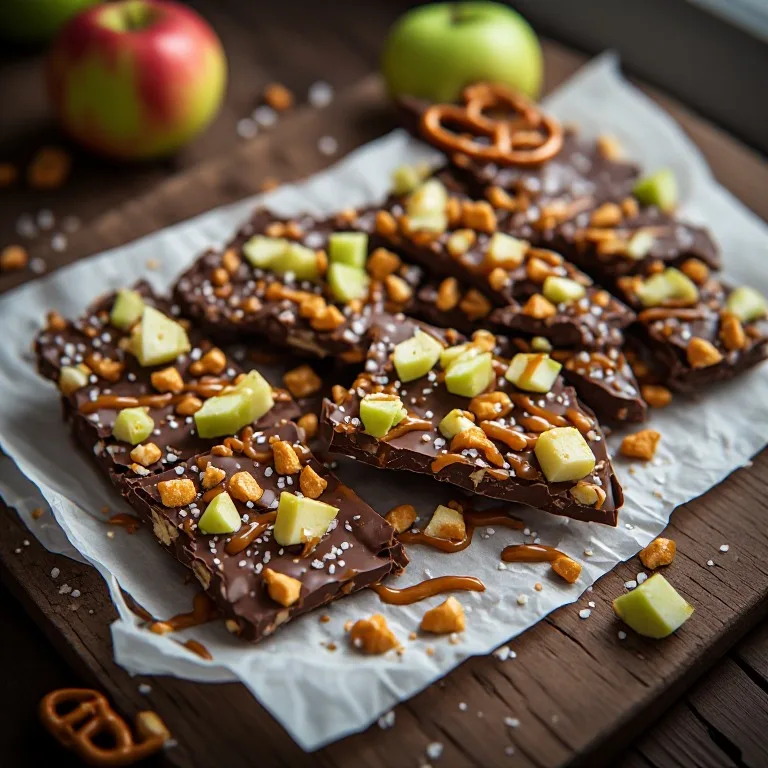
- Pretzel bark — mini pretzels scattered over the surface add a salty-sweet contrast and a satisfying crunch
- Oreo bark — crushed Oreos reinforce the black-and-white Halloween palette and add a cookies-and-cream flavor dimension
- Nerds bark — Nerds clusters on top for a textural crunch and a neon color pop that photographs exceptionally well
- Layer bark — dark chocolate poured first, allowed to set halfway, then white chocolate poured over and marbled in, creating visible layers when you break it
The base recipe below is the version that performs best for gifting: white chocolate base, dark swirl, candy corn + Reese’s Pieces + Halloween M&Ms on top, with the Oreo and pretzel options as easy upgrades.
The Chocolate That Works Best
White chocolate chips vary considerably in quality. The key quality indicator is cocoa butter content — real white chocolate (Ghirardelli, Guittard, Valrhona) uses cocoa butter as the fat, which gives it a smooth, glossy melt and a creamy flavor. Most store-brand white chips substitute palm oil or other vegetable fats for some or all of the cocoa butter. They still melt, but the texture is slightly waxy and the flavor is noticeably flatter.
For bark you’re gifting, use Ghirardelli or Guittard. For bark you’re eating at a party, the store-brand chips work fine and cost about half the price.
The dark chocolate swirl doesn’t need to be high-end — even Nestlé Toll House dark chocolate chips make a clean, visible swirl and the flavor is good. The swirl is a small portion of the total bark weight, so a premium dark chocolate isn’t necessary.
How to Get the Swirl Right
The marbled effect comes from pulling a toothpick through drops of dark chocolate while the white chocolate is still warm and fluid. The timing window is about 90 seconds after pouring.
One slow pass from top to bottom creates a clean vertical stripe pattern. One pass each way (top-to-bottom, left-to-right) creates a traditional marble pattern. Multiple random passes blend the colors into muddy gray.
The mistake most first-timers make is swirling too aggressively. Four to six total passes is usually the maximum before the colors blend. Practice on a small test pour if you want to calibrate before committing to the full batch.
Timing the Toppings
The reason candy falls off finished bark is almost always the same: the surface had begun to set before the candy was pressed in. Chocolate starts forming a skin within 60–90 seconds of being poured, especially in a cool kitchen. Once that skin forms, candy sits on top of it — it doesn’t embed into it — and falls off when the bark flexes during breaking.
The fix: scatter ALL toppings immediately after the swirl is done, within 90 seconds of pouring. Have the candy bowls measured and sitting next to the baking sheet before you melt the chocolate. Sprinkles go last because they fill the small gaps — but even they need to go on within the 90-second window.
At the Store vs. At Home
A Halloween bark gift box at Williams-Sonoma or a specialty chocolatier runs $18–28 for a half-pound (about 8 oz). The recipe below makes 12 oz of bark for about $17 in ingredients — $1.40 per serving. For gifting: divide into cellophane bags (4–5 shards each), tie with orange and black ribbon, and attach a small tag. The total cost per gift bag is under $3.