

The Viral TikTok Halloween Spider Web Pizza, Made at Home
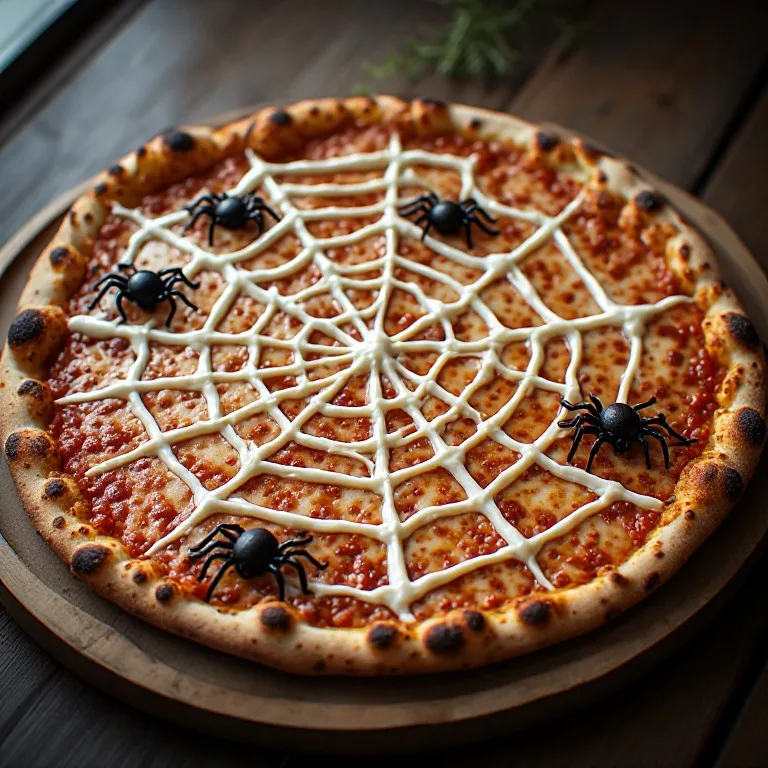
The Halloween spider web pizza is the rare party food where the visual is genuinely better than the effort required. You’re making a pizza. The web is four concentric cream cheese circles and eight toothpick drags. The whole decoration takes 90 seconds. But on a hot pizza fresh from the oven, those 90 seconds produce something that looks planned, elaborate, and worth photographing — which is exactly why the technique keeps coming back every October on TikTok with millions of views.
The original technique — piping circles then dragging a point through them — comes from French pastry, where it’s called a “feather” pattern and appears on tarts and ganache. Someone applied it to a Halloween pizza, posted it, and the format spread because the transformation moment (circles becoming a web in one pull) is visually satisfying to watch in the way TikTok food videos are designed to be.
The 60-Second Window
The one thing that separates a pizza with a beautiful web from a pizza with sad white circles sitting on cooled cheese is timing. When the pizza comes out of the oven, the mozzarella surface is roughly 190°F — hot enough that the cream cheese circles you pipe onto it will melt very slightly at the edges, feathering into the mozzarella and giving the web a natural, integrated look rather than a piped-on-top appearance.
By 90 seconds after the pizza leaves the oven, the surface temperature has dropped enough that this feathering stops. Cream cheese applied to a cooled pizza sits on top of the cheese rather than blending, and the web looks like a sticker rather than part of the pizza.
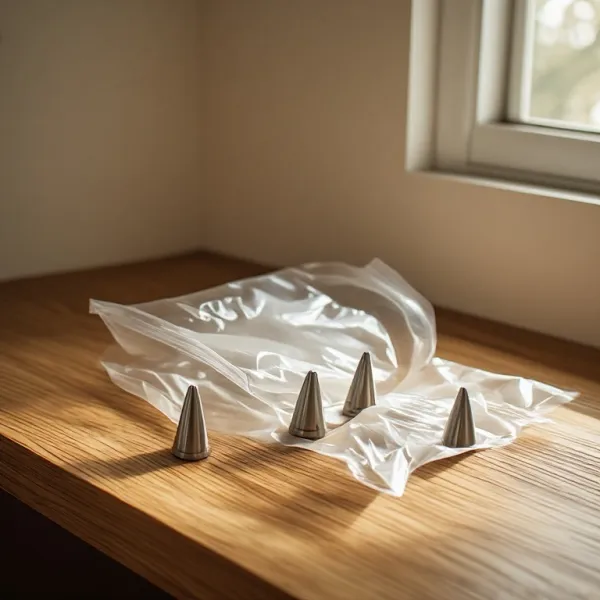
Have your piping bag loaded, your toothpick ready, and your olive spiders pre-arranged before the pizza goes into the oven. When the timer goes off, the only thing between you and a clean web is working without pausing.
The Web Technique Step by Step
Piping the circles is the easy part — steady pressure, start at the center, keep the circles about 1.5 inches apart, and work to the outer edge of the cheese. Four circles work for a 14-inch pizza; five if you want a denser web.
Dragging the web is where spacing matters. The eight spoke-lines need to be genuinely evenly distributed around the circle — if two are close together and there’s a big gap elsewhere, the web looks incomplete. The clock-face method works reliably: drag your first four lines at 12, 3, 6, and 9 (the compass points), then go back and drag at 1:30, 4:30, 7:30, and 10:30. Eight even spokes, zero measuring required.
One drag per spoke, from center to edge, continuous motion. Wipe the toothpick on a paper towel between drags so cream cheese buildup on the tip doesn’t drag a blob through your clean lines.
Making the Olive Spiders
Each spider needs one oval body and eight legs. The fastest method: cut a black olive in half lengthwise — two long ovals, two spider bodies. For the legs, cut four more olives into thin crosswise slices and arrange four slices on each side of the body. They’ll hold in place on the warm cheese.
Place the spiders after the web is dragged but before the cream cheese fully sets — they press into the soft surface slightly, which anchors them better when you cut the pizza. Two to four spiders distributed across the pizza looks intentional; one spider in the corner looks forgotten.
Serving at a Halloween Party
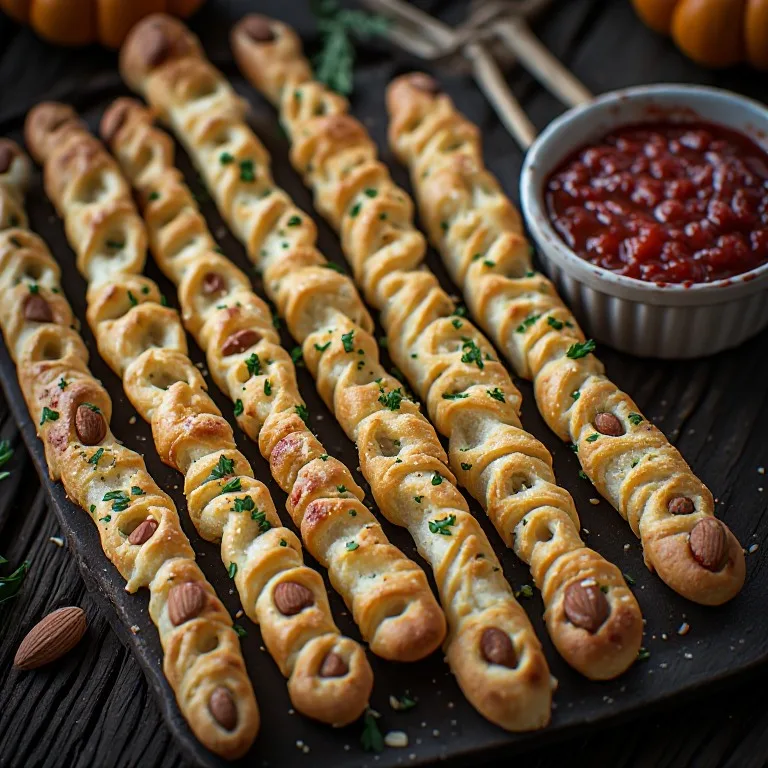
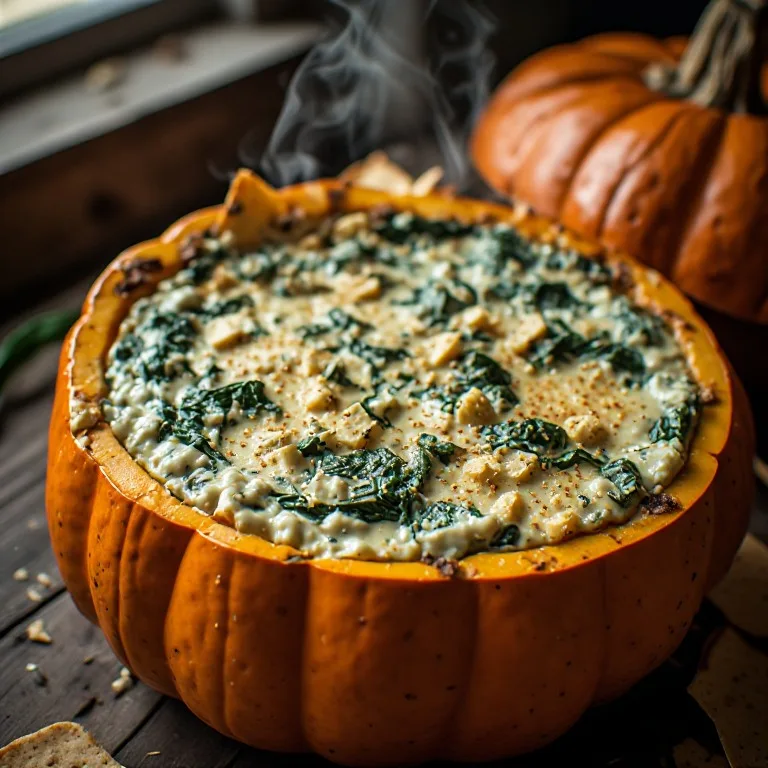
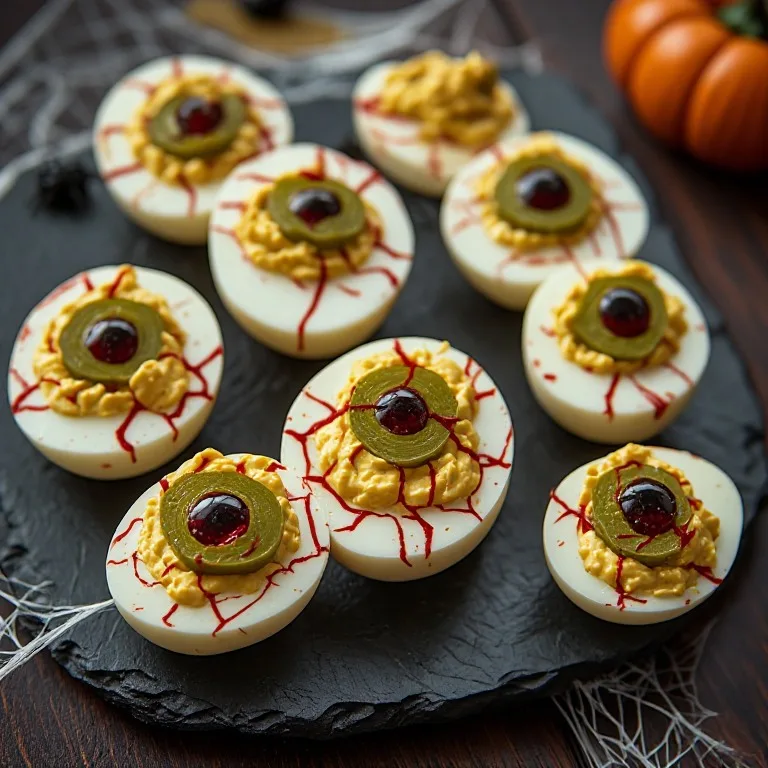
This pizza works as the anchor of a Halloween savory spread. Make it last — the witch finger garlic breadsticks and witches cauldron spinach dip can sit out while the pizza bakes. The deviled egg eyeballs cover the cold appetizer slot. Pull the pizza from the oven, decorate it, set it out, and it will be the first thing people photograph before anyone reaches for a slice.
For a larger crowd, make two identical pizzas back-to-back and leave the decoration slightly different on each — a denser web on one, larger spiders on the other. Total time for two pizzas is under 45 minutes.