


Pin It

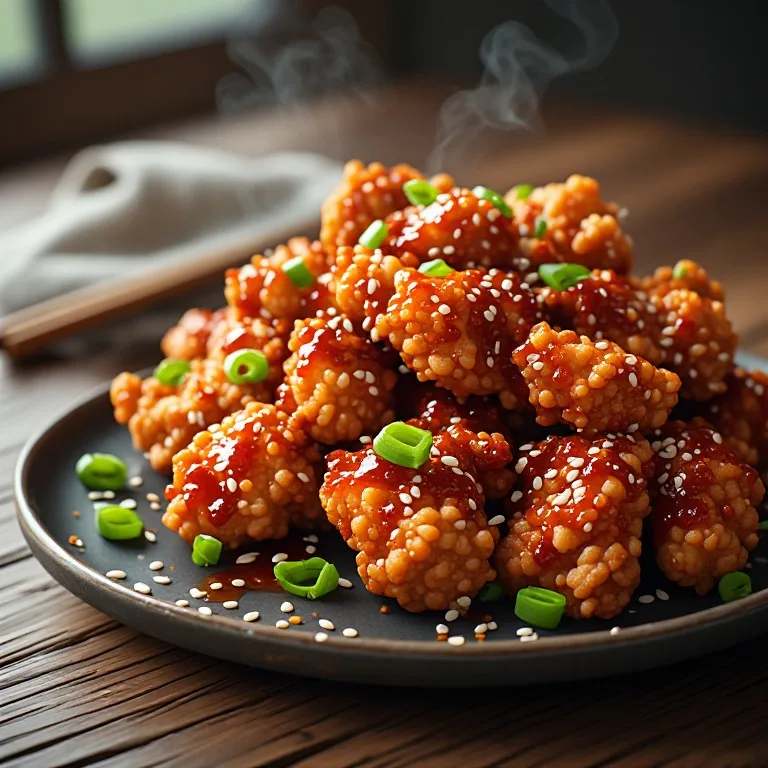
The Viral TikTok Korean Fried Chicken — Double-Fried, Impossibly Crispy

The Viral TikTok Korean Fried Chicken — Double-Fried, Impossibly Crispy
Jump to Recipe
Prep 15 min Cook 25 min Serves 4
Quick answer: Korean fried chicken is boneless chicken dredged in potato starch and fried twice — once at 325°F to cook it through, then again at 375°F after a short rest to set a thin, glass-like crust that stays crunchy even under sauce. Toss the second fry in spicy-sweet gochujang yangnyeom (or savory soy-garlic) sauce. About 40 minutes active, serves 4.

The Viral TikTok Korean Fried Chicken — Double-Fried, Impossibly Crispy

The Korean fried chicken technique that keeps the coating crunchy for 30 minutes after saucing. Potato starch dredge, two frying temperatures, and a spicy-sweet yangnyeom sauce made from pantry staples. Better than takeout, genuinely teachable.

Medium Prep: 15 min Cook: 25 min Total: 40 min4 servings ~$4.50/serving
Prep15 min
Cook25 min
Total40 min
Servings
4
At home~$4.50/serving
vs
Restaurant~$20.25/serving
You save ~78%

The Story Behind the Recipe

The Korean fried chicken technique that keeps the coating crunchy for 30 minutes after saucing. Potato starch dredge, two frying temperatures, and a spicy-sweet yangnyeom sauce made from pantry staples. Better than takeout, genuinely teachable.

Nutrition Facts

Per serving (4 servings)
Calories385
Total Fat16g
Total Carbs26g
Dietary Fiber1g
Sugars10g
Protein29g
Sodium690mg

* Estimated values based on standard recipe preparation. Actual values may vary.

Ingredients

  • For the chicken
  • For the dredge
  • For the yangnyeom sauce (spicy-sweet)
  • Garnish

Instructions

💡
Pro tip: This recipe tastes even better the next day. The flavors need time to meld together in the fridge.
❄️
Storage: Keeps in an airtight container in the fridge for up to 2 weeks. Freezer-friendly for up to 3 months.
🎃 Free Halloween cookbook — download now The Copycat Halloween Cookbook A ready-made, photo-illustrated PDF of our best halloween copycat recipes — free to download, no building required. Pay what you want to support if you love it.

Free PDF — instant download. We'll also send new seasonal copycat recipes now and then; unsubscribe anytime. Or just download it →

What makes Korean fried chicken different

Korean fried chicken (치킨, chikin) has been a TikTok fixture for a reason that’s easy to demonstrate on camera: pick up a piece immediately after it’s been tossed in sauce, and the coating shatters. Do that with a piece of American fried chicken and it bends. The crunch isn’t an accident — it’s engineered through two specific choices that American fried chicken doesn’t use.

The first is potato starch. The second is frying the chicken twice at two different temperatures with a rest in between.

This page covers both, plus the two classic sauces — spicy-sweet yangnyeom and the savory-caramel soy-garlic version — with exact temperatures and the science behind why each step matters.

The double-fry, explained

The logic is straightforward once you understand what each fry does.

First fry at 325°F: The lower temperature cooks the chicken through without burning the coating. Critically, it drives the free moisture out of the coating — the water in the marinade and the chicken surface converts to steam and pushes through the starch layer. After the first fry, the coating is set and pale golden, but still somewhat moist from the steam passing through it.

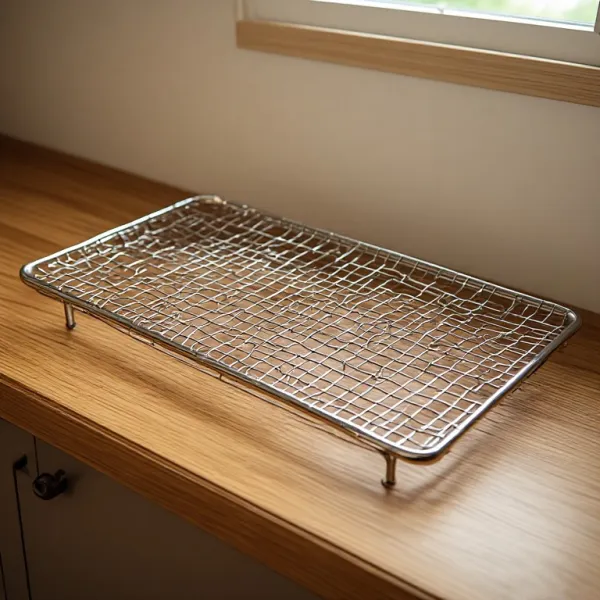
The 5-minute rest on a wire rack: After the first fry, the interior of the chicken is still producing steam. If you put the chicken immediately into hotter oil, that steam is trapped and creates a slightly soggy coating even after the second crisping fry. The rest lets the steam escape entirely. Five minutes is enough — the coating surface dries noticeably to the touch.

Second fry at 375°F: Now the coating surface is genuinely dry. The higher temperature creates rapid surface contact with hot oil — the coating literally desiccates into a rigid, glass-like layer in 2–3 minutes. This is the mechanism behind Korean fried chicken’s signature crunch. The coating isn’t thick; it’s thin and densely rigid.

Why potato starch is non-negotiable

American fried chicken uses all-purpose flour as its primary coating. Flour softens in contact with moisture — from the sauce, from the air, from the chicken’s own juices — within about 5 minutes. This is why takeout fried chicken is disappointing by the time it reaches you.

Potato starch behaves differently. It has large granules and almost no protein or fat, so instead of turning leathery it gelatinizes into a thin, rigid, glass-like network riddled with tiny air pockets. That network absorbs very little oil and physically resists moisture instead of welcoming it. A piece of Korean fried chicken tossed in yangnyeom sauce and left for 30 minutes is still audibly crunchy. The same piece in a flour-based dredge would be soft in 10 minutes.

Potato starch is at most Asian grocery stores and increasingly at large supermarkets (Bob’s Red Mill stocks it). Cornstarch works as a substitute and produces about 80% of the same effect. All-purpose flour alone does not.

The two classic sauces

Yangnyeom (양념) — spicy and sweet: The TikTok version almost always shows yangnyeom. The sauce is gochujang-based — fermented Korean red chili paste — with ketchup, honey, soy sauce, rice vinegar, and garlic. The gochujang gives it a deep, complex heat that’s different from straight hot sauce; the fermentation adds savory depth that makes it more interesting than a simple chili-sweet glaze. Heat level is moderate — most people who “don’t like spicy food” find yangnyeom comfortable.

Soy-garlic (간장, ganjang) — golden and caramelized: Soy sauce, honey, mirin, and a large amount of minced garlic, cooked until the sugar caramelizes slightly and the garlic softens. The result is savory-sweet with a pronounced roasted-garlic aroma. No heat at all. Many Korean fried chicken restaurants do half-and-half orders — half yangnyeom, half soy-garlic — and that’s the ideal introduction if you’re cooking for people with different spice tolerances.

Both sauces are applied at the last moment and the chicken is served within 5 minutes. The coating holds its crunch for 20–30 minutes under sauce; after that it starts to soften from the inside out.

Chicken thighs, not breast

Boneless skinless thighs stay juicy through two frying passes. Chicken breast dries out around 175°F internal, and the double-fry process, especially if you’re batching, can push breast meat over that threshold without you noticing. Thighs have enough fat content to remain tender even at 185–190°F internal.

Cut the thighs into 2-inch pieces — large enough to stay juicy, small enough to cook through reliably in the first fry and serve as finger food without cutting.

A note on oil temperature management

A Dutch oven or heavy pot is worth using here because the thick walls act as a thermal reservoir. When you add room-temperature chicken to hot oil, the temperature drops — sometimes by 25–50°F if the pot is thin or you’ve added too many pieces. A Dutch oven recovers to target temperature faster.

Fry in batches of 6–8 pieces at a time. More than that and the temperature drops below 300°F, which means the coating sets slowly, absorbs more oil, and the chicken braises slightly rather than crisping. Let the oil return to target temperature between batches — it takes 60–90 seconds in a Dutch oven.
🥗

Make It Healthier

Love The Viral TikTok Korean Fried Chicken — Double-Fried, Impossibly Crispy but want a lighter version? Try these simple swaps:

  • ✓Air fryer version: skip the second fry and instead air fry at 400°F for 5–6 minutes after the first fry, spraying the chicken lightly with oil. The result is genuinely crispy — not as shattering as the full double-fry, but 60–70% less oil. Works best with the chicken pieces arranged in a single layer with space between them.
  • ✓Reduce sauce sugar: swap honey for a tablespoon of honey plus a tablespoon of unsweetened applesauce — similar sweetness and body with less concentrated sugar. Or use a gochujang that is labeled 'spicy' rather than 'sweet' (they vary significantly by brand in sugar content).
  • ✓Use chicken breast if you prefer lower fat — cut into pieces slightly thicker than you would thighs (about 2.5 inches) to prevent drying out during the double fry. Check internal temperature at 165°F carefully; breast dries at 175°F+

Frequently Asked Questions

Why potato starch instead of cornstarch or flour?

Potato starch has large granules and almost no protein or fat compared with wheat flour, and it gelatinizes at a lower temperature. In hot oil it sets fast into a thin, rigid, glass-like crust with lots of tiny air pockets — a structure that absorbs very little oil and resists soaking up moisture from sauce or steam. Cornstarch gives a similar effect but a slightly finer, softer crust. All-purpose flour contains gluten-forming protein that turns leathery and soaks up grease, softening within minutes — that's why American fried chicken loses its crunch faster. Because the potato-starch crust physically resists water instead of absorbing it, Korean fried chicken stays crunchy even after it's glazed. Potato starch is at most Asian grocery stores and increasingly at large supermarkets (Bob's Red Mill makes it). If you can't find it, use cornstarch as a 1:1 substitute — the result is about 80% as crunchy.

Can I use chicken wings instead of thighs?

Yes — wings are actually the traditional Korean fried chicken format (Korean BBQ restaurants typically serve whole wings or drummettes). The technique is identical. First fry at 325°F for 12–14 minutes (wings take slightly longer than thigh pieces to cook through), rest 5 minutes, second fry at 375°F for 3–4 minutes. The skin on wings crisps dramatically during the second fry. One pound of wings serves 2 people as an appetizer.

What is gochujang and can I substitute something else?

Gochujang is a fermented Korean red chili paste — thick, deeply savory, moderately spicy, with a slight sweetness from the rice it's fermented with. It's not simply hot sauce or chili paste; the fermentation adds a complexity that sriracha or sambal oelek don't have. For the yangnyeom sauce, there is no perfect substitute, but the closest approximation is 1 tablespoon sriracha + 1 teaspoon miso paste + 1 extra teaspoon soy sauce — you lose some depth but get the heat and savory elements. Gochujang is now sold at Walmart (international foods aisle), Target, Trader Joe's, most large supermarkets, and any Asian grocery store. CJ Haechandle and Sempio are reliable widely-available brands.

What is the soy-garlic version and how do I make it?

Soy-garlic (ganjang chikin, 간장치킨) is the golden alternative to spicy yangnyeom — it's sweeter, milder, and has a caramelized garlic aroma that's hard to stop eating. Combine 4 tablespoons soy sauce, 2 tablespoons honey, 2 tablespoons mirin (or rice wine), 4 cloves minced garlic, 1 tablespoon brown sugar, 1 teaspoon sesame oil, and an optional pinch of gochugaru for mild heat. Cook over medium heat for 3 minutes until the garlic softens and the sugar dissolves. Toss with the double-fried chicken exactly as you would with yangnyeom sauce. Many Korean fried chicken restaurants serve half-and-half orders — half yangnyeom, half soy-garlic — and that's the ideal introduction to Korean fried chicken if you're serving people who don't know their spice tolerance.

Why does my coating fall off during frying?

Three causes: (1) You skipped the egg white in the marinade — the egg white is the primary binder between the wet chicken surface and the dry dredge; without it, the coating slides off in hot oil. (2) You didn't press the dredge firmly onto the chicken — press each piece flat into the potato starch mixture and apply real pressure, then shake off only the loose excess; don't just turn the piece over lightly. (3) The oil wasn't hot enough — below 300°F, the coating sets slowly and sheds into the oil before it hardens. Use a thermometer and don't add too many pieces at once, which drops the temperature.

Can I prep the chicken ahead of time?

The marinade: yes, up to overnight in the refrigerator. The dredge and sauce: yes, mix them in advance and store separately. The actual frying, though, is best done right before serving. However, the first fry is forgiving — you can complete the first fry up to an hour in advance, let the chicken rest on a rack, and then do the quick second fry to order when guests arrive. This is exactly how Korean fried chicken restaurants handle large orders. Don't try to refrigerate fully fried chicken and re-crisp it — the coating absorbs moisture in the fridge and the second fry doesn't fix that.

Love this recipe? Share it!

Free PDF: our 12 most-wanted copycat recipes — instant download.

Made it? Buy us a coffee

Every recipe here is free, with no paywalls. If this one was a hit at your table, a small tip keeps new copycats coming.

$

Ratings & Reviews

—
No ratings yet

Rate this recipe

Click a star to rate

Leave a Review

0/500

CS

Copycat Spices Editorial

Researched + fact-checked. Every recipe on Copycat Spices is built from published sources — official ingredient lists, brand-published recipes, interviews and food-science references — and fact-checked before it goes live, then written as clear, step-by-step instructions for home cooks of all skill levels.

Learn more about our mission →