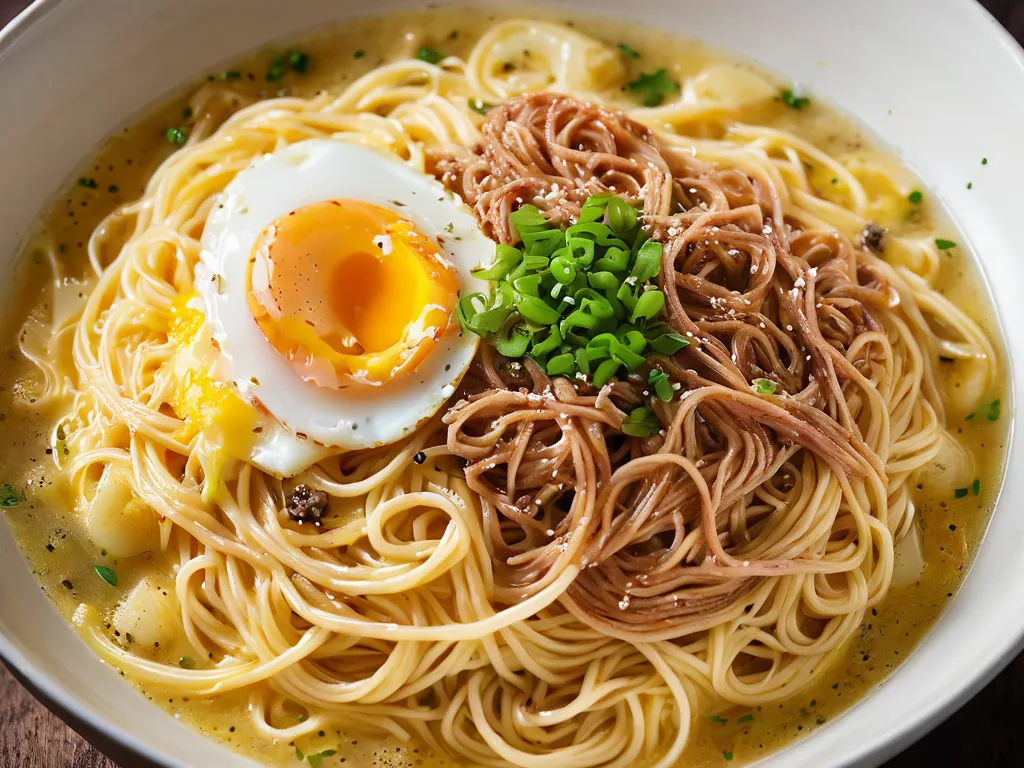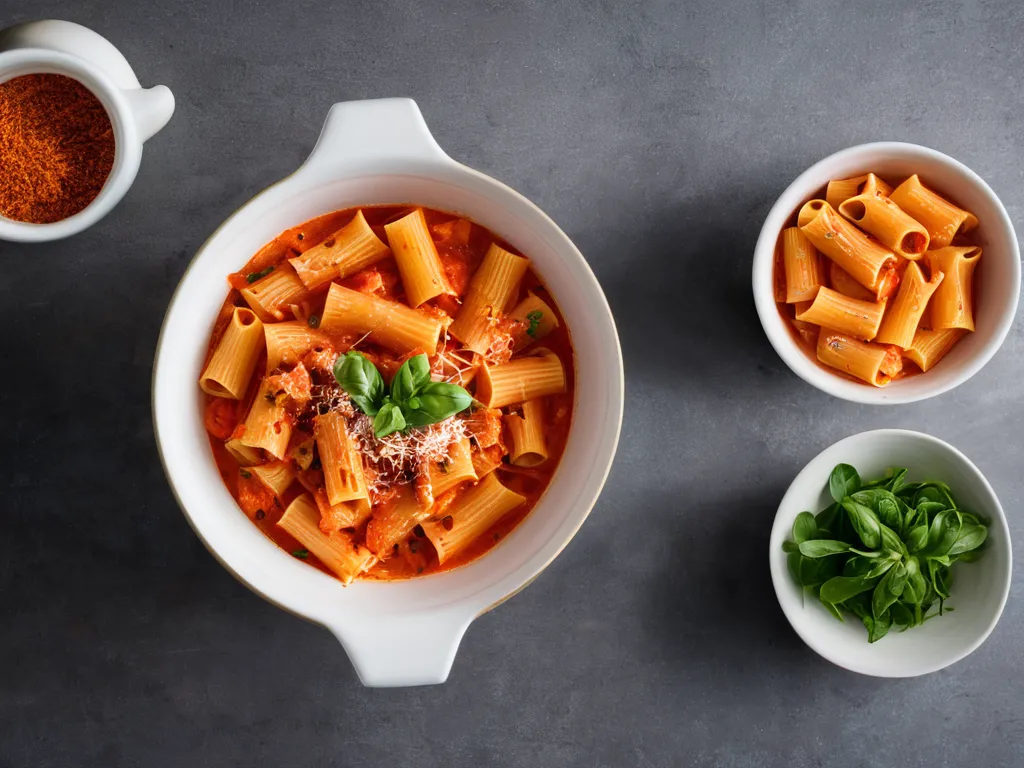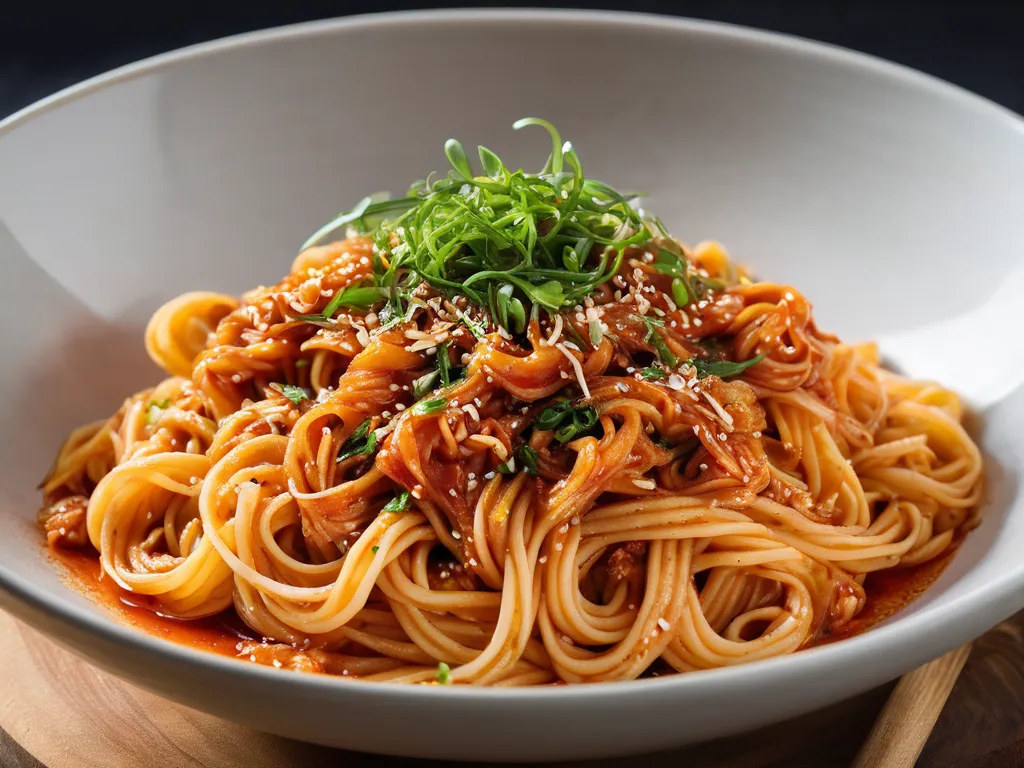
Gochujang pasta is the dish that sold out a Korean condiment at grocery stores across the country. In 2023, videos of pasta tossed in a caramelized gochujang butter sauce spread through TikTok and caused a nationwide run on a fermented Korean chili paste that most Americans had never heard of. The reason it went viral was simple: the result is genuinely, surprisingly delicious — a 15-minute weeknight dinner with a flavor complexity that you wouldn’t believe came from five ingredients.
TL;DR
Cook 8 oz rigatoni, reserve pasta water. Melt butter, bloom garlic 30 seconds, then stir gochujang + brown sugar constantly over medium heat for exactly 2 minutes until it turns deep brick-red and glossy. Add pasta, soy sauce, and pasta water; toss until coated. The 2-minute caramelization step is non-negotiable — it’s what transforms sharp fermented paste into a complex, sweet-spicy-umami glaze. Everything else is straightforward.
What Is Gochujang (and Why It’s Not Just Hot Sauce)
Gochujang is a fermented Korean chili paste made from gochugaru (Korean red chili powder), glutinous rice, meju garu (powdered fermented soybeans), and salt. It’s been central to Korean cooking since at least the 18th century — cookbooks from 1765 mention Sunchang County as the premium source — and traditionally fermented for months to years in earthenware jars called onggi on outdoor platforms.
The flavor is fundamentally different from Western hot sauces like sriracha or Tabasco:
- Sriracha is vinegar-based, thin, and delivers sharp, immediate heat followed by garlic.
- Tabasco is vinegar-based with a narrow, peppery heat profile.
- Gochujang is fermented, sweet, umami-rich, and thick. The heat is slower-building and softer because the sweetness from fermented rice and the protein-breakdown products from fermented soybeans cushion the capsaicin.
On the Scoville scale, gochujang registers 1,000–2,500 SHU — roughly the same as sriracha — but it feels noticeably milder in practice because of its composition. Think of it the way tomato paste relates to ketchup: concentrated, fermented, complex, and transformative when cooked in fat.
Where to Buy It
Gochujang is no longer a specialty-store item. Here’s where to find it:
Trader Joe’s sells a 7.05-oz tub for $1.99 — the most accessible option, widely praised as balanced and genuinely good quality. This is what most people use for this recipe.
Asian grocery stores (H Mart, 99 Ranch, Mitsuwa) carry 1–4 lb containers under brands like CJ Haechandle, Chung Jung One, and Sempio. Better value if you plan to use it regularly beyond this recipe.
Mainstream grocery stores — Whole Foods, Target, Kroger, and most large supermarkets now stock it in the international or Asian foods aisle.
Amazon carries all major brands, usually in 1-lb tubs.
One important distinction: gochujang sold in a tube (labeled “gochujang sauce”) is pre-diluted and thinner — it works in dressings and marinades but doesn’t caramelize the same way. For this recipe, you want the solid paste in a tub or jar. Once opened, it keeps in the refrigerator for 6–12 months.
The Caramelization Step — Why It Matters
The technique that made this recipe go viral is caramelizing the gochujang in butter and brown sugar before any pasta gets involved. This is the difference between a sharp, oddly-fermented pasta sauce and a complex, addictive glaze.
Here’s what happens during those 2 minutes:
Raw gochujang has an acerbic, fermented sharpness — fine in kimchi and bibimbap, but jarring when you taste it straight on pasta. When you heat it in butter over medium heat, several things happen simultaneously. The sugars in the gochujang (from the fermented rice) and the added brown sugar caramelize, deepening in color and developing new flavor compounds. The fermented funk mellows as volatile acids cook off. The paste thickens and becomes glossy as moisture evaporates. The butter emulsifies into the paste rather than sitting separately on top.
The visual cue is reliable: the paste goes from bright red and matte to deep brick-red and glossy, with a faintly sweet, caramelized smell replacing the sharp fermented smell. That’s your signal it’s done — two minutes of constant stirring over medium heat.
What can go wrong: Too-high heat burns the sugar before the gochujang develops (you’ll see the edges of the skillet darkening and smoking). Too-low heat and it just warms through without caramelizing. Medium heat, constant stirring, 2 minutes.
Pasta Shape Guide
The sauce is thick, clingy, and glossy — it needs texture to grab onto.
Best shapes:
- Rigatoni — wide tubes with ridges; the sauce fills the tube and grips the ridges. The top choice.
- Penne rigate — similar to rigatoni, smaller; the ridged exterior works well.
- Shells (conchiglie) — the curved interior catches sauce; visually striking with the red coating.
- Fusilli — the spiral shape traps sauce in every coil.
Avoid:
- Spaghetti, linguine, fettuccine — smooth surfaces and long strands let the thick sauce clump together rather than coat evenly. You end up with some noodles heavily sauced and others bare.
- Angel hair — too thin; it overcooks in the tossing step.
Adjusting the Heat Level
One tablespoon of gochujang gives a mild, background warmth that most people find comfortable. Two tablespoons is moderately spicy — sustained heat but not aggressive. The recipe uses two tablespoons as the baseline.
To reduce heat: Use 1 tablespoon gochujang and increase butter by ½ tablespoon to maintain sauce volume. The caramelization still happens; the heat is noticeably gentler. Adding ¼ cup cream (see variations below) further tames the burn.
To increase heat: Add ¼ teaspoon gochugaru (Korean red chili flakes, available wherever gochujang is sold) when you add the gochujang to the skillet. Alternatively, finish the dish with a few drops of sriracha or a pinch of cayenne. Some brands of gochujang run hotter than others — CJ Haechandle is consistently mid-level heat; Sunchang brands vary but tend spicier.
5 Variations Worth Trying
Creamy Gochujang Pasta
After the gochujang caramelizes, add ¼ cup heavy cream to the skillet before the pasta. Stir to combine and let it bubble for 30–45 seconds into a rosé-orange sauce. Add pasta directly — no pasta water needed in this version; the cream provides the body. The cream tames heat significantly (dairy fat binds capsaicin) and turns the texture velvety. This variation is arguably more popular than the original.
Gochujang Butter Pasta (Butter-Forward, No Sugar)
Increase butter to 3 tablespoons and omit the brown sugar. Without the sugar, the caramelization is lighter — the sauce is buttery and savory rather than sweet-spicy-umami. Less complex than the original but more familiar-tasting. Good entry point for anyone skeptical of sweet heat.
Gochujang Tuna Pasta
Add one drained 5-oz can of good tuna (oil-packed, flaked) to the skillet when you add the pasta. The tuna absorbs the gochujang glaze and adds protein without requiring additional cooking time. Finish with a squeeze of lemon juice to balance the richness. This becomes a complete meal — protein, carbs, fat — in under 20 minutes from a pantry you already have.
Gochujang Shrimp Pasta
Season 8 oz of peeled shrimp with salt and a pinch of garlic powder. Cook them in the skillet in 1 tablespoon butter over high heat before making the sauce — 90 seconds per side until pink, then remove. Make the gochujang sauce in the same pan (the shrimp fond adds flavor), add pasta, and return the shrimp at the end. The sweet-spicy sauce pairs naturally with shrimp’s mild sweetness.
Gochujang Caramelized Onion Pasta
Add ½ cup thinly sliced onion to the butter before the garlic, and cook over low heat for 20–25 minutes until deeply caramelized and sweet. Then add garlic, gochujang, and brown sugar, and proceed as directed. The caramelized onions add a jammy sweetness that doubles down on the dish’s sweet-umami profile. Takes longer but produces a notably richer result.
Make It a Full Meal
The basic recipe is vegetarian and makes a solid side or light dinner. To make it more substantial:
Protein additions:
- Soft-boiled or fried egg on top — the runny yolk becomes part of the sauce when broken
- Tuna (canned, oil-packed) — stirs directly into the sauce
- Shrimp — cooked separately in the skillet before the sauce, returned at the end
- Rotisserie chicken, shredded — add when tossing the pasta
Vegetable additions:
- Baby spinach (add by the handful when tossing — it wilts immediately into the sauce)
- Shiitake mushrooms (sauté in the skillet in butter before making the sauce; they absorb the gochujang flavor)
- Bok choy, halved and seared (adds a slight bitterness that cuts the sweetness)
- Frozen edamame, thawed and shelled (no cooking needed; add with the pasta)
Garnish upgrades:
- Furikake (Japanese seasoning blend of sesame, seaweed, and dried fish) instead of plain sesame seeds
- Grated parmesan — sounds wrong, works surprisingly well; the umami compounds in parmesan complement gochujang’s fermented depth
- Toasted nori strips — crumble over the top before serving for a sea-flavor accent
Why It Broke the Internet
Three things aligned:
The visual. Gochujang caramelizes into a deep, glossy red-brown coating that makes pasta look like nothing in Italian cooking. The color is striking and completely unlike what Westerners expect on pasta — it stops scrollers mid-feed.
The novelty. Korean chili paste on pasta sounds wrong until you taste it. That cognitive friction — “this shouldn’t work, but it does” — is exactly the kind of thing TikTok thrives on. The concept feels counterintuitive enough to share and surprising enough to validate.
The accessibility. Five ingredients, 15 minutes, one skillet. No technique beyond “stir for 2 minutes.” Mob Kitchen’s sausage gochujang rigatoni was one of the most shared recipes of 2023, and the simpler butter-only version spread from there. When a recipe is fast enough to try immediately after watching a video, it gets made — and then shared again.
The ripple effects were real: gochujang sold out at multiple grocery chains in 2023. People who had never been to an Asian grocery store were suddenly looking up what aisle carries it. The trend accelerated the mainstream adoption of Korean ingredients in American home cooking by at least a few years.
Related Pasta Recipes
If you’re building a weeknight pasta rotation, these are worth knowing:
- Viral TikTok Baked Feta Pasta — oven-roasted feta with cherry tomatoes, the other viral pasta that broke the internet first (2020)
- Viral TikTok Boursin Pasta — herb cream cheese melted into pasta water, ultra-creamy and similarly fast
- Viral TikTok Chili Oil Noodles — the spicy noodle companion; shares gochujang pasta’s spicy-umami DNA
- Viral TikTok Creamy Lemon Pasta — bright and acid-forward, the flavor opposite of gochujang pasta; a useful one-two punch for the week
- Copycat P.F. Chang’s Dan Dan Noodles — another Asian-inspired pasta that leans into spicy sesame flavors; gochujang pasta fans tend to love this too