


Korean Street Toast (Gilgeori Toast) — The Sweet-Savory Egg Sandwich from Gwangjang Market
Prep time: 10 minutes Cook time: 10 minutes Servings: 2 sandwiches
The viral TikTok Korean street toast recipe, including the one technique most home versions skip: a pinch of sugar sprinkled directly on the egg patty as it cooks.
Gwangjang Market in Seoul has been serving this sandwich since the 1980s. TikTok found it when creators started filming the first bite at a market stall and asking why a $2.50 sandwich with ham, an egg, and white bread tasted better than any breakfast they’d had in years. The answer, it turned out, was one pinch of sugar at exactly the right moment — and a very specific combination of ketchup and mayo on very buttery bread.
The full recipe is on this page, including the sugar technique, why it matters, and what actually goes wrong when you try to make it at home.
The Sugar Technique (Why Everyone Gets This Wrong)
Most recipes describe Korean street toast as an “egg sandwich with cabbage.” That description is accurate and completely misses the point.
The signature of gilgeori toast is the contrast between the savory egg-cabbage patty and a faint sweetness that runs through the whole sandwich — in the egg mixture, in the caramelized surface of the patty, in the ketchup sauce, even in the soft white bread. It doesn’t read as “sweet”; it reads as balanced, in a way that plain egg sandwiches aren’t.
The technique that drives this: sprinkle ¼ teaspoon of granulated sugar directly onto the top of the egg patty about 30 seconds after it goes into the pan, before you flip it. When you flip, the sugar side hits the hot butter and caramelizes in 60–90 seconds — creating a thin, faintly crisp, golden surface on the egg. This is the move. Without it, you have a very good egg sandwich. With it, you have something people film and post about.
The same technique works in a home skillet over medium heat. Use a wide flexible spatula so the flip is confident and the patty doesn’t fold.
The Egg-Cabbage Patty
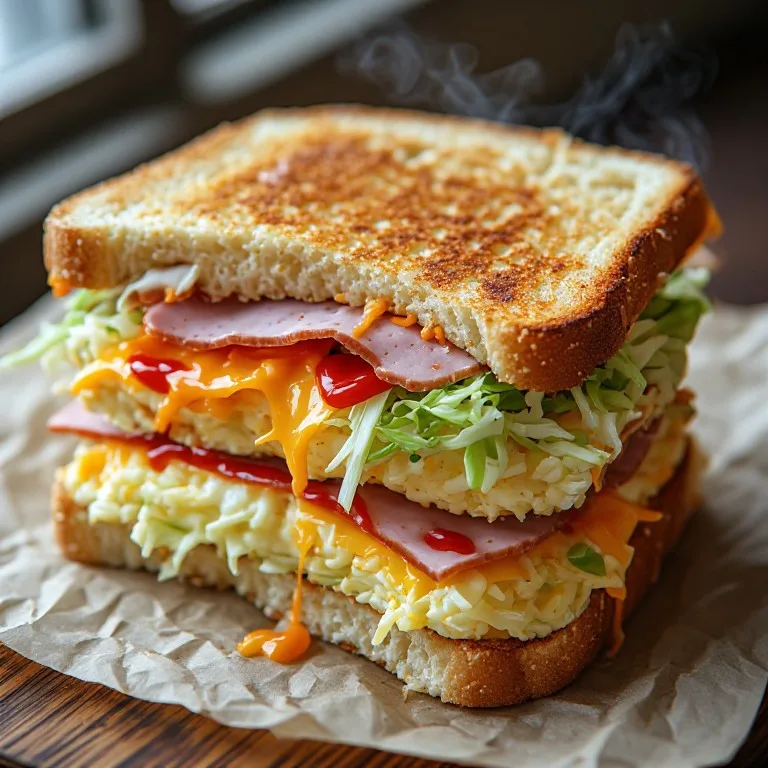
This isn’t an omelette or a fried egg. The cabbage (shredded very thin), grated carrot, and sliced green onions are mixed directly into beaten eggs with a tablespoon of flour and formed into a patty that covers both pieces of bread. The cabbage cooks as the egg sets, so it keeps a slight texture — never completely soft. A tablespoon of flour is the binder that keeps it from falling apart when it flips.
Keep the shred thin. Thick cabbage chunks stick out and make the patty hard to flip cleanly. A mandoline or a patient knife gets you to the right thickness.
Bread and Sauce
Standard commercial white bread — the softer and slightly sweeter the better. Both sides are buttered and griddled in the same pan, so the outside is crisp and golden while the center stays soft enough to compress into the egg patty. Thick brioche or sourdough are too rigid and heavy; they overwhelm the delicate filling.
The sauce is always two separate elements on two separate bread slices: ketchup on the bottom, mayo on the top. Not a mix, not a special sauce, just these two applied independently. The ketchup provides the sweet-acid balance; the mayo provides fat and creaminess. They meet in the middle when the sandwich is assembled.
The Ham and Cheese
One slice of deli ham (thin-cut) and one slice of American or processed cheese, laid on top of the egg patty in the last 30 seconds of cooking so the cheese just begins to melt. This is a sandwich that leans into processed, mild, commercial cheese rather than apologizing for it — American cheese melts completely smooth and adds a dairy richness that sharp cheddar wouldn’t. For a no-meat version, skip the ham and add a thin spread of gochujang to the bread.
The full recipe with all quantities is in the card above.