


Lasagna Soup — All the Comfort of Lasagna in One Pot, No Layering Required
Baked lasagna is one of the great achievements of Italian-American cooking. It’s also a project: the bechamel, the layering, the 45-minute bake, the resting time. Lasagna soup captures every flavor that makes the original great and collapses the process into a single pot and about 40 minutes. TikTok discovered it, realized it was almost offensively easy to make, and turned it into one of the most-searched soup recipes of 2024 and 2025.
Why This Works on TikTok
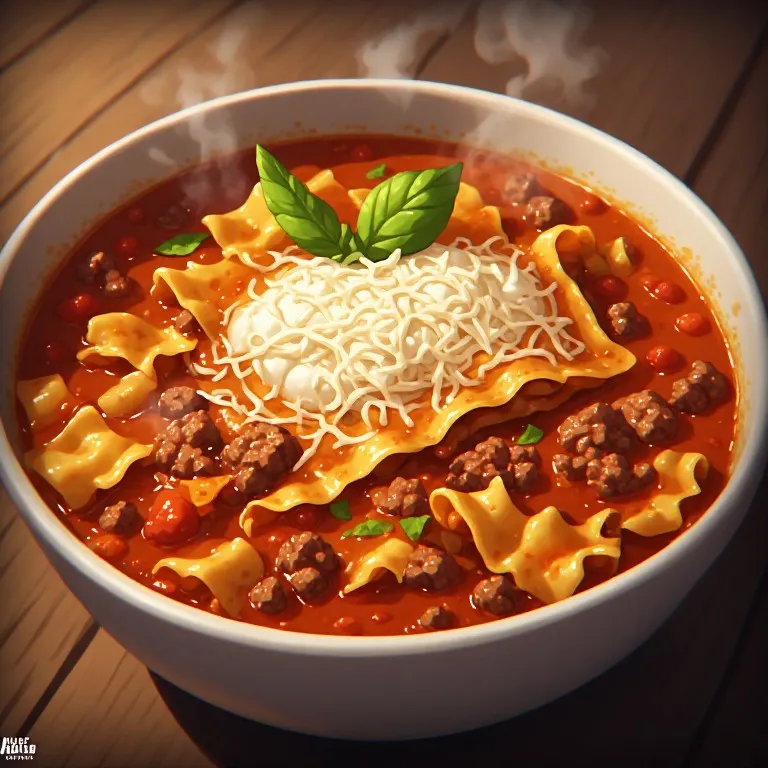
The visual storytelling writes itself. You start with a bubbling pot of deep red tomato broth, drop in broken lasagna noodles, and finish with a dramatic spoonful of ricotta dropped into the bowl while mozzarella melts around it. It looks restaurant-worthy but requires zero technique. The videos that went most viral weren’t from professional chefs — they were from home cooks who couldn’t believe how closely the soup tasted like the real thing, and filmed their reaction to prove it.
The key insight is that lasagna’s flavor isn’t in its structure — it’s in the combination of beefy tomato sauce, herby seasoning, and three-cheese richness. The soup delivers all of that.
Beef and Tomato Broth: The Foundation
The quality of the finished soup lives or dies on the browning of the ground beef. Medium-high heat, no stirring for the first two minutes — let the meat develop a crust against the pot bottom. Those browned bits, called fond, dissolve into the broth and add layers of savory depth that a pale, gray ground beef can’t match.
Tomato paste is the next critical step. It gets cooked directly in the rendered fat, dry-toasting for a full minute before any liquid is added. This drives off the raw, acidic edge and develops a sweet, concentrated tomato intensity. Crushed tomatoes give body; broth adds volume. Together, they make a broth that actually tastes like lasagna sauce.
The Ricotta Strategy
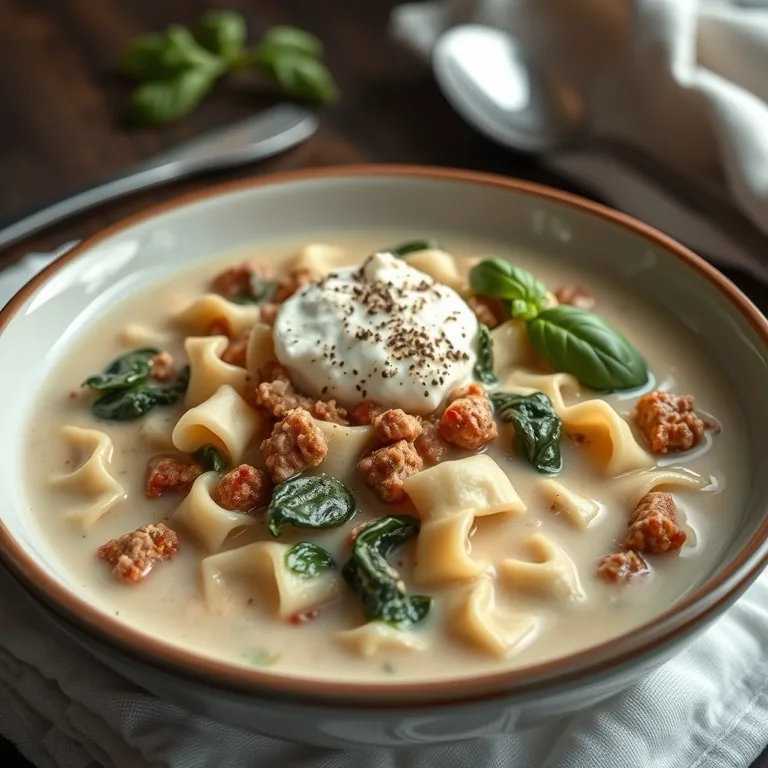
This is the detail that separates good lasagna soup from great lasagna soup. The ricotta cannot go into the pot during cooking — it will break, turn grainy, and disappear into the broth. Instead, it goes into the serving bowl, added in a generous spoonful right before ladling the hot soup over it. The heat melts it at the edges while the center stays thick and creamy. Every bite gets a slightly different ratio of broth to cheese, which is exactly what makes lasagna in layers so satisfying.
Whole-milk ricotta is worth seeking out. The fat content keeps it creamy under heat rather than becoming watery or rubbery. Fresh mozzarella, torn rather than shredded, melts into long, stretchy pulls that are as photogenic as they are delicious.
Getting the Noodles Right
Lasagna noodles take 10 to 12 minutes to cook in the simmering soup. Break them into irregular 2-inch pieces — not perfect squares. The variation in size means some pieces become tender and almost dissolve into the broth while larger ones give you a noodle-forward bite. This textural inconsistency is a feature, not a bug.
One important note: lasagna noodles are thicker than most pasta and will continue to absorb broth even after the heat is off. If you’re not serving immediately, remove the pot from heat while the noodles are still slightly underdone. They’ll finish cooking in the residual heat without becoming waterlogged.
Variations That Work
Sausage Version: Swap the ground beef for Italian sausage, casings removed. Slightly fattier and more aggressively seasoned, it makes the soup feel even more indulgent.
Vegetarian: Skip the meat entirely. Double the tomato paste, add a can of lentils and a diced zucchini with the aromatics. The lentils provide protein and a meaty texture.
Spinach and Mushroom: Add 8 oz sliced cremini mushrooms when you soften the onions. Stir in 3 cups baby spinach right before serving. The mushrooms bring an earthy savoriness that rounds out the tomato.