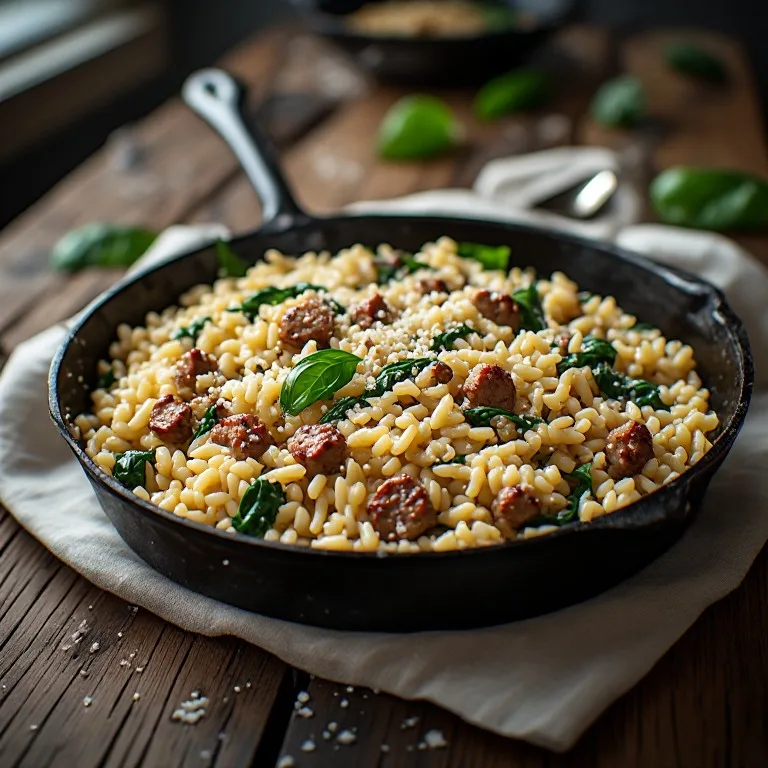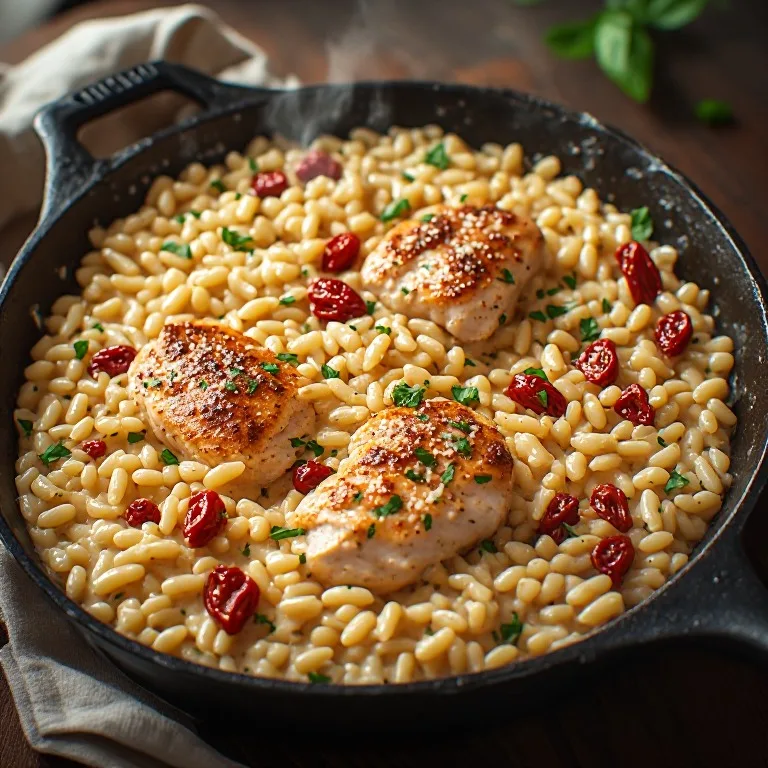



Viral TikTok Marry Me Orzo — One Pan, Every Grain Saturated
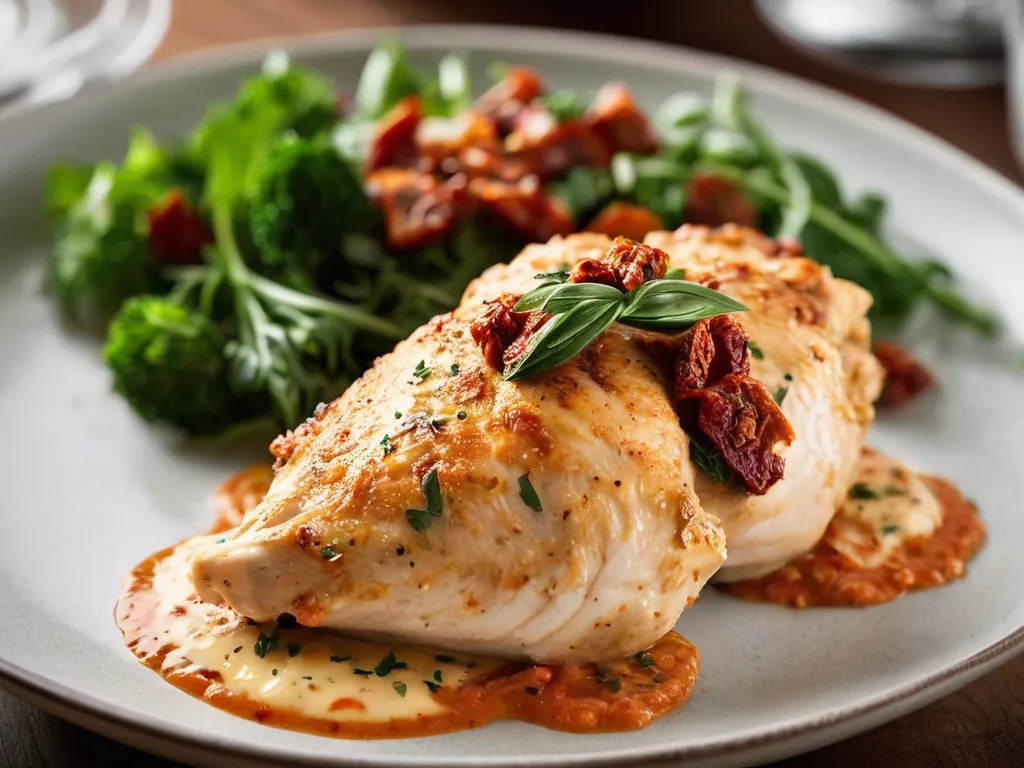
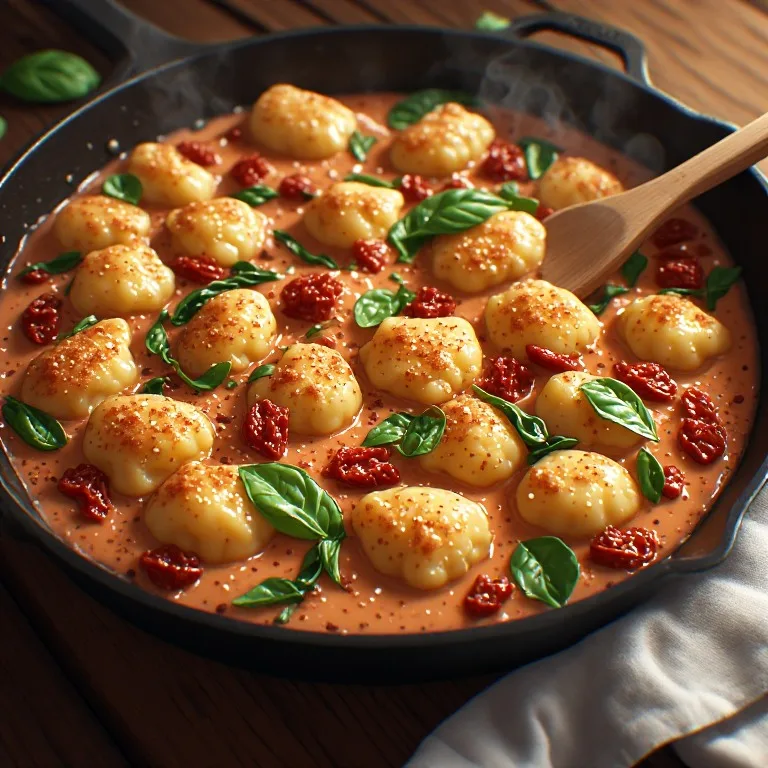
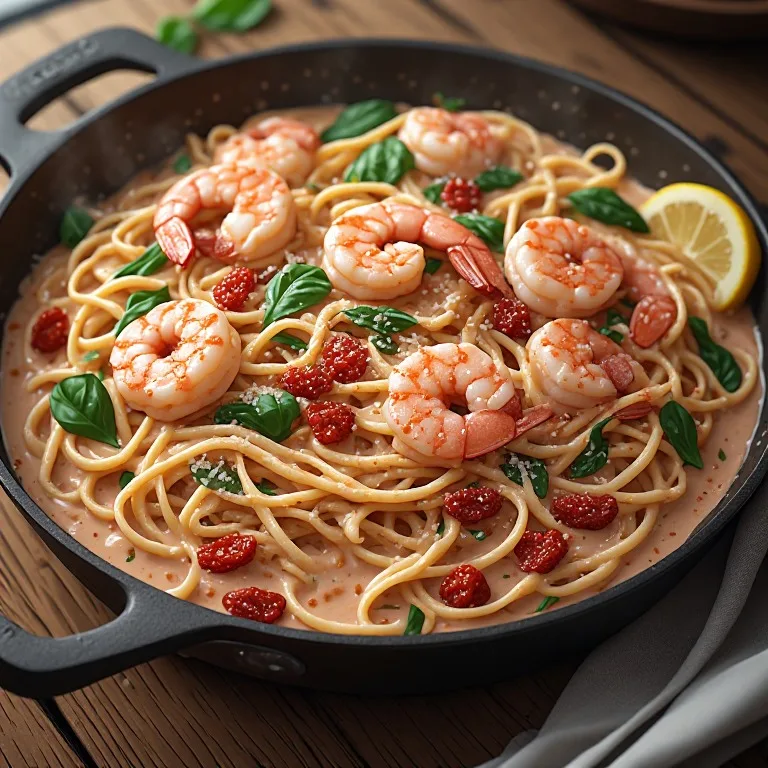
The marry me sauce is simple: sun-dried tomatoes, garlic, cream, Parmesan. It’s been applied to chicken, to gnocchi, to shrimp, to lentils. But the orzo version is the one that changes the actual cooking logic — because here, the pasta doesn’t cook separately. It cooks in the sauce, in the same pan as the chicken, and that changes everything.
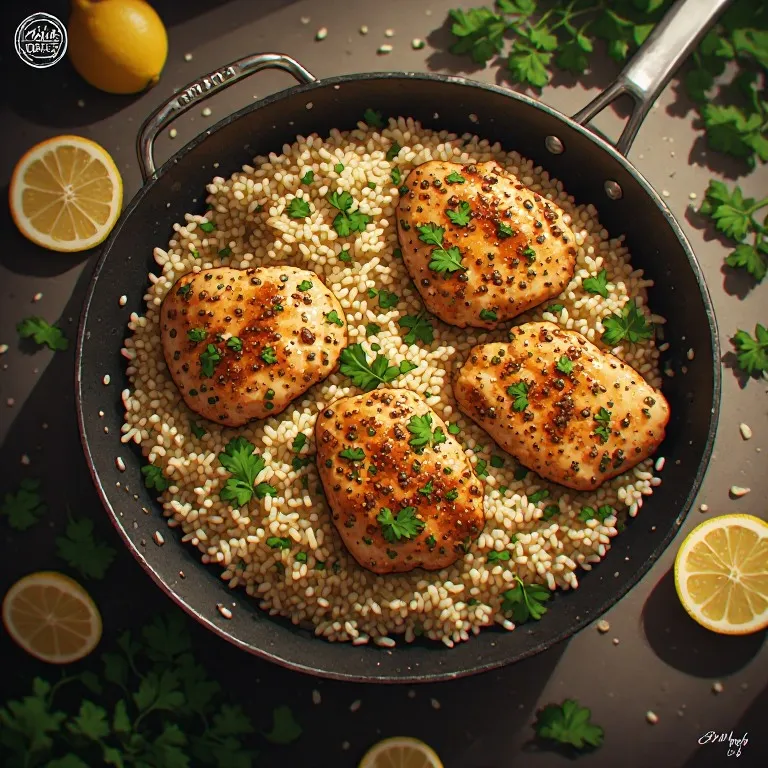
Every grain of orzo absorbs the chicken fond, the sun-dried tomato oil, and the seasoned broth from the very first minute. And as it cooks, the orzo releases starch back into the liquid, thickening the sauce naturally. You get a creamy, cohesive one-pan dinner in 30 minutes with one skillet and zero pasta-boiling water.
The viral TikTok marry me chicken has over 780 million views. The orzo spin-off has racked up tens of millions more on its own — because the “one pan, dump it in, walk away” nature of it is even easier to film, and even easier to make on a weeknight.
Why This Version Is Different From Marry Me Pasta
In Marry Me Pasta, you boil pasta separately in a full pot of salted water, then drain and combine with the sauce. The pasta is cooked in water, not in flavor.
In Marry Me Orzo, you add the dry orzo directly to the pan with the chicken, garlic, sun-dried tomatoes, and broth — then cover and cook it all together. The orzo absorbs the seasoned, concentrated broth as its sole cooking liquid. There’s no drain step. There’s no separate pot.
The tradeoff: you have to stir every few minutes to prevent the starch from sticking to the bottom. But the payoff is orzo that tastes like the sauce, not just orzo sitting inside a sauce.
The Chicken Fond Is the Secret Third Flavor
Most one-pan orzo recipes skip the chicken sear and just poach the chicken in the broth. Don’t do this.
Searing the chicken in olive oil over medium-high heat creates a mahogany layer of browned protein — fond — on the bottom of the pan. When you add the broth, it dissolves into the liquid. That fond flavors every cup of broth that the orzo then absorbs. Skip the sear and you skip the most concentrated layer of flavor in the entire dish.
You don’t need to cook the chicken all the way through during the sear. Get it golden on the outside — 5–6 minutes total — then pull it. It goes back in at the end, when the residual heat and the sauce finish it off.
The Stir Rule — Don’t Skip It
This is the instruction people skip, and it’s why their orzo scorches.
Orzo is releasing starch into a small volume of liquid while sitting on a hot surface. That starch gels against the pan bottom within a few minutes of cooking. If you cover the pan and walk away for 12 minutes, you’ll come back to a creamy top layer and a scorched, stuck bottom layer.
Stir every 3–4 minutes. This does two things: it lifts any building starch layer off the bottom, and it distributes the starch evenly through the liquid — which is exactly what creates the naturally creamy sauce without adding extra cream.
The Off-Heat Rule — Same as Every Marry Me Sauce
This applies to every version: cream and Parmesan go in after you’ve removed the pan from heat.
Heavy cream added to a ripping-hot pan can break — the fat separates and you get a greasy sauce. Parmesan over high direct heat clumps instead of melting smoothly. The pan holds enough residual heat after you pull it off the burner to melt the cheese and warm the cream without either one misbehaving.
Thirty seconds off heat, stir in the spinach, then add the cream and Parmesan. The spinach wilts from the residual warmth. The sauce comes together in another 30 seconds. Then fold the chicken back in and serve.
The Liquid Ratio
Use 1 cup orzo to 2¾ cups broth. That’s slightly more than plain one-pot orzo recipes call for (which use 1:2 or 1:2.5) because the chicken occupies surface area in the pan and the fond on the bottom increases the evaporation rate.
If your orzo absorbs all the liquid before it’s tender (this can happen depending on pan size and heat level), add broth 2 tablespoons at a time. If there’s liquid left when the orzo is done, remove the lid and cook uncovered for 1–2 minutes until it absorbs.
Variations
Vegetarian version: Sear 1 cup of halved cherry tomatoes in the olive oil until they blister — this creates vegetarian fond and bursts of concentrated tomato. Proceed as written. Add a can of drained white beans with the spinach for protein.
Shrimp version: Skip the chicken entirely. Cook the shrimp in the oil (1 lb, C-shape = done, pull at 90 seconds per side), set aside, and return off-heat at the very end. The same off-heat rule from Marry Me Shrimp Pasta applies.
Spicier version: Double the red pepper flakes and add a teaspoon of calabrian chili paste with the garlic.
Coconut milk version: Swap the heavy cream for an equal amount of full-fat canned coconut milk. This is @kalejunkie’s original viral build — it’s slightly lighter and has a hint of sweetness that plays well against the sun-dried tomatoes. Not noticeably coconut-flavored once combined with the Parmesan.
Make it a bake: After adding the cream and cheese (but before folding in the chicken), pour into an oven-safe dish, top with extra Parmesan and a few torn basil leaves, and broil for 3–4 minutes until the top is bubbling and spotted brown.
Serving and Sides
Serve immediately — orzo continues to absorb liquid as it sits and will thicken from saucy to very thick within 10 minutes. Garnish with fresh basil and extra Parmesan.
Pairs with: garlic bread for sauce-soaking, a simple arugula salad with lemon dressing (the bitterness cuts the richness), or roasted broccoli. If you’re skipping bread, the orzo provides enough starch that no side is strictly necessary.
Leftovers
Leftovers keep refrigerated for up to 4 days. The orzo will have absorbed remaining liquid and gelled. To reheat: add 3–4 tablespoons of broth or water per portion, then heat in a pan over medium-low stirring gently, or microwave in 60-second intervals with the added liquid. Do not reheat without added liquid or the orzo will be dry and rubbery.
Not ideal for freezing — cream-based sauces with pasta tend to separate and turn grainy after thawing.
The Bottom Line
Every marry me variation uses the same sauce. But the orzo version is the one where the cooking process itself is different — the pasta cooks in the sauce instead of beside it, and you get a more cohesive, more saturated result. One pan, 30 minutes, no pasta water. That’s why it keeps going viral alongside its chicken and gnocchi cousins, and why it’s worth having in your rotation on its own terms.