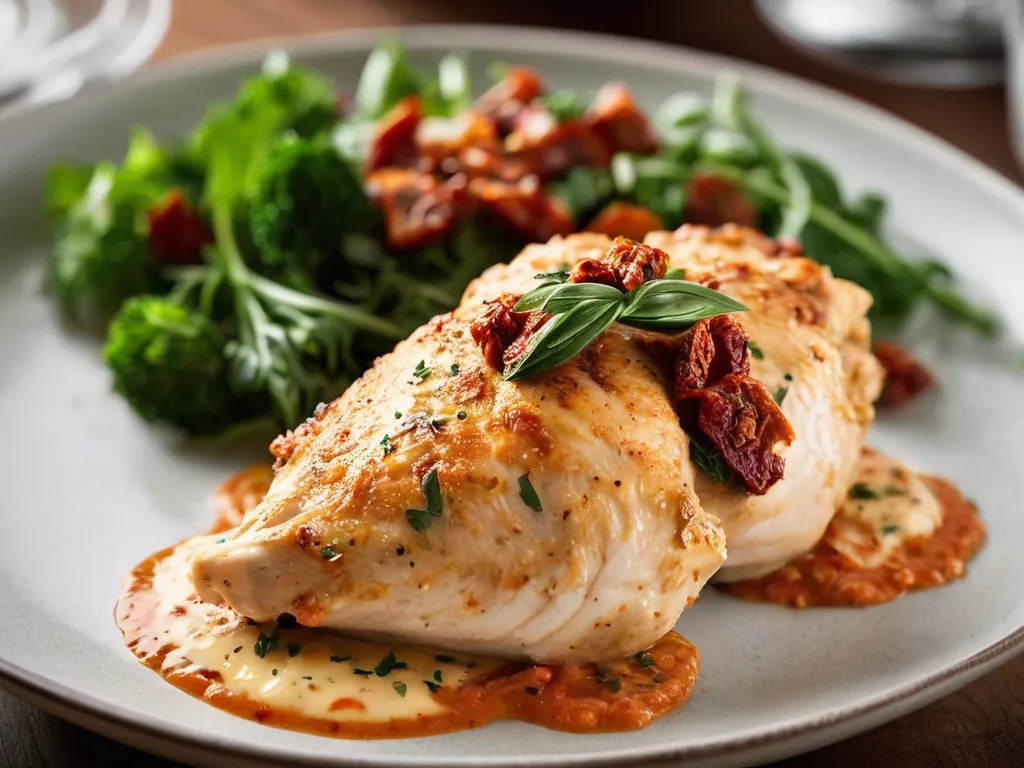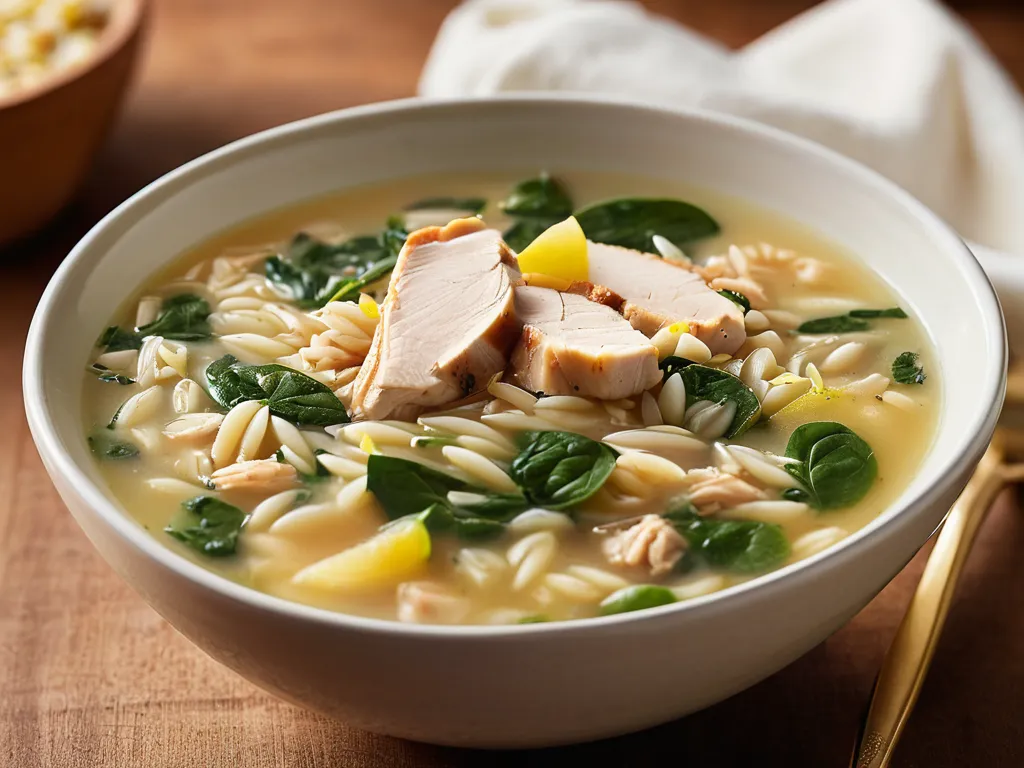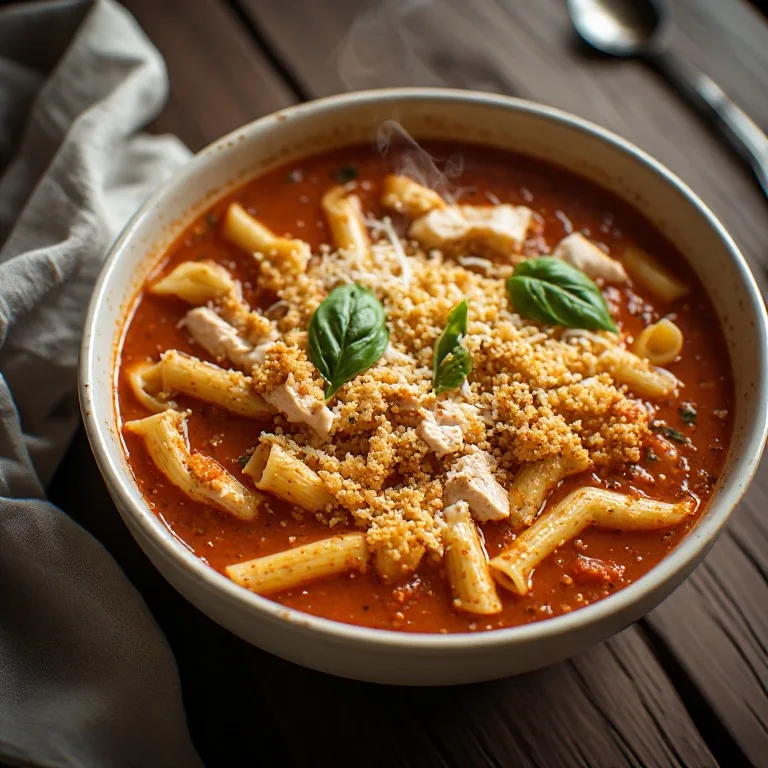



The Marry Me Chicken soup format is the newest spin on one of TikTok’s longest-running culinary obsessions — and it fixes the one thing the original Marry Me Chicken could never do: turn into something you eat by the bowl on a cold night.
The original Marry Me Chicken is a pan sauce that coats whole chicken breasts. Beautiful, but not a soup. This version takes everything that made that dish viral — the sun-dried tomato oil base, the Parmesan cream finish, the garlic-rich broth — and scales the liquid up to five cups, adds shredded chicken instead of whole breasts, and drops a cup of orzo in to cook directly in the broth. Every grain absorbs the tomato-cream broth from the inside out. The soup is pourable, deeply flavored, and genuinely filling in a way the original’s pan sauce format isn’t.
If you want the thick, risotto-style skillet version instead of a brothy bowl, that’s Marry Me Orzo — same flavor family, far less liquid. This page is the ladle-into-a-bowl one.
Why the sun-dried tomato oil is the recipe
Most versions of this soup start with olive oil. That’s fine, but it misses the best move in the entire dish: the oil in a jar of oil-packed sun-dried tomatoes is already infused with months of concentrated tomato flavor. It’s not cooking oil that happens to be near sun-dried tomatoes — it’s a flavor-carrying medium that builds the soup’s base before the onions even go in.
Use two tablespoons of that jar oil to sear the chicken and then cook the aromatics. Keep the rest for finishing — a small drizzle over each bowl just before serving adds a glossy, jammy finish that no extra-virgin olive oil can replicate.
The two-step you can’t skip
After the onion goes soft, the sun-dried tomatoes and garlic cook in that oil for two full minutes — not just until fragrant, but until the tomatoes darken and their edges begin to caramelize into the fat. Then the tomato paste goes in for one more minute. Watch for the paste to shift from bright red to a deeper rust color and start smelling slightly smoky and caramelized rather than raw.
This is the exact same tomato paste darkening step used in bolognese, in arrabbiata, and in every serious Italian-American restaurant sauce. The tin edge of raw tomato paste disappears when it’s cooked in fat over direct heat. Skip this step and the soup tastes like canned tomatoes with cream. Do it properly and it tastes like something that simmered all afternoon.
Orzo timing is everything
Orzo absorbs broth at a higher rate than almost any other small pasta — roughly 1.5 cups of liquid per 1 cup dry in a soup context. In the skillet orzo dish, that absorption is the point (the sauce clings and the whole thing becomes dense). In a soup, it’s a problem if you’re making it to store.
Cook the orzo in the soup for exactly 8 to 9 minutes, stirring every few minutes. Pull it 1 minute early if you prefer firm texture. And if you’re making this for meal prep, cook the orzo separately in salted water, drain it, and serve it per bowl by ladling the soup base over a scoop — store the base and orzo in separate containers. The base keeps 4 days in the fridge; fresh orzo reheats in 60 seconds in the microwave.
Shredded thighs, not breast chunks
Chicken thighs get shredded after searing because the extra fat in the meat keeps the fibers moist through the sear, the resting period, and the return into hot broth. Cubed chicken breast tightens and goes dry under the same conditions. If you prefer breast meat, poach it directly in the simmering broth for 15 minutes rather than searing it — it stays juicier and absorbs more of the sun-dried tomato flavor into the meat itself.
The fastest version of this soup is a rotisserie chicken. Skip the searing step entirely, go straight to the onion, and shred the rotisserie chicken (about 3 cups) to add at the end with the spinach. The broth is slightly lighter without the sear fond, but an extra tablespoon of tomato paste compensates.
The cream and Parmesan finish
Both go in off heat. Cream added to a boiling pot breaks — the fat separates and the soup goes greasy instead of creamy. Parmesan added to very high heat seizes into clumps instead of melting smoothly. Pull the pot completely off the burner, stir in the cream slowly, then add the Parmesan and stir until both are incorporated. The residual heat at 180–190°F melts both ingredients cleanly and the soup comes together in about 30 seconds. This rule holds for every cream-based pasta and soup you’ll make: cream and aged cheese go in last, always off heat.
The bottom line
This soup earns its viral run because it fixes the one thing the original couldn’t do — it turns Marry Me Chicken into something you eat by the bowl on a cold night. Get three things right and it’s foolproof: use the sun-dried tomato jar oil as your cooking fat, darken the tomato paste before the broth goes in, and pull the orzo a minute early so it doesn’t turn pasty. Cook the orzo separately if you’re meal-prepping, and it reheats all week without gelling into a solid.