


The Marry Me Format, Applied to Tofu
The original Marry Me Chicken went viral in 2022 because the format solved a real problem: one pan, under 40 minutes, a sauce so visually appealing and texturally layered that it photographs as well as it tastes. The dish works because every element — sun-dried tomatoes, garlic, cream, Parmesan, red pepper flakes — is already a flavor maximum individually. Together, they produce something that feels restaurant-caliber.
Marry Me Tofu applies the same logic to pressed, cornstarch-coated tofu, and the conversion is nearly seamless. The sauce is unchanged. The searing technique produces a golden crust with the same visual impact as seared chicken. What changes is the tofu prep — pressing and coating — which most cooks skip, and which determines whether the finished dish is crispy and satisfying or soft and underwhelming.
The Two Steps That Determine Everything
Pressing
Extra-firm tofu straight from the package holds between 50 and 70 percent of its weight in water. That water has to come out before the tofu hits the pan. If it doesn’t, here’s the sequence: the surface moisture converts to steam the instant it touches the oil, the steam barrier prevents the pan’s heat from reaching the tofu surface, the tofu surface never dries out enough to brown, and you end up with pale, soft, rubbery results regardless of how hot the pan is or how long you cook it.
Pressing solves this completely. Thirty minutes under weight removes the surface and near-surface moisture. The interior retains some water — that’s fine, it keeps the tofu from drying out inside — but the exterior becomes dry enough to take the cornstarch coating and form a crust.
Use any flat, heavy object: a cast iron pan, a Dutch oven, a weighted cutting board, or a dedicated tofu press. The weight doesn’t need to be massive — it needs to be consistent. Uneven pressure (like a small bowl) creates an uneven press with some parts drier than others. A flat heavy object applied uniformly across the top surface is what you want.
Cornstarch
Cornstarch does two things. First, it absorbs any remaining surface moisture after pressing. Second, it forms a very thin, porous shell on each tofu surface that browns quickly in oil and creates a slight crunch — the same mechanism that makes fried chicken coatings crispy.
Three tablespoons for one 14-oz block is the right ratio. Too little and the surface is still somewhat wet; the coating is too thin to brown before the interior steams. Too much and the tofu tastes chalky and the coating is so thick it breaks off in the pan. Three tablespoons coats all surfaces in a thin dry layer — you can see it visually as a pale, slightly matte coating that doesn’t clump.
Season the cornstarch. Garlic powder, salt, and pepper applied in this step are the only seasoning the tofu itself gets directly. The sauce provides the main flavor, but the coating has to contribute something too. Bland cornstarch on bland tofu tastes exactly like that in the final dish, especially on the surfaces the sauce doesn’t directly touch.
Why the Sauce Works
The core of the Marry Me sauce is a concentrated delivery of glutamates — the compounds responsible for the savory, mouth-coating quality we call umami. Sun-dried tomatoes and aged Parmesan are among the highest naturally occurring sources of glutamates in a standard pantry. Oil-packed sun-dried tomatoes release their flavored oil into the pan, which distributes that concentrated flavor through the fat phase before the cream is ever added.
When heavy cream goes in, it emulsifies with the tomato oil and the broth, picking up everything. The Parmesan, added off heat, melts into the cream and thickens it while adding its own glutamate depth. The result is a sauce that achieves multiple layers of savory flavor from simple ingredients.
This sauce is genuinely neutral to the protein underneath it — that’s why it works on chicken, salmon, lentils, butter beans, and tofu. The assertive flavors stand on their own and don’t require the protein to be distinctive. Tofu’s mild, slightly beany flavor is entirely masked by the sauce, which means the dish’s success depends almost entirely on the sauce quality and the tofu’s textural contribution. The crust gives the tofu a structural role — it’s a vehicle that holds the sauce and provides contrast.
The TikTok Appeal
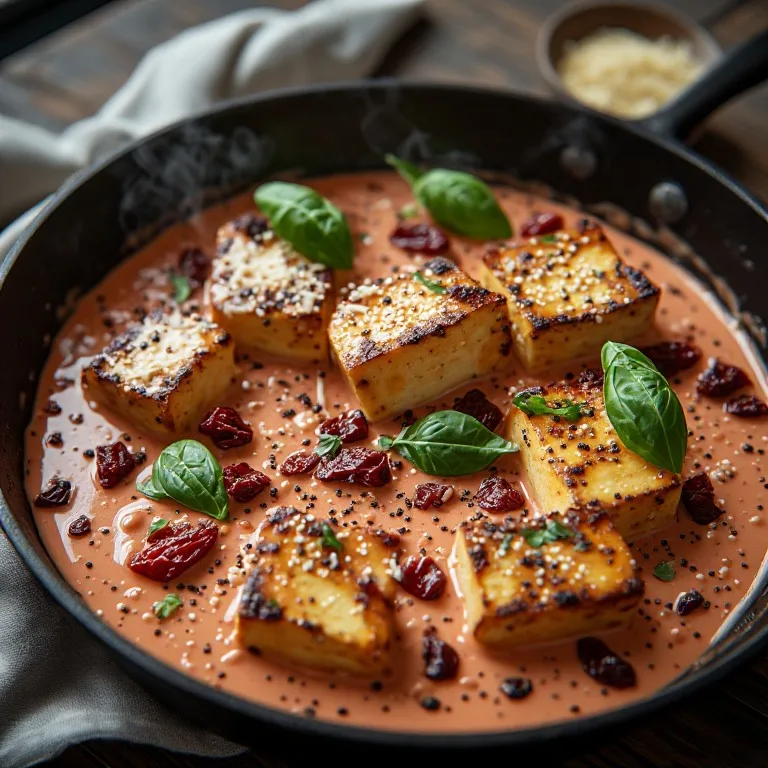
The visual logic of Marry Me Tofu on video is straightforward: golden-brown cubes or slabs of tofu in a deeply orange-red cream sauce with basil floating on top. It photographs dramatically well.
The format also plays perfectly to TikTok’s content mechanics. The pressing step is a visual — weight on a tofu block, liquid spreading out from the paper towels. The cornstarch toss is a sensory detail. The sear is audio — a loud sizzle the moment the tofu hits the pan, then silence as the cook pointedly does not touch it. The sauce building in stages, with each ingredient adding visible color change to the pan, gives editors multiple natural cut points. It’s a thirty-minute recipe that produces eight distinct visually interesting moments.
Vegan Adaptation: What Works, What Doesn’t
The two substitutions — coconut cream for heavy cream, nutritional yeast for Parmesan — both work, but they change the sauce character in ways worth knowing before you start.
Coconut cream produces nearly the same body and viscosity as heavy cream. The flavor is more neutral-sweet rather than the slightly tangy richness of dairy cream. In a sauce this heavily seasoned with garlic and sun-dried tomatoes, the sweetness reads as neutral rather than coconutty. If you want the richest coconut cream, refrigerate the can overnight and use only the solid cream on top, discarding the watery liquid at the bottom.
Nutritional yeast adds umami without the sharp aged-cheese quality of Parmesan. It doesn’t melt in the same way and can make the sauce slightly grainy if you add it while the pan is still very hot. Add it off heat, same as Parmesan, and stir until it dissolves. Two tablespoons is usually enough for comparable depth; three tablespoons brings it closer to the Parmesan level.
Miso paste is the best vegan amplifier. One tablespoon of white miso added with the garlic — pressed against the pan surface for 30 seconds before any liquid goes in — adds a concentrated umami baseline that the nutritional yeast then builds on. The combination produces a sauce that is genuinely close to the dairy original in savory depth, not just adequate.
Four Variations Worth Making
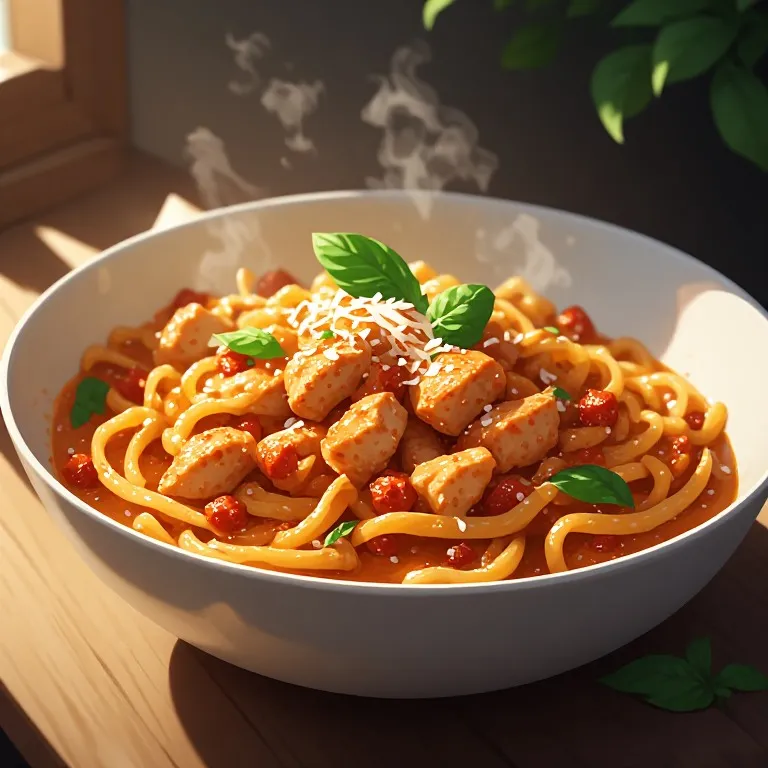
Classic cubed. Cut the tofu into 1-inch cubes instead of slabs. Cubes have more surface area, so the ratio of crispy crust to soft interior is higher. They also tumble more easily into the sauce after searing and absorb it better. Serve over pasta, with the cubes nestled into the noodles.
Panko-crusted version. After the cornstarch coat, press each slab into fine panko breadcrumbs on one side only. Sear panko-side down first for 3 minutes until deeply golden and crunchy, then flip for 1 minute on the cornstarch side. The panko crust holds up longer in the sauce and gives the finished dish a texture contrast the plain cornstarch version doesn’t have. Best with slab-format tofu.
Spinach-artichoke version. Stir 2 cups of baby spinach and ¼ cup of chopped marinated artichoke hearts into the sauce after the cream reduces. This version is particularly good over rigatoni — it reads almost like a spinach-artichoke dip crossed with a Marry Me sauce, and the tofu on top ties the whole thing together into a coherent main course.
Spicy version. Double the red pepper flakes to 1 teaspoon and add a teaspoon of smoked paprika to the cornstarch coating. The heat cuts through the cream’s richness and makes the dish feel more energetic. Finish with a drizzle of chile crisp oil on top instead of olive oil.
Marry Me Tofu vs. the Other Proteins
The sauce is identical across all Marry Me variants. What distinguishes them is how each protein is cooked and how it sits in the sauce:
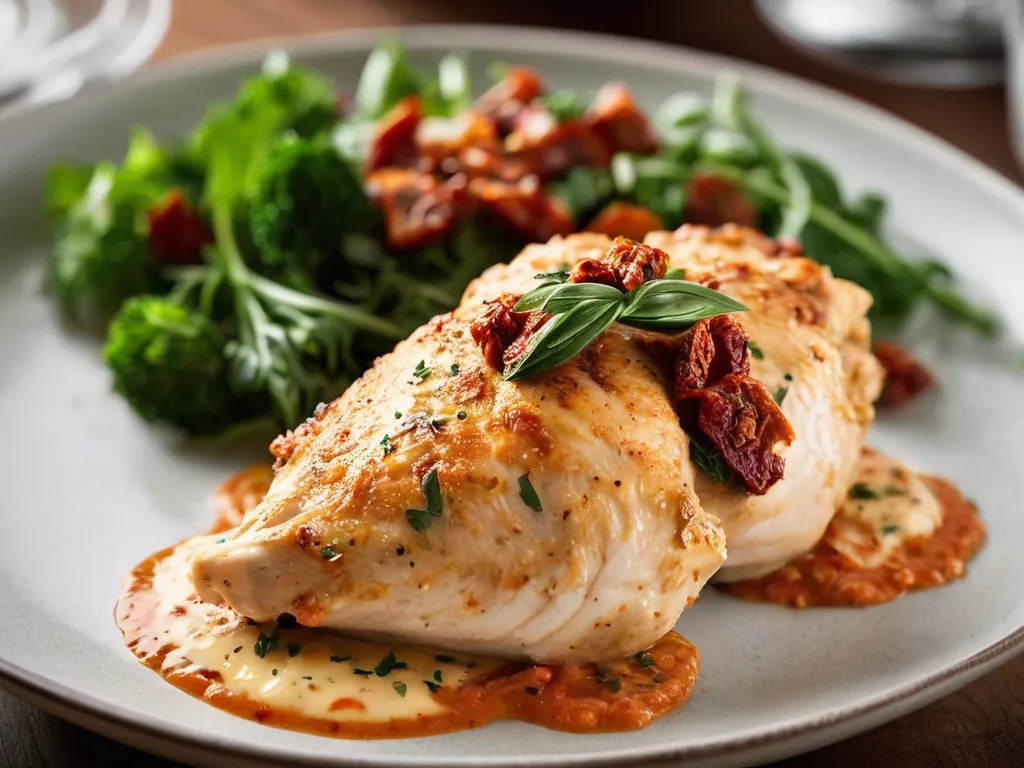
Chicken is pounded flat, seared, and returned to the sauce to finish cooking — the simmering liquid carries heat to the thickest parts. Tofu is fully cooked as soon as the crust is golden, so it returns for flavor absorption only (60 to 90 seconds), not cooking.
Salmon is seared and NOT returned to the sauce — it’s too delicate, it would break apart. Tofu returns to the sauce, which salmon can’t; tofu holds together better.
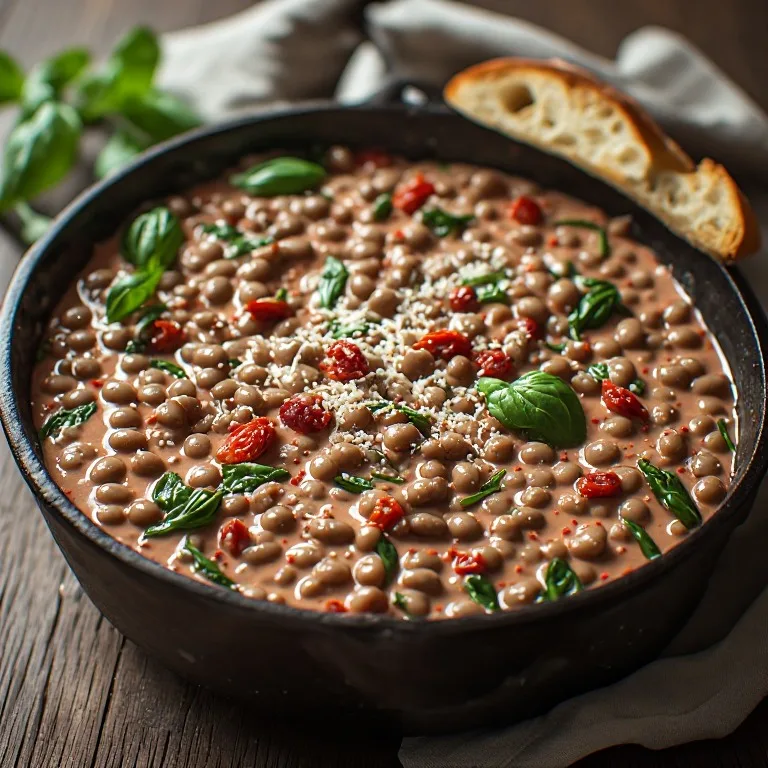
Lentils cook in the sauce from the start — there’s no separate sear. The sauce is built, the lentils simmer in it, and the cream goes in last. Tofu has the opposite structure: sear first, build sauce second, return tofu at the end.
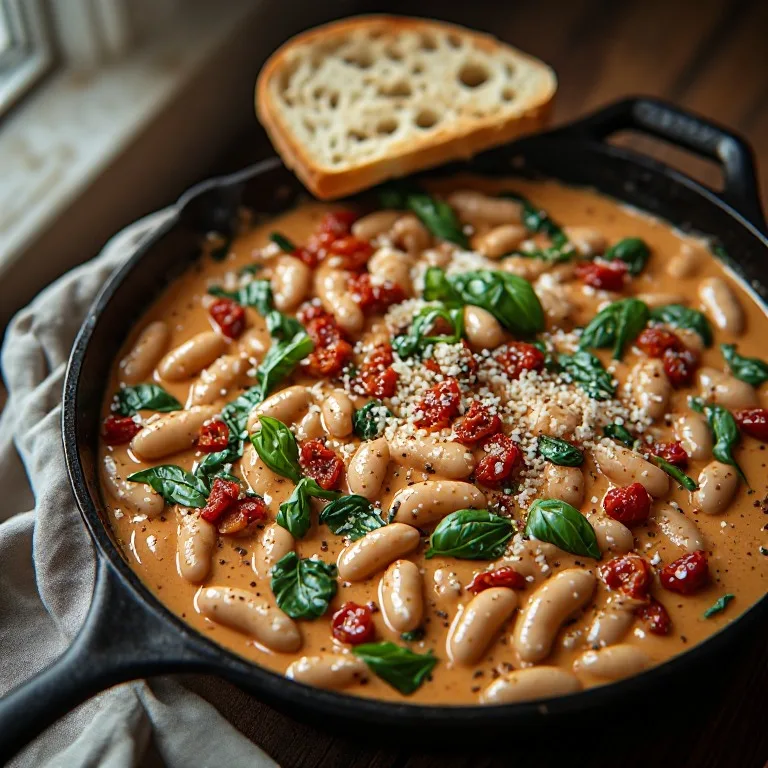
Butter beans and lentils are the closest plant-based alternatives to Marry Me Tofu in flavor profile. They lack the textural contrast of a seared crust, which is what tofu uniquely brings. See Marry Me Butter Beans and Marry Me Lentils for comparison.
The Three Failure Modes
Tofu doesn’t crisp. Water wasn’t fully pressed out, or the pan wasn’t hot enough, or the tofu was moved before it released. All three fixable for next time. If you’re mid-cook and the tofu is pale and soft, increase the heat to high and press each slab down with the spatula more aggressively — you can recover partial crispiness but not a full crust.
Sauce is too thin. The cream didn’t reduce long enough, or you added too much broth while deglazing. Fix: simmer the sauce uncovered over medium-low for another 2 to 3 minutes before adding the tofu. If Parmesan was already added, the sauce will tighten on the low simmer without breaking.
Sauce is gritty or broken. Parmesan was added to an actively simmering pan — the proteins seized before they could dissolve. Immediately pull the pan off heat completely, stir in a splash of room-temperature broth, and gently stir until the sauce comes back together. The texture will be slightly less silky than if it had been added off heat, but it’s recoverable.
Storage
The sauce stores well — refrigerate in an airtight container for up to 3 days. It thickens when cold; reheat over low heat with a splash of broth to return it to pouring consistency.
The seared tofu softens in the refrigerator after about 4 hours in sauce. For leftovers: store the tofu and sauce together (the flavor deepens overnight), reheat gently over low heat, and accept that the crust will be softer than it was fresh. If you want to preserve the crust for leftovers, store tofu and sauce separately and reheat the tofu in a dry skillet for 2 minutes per side before adding the reheated sauce.