Viral TikTok Chocolate Crinkle Cookies
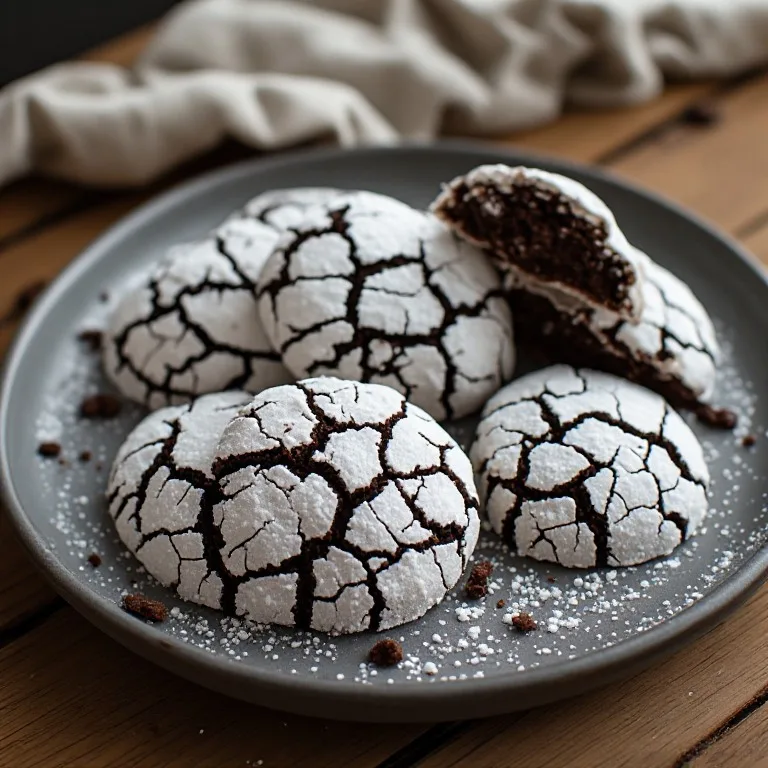
Quick answer: Melt 4 oz unsweetened chocolate; whisk with 1 cup granulated sugar, ½ cup packed brown sugar, ½ cup vegetable oil, 4 large eggs, 2 tsp vanilla. Fold in 2 cups flour, ¼ cup Dutch-process cocoa, 2 tsp baking powder, ½ tsp salt. Chill 2 hours minimum. Roll 1½-tablespoon balls in granulated sugar first, then very heavily in powdered sugar. Bake 350°F for 11 minutes — centers should look underdone. Cool 5 minutes on pan.
Shop the tools
Gear matched to this recipe. These are Amazon affiliate links — we may earn a small commission if you buy, at no extra cost to you.
 Illustrative imageNordic Ware Half Sheet PanCommercial-quality aluminum, bakes dead evenCheck price on Amazon →
 Illustrative imageWire Cooling Rack (Half-Sheet Size)Keeps fried and baked things crisp, never soggyCheck price on Amazon →Cookie ScoopPortions dough into same-size balls so a tray bakes evenlyCheck price on Amazon →
As an Amazon Associate, Copycat Spices earns from qualifying purchases. Product images are generic illustrations, not the exact item listed.
Viral TikTok Chocolate Crinkle Cookies
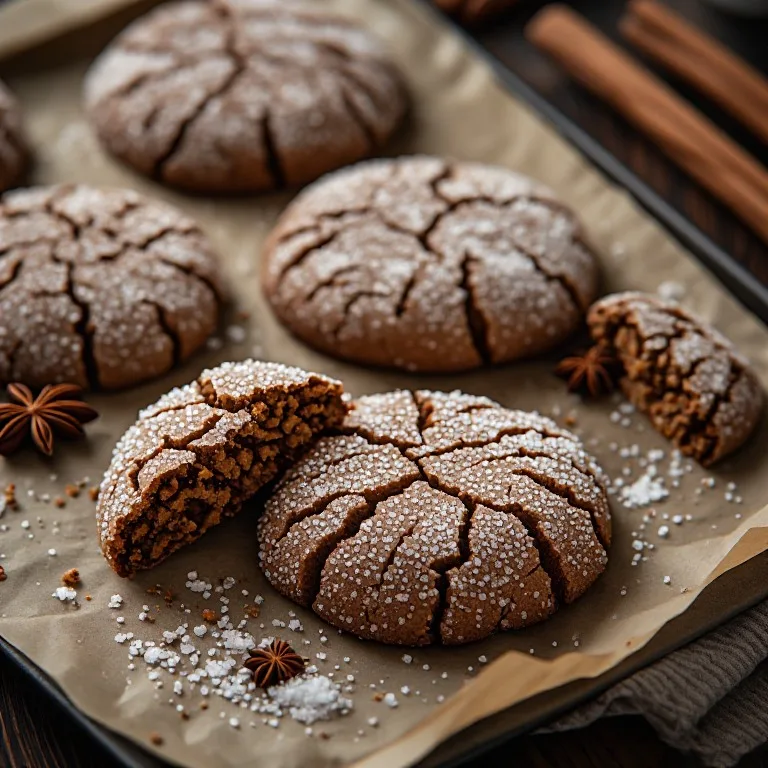
The viral TikTok chocolate crinkle cookies — fudgy dark-chocolate centers under a crackly white powdered-sugar crust. The double-coat trick (granulated sugar first, then powdered) is why every crack stays brilliantly white. From-scratch recipe, makes 36.
Easy
Prep: 25 min
Cook: 11 min
Total: 36 min36 cookies servings
~$4.50/serving
At home~$4.50/serving
vs
Restaurant~$20.25/serving
You save ~78%
The Story Behind the Recipe
Chocolate crinkle cookies trace back to at least the 1950s — they appear in early editions of Joy of Cooking and were popularized through Betty Crocker holiday editions in the 1960s. The name comes from the cracked powdered sugar surface that forms as the cookie expands in the oven, splitting to reveal the dark chocolate beneath. They've been a Christmas cookie-swap staple for 60 years. TikTok rediscovered them hard in the winter of 2020–2021: #chocolatecrinklecookies accumulated hundreds of millions of views as the pandemic holiday baking boom peaked. The ASMR-adjacent tray reveal — matte white balls going in, dramatic dark cracks blooming across each one as they cool — is exactly the satisfying content the platform amplifies. A batch of 36 costs about $5 in ingredients.
The single most-shared TikTok technique is the double coat: roll each ball in granulated sugar first, then heavily in powdered sugar. The granulated layer acts as a moisture barrier — it blocks the cookie's internal moisture from seeping into the powdered sugar coating during baking. Without it, the powdered sugar dissolves into a grayish, matte crust before it can crack, and you lose the dramatic white-on-black-chocolate contrast that makes these cookies look like they came from a specialty chocolatier. The other non-negotiable: pull them while the centers still look underdone. Carryover heat on the hot pan finishes them to fudgy perfection; a cookie that looks fully set in the oven is dry and cakey on the plate.
Nutrition Facts
Per serving (36 cookies servings)Calories128
Total Fat5g
Total Carbs19g
Dietary Fiber1g
Sugars13g
Protein2g
Sodium45mg
* Estimated values based on standard recipe preparation. Actual values may vary.
Ingredients
- Chocolate dough
- Double coating (the viral technique)
Instructions
Pro tip: This recipe tastes even better the next day. The flavors need time to meld together in the fridge.
Storage: Keeps in an airtight container in the fridge for up to 2 weeks. Freezer-friendly for up to 3 months.
Free PDF — instant download. We'll also send new seasonal copycat recipes now and then; unsubscribe anytime. Or just download it →
🎉 Your Halloween Cookbook is ready!
It's free — but if it's worth something to you, you can pay what you want. It keeps the recipes coming.
$
✓ Downloading your free Halloween Cookbook — check your downloads folder. Happy cooking!
Make It Healthier
Love Viral TikTok Chocolate Crinkle Cookies but want a lighter version? Try these simple swaps:
- ✓Use dark (70%+) unsweetened chocolate and Dutch-process cocoa — both deliver deeper chocolate flavor with less sugar than milk chocolate. You can cut the granulated sugar to ¾ cup without changing texture because Dutch-process cocoa is less bitter than natural.
- ✓Replace 3 tablespoons of the ½ cup oil with 3 tablespoons full-fat Greek yogurt — adds a slight tang that balances the sweetness and trims roughly 10 calories and 1g of fat per cookie. The fudgy texture holds because the melted unsweetened chocolate still supplies plenty of cocoa butter; don't swap out more than that or the cookies turn cakey.
- ✓Make them smaller: use 1 tablespoon of dough instead of 1½ tablespoons. You get 48 cookies instead of 36, and each drops from 128 to about 96 calories. A 2-cookie serving is nearly identical in volume.
- ✓Skip the granulated sugar in the coating (just powdered) if you want to reduce the coating sugar — the crinkle effect is slightly less dramatic but still works. The coating sugar contributes only about 1.5g of sugar per cookie.
Frequently Asked Questions
Why do you roll crinkle cookies in granulated sugar before the powdered sugar?
Granulated sugar acts as a moisture barrier between the cookie dough and the powdered sugar coating. Cookie dough contains significant moisture from eggs and fat, and during baking that moisture migrates toward the surface. Without the granulated layer, it reaches the powdered sugar, partially dissolves it, and turns the coating grayish and matte before it can crack cleanly. The granulated crystals block that moisture transfer so the powdered sugar stays brilliantly white while the dark chocolate tears through beneath it. This is the technique credited to America's Test Kitchen and shared widely by Sally's Baking Addiction — it makes a visible, dramatic difference in the final look.
Why didn't my chocolate crinkle cookies crinkle?
There are three common culprits. First, insufficient chilling: the dough needs at least 2 hours in the refrigerator (overnight is better) to firm up enough that the cookies hold their shape before the exterior sets. Warm dough spreads too fast and flattens before cracks can form. Second, too much flour: spoon flour into the measuring cup and level with a knife rather than scooping directly with the cup (scooping compacts the flour, adding up to 30% extra by weight). Third, baking powder that's past its prime — test it by dropping ½ teaspoon into hot water; if it doesn't bubble vigorously, replace it.
How do I make chocolate crinkle cookies fudgy instead of cakey?
The fat source determines texture. Vegetable oil (or melted coconut oil) produces fudgier cookies than butter because oil stays liquid at room temperature and keeps the cookie moist. Melted unsweetened chocolate adds cocoa butter and fat that cold-sets fudgy at room temperature. Recipes that use only cocoa powder (no melted chocolate) tend toward a more cakey texture because there is less fat and no cocoa butter. If your cookies came out cakey: make sure you're using oil (not butter), add 4 oz melted unsweetened chocolate to the dough, pull them from the oven 1–2 minutes earlier than you think, and let them set on the hot pan for the full 5 minutes before moving.
Can I make crinkle cookie dough ahead of time?
Yes — the dough actually improves with time. You can refrigerate it for up to 3 days; the extra chill time deepens the chocolate flavor as the flour hydrates further. You can also freeze portioned, unrolled balls for up to 3 months: freeze on a sheet pan until solid, then transfer to a freezer bag. To bake from frozen: roll frozen balls in granulated and powdered sugar (they'll be harder to coat, so work quickly) and add 2–3 extra minutes to the bake time. Do not freeze balls that have already been coated in powdered sugar — the sugar absorbs moisture in the freezer and turns gray.
What's Dutch-process cocoa and do I need it for crinkle cookies?
Dutch-process cocoa is treated with alkali (potassium carbonate) to neutralize its natural acidity, making it darker in color, less bitter, and more deeply chocolatey-tasting. It's worth using for crinkle cookies because the dark interior of the cookie — the dramatic contrast against the white powdered sugar coating — comes partly from the color of the cocoa. Natural cocoa (like Hershey's classic) is lighter in color and more bitter. Dutched brands available at most grocery stores: Ghirardelli Premium Baking Cocoa, King Arthur Bensdorp, and Droste. If you can only find natural cocoa: use the same amount, but add ½ teaspoon baking soda alongside the baking powder (natural cocoa reacts with baking soda) and expect a slightly lighter interior.
How do I store chocolate crinkle cookies and how long do they last?
At room temperature in an airtight container, crinkle cookies stay fudgy for 5 days. Add a slice of bread to the container — it keeps moisture in the cookies as the bread dries out. In the refrigerator they last up to 10 days but harden; bring to room temperature for 20 minutes before serving. Frozen (in a sealed container or bag), baked crinkle cookies keep for 3 months; thaw at room temperature for 1 hour. Do not store them in an open bowl or with other cookies — the powdered sugar absorbs moisture from the air and other baked goods and turns tacky.
Love this recipe? Share it!
Made it? Buy us a coffee
Every recipe here is free, with no paywalls. If this one was a hit at your table, a small tip keeps new copycats coming.
$
💛 Support checkout is coming soon — the cookbook stays free either way.
Ratings & Reviews
Rate this recipe
Click a star to rate