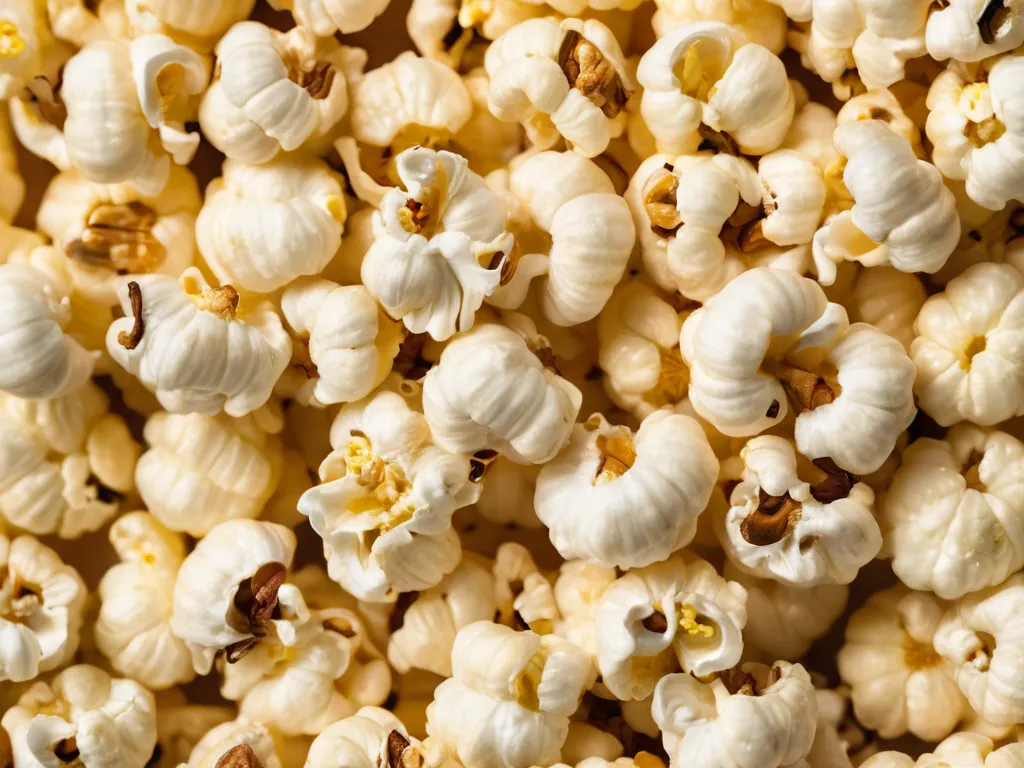
Everyone has had the same experience: you make popcorn at home and it’s fine, but it’s not that. It doesn’t taste like the theater. The kernel is slightly chewy instead of crisp. The seasoning falls to the bowl. The color is pale.
The TikTok videos that went viral in 2022–2023 cracked most of the mystery. But a lot of them got one thing wrong — they focused on clarified butter while glossing over the more important ingredient. The real answer is Flavacol.
What Is Flavacol and Why Does It Matter
Flavacol is a commercial seasoning salt made by Gold Medal Products Co., which has been supplying concession equipment and ingredients to movie theaters for decades. It contains three things: ultra-fine salt crystals processed to create pyramid-shaped flakes (via the Alberger process), artificial butter flavor, and FD&C Yellow 5 and Yellow 6. Those food-safe dyes are what give movie theater popcorn its characteristic golden color.
The physical structure of the salt is what makes Flavacol worth buying. Table salt consists of cubic crystals that are too heavy to stick to popcorn — they slide off and collect at the bottom of the bowl. Flavacol’s pyramid-shaped flakes have a much larger surface area relative to their weight, which means they cling to the oil-coated surface of each kernel. Mixed into the popping oil (not sprinkled on after), the seasoning gets distributed through the steam environment and bonds to every kernel as it pops.
You can buy Flavacol on Amazon for $5–8 for a 32-ounce box. That box will make well over a hundred batches of popcorn. It’s the ingredient that explains why homemade popcorn rarely tastes like the theater — and once you use it, you’ll understand why theaters never stopped using it.
Why Coconut Oil Instead of Vegetable Oil
Most movie theaters pop their corn in refined coconut oil, not vegetable or canola oil. Refined (not virgin) coconut oil has a neutral flavor — no coconut taste — but contributes a richness and mouthfeel that canola oil doesn’t. It also has a high enough smoke point (around 400°F for refined) to handle the popping temperature without burning.
The key word is refined. Virgin coconut oil (which is what most grocery stores stock prominently) tastes like coconut. Refined coconut oil is fully neutral. They’re the same oil with different processing — look for “refined” on the label. Spectrum, LouAna, and other brands sell refined coconut oil near the cooking oils.
Some brands also sell butter-flavored coconut oil specifically for popcorn — this is even closer to what theaters use and skips the clarified butter step entirely.
The Real Theater “Butter” vs. Clarified Butter
The “butter topping” dispensed on movie theater popcorn is not real butter. It is a butter-flavored oil — typically made from partially hydrogenated soybean oil or vegetable oil with butter flavoring and yellow coloring. The reason is practical: real melted butter contains water and milk solids, which make popcorn soggy within a few minutes. Butter-flavored oil is almost pure fat, so it coats kernels without introducing moisture.
For home cooking, clarified butter or ghee is the best substitute. When you clarify butter, you remove the milk solids and most of the water by melting it gently and either skimming or straining. What remains is essentially pure butterfat — it behaves like butter-flavored oil in that it won’t make popcorn soggy but tastes far better than commercial artificial topping.
If you have a jar of ghee in the refrigerator, it’s already clarified butter. Melt it and drizzle.
The Three Technique Details That Change Everything
Add Flavacol to oil before popping, not after. This is the single most important technique point. When Flavacol is mixed into the oil at the start, the fine-flake salt and butter flavor coat every kernel through the steam environment as the kernels pop. When you sprinkle seasoning on after, gravity wins — most of it ends up at the bowl bottom.
Pull off heat for 30 seconds before adding kernels. After your test kernels pop and you know the oil is hot enough, remove the pot from the heat for half a minute before adding the main batch. This equalizes the oil temperature so all the kernels heat together and pop in a tight window instead of a long drawn-out stagger (which gives some kernels time to burn).
Crack the lid during popping. Steam is the enemy of crisp popcorn. A fully sealed lid traps steam and makes popcorn chewy. Crack the lid slightly — just enough to let moisture escape. This one change noticeably improves texture.
DIY Flavacol Substitute
If you can’t source Flavacol before movie night, this gets close:
- ½ teaspoon fine sea salt (NOT table salt, NOT kosher salt — you need something fine enough to stick)
- ¼ teaspoon nutritional yeast (adds umami depth and a faint cheesy quality)
- 1 small pinch of turmeric (for color; it’s nearly flavorless at this quantity)
Mix all three together and add to the oil before popping, same as you would Flavacol. The result won’t have the artificial butter flavor that Flavacol carries, but the fine-grain salt and nutritional yeast approximate the adherence and umami. It’s a reasonable substitute for one batch — but genuinely, the Flavacol is worth having.
Cost Breakdown
| Ingredient | Approx. Cost |
|---|---|
| ½ cup popcorn kernels | $0.40–0.60 |
| 3 tbsp refined coconut oil | $0.50–0.80 |
| ¾ tsp Flavacol (from $6 box) | $0.05 |
| 2 tbsp clarified butter / ghee | $0.60–1.00 |
| Total (4 servings, 16 cups) | ~$1.55–2.45 |
| Per 4-cup serving | ~$0.40–0.60 |
A large movie theater popcorn typically costs $9–14. A batch at home that produces more popcorn than most large buckets costs under $2.50 total.
Variations
White cheddar popcorn. Skip the Flavacol; pop in refined coconut oil. After popping, melt 2 tablespoons of butter normally and drizzle over the popcorn. Immediately dust with 3 tablespoons of white cheddar powder (available online or in restaurant supply stores) and 1 teaspoon of fine sea salt. Toss to coat. The cheddar powder sticks to the butter coating.
Kettle corn. Use 3 tablespoons vegetable oil (neutral for kettle corn). Add 3 tablespoons sugar and ½ teaspoon fine salt to the oil; let sugar dissolve, then add kernels. Pop as normal, shaking frequently. The caramelizing sugar creates a sweet-salty glaze. Remove from heat the moment popping slows — the sugar burns fast.
Cinnamon sugar. Pop in refined coconut oil with no Flavacol. After popping, drizzle with 1 tablespoon melted butter and toss with 2 tablespoons sugar + 1 teaspoon cinnamon + ¼ teaspoon fine salt.
Spicy sriracha lime. Pop with Flavacol in coconut oil. After popping, drizzle with 1 tablespoon melted butter + ½ tablespoon sriracha + 1 teaspoon lime juice. Toss. The fat from the butter carries the sriracha flavor across every kernel; the lime juice adds brightness. The acid content means this one gets eaten fast — it gets soggy after 15 minutes.
Storage
Movie theater popcorn does not store well. The Flavacol and coconut oil coating starts to firm up as the popcorn cools, and the texture is noticeably worse after the first 20–30 minutes. This is best made immediately before serving — the 10-minute prep and cook time is fast enough that there’s no reason to make it ahead.
If you have leftovers, store in a loosely sealed paper bag (not airtight plastic, which traps moisture). Reheat in a single layer on a baking sheet at 300°F for 4–5 minutes to restore some crispness. It won’t be as good as fresh, but it’s better than cold.
Movie Night Snacks That Go With This
- Viral TikTok Sheet Pan Nachos — another crowd-scale snack built for sharing; pairs well with movie popcorn as a full spread
- Viral TikTok Hot Honey Pizza — movie night pizza that comes together in under 20 minutes, good alongside a bowl of popcorn
- Viral TikTok Crack Broccoli — the vegetable side of the snack table; same addictive quality, completely different format
- Viral TikTok Crispy Chickpeas — another crunchy movie-night snack, naturally gluten-free and higher protein than popcorn