
Pumpkin dump cake is the dessert that resets every September, and the reason it has been reposted across TikTok every fall for years running is not that it is clever — it is that it looks like it should not work, then produces something genuinely good when you follow one rule: do not stir it.
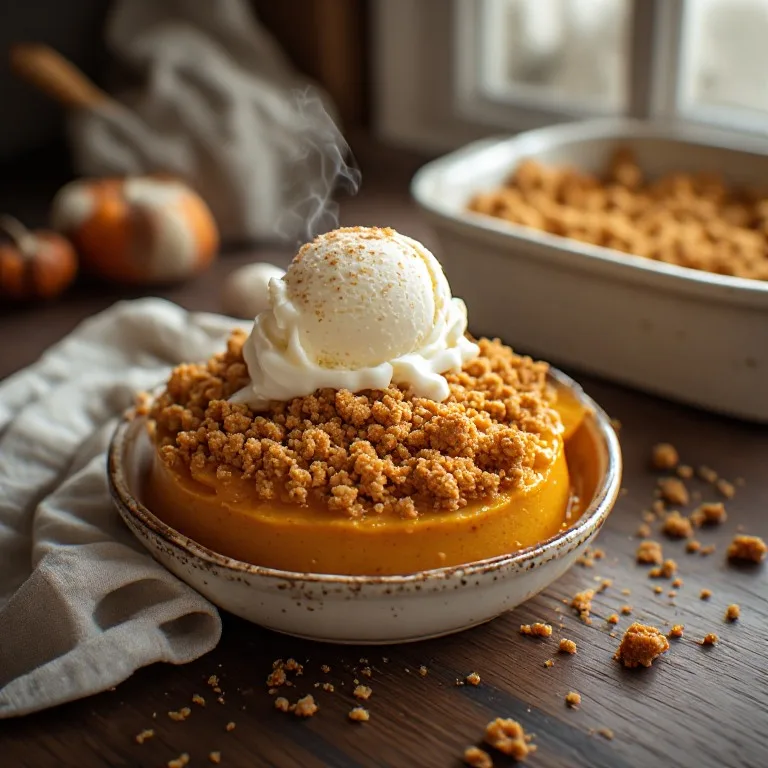
The concept is layered simplicity. The bottom is pumpkin pie filling: pumpkin puree, evaporated milk, eggs, sugar, and pumpkin pie spice whisked into a smooth custard and poured into a greased pan. On top of that goes an entire box of dry yellow cake mix, distributed evenly but not mixed in. On top of that, a full cup of melted butter poured across the surface until every visible speck of powder is covered. Bake at 350°F for about an hour and you get two completely distinct textures in one pan: a silky, set pumpkin custard on the bottom and a golden, sandy, streusel-like crumble on top. That two-layer cross-section — pull a serving and it shows a sharp horizontal band of amber crumble sitting cleanly on orange custard — is the reveal shot.
Why you don’t stir it (and what happens if you do)
The no-stir rule is counterintuitive because every baking instinct says to combine wet and dry ingredients. Here, that instinct is exactly wrong.
The pumpkin custard layer is wet — it has the same moisture content as a pumpkin pie filling, which is mostly liquid. The dry cake mix is porous. The moment the two contact each other, the cake mix starts absorbing the custard. If you stir once, the dry powder fully hydrates in seconds: it dissolves into the liquid, the two layers merge, and you have a uniform wet batter with no intact texture separation. That batter bakes into a dense, uniform cake — not bad, but not what you were trying to make.
If you don’t stir, a moisture boundary forms. The cake mix on the bottom of the dry layer absorbs a small amount of custard moisture (this is what causes the slight binding between the two layers in the finished dessert), but the majority of the dry mix stays dry. The melted butter poured from above hydrates the top of the dry layer only, and the butter has far less water than the custard — so the cake mix absorbs it slowly, puffs with the oven heat, and bakes into a crunchy, sandy streusel texture. Meanwhile the custard below cooks like a pumpkin pie: the eggs bind the milk proteins, the sugars caramelize slightly at the edges, and the whole layer sets firm and silky.
Two layers, one pan, one rule.
The butter coverage problem
Most people who end up with white powdery patches in the topping used too little butter or didn’t spread it far enough.
The standard recipe calls for ½ cup of butter. That works for a classic dump cake (cherry pie filling + pineapple) because the fruit layer releases steam during baking that helps hydrate the bottom of the cake mix. Pumpkin custard releases much less surface steam — the eggs bind the liquid — so the only hydration the cake mix gets from below is minimal. The butter from above is doing nearly all the work.
One cup of butter for a 9×13 pan is the correct amount. Pour it slowly — hold the measuring cup 6 inches above the surface and move it back and forth like painting a fence. Every visible speck of cake mix should look damp when you’re done. If you see white patches, those areas will not brown in the oven. A pastry brush or the back of a spoon can push butter into corners and edges.
The two textures, explained
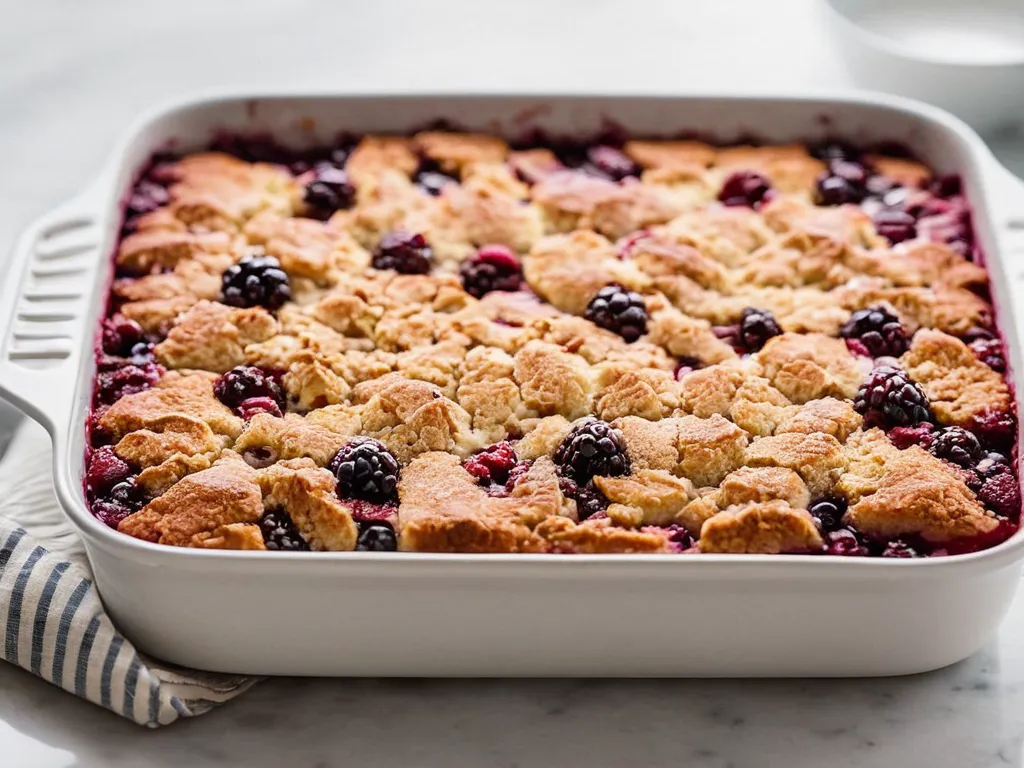
The finished dessert has a clear textural division. On top: a crumbly, sandy layer that ranges from crispy-crunchy at the surface to slightly chewy closer to the custard interface. This is essentially a cake-mix streusel — butter-hydrated starch granules that puffed and browned in the dry heat of the oven, similar to what happens with a buttery streusel topping on a coffee cake. On the bottom: a smooth, dense custard with the consistency of a set pumpkin pie slice — firm enough to hold its shape when scooped, soft enough that a spoon goes through it without effort.
The interface between the two layers has a thin zone of slight caramelization where the butter and the top of the custard met and browned together. This is the best bite.
Fall timing and why it keeps going viral
Pumpkin dump cake circulates on TikTok every September for the same reason it keeps generating saves: the gap between what it looks like during assembly (a pan of dry powder poured over orange goop) and what comes out of the oven (two distinct, beautiful textures) is large enough that people have to film themselves to prove they followed the rule. The “don’t mix it” warning creates a small amount of anxiety that resolves into relief when the topping comes out golden and the custard holds its shape.
The reveal shot — a spoon pulling a cross-section to show the amber crumble sitting cleanly on the orange custard, followed by a scoop of vanilla ice cream placed on top and immediately beginning to melt — is one of the most reliable fall food visuals on the platform. It requires no special equipment and almost no skill. That combination is why it reappears annually rather than fading out.
Serve it while it’s warm. The ice cream melts into the crumble within about 30 seconds. That’s the moment.